
This 4,000-Year-Old Lyric Trick Makes Words Stick
55sReveals an ancient writing secret used by Shakespeare and Dylan that instantly makes lyrics catchy.
▶ Play Clip"Exactly what the title promises: an ancient, easy lyric trick with clear examples and a practical rewrite demo."
This video breaks down alliteration—a rhetorical device that has been used for over 4,000 years—and shows songwriters how to use it effectively. The presenter explains the technique's history, demonstrates examples from famous songs, and offers practical guidance on frequency, placement, and rewriting.
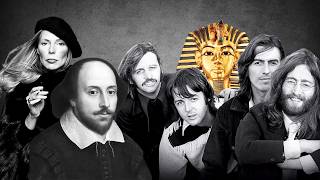
Alliteration appeared in Sumerian and Egyptian oral poetry around 2000 BC and has been used by Shakespeare and Dylan.
Alliteration is the repetition of the same initial consonant sound in two or more adjacent or closely connected words within a phrase.
Lyric writing involves both what you say and how you say it; alliteration makes language stick, memorable, and catchy.
The Beatles use 'whisper words of wisdom' in Let It Be; Joni Mitchell uses 'paved paradise and put up a parking lot'.
Too much alliteration can feel comical or distracting, as with the five P-sounds in Joni Mitchell's parking lot line.
Just two T-sounds in 'tangerine trees' from Lucy in the Sky with Diamonds is enough to create the effect.
Plosive sounds like P and T are hard-edged; softer sounds like L and W better support gentle messages such as 'whisper words of wisdom'.
Alliteration at the end of a line closes it off, at the beginning gives it momentum, and in the middle keeps attention.
The first draft is for finding the theme; alliteration belongs to the second pass, where you shape language into more impactful phrasing.
Changing 'looked at love' to 'stared at love' and removing other repeated sounds keeps the message flat, showing how alliteration adds rhythm and beauty.
Alliteration is a simple, ancient tool that can make lyrics more memorable and poetic. Use it sparingly and deliberately during the rewrite, matching the sound to the sentiment, and your words will stick with listeners.
What is alliteration?
The repetition of the same initial consonant sound in two or more adjacent or closely connected words within a phrase.
00:43
Around when did alliteration first appear in recorded poetry?
Around 2000 BC in Sumerian and Egyptian oral poetry.
00:01
What example from The Beatles illustrates alliteration?
"Whisper words of wisdom" in "Let It Be".
02:29
What are the two main considerations in lyric writing mentioned in the video?
What we're saying and how we're saying it.
01:09
Why did the author say Joni Mitchell's 'paved paradise and put up a parking lot' sounds like a tongue twister?
Because it has five occurrences of the P sound in a short line, making the alliteration too obvious.
02:56
How does alliteration at the beginning of a line affect the listener?
It gives the line a little push or momentum.
07:22
What does alliteration at the end of a line do?
It closes off and completes the phrase.
07:38
According to the video, when should songwriters primarily apply alliteration?
During the rewrite, not the first draft.
08:32
What distinguishes plosive sounds from soft sounds in alliteration?
Plosives like P and T are hard-edged; soft sounds like L and W feel warmer and can better support gentle sentiments.
05:01
What did the presenter demonstrate by changing 'looked at love' to 'stared at love'?
That removing alliteration makes the line flatter; the message stays similar but the rhythm and beauty disappear.
09:17
Alliteration makes language stick
Explains why the technique has survived for thousands of years and why brands still use it.
01:47Overuse can turn a lyric into a tongue twister
Warns against frequency overload with a concrete example from Joni Mitchell.
02:56Hard vs soft sounds should match the message
Gives songwriters a practical way to pick consonants based on emotion.
05:01Placement controls momentum and closure
Shows how start, middle, and end placement create different rhythmic effects.
07:38Rewriting with alliteration turns flat drafts into poetry
The demonstration proves the technique's power by stripping it away from a famous lyric.
09:30[00:01] literary [music] techniques that have been around for thousands of years. And particular technique I want to look at today appeared in the oral poetry of ancient Samrian and Egyptian civilizations around 2000 BC. And
[00:15] everyone since from Shakespeare to Dylan has been using this technique to amplify the impact [music] of their words. So, in this video, I want to talk about this ancient technique and demonstrate some ways you can use it to immediately level
[00:28] ways you can use it to immediately level up your lyric writing. callediteration. And alliteration is defined as a rhetorical and literary device characterized by the repetition of the
[00:43] characterized by the repetition of the same initial consonant sound in two or more adjacent or closely connected words within a phrase. And you've heard the effect of this technique in famous tongue twisters. Peter Piper picked a
[00:55] pack of pickled peppers. There you can really hear the repetition of that pllosive P sound. And interestingly, the tongue twister reveals one of the effectively, but we'll come back to that in a minute. Firstly, let's talk about
[01:09] why we care. Why do we as songwriters care about a technique such as alliteration? Well, in lyric writing and really in all communication, there are two main considerations. what we're saying and how we're saying it. What we
[01:23] are saying is of course incredibly important. The topic or the narrative or the theme, that's important for us to get a handle on. But what we're focusing on here is how we're saying it. And it's so important that when we're writing our
[01:35] lyrics and rewriting our lyrics, we're painfully aware of these two considerations that it's not enough to just say something interesting. We have to find impactful ways of saying it. And what we know about alliteration is it
[01:47] makes the language stick. It makes it memorable. It makes it catchy. And the beauty of alliteration is it's so simple. The corporate world and aware of its impact for a long time. Whenever you hear a famous company name
[02:00] or brand, you'll often hear alliteration embedded in the structure of the name. Coca-Cola, PayPal, and some of those famous slogans like power to the people arguably owe their enduring legacy to this simple technique. Of course,
[02:14] alliteration. You only have to look at the prologue of Romeo and Juliet to see how much the famous playwright lent on this technique from forth the fatal loins of these two foes. So what about songwriting examples?
[02:29] Well, in the Beatles Let It Be, we've got whisper words of wisdom. Or in Joanie Mitchell's Big Yellow Taxi, we get they paved paradise and put up a parking lot. And Joanie Mitchell's song really brings us back to the idea of the
[02:43] tongue twister that I was talking about earlier because it almost sounds like a tongue twister. They paved paradise and put up a parking lot. And the reason it sounds like a tongue twister is because of the frequency of the alliteration. So
[02:56] we have five occurrences of that P sound in what is a fairly short line. And the effect is almost comical and silly, which might have been the effect that Janie Mitchell was going for. But it shows us that we need to be careful with
[03:09] overusing the technique or overusing any technique for that matter because if the technique becomes too obvious, if it feels like the technique is the point, then it becomes a distraction for the listener and it actually gets in the way
[03:21] of the listener really hearing the message you're trying to communicate. just want to pause and let you know about an exciting new program we're launching for the very first time. It's a two-week lyric writing program. In
[03:34] those two weeks, you'll be focusing on advanced lyricw writing techniques. You'll have time with Key and myself. There'll be master classes. There'll be accountability sessions. There'll be a cohort of like-minded songwriters for
[03:46] And at the end of those two weeks, you'll have a collection of techniques lyric writing. So, if you're interested, you'll find the link below. So thinking Jonie Mitchell's lyric gives us an insight into a key consideration with
[04:02] using alliteration and that is frequency. How often are we using the technique in the phrase? The other big consideration for us to think about is placement. Where is the alliteration appearing throughout the phrase? We'll
[04:17] we just stay with frequency a little longer, we'll see that with alliteration, a little bit goes a long way. In the first verse of Lucy in the Sky with Diamonds, we have picture yourself in a boat on a river with
[04:31] tangerine trees and marmalade skies. Just the sound of those two T's, tangerine trees, is enough to feel the effect of alliteration in that verse. The chorus of another Joanie Mitchell song, Both Sides Now, is a beautiful
[04:46] demonstration of alliteration in action. I've looked at love from Both Sides Now. Again, just two of the L sounds pairing up there. And this is a nice moment to talk about the sounds that we're actually hearing. Tangerine trees are
[05:01] hard edge sounds. Pllosive sounds. Paved paradise put up a parking lot. Again, pllosive sounds. Looked at love. The L sound. Whisper words of wisdom. The W
[05:14] sound. Those are softer and they're doing a job to support the message of the song. Whisper words of wisdom is the kind of sentiment or the kind of message that feels beautifully supported by a softer sound. If you put a hard pllosive
[05:31] in there, it may be too aggressive. It may be too hard for the sentiment that is being communicated. Again, looked at love from both sides. Now, it's a love love from both sides. Now, it's a love song. It's a song about reflection.
[05:45] The hard edge of the pllosive may not serve the message of the song in that moment. So, when you're creating these moments of alliteration or when you're inserting alliteration into your lyrics, be mindful of the actual sound of the
[05:59] letters that you're using, consider whether they're hard or soft and consider whether you need one or the other to support the message you're sides now. That entire chorus is a beautiful example of alliteration
[06:13] because we get I've looked at love from both sides now from give and take and still somehow. The still somehow is another alliteration moment with the two S's. And then we get a return to these L
[06:28] And then we get a return to these L sounds. It's love's illusions. I recall sounds. It's love's illusions. I recall I really don't know love at all. So the Jonie Mitchell is really leaning into the warmth and the roundness of that L
[06:41] sound to help deliver the message and it's only being counterpointed by the two S's in the middle. So that gives us a good sense of frequency. Now I want to go back to placement and I want to look at the first verse of let it be. When I
[06:55] at the first verse of let it be. When I find myself in times of trouble, Mother Mary comes to me speaking words of wisdom. Let it be. This is a great example of minimal alliteration being used in each line but in different
[07:09] positions in the line, different placements when I find myself in times of trouble. Here we have alliteration appearing at the end of the line and it really closes off the line. It's the finisher of the line. The next line we
[07:22] have it at the very beginning. Mother Mary comes to me. And the feeling we get beginning of the line is that it gives the whole line a little push. It gives it momentum from that first moment speaking words of wisdom. Now we return
[07:38] to placement at the end of the line. And so you can hear we've got end line, beginning of line, end line. Again, toggling back and forth between these ititeration appearing at the end of the line really finishes off the phrase and
[07:52] completes it. When it appears at the beginning, it gives us a little momentum push, a little moment of propulsion. When it appears in the middle, it has a slightly different effect, but it still creates momentum that carries us through
[08:05] to the end of the phrase. And we've already heard this in effect with Lucy in the Sky with Diamonds. Picture yourself in a boat on a river with tangerine trees and marmalade skies. That little tangerine tree moment at the
[08:18] halfway point really grabs our attention and keeps us engaged in the line so that we stick with it to the end. So, at what point is using all ititeration most effective? because it's arguably not effective to really think about how to
[08:32] use alliteration at the beginning of the songwriting process. At the beginning of define what we're talking about. We're trying to find a theme or a topic or a narrative that we're really interested in exploring. At that point, worrying
[08:47] about these kind of techniques can actually be detrimental to the process. ititeration when you're starting to do a rewrite or when you're starting to look at a second version, taking that first draft and transforming it into language
[09:02] that feels more impactful, finding more interesting ways of phrasing your lyrics demonstrate this, I'm going to do the unthinkable and actually take the Janie Mitchell lyric from both sides now and just mess with it a little bit to show
[09:17] first draft. So, we've got that final chorus. I've looked at love from both sides. Now, from give and take, and still somehow it's love's illusions. I recall, I really don't know love at all. What if I just remove some of that
[09:30] alliteration? Starting with the first line, instead of looked at love, let me change it to I've stared at love from both sides. Now, from give and take and yet somehow. So, I'm taking away one of the s's and again removing the
[09:44] alliteration. It's love's deception. I recall I didn't It's love's deception. I recall I didn't know love at all. So there's a version of that chorus that you could imagine as a first draft. I've stared at love from
[09:59] both sides now from give and take and yet somehow it's love's deception. I yet somehow it's love's deception. I recall I didn't know love at all. It's really close in terms of the message. It's pretty similar. I've just replaced
[10:11] It's pretty similar. I've just replaced a few words. But this is the point that taking the message and then finding the most beautiful, interesting, effective way of communicating that message is really what alliteration is there to do.
[10:25] As with all of the rhetorical devices, that's what they're there to do. And we're reviewing our lyrics and trying to take it from first draft to a second or a third version. It's to look at each line and consider if there are any
[10:39] opportunities to insert alliteration or to rework the rhyme scheme or to substitute a word for a different word, a word with a little more impact, a on what we're trying to say in our lyrics, we're then looking for
[10:53] opportunities to change how we say it. And if we go back to the beautiful phrasing that Janie Mitchell uses, you can feel the rhythm of it. You can feel the flow of it because of the alliteration. I've looked at love from
[11:06] both sides now from give and take and still somehow it's love's illusions. I still somehow it's love's illusions. I recall I really don't know love at all. It sounds more poetic. It feels more rhythmic. It's just beautiful to listen
[11:19] to. And this is the power of alliteration. And this is why I encourage you to really experiment with it. Play with it. Be aware of the frequency. Be aware of the placement. and see if you can take a first draft to
[11:34] a beautiful interesting second draft just using this technique. Happy just using this technique. Happy songwriting. Bye.


⚡ Saved you 0h 11m reading this? Transcribe any YouTube video for free — no signup needed.