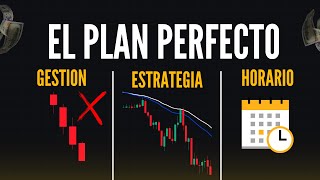

The 4-Part Trading Plan That Wins Every Day
45sImmediately promises a life-changing plan and identifies a common trader problem of strategy overload, making viewers eager to learn the solution.
▶ Play Clip"The title promises a life-changing trading plan, and the video delivers a solid, structured framework, though it's not revolutionary."
This video outlines a four-part trading plan designed to help traders achieve consistent profitability. The speaker emphasizes the importance of having a written plan that covers methodology, capital management, timing, and professionalism.
A trading plan is divided into four parts: methodology, capital management, timing, and professionalism.
Traders often use too many strategies. The first part of a plan is to select one specific methodology to avoid confusion.
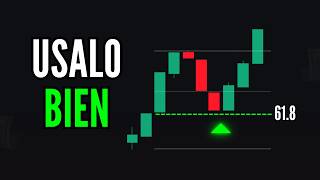
Create a written plan that specifies entry models, such as Fibonacci retracements or structural changes, with illustrations.
Do not use more than two or three strategies; mixing too many leads to senseless trades and losses.
Specify how much capital to risk per trade (e.g., 1-2% of account), and rules for increasing leverage after wins and stopping after two consecutive losses.
A trading plan helps you accelerate when winning and brake when losing, preventing account blowouts.
Dedicate no more than 40 minutes per session, with a maximum of two sessions per day. Overtrading leads to poor decisions.
Referencing Alcoholics Anonymous, the speaker stresses that skipping steps leads to failure. Follow the plan sequentially.
Trade in a serious, distraction-free environment. Treat trading like a profession, not a casual activity.
Have the written trading plan in front of you during sessions to avoid impulsive decisions.
A well-defined, written trading plan covering methodology, capital management, timing, and professionalism is essential for long-term success. Following the plan strictly and avoiding shortcuts can transform trading results.
What are the four parts of a trading plan according to the video?
Methodology, capital management, timing, and professionalism.
00:14
How many strategies should a trader use in their methodology?
No more than two or three strategies.
03:24
What is the recommended risk per trade as a percentage of account balance?
1% or 2%.
06:21
What should a trader do after two consecutive losing trades?
End the trading session and not open charts again that day.
06:49
What is the recommended maximum duration for a trading session?
Approximately 40 minutes.
10:11
How many trading sessions per day does the speaker recommend?
A maximum of two trading sessions per day.
11:16
What analogy does the speaker use to explain the trading plan's role in winning and losing streaks?
Gas and brakes: accelerate when winning, brake when losing.
07:28
What book does the speaker reference to emphasize not skipping steps?
The Big Book of Alcoholics Anonymous.
12:38
What is the fourth part of the trading plan?
Professionalism and having the right equipment and space to trade.
14:00
Why should a trader have their trading plan visible during sessions?
To avoid impulsive decisions and stay disciplined.
15:58
Four-Part Trading Plan Framework
Provides a clear, structured approach to trading that can prevent common mistakes.
00:14Limit Strategies to Avoid Confusion
Highlights a key reason traders fail: using too many strategies leads to inconsistency.
03:24Gas and Brakes Analogy
Memorable analogy that illustrates how a trading plan helps manage winning and losing streaks.
07:28Don't Skip Steps
Emphasizes the importance of following the plan sequentially, a lesson from addiction recovery.
12:38Professional Environment Matters
Treating trading seriously and having a dedicated space can improve focus and results.
14:00[00:01] be profitable and win every day in trading. If you want to learn which is the best plan of all, then stay until the end of this video. Okay, traders, to have a trading plan, you should know that it's divided into four
[00:14] parts. The first part of having a trading plan is knowing the methodology you're going to use. Many times when we start trading, we have this big problem: out of all the strategies we've learned,
[00:27] when we open our charts, we start applying them all. If you don't have a trading plan and before trading you don't know which strategy you're going to use, what happens is that when you open your charts, you'll be
[00:39] completely blank and won't know which of the 500 strategies you have you're going to use. The first part of a trading plan is the methodology, and this part of the trading plan tells us that before trading, we
[00:52] must know perfectly what type of strategy or methodology we're going to use. And it's important to know that you must have a specific one that you're going to use on all the charts or in all the
[01:05] markets you're using. This is regardless of whether you do Forex, binary options, or any other type of market, you must know in detail the methodology, the strategy, and how you are going to operate. So pay
[01:19] close attention. Here, it's important that you create a written trading plan and don't just leave it lying around. create a written trading plan and don't just leave it lying around. importance. How many times has it happened to you that you open a chart and don't know
[01:32] whether to select an indicator, whether to trade up or down? That's why it's very important that your trading plan clearly specifies the entry model and the strategies you are going to use. For example, in my case,
[01:45] before opening any chart, I know that my main methodology is based on Fibonacci and entry models with any type of chart, I know I'm looking for a structural change,
[02:01] a trend reversal, or a Fibonacci trade. What does this tell us? Well, when opening any type of chart, we can automatically discard any bad trades or any chart
[02:14] that doesn't have the conditions we need. And it's important that we have order in everything we do. For example, look at the euro with... The Canadian dollar. I open this chart, and my
[02:27] entry model tells me, for example, that I should look for a structural change, for the chart to break the last high, and I'm going to trade here. For example, it's important that you have the methodology, the strategy, and the time frame for
[02:42] your trade clearly specified so that you don't leave the variations and variables up in the air. For example, here I already know that this is the entry model I use and that I trade practically every day. For example, in this chart
[02:55] here, I already know that I can have a structural change. I would need the chart to break my last high in order to trade the structural change exactly with the methodology that I already know, that I know works for me, and that I
[03:10] 've traded for so many years. I see that my Fibonacci retracement coincides exactly with my last high, so all that's left is to wait for the chart to meet the methodology of the trading plan in order to trade. And
[03:24] also, a very important point: you shouldn't have more than two or three strategies in your methodology or your trading plan. It's not like we open a chart and say, "Well, I have a Fibonacci retracement, but if not, then I have
[03:37] moving averages." But if not, then I have double support. But if not, then I have Smart Money concepts because what this does is confuse one methodology with another, and at the end of the day, you want them all to be respected. And what
[03:51] happens is that you end up placing completely senseless trades, and that will lead to losses in trading. So it's important that you have your methodology well specified in writing with each of the
[04:03] images of what you expect to trade in the market. If you're looking to trade upward trends, then in your trading plan, make an illustration of an upward trend and exactly what you would look for with each of
[04:16] the possible variations. For example, I can trade here in an upward trend, or I could also look for an extension within an upward trend. And it's important that you have each of these entry models specified
[04:29] so that when you open your charts, you don't enter completely second phase of the trading plan. Remember that if you want to start in the first trades, in the description of this video you have the links to the
[04:43] brokers that I use for both forex and binary options, even if Europe, the description includes a link to the recommended broker for If you'd like to join my private trading academy, we now have a new
[04:58] contact number you can use to receive information about mentorship programs. So, let's continue. Now that we have a well-defined methodology, we'll cover: the timeframe for trading, the types of movements we need, and how we
[05:13] seek our trades. This is where capital management comes in. What is the purpose of capital management? I don't know if this has ever happened to you: you start seeing great capital management? I don't know if this has ever happened to you: you start seeing great
[05:25] your entire account and think, "Well, that's exactly what happened." If you don't have proper capital management, you 're not controlling all the variables. Many traders simply
[05:38] open their charts and start trading whatever comes to mind, and they also start trading with whatever capital they can think of. This is the least optimal thing you can do. This should also be written in your
[05:52] trading plan, and above all, you must clearly specify each of the variables, including what happens when you win a trade. For example, you already have your methodology like this one here with the euro and the dollar. Here I would be
[06:06] looking for a retest. I already know the methodology because I have it specified in my trading plan. Now, how much capital should I trade with? Ideally, you should select your total account balance, for example, an account with $100, and
[06:21] specify how much you will invest per trade, whether you will trade with 1% or 2%. It is also important that each time you win a trade, the next time you should increase your leverage a little more so that
[06:36] you can use the profit as leverage to achieve great results. Also, your trading plan should clearly specify what you would do if the chart moves against you and you end up losing.
[06:49] Normally, a trading plan stipulates that if you have two losing trades, that is where your trading session ends, and you should not open your charts again that day. You should wait until another
[07:03] trading session to continue. Let's say I place a short trade here, the chart moves against me, and not knowing when to stop, I place another one on the upside. And they lose again, and then they
[07:15] invest again with double the capital, triple the capital, using Martin Galas, and they end up completely burning through their account. So, if you don't have proper capital management, you won't be able to get results in trading.
[07:28] Here's a pretty good analogy: imagine this is the point we want to reach, the top of this hill. What good is capital management if, when we're on
[07:40] this hill, we can't take our foot off the gas? We have to push hard to reach our goal. That's what a step on the gas to keep moving forward and reach the goal. That's why you
[07:56] need to have everything clearly defined: your initial capital, what you'll do if you make a profit, what you'll do if you lose, and most importantly, knowing when to stop. But what happens if the
[08:08] opposite occurs, if you're going downhill? Many traders make the mistake of pushing the gas even harder when they're on a losing streak. They trade double, triple, invest more money, and they don't have a trading plan. It helps you, if you're going
[08:22] downhill, if you're on a bad streak, to avoid crashing headfirst into a wall. It helps you know when to hit the brakes, and then you can reduce the impact as much as possible. That's what a trading plan is for: so that when you're going
[08:36] uphill and heading for the top, you know when to floor the accelerator, and when you're on a bad streak, you know when to stop so you don't completely hit the wall. So let's move on to the third part of the
[08:49] trading plan. The third part of the trading plan is even more important, and this is about timing. Knowing which timeframes you're going to trade—this can also be left in the methodology stage, where you should
[09:02] specify the timeframe you're going to trade in, the timeframe you're going to analyze in, how long you're going to place your trades, the methodology, and so on. But this part about timing comes down to how much time you're going to
[09:16] dedicate to trading and how trading can fit into your daily life, how it can become a habit. Let me explain: many traders believe that when they start in this world The more time we
[09:30] dedicate to it, the faster we'll become profitable. But let's take a very simple example: what happens to someone who goes to the gym? Imagine you want to get strong. You say, "I'm going to get strong. I'm going to go to the
[09:42] gym." Well, you can get strong by going to the gym for one hour a day. Just because you want to get stronger doesn't mean you're going to go to the gym 24 hours a day. That can even be worse. And the same thing happens with traders. When they
[09:56] learn new strategies, when they understand and learn entry patterns, they think that by dedicating more time to it, they'll be more profitable or profitable much faster. But it's practically the opposite. In a
[10:11] trading plan, you must have clearly stipulated how much time you're going to dedicate to your trading sessions. Normally, we traders who already make a living from this don't dedicate more than 40 minutes to an hour a day. And I'm going to
[10:24] explain why. I want you to tell me how many times it's happened to you that after half an hour or 40 minutes without finding a good trade, your mind completely goes blank. And what is that? What happens is
[10:36] we start placing trades recklessly, waiting for the chart to reach a point where we can trade a head and shoulders pattern. But what happens is the chart doesn't reach the point we want; there's no time.
[10:50] And what happens? We get desperate. We start placing trades, we place one here, it goes against us, and we lose. So we place another, it goes against us, and we place another, and our minds start to cloud over. Usually, when this happens in a
[11:03] trading session, all the trades that follow this bad decision are likely to be negative as well. For this reason, I would recommend that you have sessions of approximately 40 minutes and that you
[11:16] aim for a limit of two trading sessions per day. You should also find a way to fit this into your lifestyle, not the other way around. If you work all day, find a time when you feel comfortable
[11:29] trading and can have a proper trading session. If you work all day, try to trade at night and dedicate the appropriate time to your trading session. So, in a
[11:42] trading plan, we need to specify the methodology we are going to use. How we're going to use it, when we're going to use it, the way, the place where we're going to operate, whether we're going to trade a downtrend, an uptrend, etc., etc.,
[11:56] must specify how much capital we're going to operate with, what happens if we win, what happens if we lose. We must know all the possible variations. Third, how long are we going to
[12:09] do it? As I mentioned, I normally dedicate 40 minutes a day, and that's it. If I win in those 40 minutes, perfect, that's the end of my trading session. If I lose in those 40 minutes, oh well, that's the end of my
[12:23] trading session. You must know when to stop because most traders end up blowing their account and losing all their capital simply for not knowing when to stop. So you must start setting limits
[12:38] without skipping any of the steps. So pay close attention to what I'm going to tell you here. Over the years, I've told my traders that there's a paragraph in the Big Book of Alcoholics Anonymous literature that
[12:51] share this here so you can see how wonderful this literature is, and this paragraph says, "We have rarely seen a person fail who has conscientiously followed Our path. The only ones who don't succeed are those
[13:05] individuals who don't want to or can't fully commit to this simple program. If you want what we have and are willing to do everything necessary to achieve it, then you are in a position to take
[13:18] certain steps. We in the past tried to skip some of these easier and more comfortable path, but we couldn't. The result was completely null since we remained attached to our old ideas. What does
[13:33] this mean, traders? That you shouldn't skip any steps. There is no easy path in trading. You must do step one, step two, step three, and so on. Otherwise, you won't reach the goal. For this reason, if
[13:46] every time you trade you don't know what you are going to do, you are leaving all the variables up in the air, and everything that you cannot measure, you cannot measure, you can control; the variables can be controlled and can even be
[14:00] perfected. This leads us to the last part of... A trading plan. This last part focuses more on trading correctly, having the right equipment and space to trade. It's not
[14:14] the same to trade at home in your own space, in the home in your own space, in the trade to show off to your friends while at
[14:28] the movies. This makes us lose sight of the seriousness of what we're doing at the end of the day. Remember that we're all in this profession to change our lives, to provide for our families, to
[14:40] achieve all our goals. This will depend on the person and the seriousness you bring to it. For example, in my trading plan, I have it clearly stipulated that when I have my trading session, I'm not going to
[14:54] worry about anything else. I'm going to focus only on my trades because it's just me and the market. I
[15:06] day of my trading plan. The moment I start to lose seriousness, I simply step away from the market because sometimes people tell me, "Hey, seriously, I'm..." Trading on my phone here in a
[15:18] shopping mall, obviously, makes me lose sight of the seriousness of what I'm doing. Imagine a doctor saying, "Hey, I'm going to perform open-heart surgery on someone, but I can't see them with my hands. But honestly, I'm thinking, 'Oh no, I don't want to
[15:31] operate on them.' And look, the tools I have are plastic. What's going to happen? A fatal outcome." Take trading with all the seriousness in the world because I can tell you, this profession can change your life
[15:43] forever if you make the right decisions. So it's important that your trading plan is well- defined and written down, including each phase, methodology, capital management, trading times, and the
[15:58] professionalism to what we're doing. So in your trading plan, you'll stipulate the hours you'll trade, the strategy you'll use, what you will do, and what you won't do. I
[16:11] recommend having it in front of you in a notebook before you trade, so you have it ready at the exact moment you're about to make a mistake and say, "Okay, me." I'm skipping my trading plan, so that's why I wo n't be able to get
[16:24] results. I can assure you that if you start taking what you're doing more seriously and professionally, start taking what you're doing more seriously and professionally, results in trading. I hope you liked this video, traders.
[16:38] channel, leave a like on this video, and tell me in the comments if you'd like me to create some specific trading plans for different times of day so you a future video for you to watch. Click on it, and I'll see you next time.
⚡ Saved you 0h 16m reading this? Transcribe any YouTube video for free — no signup needed.