

From Security Guard to Trader: My Life Changed
45sPersonal transformation story with a rags-to-riches arc is highly relatable and inspiring for viewers seeking financial freedom.
▶ Play Clip"The title promises life-changing results, and the video does explain a specific strategy, but the claims are anecdotal and lack objective proof."
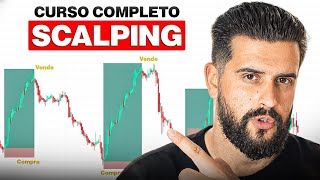
This video presents a trading strategy focused on exploiting market liquidity by trading against retail traders' stop-loss orders. The speaker, Benjamin, claims this approach has transformed his life and the lives of others, emphasizing simplicity and consistency over complex analysis.
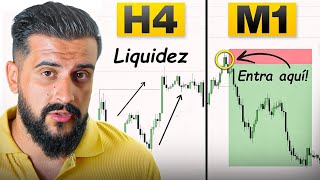
Market liquidity is found in stop-loss orders placed by the majority of traders, typically at market highs and lows.
To be profitable, traders must do the opposite of what the majority does, as the price often sweeps stop-losses before continuing its trend.
Higher timeframes (H4 and H1) contain more liquidity and are preferred for analysis, while intraday trading (same day) avoids overnight swap fees.
The strategy is to sell above highs and buy below lows, targeting areas where stop-losses and take-profits are concentrated.
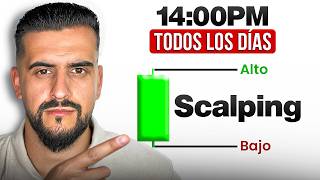
Focus on London (9-11 AM Spain time) and New York (2-4:30 PM Spain time) sessions, as these have high bank transaction volumes.
Look for a three-candle sequence where the wicks of the first and third candles do not touch, indicating an imbalance that the price will likely fill.
Prefer market orders over limit orders to avoid missing entries due to spread, and aim for a risk-reward ratio of 1:2.
The strategy is simple: identify key highs and lows on H4/H1 timeframes, wait for the price to reach these levels during London or New York sessions, and enter trades using the imbalance pattern with a 1:2 risk-reward ratio.
Where is market liquidity typically found according to the video?
In stop-loss orders placed at market highs and lows.
01:12
What is the core contrarian principle of the strategy?
Do the opposite of what the majority does; sell above highs and buy below lows.
03:12
Which timeframes are recommended for analysis and why?
H4 and H1 because they contain more liquidity and stop-loss orders.
04:24
What are the two best trading sessions and their Spain time hours?
London (9-11 AM) and New York (2-4:30 PM).
06:30
What is the entry pattern called and how is it identified?
An imbalance, identified by a three-candle sequence where the wicks of the first and third candles do not touch.
15:06
Why does the speaker prefer market orders over limit orders?
To avoid missing entries due to spread when the price moves quickly.
17:53
What risk-reward ratio does the speaker recommend?
1:2.
18:20
Liquidity in Stop-Losses
Fundamental insight that market moves are fueled by retail stop-losses.
01:12Contrarian Trading Principle
Key to profitability is doing the opposite of the majority.
03:12Sell Highs, Buy Lows
Core strategy that targets liquidity pools.
06:03Imbalance Entry Pattern
Specific, actionable pattern for trade entry.
15:06[00:01] explain in this video is changing lives. So, if you want to be the next one to radically change your life, stay tuned because I'm going to explain absolutely everything to you. If you don't know me, I'll introduce myself quickly.
[00:16] My name is Benjamin and I have been dedicating my time to trading for over 7 years. I have withdrawn over $80,000 in payouts with funding accounts and I have always used the same strategy. This trading strategy
[00:30] that I'm going to explain in this video, yes, indeed, changed my life because just a few years ago I was working as a security guard working as a security guard earning less than €1500 and this
[00:43] trading strategy did the impossible, radically changing my future. And mind you, it did n't just change my life, many other people who started applying this strategy, following my advice, also experienced that
[00:59] radical change in their lives. I'm going to leave you with dozens of other people who have also achieved it, so stay tuned because we're starting. The first thing we need to understand is where the market's money is,
[01:12] in other words, the stop-loss orders of the vast majority of people, people like you. Like me and your next-door neighbor , where is all that money? Where are all those stoplos located? which, ultimately, as
[01:29] I always mention in all my videos, is where the videos, is where the market's liquidity is found. This is super important. And now we're going to do some thinking, to reflect on where
[01:44] thinking, to reflect on where you normally put your stop-loss, right? And you take profit. Well, I'm sure you'll agree with me that most of the time you put it below a minimum or above a
[01:59] maximum. In other words, if you want to enter a selling position, that is, if you speculate that the price will go down, as a general rule, where are you going to hedge your position? Well, at most. Normally, when you sell in this
[02:16] area to go for lower prices, you will place your stop loss below a high. And as I 'm explaining here, as a market structure, whether it's bullish or bearish, although I do
[02:31] explanation of structures that most people spread, because I don't agree that there really is a market structure, because otherwise it would be too obvious to make money and very few people actually make
[02:45] money. Therefore, if an upward trend were as simple as buying down here and continuing to raise the price, then obviously everyone would put their money into an upward trend, protect themselves down here, and everyone would
[02:58] make money. What is the reality? The vast majority of people in you have to understand that you have to do the exact opposite of what the vast majority do. This is very important. So, where were we going?
[03:12] Where you normally protect yourself, your next-door neighbor, your friend, your acquaintance, and the vast majority of people are also protected, because in every maximum and in every minimum, depending on whether you are looking to sell or if you are looking to buy.
[03:26] Therefore, this already indicates where the stop-losses are located. Well, stop-loss orders are placed at every market high and low. That's why, on some occasions, when you try to join the upward trend, which is what will
[03:41] mostly happen, the price will first sweep through the stop-losses located down here and then tend to rise. Because? Because the price needs money to keep
[03:55] that you need to understand. Therefore, to answer this question, where is the liquidity? As I just told you, liquidity is told you, liquidity is found in everything, from the market's maximum to its minimum
[04:11] . Obviously, timing is very important. Because? Because the longer the time frame, the more stop-loss orders, the more liquidity, and the more money will have highs and lows.
[04:24] A minimum maximum of one minute, or 5 minutes, is not the same as a minimum maximum of one hour for the season, or 4 hours daily. It has absolutely nothing to do with it . Therefore, the vast majority of my opportunities, my
[04:36] opportunities, my market analyses, are usually sought in H4 and H1. Normally, if you trade intraday, which is what I do, what does intraday mean? Well, it's very easy to open and close operations on the same day,
[04:49] okay? That's what I'm looking for. Because? Because if I extend trades, the commissions and swaps for holding the trade overnight usually hit my account hard. You have to understand that
[05:02] swaps mean that when you leave a position open overnight, and then charged a fee. Therefore, the more days you keep your charged. That's why I'm personally interested in opening and closing on the same day, and
[05:19] also to operate, of course, without anxiety and sleep peacefully, which is what I'm peacefully. OK? Therefore, we have already solved this first question, this first unknown, which is one of the most important. Liquidity is
[05:34] low. That's why eventually, before the price continues to rise, it will eliminate lows, it will eliminate stop losses, it will need money, fuel to continue that trend that the price is continuing. That's why
[05:50] high and every low that the price normally leaves us in longer timeframes like H1 and H4, one hour and 4 hours, will tend to react when the price takes those points. OK? What am I going to look for in my strategy?
[06:03] changing lives, as I've told you, mine, for example, has completely changed. Look for sales above highs and look for purchases below lows. Because? Because this is where all the money in the
[06:18] market is. Absolutely everything, all the stop-loss orders, all the take-profit orders are set at the highest and lowest prices. OK? This is something you need to understand very, very clearly. So, what are the best
[06:30] times to look for these trades? Because schedules are very important. Keep in mind that bank transactions usually take place bank transactions usually take place at stock exchange opening times.
[06:45] OK? What are those openings? London, New York and Asia. This is something very important that you need to keep in mind. Okay? Benjamin, what sessions or times do they include? Okay, the London session, the New
[06:59] York session, and the Asia session comprise these times that I'm going to tell you about , okay? The London session would be from 9 a.m. to London session would be from 9 a.m. to 11 a.m., Spain time. If you're from
[07:14] any other country, just use VH GPT, which everyone uses AI these days, and ask, "Hey, what time is it in Argentina between 9 and 11 AM? What time is it in Dubai? What time is it in the United States? What time is it in
[07:27] Mexico?" Whatever it is, just ask there to make sure it's very clear. The New York session would then be from 2 PM to 4:30
[07:41] PM. This is the same time in Spain. If you're from any other country, just do a quick search and it will give you the information very easily. And the Asian session, which we're not really interested in, would start around
[07:57] interested in, would start around midnight. Keep in mind that from 11 PM midnight. Keep in mind that from 11 PM to midnight there's a pause in the Forex market, the currency market. Normally, you can't trade during these hours
[08:09] exchanges close and then reopen, which would start the Asian session at midnight . But to avoid To give you more information and avoid making this understand it perfectly so that this strategy makes you
[08:25] main goal in these videos. We're going to skip over this; I'm not even going to explain it. Keep in mind that we're not interested in the Asian session , okay? We're interested in the
[08:37] London and New York sessions. This is what we really need to focus on and be consistent with during these times. It's very important that you understand this
[08:50] perfectly. So, what are we going to look for in this strategy? We'll see a couple of examples now to make everything clear. Of course. Well, basically, we're going to wait for the entry price during these
[09:02] times I mentioned, London and New York, to reach a high or a low. Why? To look for a price reversal. That is, above these highs, we sell; we go down to move in
[09:20] the next direction. I'm sure this sounds familiar. counterintuitive, told, "No, it's that when the price breaks higher highs, when the higher, but normally the price will tend towards an upward trend and I will have to
[09:34] look for buying opportunities, right?" If you keep doing that, you're going to keep losing money. Honestly, I've been here for 7 years and I know what I'm talking about. I have many withdrawn from a funding company, so I know that this trend, these types
[09:51] of strategies that are commonly publicized, don't make sense. That's why the this video. That's why most people lose money, because they can't find a strategy that's truly worthwhile, refuted,
[10:05] and proven—which is the most important thing—a strategy that's already been n't have to rack your brains backtesting it. I'll tell you right now . Hey, I'm profitable with this strategy. I have withdrawn almost $400,000 from
[10:18] funding accounts using this very simple method. Replicate it. Don't the wheel. Repeat what Benjamin is telling you. Repeat what I 'm telling you. Backtest it. See if it works or not, but spoiler alert, it does. And
[10:34] when you're clear on that, start pushing hard in the real market. OK? course, so you can see for yourself. So, this is the main idea of the strategy, okay? This is the main idea of the strategy. Where are
[10:49] the stoplos located? At the maximum and at the minimum, okay? Normally, when the price breaks this low, it will tend to retrace, okay? It may continue to fall, of course, but in this recovery we have already
[11:03] made money from it, which is the important thing. And listen, now I'm going to explain it to you with several examples so that you understand it perfectly. Where are the stop signs located? Liquidity, maximum and minimum. OK? Normally, the highs and
[11:17] lows that I recommend you use to avoid overthinking and highs and lows of H4 and H1. What time? So, where does that interest us? Banking transactions, stock market openings, London, New York, Asia, we're not
[11:33] interested in that. Those are the times that interest us. In fact, if you're making money in the London session, don't trade in the New York session, okay? If you're not making money in the London session, then go trade in the New York session. But what
[11:48] necessarily have to operate both sessions. One is more than enough. If your job doesn't allow you to operate both, then simply stick with one enough. In fact, when I worked as a security guard, I
[12:01] only operated one session because the rest of the time I spent working on my the next day. I've been in your situation, I've had a job, I've been a security guard and I know what it's like , but with one session, with a couple
[12:15] of hours, it's more than enough to make money trading. Believe me, it's possible, I'm telling you the truth. And I'm going to make a point here. Below in the description you have a free class. Below it will say free class. You enter,
[12:30] put in your details, which is your email and little else, and you will have access to a free class where I will explain all this to you in great detail. The truth is, this I recommend that if you're interested in everything I'm explaining, although we're going to
[12:44] continue now, you have a free class below, very detailed so that you understand everything perfectly. Now let's look at the examples so you understand everything perfectly. Let's go over the first
[12:59] example now and start analyzing it from the beginning so that you don't understand it perfectly, okay? What I'm looking for, as I always say, here in the 4-hour timeframe on
[13:11] H4, is what maximum and minimum are relatively close together? So we would have relatively close together? So we would have this maximum, the first one over here, and the minimum would be down here. Then we have a sequence of
[13:23] minimums, so further down, for example, this one here, or a maximum we would have above, for example, this one here. For me, these would be the really important or interesting highs and lows we have for the start of the session.
[13:37] This in 4 hours. Next, we'll move on to the one-hour time frame. And as advice I'm going to give you, is that when you have doubts, always extend the time frame, okay? When this is like life itself, when you have a problem
[13:52] and you have it focused on and you're obsessed with a problem, jump out of obsessed with a problem, jump out of that problem, broaden the picture, okay? It increases the ability to analyze. In this case, if we take it to the field
[14:06] of trading, what we are going to do is broaden our image, okay? And really see what's going on, okay? Let's not focus so much on low seasonality. Low timeframes often lead to a fairly wide margin of error
[14:21] obsessed with areas that may not actually be important. So one-hour season, go to the four-hour season and you'll see it much more clearly. Hey Benjamin, I don't see it clearly in an hour . Perfect. H4 hours and here you'll
[14:36] see it much more clearly, because here you see the highs and lows much more easily, just like life itself, okay? You go to the one- hour timeframe and wait for the price to, well, exceed this minimum. So
[14:52] that? To search for a purchase. OK? We buy below the lows, we sell above the highs, okay? That's what we're looking for in our way of operating in this strategy, okay? And now the
[15:06] price, what are we going to do? We can go from 1 minute to 5 minutes and look for entry patterns that the price tends to repeat quite waiting for here? As I mentioned before, bank transactions. When do
[15:22] these bank transactions occur? London, New York. Okay, that's very important, alright? When the big fish are entering the market and they need
[15:34] your money, they need your money, right? Because you're going to learn Therefore, they're going to need money from your neighbor or other people who aren't watching this video, okay? Not you and I anymore. But what we're going to expect
[15:48] is that within that session, the price, for example, the 2-minute timeframe, will show us some patterns that I'm going to explain to you right now. OK? We see here that it is 2:26 in the afternoon within the New
[16:00] going to wait for here is for the price to create a slippage. What is a landslide? Basically, it's an imbalance, an imbalance in a sequence of three candles. Okay? Excuse my drawing, I failed drawing.
[16:15] my drawing, I failed drawing. had to confess, but the truth is I do trading, don't take me out of that, I 'm very bad at everything else. And mostly drawing, okay? In a sequence of
[16:28] three candles, first, second, third, there is a gap. What does a void mean? very important that you understand this. Basically, it means that the wicks of
[16:42] the first and third candles should not touch. That is to say, these sticks touch. That is to say, these sticks here, these sticks here should not touch at any time in the sequence of three candles, one, two, three, this one here there is
[16:56] an imbalance. What does this mean? As the word suggests, there is an imbalance in sales and price; generally, it tends to mitigate it before continuing. And besides, the information
[17:09] that's giving me is that there's a sharp drop, okay? Because? Because look, the price has to show me that it doesn't want to be here, okay? He doesn't that it doesn't want to be here, okay? He doesn't want to be here, okay?
[17:23] Therefore, look, a sequence of three candles. First, second, and third gears are not to be touched, okay? This wick and this wick here are not to be touched. First, second and third, in a sequence of three candles, the first and third candles not
[17:40] the first and third candles not touching each other. This is very important. What are we going to do here? Well, what we're simply going to look for are our sales. You have two options, either by a limit order, okay? Or
[17:53] personally tend to execute at market and I'll explain why. Because normally with limit orders, if there's a little bit of a spread and the price hits a big swoop and goes away, the order doesn't get triggered, and that really annoys us. Believe me, it has
[18:06] Therefore, I either keep an eye on it or set an alarm, whatever I want, or I just wait a little while for the price to touch it, and the moment it touches the zone, boom, up and I almost always recommend a risk-reward ratio of one to two,
[18:20] liquidity points, which would be these lows here, okay, they are the closest, and simply enjoy it. Okay, you also have other entry possibilities, as you can see the price has gone, it
[18:34] plummeted, okay? You can enter here, you can go to a 5- minute timeframe if you don't feel comfortable with the two-minute one, for example, here you have an imbalance, a gap, what I've told you, the price is going to
[18:46] touch it, okay? We're going to throw this back here and as you can see, it's going to hit that So you can also enter this way, through this area, the 5- minute season, okay? One to five minutes are our entry trigger, our
[19:00] confirmations. Because? Because that's how we get the maximum performance, the operations. A small stop loss and a high profit. You can let this operation recommend going to step 1 or 2 and not being too greedy. Let's look at another
[19:16] example to make it perfectly clear. This is the goal. By the way, below in the description, there's a free class and if you want to learn even more. Let's look at another example. In this case, we are now going to look at a scenario in purchases.
[19:29] As I told you, I have two scenarios. Buy below lows, sell above highs. I've never done this before, but I'll tell you something. I'm going to give you 5 seconds so that you, from your house, from your phone, from
[19:42] your bed, because I'm sure some of you are about to fall asleep, can hear my voice because you're very annoying. But anyway, I'm going to give you 5 seconds But anyway, I'm going to give you 5 seconds to locate the minimum and
[19:55] to locate the minimum and maximum area. One, two, three, four and five. You've had plenty of time. Where do we have the minimums and maximums here?
[20:07] Well, basically, look, one-hour season, we have the most relevant minimum here and we would have the most relevant maximum here. So what would we be looking for? Sales, purchases, it's over. No CRT, no Smart
[20:22] Money, no round the world in 182 days, no acrobatic turn, none of that. Okay, sell above highs, buy below lows. Very simple, really, very easy, okay? Nothing crazy. Like I said,
[20:41] which is a saying that's often used in Seville. I don't have formal education, but I'm very quickly, very simply, and very coherently, okay? And very easy, which is what I'm looking for. Buying, selling, it's over.
[20:56] London, New York sessions 9 to 11 2 to 4:30 the New York session. This is all there is case, we're going to a 5-minute season. Because? Because we're going to see the also have the entry in two, in three you can have it in the times you
[21:11] want. But in this case, since I know some of you like the 5-minute season, we're minute season, and you'll see that this is also viable in the 5-minute season, okay? And we're going to watch it again here together. Let's wait until the price
[21:24] eliminates, liquidates your neighbor's money. Not yours anymore, because you already know how to apply starting today, which will change your life. I am absolutely sure. And life. I am absolutely sure. And we wait. Boom. Here we have the price
[21:37] we wait. Boom. Here we have the price eliminates the minimum. And now I want you to tell me something important. What time is it? 15:45. 3:45 hours Spain. Which session are we in? New York session.
[21:52] New York session. We are looking for entries below a minimum. We bought within the 5-minute season session to take advantage of a small stop loss and seek the maximum possible profit. And what do we have here? And I'm going to give you another 3 seconds,
[22:05] I'll leave it for 3 seconds. What do we have in that sequence of three candles? One, two, that sequence of three candles? One, two, three. Indeed, an imbalance.
[22:17] The price, what's it going to do? It will usually go to balance it out. OK? So, what are we going to do? Basically, I'm looking for purchases. You have two options: either wait and set no limit, or wait and execute at market
[22:34] limit, or wait and execute at market when the price touches that gap, that imbalance. What ratio are we going to look for? One, two, without complicating our minds at any time. Here it is . Two options: order, limit, that is
[22:48] , the moment the price, boom, touches that imbalance, we enter the order. But I recommend you enter the market, as I've told you before. Because? Because that way you avoid the spread, okay? And here you're just going to be scared shitless
[23:01] , they're going to put it right here on your neck, you're going to say, "Damn, stop, the Benjamins lied to me, don't worry." Obviously there are also trades that are lost, but no, mate, relax, we buy below
[23:15] lows, we sell above highs. And here, you can simply wait peacefully while you drink a coffee or while you take a nap, boom, and before you know it, there's your one-two punch. I've already explained
[23:29] both scenarios to you. Sales above highs, purchases below lows. Below in the description you have a free class. Below you'll also find my completely free Telegram group where I share valuable information every single
[23:44] day, totally free. I also have to say that the free class is absolutely amazing because I explain this in much more detail. It's amazing, I I hope to see you in the next video.
[23:57] Subscribe if you haven't already, and I hope you really enjoy it because this is going to change your life just like it changed mine. See you. M.
⚡ Saved you 0h 24m reading this? Transcribe any YouTube video for free — no signup needed.