
AI Summary
This video provides an overview of different API architectural styles, including SOAP and RESTful APIs, highlighting their use cases, strengths, and limitations. It emphasizes the importance of choosing the right style based on specific needs such as security, real-time data, or lightweight applications.
Chapters
Billions of API calls are made daily, making understanding API architecture styles crucial for modern software development.
APIs act as bridges between software components, enabling data exchange, function calls, and integration.
SOAP is a mature, XML-based protocol used in financial services and payment gateways for its security and reliability, but it is complex and verbose, making it overkill for lightweight apps.
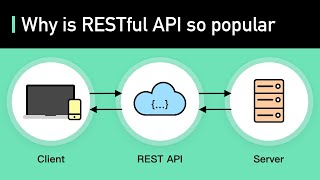
RESTful APIs are popular, easy to implement, and built on HTTP methods, powering most web services like Twitter and YouTube, but they are not ideal for real-time data or highly connected data models.
Choosing the right API architecture style depends on your specific requirements, balancing factors like security, complexity, and real-time needs.
Study Flashcards (5)
What is the primary role of APIs?
easy
Click to reveal answer
What is the primary role of APIs?
APIs act as bridges, allowing distinct software components to communicate and interact, enabling data exchange, function calls, and integration.
00:12
Which API style is commonly used in financial services and why?
medium
Click to reveal answer
Which API style is commonly used in financial services and why?
SOAP is used in financial services and payment gateways because it offers security and reliability.
00:41
What are the drawbacks of SOAP for lightweight applications?
medium
Click to reveal answer
What are the drawbacks of SOAP for lightweight applications?
SOAP is complex and verbose, making it overkill for lightweight mobile apps or quick prototypes.
00:41
What are RESTful APIs built on?
easy
Click to reveal answer
What are RESTful APIs built on?
RESTful APIs are built on top of HTTP methods.
00:55
When is REST not the best fit?
medium
Click to reveal answer
When is REST not the best fit?
REST is not the best fit when you need real-time data or operate with a highly connected data model.
01:09
💡 Key Takeaways
API Calls Are Ubiquitous
Sets the stage by quantifying the scale of API usage, emphasizing the importance of understanding architecture styles.
SOAP's Niche
Highlights SOAP's strength in security-critical domains, guiding developers on when to choose it.
00:29REST's Dominance
Explains why REST is the default choice for most web services, making it essential knowledge for developers.
00:55Full Transcript
[00:00] With billions of API calls made every day, understanding API architecture styles had never been more important. In this video, we take a closer look at these styles. They are the backbone of our interconnected digital world.
[00:12] APIs, or Application Programming Interfaces, play a pivotal role in modern software development. They act as bridges, allowing distinct software components to communicate and interact. They are responsible for data exchange, function calls, and overall integration between different software systems.
[00:29] To facilitate these operations, there exist several architectural styles, each with its own design philosophy and use cases. First, we have SOAP. It's a veteran in the field, mature, comprehensive, and XML-based.
[00:41] SOAP is heavily used in financial services and payment gateways, where security and reliability are key. However, if you are working on a lightweight mobile app or a quick prototype, SOAP might be overkill. It is complex and verbose.
[00:55] Then there's RESTful APIs. They are like the internet backbone, popular and easy to implement. It's built on top of the HTTP methods. Most of the web services you interact with daily, like Twitter or YouTube, are powered by RESTful API. But if you need
[01:09] real-time data or operate with a highly connected data model, REST might not be the best fit.