
How Tuca and Bertie Nails a BDSM Scene
48sThis scene realistically depicts a boundary violation in BDSM, which is rarely handled accurately in media, sparking discussion.
▶ Play Clip"Delivers exactly what the title promises: a thoughtful analysis of Tuca and Bertie and its themes of interdependence and communication."
This video analyzes a sex scene from the Netflix animated show 'Tuca and Bertie' to illustrate how such scenes can serve narrative purposes like characterization, theme, and plot advancement, in stark contrast to the purposeless sex scenes in 'Fifty Shades of Grey'. The scene in question explores boundaries, communication, and self-discovery within a relationship, using intimacy as a narrative device.
The sex scenes in Fifty Shades exist in a 'bubble space' that can be excised without affecting plot, theme, or character. They are repetitive and lack aesthetic value.
Purpose includes characterization, world building, theme, plot, and even pacing or aesthetic pleasure. 'Fun is an acceptable aesthetic goal.'
Bertie feels her sex life with Speckle is routine. She suggests roleplay with him ordering her around, but ignores his suggestion of a safeword. The roleplay triggers a negative reaction when Speckle calls her a 'bad bird'.
Speckle crosses Bertie's limits not out of malice but because Bertie herself doesn't know her own boundaries. The scene highlights the difficulty of communicating unexamined limits.
The season's thesis: we often don't know our boundaries until we hit them. This applies to sex, family, friends, and relationships.
The 90-second scene efficiently touches on complex relationship dynamics that would be difficult to convey without the vulnerability inherent in a sex scene.
Tuca and Bertie effectively shows the difference between consensual power dynamics and abuse, something Fifty Shades failed to do despite attempting to address similar themes.
The show explores how relationships require compromise and communication, and that sometimes needs diverge, leading to difficult decisions.
The video argues that the Tuca and Bertie sex scene exemplifies how intimacy can be used for profound storytelling about boundaries, self-knowledge, and relationship dynamics, in stark contrast to the empty scenes in Fifty Shades.
What is the main criticism of sex scenes in Fifty Shades as described in the video?
They exist in a 'bubble space', are repetitive, overly long, and can be excised without affecting plot, theme, or character.
00:41
According to the video, what are some narrative purposes a sex scene can serve?
Characterization, world building, theme, plot, pacing, and aesthetic pleasure.
01:11
Why does Bertie ignore Speckle's suggestion of a safeword?
She wants to look cool and strong.
03:00
What triggers Bertie's negative reaction during the roleplay?
Speckle calls her a 'bad bird'.
03:29
What is the thesis statement that underpins the season?
We don't often know what our boundaries are until we hit them.
05:06
According to the video, how long is the Tuca and Bertie sex scene?
Ninety seconds.
06:45
What does the video claim Tuca and Bertie manages to do that Fifty Shades failed to do?
Effectively demonstrate the difference between consensual power dynamics and abuse.
08:27
Crossing boundaries unknowingly
Highlights the complex idea that boundaries can be crossed not out of malice but because individuals themselves are unaware of their own limits, a nuanced take on consent and communication.
03:57Thesis of the season
Central theme that we only discover boundaries by hitting them, applicable beyond sex to all areas of life.
05:06Efficiency of intimacy in storytelling
Demonstrates how a brief sex scene can convey deep relationship dynamics more efficiently than other narrative methods.
07:01Contrast with Fifty Shades
Provides clear distinction between healthy BDSM dynamics and abuse, a lesson Fifty Shades failed to deliver.
08:27[00:00] I want to talk about Tuca and Bertie, the animated Netflix show, and how it uses a sex scene to do everything that Fifty Shades wishes it could have done, but first I’m going to just shove in a super short lukewarm defence of gratuitous sex scenes because I don’t
[00:14] want to give the impression that this is, like, the only correct way to do things. I have spent a prety substantial amount of time talking about the fifty shades franchise, but in all that time I’ve not really spent much of it discussing most of the sex scenes
[00:28] A big reason for that is that with few exceptions, the scenes don’t really do anything. This is not a new criticism, of course, plenty of people have pointed out that the Fifty
[00:41] Shades sex scenes largely exist in bubble space. They are scenes that can be pretty cleanly excised for different markets without having They just don’t have a lot of purpose.
[00:57] Now, this is probably something you’ve heard before, but let’s actually dig into that for a second: what gives a sex scene “purpose”? I’m going to argue, however briefly, a much more permissive interpretation of this.
[01:11] Purpose is a narrative construct and exists in that context. It is characterization, it is world building, it is theme, it is plot, but it’s also pacing Looking good and breaking up the action or drama for a couple minutes as a narrative
[01:29] Not every scene in every movie needs to be deep to justify its existence. Fun is an acceptable aesthetic goal.
[01:41] Where Fifty Shades ends up really falling flat is that the sex scenes are not only isolated from plot and theme and character, they’re also repetitive, overly long, not particularly Basically the nominal value as aesthetic or pacing are undercut by not having a good aesthetic
[02:00] Okay, so let’s talk about a sex scene that’s the complete opposite of all of that. Tuca and Bertie is a 2019 Netflix original animated sitcom created by illustrator, writer,
[02:13] The series revolves around the titular characters Tuca and Bertie as they navigate the complexities Tuca is a fun loving, carefree, directionless catastrophe living off her rich aunt’s goodwill
[02:26] while dealing with hidden pain and trauma, and Bertie is a nervous, career-minded data analyst and aspiring baker dealing with hidden pain and trauma. The scene I want to focus on comes from the third episode, The Deli Guy.
[02:41] Since her long term boyfriend Speckle moved in with her, Bertie feels like their sex life has grown routine and uninteresting, which she catasrophizes as the seed of a chain reaction Parallel to this Bertie has been developing a sexual interest in Pastry Pete, an authoritative,
[03:00] To spice things up she suggests they try something new. “What if you, I don’t know, ordered me around?” Speckle suggests a safeword, Bertie brushes the suggestion off because she wants to look
[03:15] cool and strong, and the roleplay begins. “Maybe something like: bend over you little tart!” At first things are going well but they quickly take a turn for the worse after Speckle calls
[03:29] Bertie a “bad bird” triggering an intensely negative reaction. As Bertie breaks down, Speckle uses his warm potato safe word to end things, and the two of them agree to just go with the usual for the night.
[03:43] This scene is brilliant. While this specific interaction never comes up again in the season, the characters never try again or really talk about what it means, the themes underlying this scene form a thesis
[03:57] Speckle crosses Bertie’s limits, pushes her boundaries, but doesn’t do so out of He crosses those lines because he doesn’t know they’re there, and he doesn’t know
[04:12] where Bertie’s lines are because Bertie doesn’t know where Bertie’s lines are. What the hell?” And it’s important to emphasize that these lines aren’t cleanly drawn.
[04:26] When Speckle calls Bertie a tart and starts spanking her, she’s super into it. What Bertie doesn’t understand about herself is that she likes the idea of submission but
[04:38] only in the context of validation and ends up confronting that about herself the hard “But I’m a good bird” Speckle wants to respect Bertie’s boundaries, but he can’t do that if she doesn’t know
[04:53] This, then, is the thesis statement that underpins the season, that we don't often know what our boundaries are until we hit them, whether it be in matters of sex, family, friends,
[05:06] Over the course of the season all the characters confront this realization, that they need to get to know themselves better so that they can actually communicate their wants and needs
[05:18] As the season goes on the stakes of these conflicts escalate. Tuca needs to confront her history of substance abuse and her toxic relationship with her Bertie needs to confront the ways childhood abuse has echoed through her life.
[05:34] Speckle comes face to face with the possibility that no matter how much he loves her, his emotional needs, where he wants his life to go, might be incompatible with staying together The show does a really fantastic job of getting into the chaotic mess of being an adult and
[05:52] the give and take required to navigate relationships where both people are willing participants who have their own complicated wants and needs, where some boundaries are big and obvious
[06:04] Sometimes, between people, those needs line up, and sometimes they’re mutually exclusive, and maybe we don’t even entirely understand them ourselves.
[06:17] All of us need to compromise and in turn ask others to compromise for us. Navigating that space between ourselves is not a clean process, and may in fact be deeply
[06:30] There are things we’re willing to compromise on because it will make someone else happy, and making them happy will make use happier than keeping the thing we compromised, and there are lines that we have to ask others to never cross, spaces that we have to ask
[06:45] And the worst part is that we may not even know where those lines and spaces are until it’s too late and we’ve stumbled into them by accident. All of this Tuca and Bertie manages to touch on in one ninety second sex scene.
[07:01] And honestly, I don’t think you could do the same this efficiently without that aspect, without it being a sex scene, and without the vulnerability that represents. See, while I will defend the gratuitous and trivial for indulging in aesthetic satiation
[07:20] above metaphorical pursuits, this type of interaction, one that doesn’t just have sex as the backdrop for things to happen in front of, but uses the dynamics of intimacy
[07:32] for their intrinsic qualities, it is exemplary storytelling. Bertie’s relationship with her own sexuality, the frame of power dynamics, and the specific
[07:45] boundary of being punished in that space, if you were to de-sex this scene the meaning This scene takes on heavy implications in later episodes, when Bertie begins working
[07:58] with Pastry Pete who forces her into an uncomfortable situation with clear sexual undertones, a moment that exploits Bertie’s own inconfidence in her boundaries, which spirals into Bertie
[08:10] To throw this back to Fifty Shades one last time, taken as a whole this effectively demonstrates the difference between consenting adults exploring power dynamics and their own wants and needs,
[08:27] and abuse, in a way that Fifty Shades never really managed to do, even when it tried. She does want him to be in charge, but in the vein of a Victorian bodice ripper, to
[08:43] sweep her off her feet with big, melodramatic declarations, to be adored. Late in the season Speckle and Bertie toy with the idea of buying a house and moving
[08:56] Bertie at one point has a major meltdown and disappears for several days out of town, during which Speckle can’t get ahold of her because she refuses to answer his calls and then loses
[09:11] Speckle then buys a fixer upper house when a sudden opportunity presents itself. While he thought that she would be onboard with this spontaneous move, the stress of her vanishing and going incommunicado turns it into an argument.
[09:28] Sometimes I need you to be my rock.” Speckle needs to confront both Bertie and himself and admit that while he hoped it would
[09:41] make her happy, he wants to move on with his life. He hopes that she’ll come with him, but if she can’t, if their needs have diverged, then it’ll be sad, but this is what he needs to move forward.
[09:56] Managing relationships, navigating compromises, it’s a lot of work, and it is not easy but, We need that human contact, we need those support networks, flawed and human as they
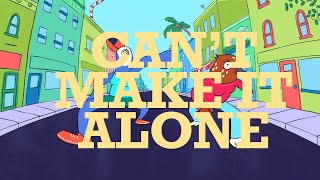
[10:12] may be, because we can’t make it alone.



⚡ Saved you 0h 10m reading this? Transcribe any YouTube video for free — no signup needed.