

Noob vs Pro: Kimi K3 Market Crash Explained
44sThe noob vs pro breakdown contrasts simplistic and nuanced views, sparking debate on AI regulation and market impact.
▶ Play Clip"Title is slightly dramatic but the video genuinely explains why Kimi K3 isn't a market reset, delivering on its promise."
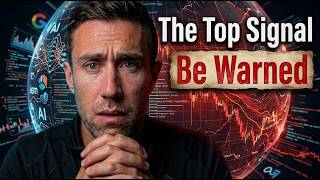
This video analyzes the impact of the Kimi K3 AI model on semiconductor stocks, debunking the 'noob' narrative that it signals a market crash. The presenter argues that Kimi K3's efficiencies, achieved partly through distillation from American models like Claude, actually enable better AI models, which drives more usage and is ultimately bullish for hardware stocks. The real risk is when model improvement stalls, not from new competitors.
The video uses a 'nub vs pro' style to analyze Kimi K3's impact on semiconductor stocks, distinguishing between superficial and nuanced understanding.
US semiconductor stocks briefly entered a bear market, down over 20% from highs, with the 3x leveraged version nearly 50% off its all-time high.
The analysis covers five key components: the original claim about regulation, distillation evidence, open weight vs open source, impact on hardware stocks, and IPO motivations.
Anthropic documented 3.4 million Claude exchanges extracted via fraudulent accounts. Kimi K3 frequently identifies itself as Claude 4.5, and K2 was 82.7% similar to Claude Sonnet 4.5.
Moonshot AI introduced the Muon Clip optimizer for stable training and used DeepSeek's mixture of experts strategy, firing only 3% of parameters per prompt.
Open weight releases model weights but not the training recipe, unlike open source. This allows fine-tuning while keeping proprietary methods secret.
Kimi K3's efficiency innovations (delta attention) improve model quality, leading to more usage, which is bullish for AI hardware stocks. The real danger is when model improvement stalls.
Companies like Anthropic and Moonshot rush to IPO to raise capital for continued R&D, not because they are at their peak. Model value decays over time, requiring constant investment.
Kimi K3 is not a market reset; it introduces genuine efficiencies that can improve AI models and drive more usage, which is positive for hardware stocks. The biggest risk is when model improvement plateaus, not from new competitors.
What is the 'noob take' on Kimi K3's breakthrough?
That regulating American companies like OpenAI enables China to come from behind with AI breakthroughs.
01:41
How many Claude exchanges did Anthropic document as extracted through fraudulent accounts?
3.4 million.
02:54
What percentage similarity did Kimi K2 have to Claude Sonnet 4.5 according to independent studies?
82.7%.
04:05
What is the Muon Clip optimizer used for?
To make training more stable by preventing LLMs from crashing out (spikes).
07:30
What is the difference between open source and open weight?
Open source gives everything including training recipe; open weight only gives model weights for fine-tuning.
10:42
What is delta attention (Kimi Linear)?
A method where the LLM only pays attention to what changed (delta) instead of storing everything, reducing memory demands.
15:28
According to the pro take, what is the real danger for AI hardware stocks?
When model improvement stalls and the S-curve hits, not from new competitors like Kimi.
19:54
Why are AI companies rushing to IPO according to the pro take?
To raise capital to keep succeeding and stay relevant, not because they are at their peak.
20:40
Distillation Evidence
Provides concrete evidence that Kimi likely copied Claude, challenging the narrative of Chinese innovation.
02:40Kimi's Own Innovations
Acknowledges that Kimi has genuine innovations like Muon Clip, adding nuance to the copycat claim.
07:01Open Weight vs Open Source
Clarifies a common misconception that open weight equals open source, which has implications for monetization.
10:27Efficiency Enables Better Models
Key insight that efficiency gains lead to better models, which drive usage, not just Jevons paradox.
17:20Real Risk: Model Improvement Stall
Identifies the true risk for AI stocks: when models stop improving, not from competition.
19:54[00:01] totally different. We're going to do a nub versus pro style breakdown of what's smashing semiconductor stocks, especially talking about Kimmy K3. Everything that you need to know about the truth of actually what's going on
[00:13] and how it affects your money in this video. And shout out to everybody who went green on the triple Q's this morning in our alpha report. We thought we would go from negative one to positive. Boom. We just went positive on
[00:27] the triple Q's. Let's go. If you want those trading signals, make sure to join we've got a coupon code expiring tomorrow night. Go check it out at mec.com. US semiconductor stocks briefly
[00:40] entered a bare market, and that bare market could continue. A lot of this has to do with Kimmy. But first, look at the charts yourself. When you look at the Philadelphia semiconductor index, you could see it's down 15% at the time of
[00:56] this recording, but it's extended into bare market being down more than 20%. bare market being down more than 20%. The 3x leveraged version today still The 3x leveraged version today still sits nearly 50% off of its all-time
[01:10] highs. Now, this isn't a video to talk about the dangers of leverage. It's a video to talk about what Kimmy actually means. And there are five really important components. And I think when we understand these five different
[01:25] components, we'll have a much better picture of what does this really mean for large language models and investing around hardware. So let's take this easy and let's break through these one step at a time. Number one, the original
[01:41] claim that comes after this sort of Kimmy K3 breakthrough is that's it. And this is what I call the noob take. Kimmy K3 evidences that if we regulate
[01:55] American companies like OpenAI or Claude, we end up enabling countries like China to come up from behind with AI breakthroughs. They come out of
[02:07] nowhere and this is how we end up losing to China. Now, that's probably pretty self-serving of the venture capitalists who don't like any kind of regulation. regulation or not. It's simply to say this is what in my opinion the noobs are
[02:24] saying. But the pro looks at this and says this didn't happen because of regulation. What happened here actually happened because of distillation. And that's only one of our five components of this video. So, let's just
[02:40] the way. You may have heard it before, but here's my take on it, and then we're going to hit the other four items. See, in my opinion, the pro looks and says there is plenty of credible evidence that Moonshot AI basically copied
[02:54] Claude. Anthropic itself documented over 3.4 4 million clawed exchanges extracted through fraudulent accounts, IP addresses, metadata, and they basically were able to match up the behaviors of Moonshot employees and their staff
[03:09] profiles with exactly what was being extracted from Claude. So, you kind of had a bunch of people taking Claude files and just putting them in a copy machine over and over again. Now, that's really oversimplifying. What really
[03:24] happened is they targeted Agentic Reasoning. They targeted tool use. They targeted coding, which is probably the most profitable uh business for these LLMs to be in. They targeted computer vision. And these were all the areas
[03:37] where Kimmy K3 scored the highest. Now, that doesn't mean that Kimmy only copied Claude because Kimmy in some areas is actually outperforming. And there's a to talk about the other four components that really matter here. But we can't
[03:51] start this Kimmy information out or this argument out without addressing the fact that Redwood research did find that K3 literally frequently identifies itself as Claude 4.5 disproportionately often. They said there have also been
[04:05] independent studies that found that Kimmy K2 the older model was 82.7% Kimmy K2 the older model was 82.7% similar to Claude Sonnet 4.5. Now, what's actually really interesting about that is you would expect that like
[04:20] Claude Opus is pretty similar to Claude Sonnet, you know, because they're just sort of like evolutions of each other. You would expect them to be similar, but the Arziv study actually found that Kimmy K2 was more similar to Sonnet than
[04:36] other Claude models were similar to Sonnet, which is basically a way of saying they've copied Claude in the past. They're probably copying Claude past. They're probably copying Claude today. So, point number one, basically,
[04:54] when it comes to Kimmy, the noob says, "We let China win because we tried to regulate AI. Now, they've got a better openweight model than what we have in haven't even released the weights yet and it's not open source. It's open
[05:09] weight. It's different. They win, we lose because we tried to regulate them. The pro says, "No, Kimmy basically copied the crap out of American companies with K2, and they probably did a lot of the same with K3.
[05:26] It calls itself Claw. They almost certainly used our American post-training data." And so, while it's not entirely a clawed copy, there is no doubt that this is actually a case where a Chinese AI looked at our stuff as if
[05:44] they're in an AP exam and said, "Huh, I showed up to this exam late. Let me just uh quickly copy all the answers off this other smart kid and I'll do the last 5% myself to pretend like I did something." Another analogy you could think of is
[06:00] just took some illegal drugs and to catch up on the horse race. They're all still racing, but somebody got a pretty unfair boost. And let's just say this is kind of China's MMO. If we spend
[06:15] $10 billion doing something, China often comes around and says, "We'll do the same thing a year later for 1% of the cost. We'll do it for $100 million." >> That's sort of the nature of how China has historically always caught up to
[06:29] what American innovation is. They steal and copy and then they replicate for and copy and then they replicate for cheaper. But that is not fair because obviously the amount of expense that went into figuring out what works isn't
[06:45] born by the Chinese companies. It's borne by American companies and American investors. And that's why this Kimmy moment, point number one, isn't as great of a deal as people are making it out to be. Now, point number two, in fairness,
[07:01] Moonshot is not a dumb kid. It's not like some stupid idiot just copied Claude and it's all copycat. That's not what we're saying here. So, to be very clear, a noob hears what I just said and says, "Well, so Kimmy is just literally
[07:17] a copy of Cloud is what you're saying." No, there's actually real work that they've done. And so this is where the pro goes in and says, "Look, they've actually got some good revolutionary ideas that the entire industry can use."
[07:30] For example, they use the Muan clip optimizer. This is basically a fancy way to help make training more stable. It's kind of like like I like to use this analogy. Imagine somebody throws you a newspaper written in Spanish and you
[07:45] don't know how to speak Spanish and you crash out because there's a lot to study here. Uh LLMs when they get trained, they can tend to crash out and they call them spikes really. And I'm going to oversimplify this, okay? But they can
[08:00] kind of go down the wrong path and kind of screw up their training data. Imagine now instead you got Rosetta Stone. We're not even at the Dualingo level yet, right? That's spaced repetition. That's pretty good. Now, we're like at Rosetta
[08:15] Stone where we're going to give you this newspaper in a kind of cleaner way to help you learn, keeping you calibrated without you freaking out. They did innovate this, right? That's Muan Clip. They've done a great job with this for
[08:28] helping train LLMs. So, they do deserve some credit. Like, they're not a bad lab. They're doing good things just like Anthropic is doing stuff that is beneficial for LLMs and so is GPT and so is Gemini and Grock somewhere as well.
[08:43] They also used the strategy that Deepseek came up with which was the Deepseek came up with which was the mixture of experts model or strategy which is basically only firing a portion of like one trillion parameter models
[08:55] activating just like 3% at a time of a model to keep the results clear and more efficient. When I say clearer, you actually can get more accurate information when you're firing smaller portions of a model, only the ones that
[09:09] you actually need. You get less noise. So, they did actually build good strategies for developing LLMs. And so, we don't want to just say that Kimmy is just a copycat. We want to be very clear
[09:25] here. The noob says, "All right, that's it. I've heard enough. Kimmy AI is just a copy." But the pro knows that they've actually done good things as well. Number one, yes, they did copy Claude really well. That is a bad thing,
[09:42] probably at least. Then they did copy Deepseek's mixture of expert strategy really well, compressing how much of an LLM turns on for each prompt. Okay. But LLM turns on for each prompt. Okay. But then they did also add some sugar and,
[09:56] salt and pepper to the top. and they came up with the Muan clip engine to make training LLMs more efficient. So, we can't say that Kimmy is just a dumb copycat or a stupid student who missed that first half of school and they
[10:12] copied somebody else to catch up. They're actually a smart kid who is probably copying the crap out of American models, but is actually adding its own value after being a bad student and copycatting. [laughter] Right? So,
[10:27] as with everything, there's more nuance. And this is where we get to point number three. You have to know the difference between open source and open weight because this is where we actually get into monetization and our favorite
[10:42] investing and money. See, the noob says that moonshot releasing K3's weight openly makes it an open- source model just like Linux where anybody can build on it freely. The pro says, "Hold on,
[10:57] not so fast." Open source means you get everything. Model weights, the training recipe. Everybody can reproduce this from scratch. This would literally be like getting all of Tesla's vehicle training data like the cameras, the
[11:11] people sitting in the car, the accidents, the near misses, every single input from users so somebody else can rebuild Tesla full self-driving. That is rebuild Tesla full self-driving. That is technically open source. Open weight is
[11:25] technically open source. Open weight is very different. Open weight means, hey, you get full self-driving. You get Kimmy K3, the full LLM, the Tesla that drives itself. But you fine-tune the style of how you want it. Again, I'm
[11:39] oversimplifying, but it's essentially a way of saying, hey, how much do we want want to be? How deterministic do we want to be? Which is very useful because paper, you do not want to be creative. you want to be very accurate, which is
[11:52] different if you're telling a story. But if maybe you're just framing an idea for present a court case, you might turn up that creativity a little bit. And in doing so, you can adjust the weights for ultimately what it is your company does
[12:08] ultimately what it is your company does without telling others how you're putting your AI recipe together, which gives you some proprietary advantage because you're not giving all of your weights, which Mr.
[12:21] Palanteer Karp tells us is a big giveaway to companies like Anthropic because that's your protected information. You shouldn't have to give information. You shouldn't have to give up how you're tuning your LLMs for the
[12:35] software and legal and business and accounting or whatever. That should be proprietary information. And so that's another area where people are kind of excited about Kimmy. It's like, yeah, okay, fine. It's not open source, but
[12:50] open weight is kind of cool and they're giving away this for free, so it must be good, right? Well, this is where people who look at Well, this is where people who look at this say, "Sure, Kimmy is basically
[13:03] coming up from behind building this product to give it away to build a relationship with you. Now, once you have a relationship, you've got Kimmy installed, you're going to want Kimmy K4. You're going to want the new models.
[13:18] You're going to want the enterprise support, the fine-tuning, whatever Moonshot AI throws your direction." So, let's simplify this for a moment. The noob comes in and says, "Kimmy is open weight, meaning it's basically
[13:33] open- source. They have no profit motive. Wow, they're so good. US LLMs motive. Wow, they're so good. US LLMs like Anthropic and GPT are dead." The pro comes in and says, "Whoa, whoa, whoa, not so fast." They were the kid
[13:46] that showed up late. This is an advertising technique. They're literally you sign up for a membership in the future. And this is open weight, not tune it to your software and run it yourself, but when the next products
[14:02] come out or enterprise support comes out, they're going to profit. That is why they're pushing for an IPO just like why they're pushing for an IPO just like Anthropic is. So, did Kimmy really kill
[14:14] US LLMs? No. If anything, they just kind of No. If anything, they just kind of showed up, caught up, and added some [snorts] ideas and features to the LLM discussion. And the pro knows this,
[14:28] and the pro realizes that what they're doing is just trying to undercut US LLMs to gain market share and business. Totally reasonable. Now, we got to get to the money. And when I say reasonable, I say the giveaway part is reasonable,
[14:43] clear about that. We're not here endorsing Kimmy's copying their distillation. Okay. Point number four out of all of this. Himmy's K3 out of all of this. Himmy's K3 model crashing US semiconductor stocks.
[14:58] Deepseek trade 2.0. Basically, let's break this down. The noob says Kimmy K3 off hard just like Deepseek. The same trade, the same logic, nothing else needed. We need less compute. That's it. Semiconductor stocks like Nvidia and AMD
[15:14] are cooked. The pro looks at this different. The pro knows that DeepS was all about compute efficiency like using model of experts to fire a portion of the LLM rather than the whole model. K3 is a bit different.
[15:28] The pro realizes the difference. Kimmy also introduced something called Kimmy linear, also known as delta attention. Basically, in training or in a chat, instead of storing everything, the LLM
[15:42] just pays attention to the delta, which is a fancy word for what changed. This works as well. Like I said, in training, if you read a book, you don't need to need to read and study the information that has changed. That helps you train
[15:59] more efficiently. It's really important in training. It's really important in in training. It's really important in chats because standard memory works in such a way that if you double the context, you 4x the memory demanded. So
[16:13] your context window in a chat gets twice as big. You're 4xing the memory required. That gets expensive very fast. So Kimmy innovated with delta attention,
[16:25] which again is useful. So Kimmy is actually providing value to how AI actually providing value to how AI develop, which is cool. The danger is, you know, some people say, "Oh, well, you know, Deep Seek efficiency meant
[16:38] more usage." But that's not really what it meant. People say, "Oh, this is Jevon's paradox all over again. If costs come down, we're going to use more of it." I think those are related, but that's
[16:51] not actually what's going on. See, Deepseek efficiency didn't mean more usage. Deepseek's efficiency in mixture of experts model efficiency in mixture of experts model enabled better models. And when the
[17:06] models got better, more people used them. That's a different step. I actually think that's really important to consider. We should uh here let's erase the whiteboard for a moment and really drive that point home because
[17:20] this is probably one of the core takeaways of this video and what a lot takeaways of this video and what a lot of people misunderstand. So to just say, of people misunderstand. So to just say, hey, something is more efficient,
[17:33] therefore we're going to use uh more of it. Okay, that misses what's actually it. Okay, that misses what's actually going on. What's actually going on is efficiency is going up. The models as a result are able to get better. The
[17:49] maintain more contextual memory of a conversation and hallucinate less and that is leading usage to go up. In other words, a bad and efficient product does
[18:01] not see usage go up. A better product sees usage go up. So in other words, quality in my opinion is related to usage. As the quality goes
[18:14] that's great. But if the quality goes up, that leads to more usage and more breakthroughs. And so the point of this is to say that Kimmy breakthroughs about is to say that Kimmy breakthroughs about making models better enable LLMs. That's
[18:30] actually bullish for AI stocks and hardware in the near term. It means if learn from Kimmy how to do certain things more efficiently and as a result
[18:42] of that we can improve the quality of the models then more people are likely to use LMS for more things for more variety of tasks or more frequently and then what happens the AI trade actually keeps going now when the models stop
[18:59] getting better and compute hits a ceiling that's when the AI trade starts ceiling that's when the AI trade starts dying. And see, that's really important to know, AI trade keeps going as the models get
[19:14] better. It stalls when the models stall. better. It stalls when the models stall. So, put simply, the noob says Kimmy 3 launched killed hardware stocks. The noob also says, well, you know, I mean,
[19:28] if there's more efficiency, then then more people are going to use it. And so, you know, may maybe there's still an argument to be made for for AI stocks and hardware stocks, right? The pro is actually much wiser here. The pro says
[19:42] more efficiency at AI models like what DeepS brought us, like what Kimmy is bringing us. Actually enables better models. Better models equal more usage.
[19:54] More usage and better models equal the AI hardware stock rally can keep going. The danger to pay attention to is once model improvement peters out, when that Scurve hits and things start slowing down, that's when the AI stock trade
[20:11] actually is over. That's when the collapse comes. So, no, Kimmy releasing K3 doesn't collapse hardware stocks. They actually help hardware stocks because you're introducing more efficient tools and how we could
[20:25] actually run LLMs better. That's a good thing. That's good for hardware stocks, better, that's your red flag to pay attention to. Now, number five,
[20:40] attention to. Now, number five, Anthropic and the Moonshot IPO. The noob companies are rushing to IPO because they're at the top of their game. Moonshot over in China, Anthropic over here. This is really a victory lap and
[20:53] they want to go public because they're winning." The pro frames this a little bit differently. The pro says look the value of any model that we have today is not going to be the same value today as in 6 months. In other words, the value
[21:09] of a model that exists today, whether it's Fable or Opus 48, whatever you're using, decays over time because other technology gets better. Nobody's still technology gets better. Nobody's still excited about using chat GPT 3.5 when
[21:23] you could use substantially better models today. Remember what Mark Zuckerberg talked about in his recent earnings call for Meta? It's a loop. You have to keep spending to stay relevant on AI models. He's basically describing
[21:38] a treadmill. So yes, the incentive to IPO is monetization, but really what they're trying to do is build capital that they could use to keep succeeding, that they could use to keep succeeding, which is even more hardware spend. The
[21:53] big and and this is why stocks like the Miniax IPO, you know, were up 109% on intentionally underpriced for marketing hype. So, what's really important here is to remember that the noob basically buys the hottest AI IPO because it's
[22:09] hot. The pro then comes in and says, "Wait a second. What if this chick's average in two years? You know, a five out of 10 here. What's the value I'm willing to pay now if there's going to be some decay in the future?" The noob
[22:22] thinks Anthropic wants to just rush to an IPO because they're the winners and they will for win forever and the same for Moonshot. But really today the pro looks and says these companies are raising money to stay
[22:36] relevant. Once they stop being relevant because the models aren't getting better and if nobody else is improving models that is the biggest risk to our AI that is the biggest risk to our AI hardware stock sector that has an
[22:49] hardware stock sector that has an economicwide consequence. So let's streamline this to make sense of all of this. And yes, if you want more of my fundamental analysis, you could always join me over at meetke.com. We've got a
[23:02] meet me.com. You get lifetime access to it. But for now, let's break down what we just went through. There's almost no doubt that Kimmy is a copycat. But they also brought us some actual efficiencies.
[23:18] efficiencies. Muan Clip Optimizer, great. It's useful for LLMs. This is fantastic. In addition to that, their delta attention in training useful. These make us more efficient in AI
[23:35] and they enable models to get better. As models get better, AI stocks can still go up. Is Kimmy open source? No. Are they a
[23:47] charity case? No. They're playing a smart marketing strategy [music] to gain market share, but they're actually introducing true efficiencies that actually help the broader market expand and keep bringing us new models. The
[24:02] biggest risk is not a Kimmy moment. The biggest risk is actually that models biggest risk is actually that models stop getting better. And so with that, I know what you think in the comments down below. Why not advertise [music] these
[24:17] like nobody else knows about this. >> We'll we'll try a little advertising and >> Congratulations, man. You have [music] done so much. People love you. People >> Kevin Pra there, financial analyst and YouTuber. Meet Kevin. Always great to
[24:29] YouTuber. Meet Kevin. Always great to get your take.



⚡ Saved you 0h 24m reading this? Transcribe any YouTube video for free — no signup needed.