
The Worst Trading Advice Ever
45sChallenges common trading advice, sparking controversy and engagement from traders who have experienced stop-outs.
▶ Play Clip"The title is vague but the content delivers a concise, useful trading tip without fluff."
The video discusses a common trading mistake: entering a position at the same level where one would place a stop loss. It explains why this approach is flawed and offers a better strategy based on identifying invalidation levels and working backwards to find precise entries.
Traders often enter at the point where they would place a stop loss, leading to frequent stop-outs and frustration.
Entering at the stop level is dangerous because the stop should be where the trade is wrong, so entering there means the trade may already be invalid.
First identify where you are wrong (the invalidation level), then work backwards to find a disciplined entry as close to that level as possible while the setup remains valid.
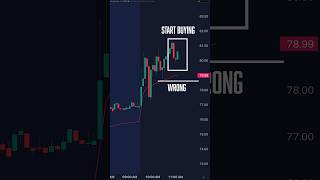
Enter on higher lows within an uptrend instead of chasing new highs, which provides clear risk and better reward-to-risk ratio.
Do not build a strategy around avoiding stop-outs; instead, focus on smart entries, proper structure, and knowing exactly where you are wrong.
The key takeaway is to prioritize precise entries based on structural invalidation levels rather than trying to avoid stop-outs, which leads to more consistent trading.
What is the common trading mistake described?
Entering at the same level where you would place a stop loss.
00:03
Why is entering at the stop level dangerous?
Because the stop is where the trade is wrong, so entering there may mean the trade is already invalid.
00:15
What is the correct approach to entry?
Identify where you are wrong first, then work backwards to find a disciplined entry as close to that level as possible while the setup remains valid.
00:28
Give an example of a better entry in an uptrend.
Entering on higher lows within an uptrend instead of chasing new highs.
00:42
What should a trading strategy be built around?
Smart entries, proper structure, and knowing exactly where you are wrong.
00:57
Common Mistake
Highlights a frequent error that frustrates many traders.
00:03Danger of Misunderstanding
Explains why the advice can be harmful if taken literally.
00:15Correct Approach
Provides a clear, actionable alternative strategy.
00:28Better Entry Example
Gives a concrete example that traders can apply immediately.
00:42Strategy Foundation
Summarizes the core principle for building a robust trading strategy.
00:57[00:03] to buy it at where you're going to put your stop loss. And then just watch how many times the market goes to your order. I get it. And especially in the beginning as a trader, getting whipped out of positions is frustrating. You
[00:15] cents, and then it rips in your direction. We've all been there. But advice like just enter where you should be getting stopped out can be dangerous if misunderstood. Because your stop should be placed where you are wrong in
[00:28] the trade. It should be the level where the setup breaks, where the structure changes, where the trade no longer makes sense. So if you're entering exactly where you should be stopping out, in theory, you're entering when the trade
[00:42] may no longer even be valid. That's backwards. Now, the better approach is first to identify where you're wrong. Then, work backwards and look for a disciplined, precise entry as close to that level as possible while the setup
[00:57] still remains intact. Like entering on a higher lows within an uptrend instead of chasing new highs. Why? Because that gives you clear risk. It gives you better reward relative to risk, and it keeps you entering while the trade still
[01:11] makes sense. Don't build your strategy around avoiding stop outs, all right? Build it around smart entries, proper structure, and knowing exactly where structure, and knowing exactly where you're wrong.
⚡ Saved you 0h 01m reading this? Transcribe any YouTube video for free — no signup needed.