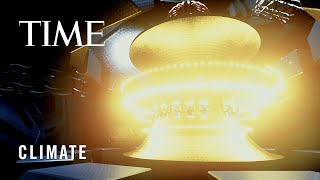

Limitless Clean Energy Is Closer Than You Think
45sThe opening hook about limitless clean energy sparks curiosity and hope, a universal appeal that drives shares.
▶ Play Clip"Title accurately reflects the content: the video discusses a breakthrough and the potential for fusion, though it remains cautious about timelines."
Nuclear fusion, the process that powers the sun, promises limitless clean energy with no emissions or radioactive waste. A major breakthrough occurred in 2022 when scientists achieved fusion ignition, producing more energy than consumed. However, commercial fusion faces challenges including time, cost, and geopolitical competition.
Nuclear fusion could provide limitless clean energy, ending dependence on fossil fuels.
Fusion fuses atomic nuclei, releasing energy, similar to bringing together two magnets with same polarity.
In 2022, scientists achieved fusion ignition, creating more energy than the process consumes.
Fission splits heavy elements and risks runaway reactions; fusion is safer with no meltdown risk.
Fusion has zero emissions, no radioactive waste, and produces only helium as byproduct.
Fusion could lower energy costs by 50% or more, impacting AI energy use and human possibilities.
Most optimistic estimates suggest commercial fusion by early 2030s, but rising energy demand may outpace it.
US, China, UK are investing in fusion; control of technology has implications for developing countries.
Policymakers and utilities may delay acceptance due to uncertainty, but climate urgency may not allow a 10-year wait.
Nuclear fusion is a high-risk, high-reward technology that could transform energy, economy, and global relations, but its success depends on overcoming technical, political, and timing challenges.
What is nuclear fusion?
The process of fusing atomic nuclei to release energy.
00:18
When did scientists achieve fusion ignition?
2022.
00:53
What is the main safety advantage of fusion over fission?
Fusion has no risk of a runaway reaction or nuclear meltdown.
01:22
What is the only byproduct of nuclear fusion?
Helium.
01:50
What is the most optimistic timeline for commercial fusion?
Early 2030s.
02:28
Which countries are investing heavily in fusion technology?
US, China, and UK.
02:46
Fusion Ignition Achieved
First time fusion produced more energy than consumed, a historic milestone.
00:53Clean and Safe
Fusion has zero emissions and no radioactive waste, only helium.
01:50Big Bet on the Future
Fusion could change energy, economy, and global relations if it pays off.
03:49[00:00] Imagine a world with limitless clean energy, no longer dependent on fossil fuels. If the promise of nuclear fusion is realized, that world might be closer than we imagine.
[00:18] So nuclear fusion is the process of fusing together different atomic nuclei, and in the process releasing energy and then capturing that energy. One way you might think about it is thinking about two magnets and trying to bring two positively charged ends of magnets together, and they really resist.
[00:35] Fusion is like doing that with atomic nuclei, and this process is happening all the time. It's happening in the sun. It's happening in other stars. Doing nuclear fusion for power here on Earth requires setting up conditions to allow that process to happen in a contained way, and so it's very challenging to do.
[00:53] It wasn until 2022 when scientists first hit what they call break or fusion ignition And this is the point that fusion is actually something that can work that can create more energy than it takes to do the process
[01:10] In nuclear fission, you're breaking apart a heavy element and then in that process releasing energy. Fission is really the way in which we use nuclear energy today.
[01:22] It's what we have in nuclear weapons. Fusion is much safer, and the reason for that is that it doesn't have any sort of risk of a runaway reaction. Whereas when you are doing fission and splitting apart elements, the reaction can trigger a chain of reactions,
[01:37] which if not controlled can lead to something like a nuclear meltdown, which we've seen, which is obviously very dangerous. From a climate perspective, fusion is clean.
[01:50] It has zero emissions. It also has no radioactive waste. The only byproduct that comes out of it is actually helium And once it set up will be relatively low cost So if you could lower the cost of energy by 50 maybe even more you might start seeing people think about new kinds of ways in which we might use energy
[02:12] And so there's a big conversation around AI and energy use right now. So it's a real game changer in the possibilities for humanity. The biggest challenge with fusion is that it will take time.
[02:28] Even the most optimistic estimates say maybe we could have commercial fusion by the early 2030s. Right now there is a huge rising demand for power and utility companies are building out a lot of natural gas, some renewables across the country and around the world.
[02:46] It's just possible that it kind of misses the boat. So there's a big question of who actually controls this technology. Right now there a sort of geopolitical arms race of sorts The U has a number of private companies trying to develop fusion technology China has sunk a lot of money into state companies and trying to make fusion at home
[03:10] Places like the U.K. are also spending money to try to encourage fusion development. That also has significant implications for developing countries that might want to adopt fusion, but then have to look to the U.S., to the U.K., to China.
[03:24] And then finally, I would also say there's a big question for policymakers, for utilities, for the folks in power, how soon will they accept fusion? They may want to wait a little bit to see, you know, does this plant really run?
[03:36] How long does it run? Are there any hiccups? How do people respond to it? And when we're thinking about the urgency of the climate challenge, that sort of 10-year potential waiting period might be too long.
[03:49] It's a big bet, but if it pays off, it's going to change not just energy systems, but the global economy, global relations, and really human society.
⚡ Saved you 0h 04m reading this? Transcribe any YouTube video for free — no signup needed.