

Why IPOs Disappeared: Public Companies Halved
50sReveals the shocking 50% drop in public companies, making investors question market health.
▶ Play Clip"Title is accurate and the interview directly addresses the decline in public companies and SEC efforts to reverse it."
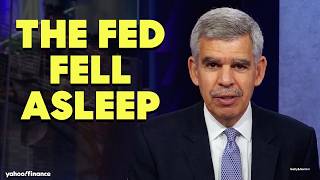
The video features an interview with the SEC Chair discussing the dramatic decline in the number of U.S. public companies and the agency's efforts to reverse this trend. It covers regulatory changes to modernize disclosure requirements, a controversial proposal to allow semiannual reporting, and explorations into 24/7 trading.
The number of public companies is about half of what it was 30 years ago. The Wilshire 5000 index now tracks around 3,500 companies, not 5,000.
The SEC Chair wants to make it cool to be a public company again, removing impediments that keep companies private and encouraging more IPOs.
The SEC has changed its attitude to welcome companies going public and is reviewing its rule book to modernize disclosure, focusing on materiality standards.
A proposal would allow companies with public float up to $2 billion to file only two years of financial results instead of three, under smaller reporting company status.
Comment letters worry about less transparency and investor protection. The SEC says over 90% of public companies will still be subject to full disclosure, and the JOBS Act set the framework.
Thurgood Marshall's 1976 Supreme Court decision defined disclosure obligations: what a reasonable investor would need to know to make an investment decision.
The SEC is exploring ways to give retail investors earlier access to IPOs, which currently favor insiders and investment bankers. The first step is increasing the number of IPOs.
The comment period closed on a rule allowing companies to report semiannually instead of quarterly. 99.5% of letters opposed it, per an Ohio State University tracker.
The SEC received over 200,000 comments. The Chair notes some opposition stems from misunderstanding—the proposal is optional and companies can still report quarterly.
A September 17 roundtable will examine the infrastructure, risks, and readiness for around-the-clock trading. The SEC is collecting ideas on liquidity and investor protections.
How much has the number of public companies shrunk compared to 30 years ago?
It's about half.
00:02
What does the Wilshire 5000 index actually represent today?
Not 5,000 companies, but closer to 3,500 listed companies.
00:14
What is the Supreme Court's standard for materiality?
What a reasonable investor would need to know to make an investment decision.
03:53
What is the proposal for companies with public float up to $2 billion?
They would qualify as smaller reporting companies and only file two years of historical financial results.
01:54
What percentage of comment letters opposed the semiannual reporting proposal?
99.5%.
07:25
What event is planned for September 17 to discuss market structure?
A roundtable to explore 24/7 trading infrastructure, risks, and readiness.
09:41
Who wrote the 1976 Supreme Court decision defining disclosure obligations?
Thurgood Marshall.
03:38
Public Companies Halved
The statistic that the Wilshire 5000 no longer tracks 5,000 companies underscores the scale of the IPO decline.
00:02Materiality Standard
Cites the Supreme Court's reasonable investor standard as the guiding principle for disclosure reform.
03:38Overwhelming Opposition
99.5% of comment letters oppose semiannual reporting, a striking signal for the SEC.
07:2524/7 Trading Debate
SEC is actively exploring around-the-clock trading, indicating major market structure changes ahead.
09:41[00:02] so we've had we are down actually the number of public companies is about half of what it was 30 years ago. And so even like the Wilshire 5000 which probably a lot of your viewers know is a very the
[00:14] broadest index out there. We should really call it the Wilshshire 3500 or something like that because there are not 5,000 public companies uh anymore. So, that's one thing that uh you know I've set out to try to change uh to make
[00:28] IPOs great again, you know, make it cool to be a public company again. And there's so many impediments uh to it that uh make uh companies uh stay
[00:40] private rather than venture out into the public markets. And it's good for public markets. And it's good for American investors to have a very robust way for them to participate in the economy and that's through public
[00:52] companies and investing that in a diversified way and then that's the shest way to to save and invest uh for for the future. So what we've uh tried to do is well first of all we've changed the the whole uh attitude here at the
[01:08] the the whole uh attitude here at the SEC to basically uh welcome uh companies uh to go public uh and then to we're taking steps through our rulemaking authority to look at our rule book and and see what needs modernization you
[01:23] know what is too much to get and to get back to the basic standard of materiality which is incumbent on companies to disclose material information. And so we should be asking for them to disclose material
[01:38] information rather than asking for them to disclose peripheral stuff that that >> And you've proposed a smattering of rules to try to reduce the regulatory burden and encourage companies to go public, encourage more IPOs in this
[01:54] market. And among those proposals, companies with public shares of up to$2 billion dollar would only be subject to that small company filing status, which means they only have to file two years of historical financial results instead
[02:09] of historical financial results instead of three no risk disclosures, According to some of the comment letters, there is concern that this is going to lead to less transparency, fewer investor protections and may not
[02:24] lead to more IPOs with this particular rule. What do you say to that? their comments. I mean, that's why uh we go out for uh notice of uh this proposed rule and then and then ask for comments and the law uh basically requires us to
[02:40] do that, which is great. So, um I I appreciate people taking the time to do that. But one thing, this is Congress and the Jobs Act basically laid out this structure uh for uh uh smaller companies and new companies. Um and and so we're
[02:55] taking that and and basically applying it uh you know a little bit more broadly. But one thing to remember is that more than 90% of uh you know the public companies will still be subject uh to uh you know the the normal uh
[03:12] rubric of of disclosure uh with all the things you mentioned there. And so we're we're basically looking at the other uh you know segment of uh the the market and to encourage more companies to come
[03:26] in where they have a longer uh glide path uh to have this this uh other sorts of alternatives. And and again the thing to remember about disclosure is that the
[03:38] securities laws require uh companies to disclose material information which means this is set out by Thood Marshall when he wrote for the court back in 1976 when he wrote for the court back in 1976 to define uh what the obligation is for
[03:53] companies to disclose. And that's what a reasonable investor, not you, not I, not uh, you know, take a poll of of people um, out there, but it's what a reasonable investor, the objective uh, sort of standard under law, what that
[04:08] investor would uh, need to know in order to uh, make an investment decision basically. So that's the Supreme Court's standard and that's what we want to hue to and make sure that our uh, demands for uh, for disclosure are constant with
[04:23] that. There's a hierarchy when it comes to IPOs, right? The insiders, the investment bankers, those who work for these companies, they they get the first bite of the apple, but the retail investor tends to get the leftovers. And
[04:37] so I'm wondering if the SEC is looking at a way to offer retail investors a piece of that higher up in the hierarchy earlier on, if you will. Well, so that this is an issue that's been beding the market now for a good well, as long as
[04:53] I've been uh around uh the securities markets about 40 years now or so. And so um uh and uh Bill Hamck was one of Hammer and Twist and Chuck Schwab and Hammer and Twist and Chuck Schwab and others have been trying to work on uh
[05:08] over the years a way to make access to IPOs more democratized, let's say. Um, so I think there's probably more work to be done and but again the the first step is to have more IPOs to do that. We've had a
[05:23] change that or >> we Yes, we are actively asking people and and looking at the structure of the market to see if there's something that we've done uh through rule making that has been an
[05:39] impediment to that. But ultimately uh yes there's an advantage potentially of investing uh you know early in in the initial offering and sometimes that gets uh those uh the access to that gets saved for um you know particular clients
[05:55] of the bankers or whatever but ultimately uh you know it's it's the long term that counts and sometimes you know when IPO comes out you know it tends to be rocky or it can be and it can go up or down. So, uh, you know,
[06:10] look at the long term, but we definitely are focused on trying to, uh, uh, make things more, um, you know, available to, uh, investors of all sorts. looking at more proposals to try to address companies staying private for
[06:26] longer so that Americans can partake in that early stage of growth. Are you able to offer us a bit of a preview? Well, we we have we've uh filed uh our our reggg flex agenda with uh the office of management and budget and that's being
[06:41] published. So, let's say that we have we have more uh you know on the uh on the uh the burner of the stove, let's say that uh that we'll be coming out with, but including uh executive compensation disclosure. We've already had a roundts
[06:56] about that and and other sorts of aspects of disclosure. And so I'm looking forward to being able to unveil that here in the next few months. So I think we'll I'm sure we'll get lots of good robust comments.
[07:09] >> Switching gears, the comment period has closed for your proposed rule to give companies the option to report financial statements twice a year instead of quarterly. Right. And the comments for this uh have been particularly harsh,
[07:25] especially from asset managers and retail investor advocacy groups. Uh there's a tracker that was created by an accounting professor at Ohio State University showed that 99.5% of the letters opposed this. So will you
[07:41] move forward with the proposal as is or are you looking to make changes based on the feedback? Well, you know, this the the the the law requires us to and this is a great thing about the uh about the process is to put out public notice that
[07:56] this is what we're thinking of doing. Here's the proposed rule. Please send us comments. So, we have 200 some odd thousand uh comments and they're still being processed by our secretar's office and um and so that's great. I I love
[08:12] people to be involved and to and to let have their voices heard and so we're listening obviously but you know one strain that uh comes through a lot of those letters is misunderstanding about
[08:25] what the um uh what the proposal is and you mentioned it there giving them the option it's optionality of reporting uh semiannually or quarterly um or more frequently if you want to frankly um and so what this proposal is is giving a
[08:41] company the option of doing it uh semiannually and then if you don't want semiannually and then if you don't want to do a full-blown 10 Q you can do uh to do a full-blown 10 Q you can do uh you can disclose uh quarterly uh uh
[08:54] earnings uh you can do uh you know earnings call you can do um guidance and that sort of thing uh uh quarterly uh financial statements so that's one aspect and so when I when people say oh that's this could be less transparent or
[09:10] whatnot Again, we're we have a one-sizefits-all rule right now. So, one-sizefits-all rule right now. So, what do I tell a pre-revenue biotech company that's gone public and is waiting for the FDA to say yay or nay uh
[09:24] to that particular product. So, they go for sometimes years without showing any um revenue. So, what am I supposed to tell them? You just have to file a 10Q anyway. This way that gives them a way to uh you know make it more uh
[09:41] responsible basically for their investors and and the the uh the the expenses that they have um you know with respect to their um uh how their >> You've announced you're going to have a roundt on September 17th to explore 247
[10:00] the infrastructure, the risks, the readiness. I know some of the exchanges have been preparing for that very prospect to be operational by year end. Are things on track. What is the earliest date we could see 247 trading
[10:17] in the United States? And would it actually be 7 days a week, 24 hours a day, or would it be perhaps 5 days a week, no weekends? >> Well, we're people are talking about 235, that sort of thing. and to have an
[10:30] hour to like bring down the system and and update the uh software and that sort of thing. So, we'll be exploring all of this, you know, and in effect right now we do have uh you know, 24-hour trading
[10:42] in in many uh in many types of products and and uh you know, securities and derivatives and that sort of thing because it is a global market, you know, around the world. somewhere some there's a stock exchange open and a lot of
[10:56] things are being uh traded um even in off hours. So there are a lot of questions to be answered including liquidity uh you know that will vary of course perhaps you know at 3 in the morning uh you know Eastern Standard
[11:11] >> right are they going to get the same quote protections and everything as somebody who's trading during normal market hours? Well, so we have to the market I have confidence that the market will balance this out. Um but uh but
[11:25] that's exactly what we want to talk about at these roundts and collect uh people's ideas. So obviously we're going to do this in a very responsible way. But there's a lot of pressure already I think on market participants to uh
[11:37] expand the trading hours and that's will keep America competitive and our markets keep America competitive and our markets the best in the



⚡ Saved you 0h 11m reading this? Transcribe any YouTube video for free — no signup needed.