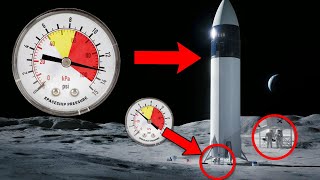

Why Moon Suits Won't Be Pressurized Like Earth
50sReveals a counterintuitive design choice for NASA's Artemis moon suits, sparking curiosity about spacesuit engineering.
▶ Play Clip"Title accurately reflects the core question; video delivers detailed explanation and test footage."
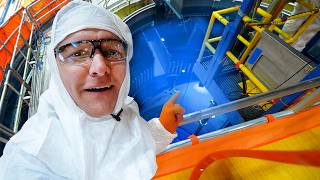
This video explores the critical decision NASA faces regarding spacesuit pressurization for the Artemis moon program. Host Destin Sandlin visits the Neutral Buoyancy Laboratory (NBL) to observe a test comparing suit pressures, and explains the trade-offs between pre-breathe time and fire hazard. The episode provides an in-depth look at how astronauts train for lunar surface EVAs underwater, including the physics of walking in 1/6 gravity and the meticulous process of trimming suits for neutral buoyancy.
NASA must decide the atmospheric pressure for the Artemis spacesuit, affecting pre-breathe time and fire risk.
Dom and Pat explain the NBL's role in simulating microgravity and lunar gravity for astronaut training.
Divers use a special nitrox blend to avoid decompression sickness, allowing long dives at the NBL.
Destin recalls his experience in a NASA spacesuit, noting the stiffness and difficulty of movement when pressurized.
In 1/6 gravity, inertia remains the same, making movement feel sluggish. Astronauts must lean more to accelerate.
To simulate lunar gravity underwater, divers align the center of gravity and center of buoyancy using weights and foam.
The test compares suit performance at 4.3 psi vs. 6.2 psi to reduce pre-breathe time for lunar EVAs.
Both experienced astronauts participate in the blind test, not knowing the suit pressure they are using.
Randy falls and struggles to get up, demonstrating the challenge of managing center of gravity in 1/6 gravity.
The optimal suit pressure balances pre-breathe time and fire hazard. Apollo used 5 psi; Artemis may vary.
NASA's choice of spacesuit pressure for Artemis involves a complex trade-off between minimizing pre-breathe time and managing fire risk. The NBL provides invaluable data to inform this decision, helping astronauts train for the unique physics of walking on the moon.
What is the primary purpose of the Neutral Buoyancy Laboratory (NBL)?
To simulate microgravity and lunar gravity for astronaut training and suit testing.
03:03
Why do NBL divers use a special nitrox blend?
To avoid decompression sickness and allow long dives without mandatory decompression stops.
11:08
What is the pressure of the current ISS spacesuit (EMU)?
4.3 psi.
36:03
What is pre-breathe time and why is it necessary?
Time spent breathing oxygen to purge nitrogen from the blood before a spacewalk to prevent decompression sickness.
37:04
How long is the pre-breathe process for ISS spacewalks?
Approximately 3 to 3.5 hours.
37:30
What are the two main trade-offs in choosing spacesuit pressure?
Pre-breathe time vs. fire hazard (oxygen-rich environment).
01:14:14
What was the atmospheric pressure inside the Apollo lunar lander?
Around 5 psi.
01:13:20
Why does walking on the moon feel sluggish despite lower gravity?
Inertia (mass) remains the same, so the same force produces less acceleration in 1/6 gravity.
22:53
How do divers simulate 1/6 gravity underwater?
By making the astronaut neutrally buoyant, then adding weights to create a net downward force equal to 1/6 of their weight.
27:40
What is the 'Valsalva device' in a spacesuit?
A device that allows astronauts to equalize ear pressure by pinching their nostrils.
51:12
Inertia on the Moon
Explains why lunar walking is sluggish despite low gravity, a key insight for suit design.
22:53CG and CB Alignment
Demonstrates the complex engineering required to simulate lunar gravity underwater.
27:40Astronaut Falling and Recovery
Shows real-time learning of lunar locomotion, highlighting the value of the NBL.
01:01:35Pressure Trade-off
Summarizes the central decision NASA faces, balancing pre-breathe time and fire risk.
01:11:59[00:02] This is me trying to figure something out underwater. also trying to figure something out underwater.
[00:38] and I want to try to explain why it's so important. Like, if you could design an entire moon program, you're going to take people However you take people to the moon, you're going to have to use a spacecraft.
[00:54] they're breathing oxygen so their bodies can stay alive. They'll touchdown. And then they'll get out and walk on the surface of the moon in a spacesuit, which also has oxygen in it.
[01:08] For the Apollo program, there was the A7L suit with a PLSS This device pressurized the spacesuit so One thing we don't think about very often
[01:21] is going from the spacecraft to the spacesuit. that NASA has to make for the architecture of Artemis. It put flags and footprints from humans
[01:36] Ultimately, though, the Apollo program ended. People are going to live on the moon. The fact that we got to do this is amazing.
[01:50] So what we're going to do today is we're going to go observe a government test that information to understand this big decision that NASA has to make.
[02:02] Engineers, divers, astronauts, test conductors. in this big decision that will affect the architecture of the Artemis program.
[02:14] Whatever. It's worth it. with you, and I want you to go on this journey with me. of being on the surface of the moon in a spacesuit.
[02:28] I'm going to show you footage I've kept for years I haven't shared. I'm excited to share it with you. buoyancy laboratory at Johnson Space center in Houston, Texas.
[02:49] to the Sonny Carter Training Facility, NASA's famous neutral buoyancy laboratory. in the facility where he introduced me to two very important people.
[03:03] He used to run the zero gravity program that I got to participate in as an undergraduate where he did all kinds He served as a fire chief.
[03:16] Yeah. How cool is that? He's served as a test subject for NASA countless times. He's currently the chief engineer at the neutral buoyancy lab because he's
[03:29] a diving instructor trainer and he also serves on the dive safety board. The second person they introduced me to was Pat Keller. thousands of people how to scuba dive in his off time.
[03:45] He's the guy that goes in and saves the pilot of the boat if they have a problem. what we need to know in order to even get in the pool with the astronauts.
[03:59] Okay, we're here at the neutral buoyancy lab and this is Pat. Yeah, that's the goal. What I do here is I run the maintenance
[04:12] I also safety dive, float dive, but that's my main job. Yeah, you're the one you're stuck with. [D] Okay. [P] Well, that's debatable,
[04:25] [D] Okay, that makes sense. And this is Dom. I'm chief engineer here at the facility, but I wear a couple of different hats. I'm also instructor trainer for diving and sit on our dive safety board.
[04:42] So I'm going to be talking a couple different things, different areas. so anything bad happens, I have to do the paperwork. [D] So, Dom and I met each other a long time ago.
[04:58] student flight opportunities program when I was. I really enjoyed that period of my career. Really big swimming pool. It's amazing.
[05:13] You can do specific simulations that you can't do anywhere else in the world. They have a very, very small pool, but it's nothing like the NBL. Yes, for our facility it is for our space program.
[05:30] There's one JAXA has in Japan, but by far and away, this is the most utilized and heaviest used one. You guys use divers and, well, I guess you are the diver. [P] One of them.
[05:49] [D] And so you guys can simulate zero gravity or other environments by attaching weights [Dom] We want you neutrally buoyant. We don't want you to.
[06:02] And that way, this is the only place you You still have weight inside that suit, but you can do the entire space station
[06:14] end to end, six hour run with you and your buddy out there. And I think we're going to talk about So now I got to get you on the bottom 1/6 g.
[06:28] And that's our team here that trains our [D] Air Force PJ's.. [Dom] The Pararescue. [Dom] Yeah. The navy divers and air force
[06:45] pararescue men do the nominal recovery of the crew, but our people here train them. as well as we also do aircraft water survival for our aviators and astronauts. under the water, on the bottom, all over, daylight conditions at night,
[07:02] So, yep, when you're outside space station, every 45 minutes, Right. So it's gonna be full on bright for 45
[07:14] So we turn the lights on and off. [D] So you mess with the photopic and scotopic vision and the astronauts.
[07:27] And we're probably going to talk about this a little bit later. Each environment is valid in some aspects and not others. We have water drag, so we don't do stuff that is high drag in there.
[07:40] It's an invalid. It's that end to end working together 3D kind of thing.
[07:52] It's not really, as you get back to your vision stuff, we're not doing lighting testing, evaluation like that, but we're giving them the operational sense. It's not doing soil studies here. It's underwater.
[08:05] physical reaction environment so you know how to operate. and you're having to manipulate your arms and stuff.
[08:17] [Dom] Okay, so what we're gonna do is we want you to get in the water with the crew tomorrow to be able to see what they're doing up close and really get a sense of the scale and everything else.
[08:31] To do that, we need to qualify you as a diver. we're gonna have Pat here as an instructor do an escorted dive for you. So your current recreational certifications with an escorted diver
[08:45] the difference between what we do here in a recreational dive. So we're going to get through this so you can get down to what you need to do.
[08:58] we have to understand some of the prerequisite information. This gets complicated. So the air we generally breathe is made up of several gasses.
[09:14] 21% oxygen with a tiny bit of argon, CO2, and some trace gasses. the further down you go, the higher the water pressure becomes.
[09:26] When the scuba diver breathes air to the pressure of the depth that the diver is at. That means that the deeper you go, the more nitrogen enters your bloodstream.
[09:41] in your blood, nerve cells, basically, all your tissues. If you then return to the surface, all that nitrogen has to work its way back Now, you've heard of this.
[09:54] You've heard of divers getting the bends if they surface too quickly, right? So divers are always working to stay on the correct side of the math so that they don't stay down too long and get too much nitrogen in their blood,
[10:06] to rupture out of their body really quickly, causing the bends. If I go down, the nitrogen will get In fact, I have to do what's called a safety stop.
[10:22] I'll come up to a certain depth and let that nitrogen work its way out of my body. I'm gonna watch the time, make sure that nitrogen gets to dissipate out. they have this cheat code that lets them stay down longer.
[10:37] They have more bottom time. It's called EAN, or but they played with the percentages of oxygen versus nitrogen. That's 32% oxygen, or 36% oxygen, instead of the normal 21% oxygen.
[10:56] It's a really interesting way to offset the nitrogen buildup in your blood. Now, at the NBL, they go even farther. They don't use normal nitrox that a professional diver would use.
[11:08] And the reason they do this is because So they've done all the math ahead of time, and they realized if we have this special nitrox that we dive in here
[11:23] want, and then they can come back up at any time. Long story short, the people at the neutral buoyancy lab, extremely smart. They develop this special nitrox blend so that people can dive for an extremely long
[11:39] period of time and come up safely, and they never have to worry about It's fascinating. My understanding is we dive with nitrox here, but it's a special kind of nitrox.
[11:51] out recreationally or industrially, because it's set up for the profile. suit, that right now is about four psi over ambient.
[12:05] So at the bottom, it's going to be the bottom pressure, plus four in for 6 hours. Well, I would be in decompression cycle at that point. well, 48ft equivalent, I'd be in decompression.
[12:21] But if I get too much oxygen, it becomes toxic, so I can't. There's no nitrogen in the system for the on orbit suit, but I can't do that in the water because you'll be toxic.
[12:35] so it splits that difference there so we can do that safely. knows a lot of things, but I finally gained enough,
[12:48] like self discipline, to quit asking questions so that we could [P] See, each subject has four divers on them. So you have eight divers, two subjects in the water.
[13:02] Is it four people per subject? [P] As you do, we hear them in the water because we have speakers. and everything the TC and the TD are saying in the water.
[13:17] So they can make requests to us, they can talk to us, we can hear things, So, yeah, you'll hear that. You can stay about 3ft away from them.
[13:31] But you can hear them as if I'm talking to you right now. instruction, it became clear to me that this is not a normal dive. These people are doing amazing things, nuances to what they do.
[13:46] So the fire hazards are different. All this stuff made it very clear to me I'm dealing with people who have been hand selected because of their unique
[14:03] temperament and their skills and their ability to react under pressure. So it's time to talk about spacesuits. I have a unique insight into what it feels like to be inside a spacesuit,
[14:18] because nine years ago, I actually got to wear a NASA spacesuit. footage now because I did it nine years ago. young man that wanted to apply to be an astronaut, and that's what I was doing.
[14:33] And so it didn't feel right to release this footage back then. I know what it feels like to be Just for the record, I want to let you know what I feel about this footage.
[14:47] It's odd looking at it because it reminds me of, like, what could have been. right there in the shot of every smarter, everyday video. It reminds me that NASA made the right call.
[15:02] The people that are astronauts right now are absolutely incredible. So I feel weird looking at this footage because it feels almost selfish. Like, man, I really wanted to do that, but that wasn't God's plan for me.
[15:14] And I just have comfort knowing that God had a different plan for my life. Now, if you think about it, on the International Space Station, they're not made for walking because
[15:31] the astronauts move around by grabbing handholds and moving with their arms. used on the moon, they do require boots that are made for walking.
[15:43] the older style, and I learned things by trying this Now, if you think about a spacesuit as a self contained spaceship,
[15:56] you have heat that your body is generating, and that has to go somewhere. On Earth, the heat dissipates through the air, but in space, it can't do that. So you have to wear this suit full of tubes that will dissipate the heat
[16:10] from your body by actually contacting your body and pulling the heat away. And so getting into the hard upper torso from the bottom was very difficult.
[16:25] There you go. Yeah, there you go.
[16:38] There you go. And it's a boy. Also, as you put the suit on and they put
[16:51] the helmet on, it was quite the moment, by the way, the first thing you realize when they pressurize the suit is that it feels like a balloon. as it pressurized, had a state that it wanted to be in, like at rest.
[17:06] As I closed my hand, I could feel my fingers having to work against the suit to close the hand, because it was like being on the inside So what that means is,
[17:20] the higher the pressure in the suit, the harder it would be to close your fingers. It's a fascinating feeling, and it was also very heavy. I found that the suit was very difficult to walk in, and I was kind of scared
[17:33] It was an interesting experience, because it helped me understand the things that Dominic was about to teach me. inside the suit and what's outside, that determines how stiff the balloon is.
[17:50] [Dom] So the current space station suit, which is a derivation of the shuttle suit, is 4.3 psi delta over whatever it is. If it's, you know, here,
[18:04] So it's going to feel and act the same way. These are all downgraded flight hardware, and they're sized for you.
[18:17] It is exactly the same delta pressure. Like I said, our environment here, the biggest thing is water drag. And so we don't do stuff where drag is in the equation, because that's not valid.
[18:30] [D] So are you going to do a higher pressure run tomorrow? [Dom] Tomorrow's a higher pressure run so the crew members can evaluate can. So that can they one, there's no bias on that, right.
[18:47] fatigue levels between this run and the next run they do, with Johnny Kim, and he was telling me that a senior astronaut,
[18:59] I think it was Chris, told him, don't fight the suit. [Dom] So the suit is designed with joints and with bearings.
[19:11] sized perfectly, it's going to be just a little bit of friction. What if you're fighting, like, if you want to reach out?
[19:23] Because there's a bearing here. there's a joint here, and then you want to come over because If I do this, I'm having to force all
[19:37] [D] Oh, so you literally find the path of least resistance. and where it's designed to move and where it's not, you move that way and then
[19:49] [D] Alright, it's time to talk about the sponsor of this video. So, number one, this room is never this clean. Number two, I am concerned about making
[20:04] Today. This video is sponsored by eight sleep. with on my own before they reached out to sponsor,
[20:16] I like to sleep more warm. And so I arrived at eight sleep and decided to invest in this technology. in the episode, I explained that there's this undergarment that astronauts wear
[20:29] Well, that's exactly what this is. You have these cooling tubes and liquid runs inside, and that liquid will keep
[20:42] So there's two elements to the eight sleep pod. and has the cooling and heating channels in it. that contains the water and does the heating and cooling.
[20:56] of really useful feedback on the quality of your sleep. The fact that I get a sleep score every day, it's made me mindful about my rest. It can measure when you're in deep sleep, light sleep, REM.
[21:13] and imagining, like, what is causing my heart rate to fall later than normal? Here's a flir image. Eightsleep. com smarter gets $200 off the pod.
[21:29] one cut in half so I can look at it because I'm a nerd? It's not like tubes. Weld it together.
[21:42] There's a seam down the middle for one side of the bed versus the other. You see that all the water runs through I would love to know how that works.
[21:58] No, that's a USB type interface there. That must be how it works. I did a, like a broad market analysis for the Sandlin family.
[22:13] My wife loves it. I love it. Even if now is not the time for you That would be great. So anyway, that's it.
[22:27] Okay, so we're talking about teaching modern astronauts how to walk across the surface of the moon. you think, well, the earth is one g and the moon is 1/6th g.
[22:41] on the surface of the moon, at least from an exertion standpoint. be that way, but it's actually quite complicated.
[22:53] Think about it. So your weight, yes, is one 6th as much, but your mass is the same, which means the inertia is the same. on the surface of the moon, and I really like the illustration that we use.
[23:08] I like the animation and it explains this problem in a very interesting way. If you think about a helicopter, it has to offset its own weight, right? then you have lift that's pulling it up at a certain amount to offset that, right.
[23:25] If you decide to translate forward, meaning you want to tilt the helicopter you still have a vertical component of lift that's going to offset that weight. component that will let you accelerate forward.
[23:41] in a spacecraft and your spacecraft has one 6th the weight of a helicopter, Think about it. If you have a very small thrust required
[23:55] in the same acceleration moving forward, it's not going to work because as you tilt acceleration is far lower because you're not thrusting as much.
[24:10] So in order to get the same acceleration in the horizontal direction, you would have to tilt the spacecraft over much farther than you would a helicopter. They considered a helicopter and a lunar.
[24:25] Vehicle of the same mass over earth in the helicopter. Horizontal component of acceleration would be approximately.
[24:39] Proportional to the tilt angle of the rotor. Definitely no drag and weight is only one 6th of Earth, the same amount of acceleration requires
[24:55] nearly six times the tilt angle that Neil Armstrong, pretty smart guy. different, walking on the moon is different, and it has to do with the fact that your inertia is the same, that the amount of force it takes to move
[25:10] It's a fascinating problem. of the moon, like right now, if my cg is right here, And when I walk, I lean forward just a little bit.
[25:27] that force into the ground, and you might have to lean a different amount. If I have to move my cg more in order to tilt forward and walk, I put my CG out over my feet, and so I have to catch up to it.
[25:42] of the Apollo astronauts, it's mismanagement of the CG. It's fascinating once you think about the physics of what's involved here. Clarke in 2001 a space Odyssey.
[25:58] sluggish than your weight would suggest, which is interesting because it means, directions, my inertia wants to keep going forward.
[26:10] watch a couple of the Apollo astronauts walk around and see the moment that they So this is a thing that the astronauts need to train for here on Earth
[26:24] [Astronauts speaking] They say give it a slight rotation clockwise as they're lifting out. It's just the same as it.
[26:40] Ah, rat. Give me a help.
[26:52] We just don't have. factors, it's like, wow, this is just physics.
[27:06] have to consider, because we're in the neutral buoyancy lab. In the neutral buoyancy lab, there is drag. But if we're going to have this simulate the fact that we are in 1/6th the weight
[27:25] Right. But you have to do that in a very special way that I didn't understand. And Dom does a great job of explaining how they do this.
[27:40] It's going to be buoyant. of mass is where it's going to be predicted for your flight unit. But I also have to co locate that with your center of buoyancy because
[27:53] Even though I'm 1/6th g weight. So my trick is to locate those two together.
[28:05] So that the center of buoyancy isn't a thing. [Dom] No orientation. It's not going to. [D] Is that what you're about to show me here?
[28:18] So aircraft, when we weigh and balance those, we put them on three jack stands and there's load cell in each one and it will give me a resultant axis. And then I tilt it 20 degrees and I get a second axis.
[28:33] Now I got to do that with you in a spacesuit. [Dom] So here are my three jack stands and my load cells.
[28:46] [Dom] Okay. And so I'm on three point And I'm going to stand in here and lock my suit in up here and hold on to those You'll be able to see this tomorrow. It'll be.
[29:00] Because this whole thing will rotate 20 degrees. But I'll unpin it and you'll see this whole thing will rotate that person in that spacesuit that day, 20 degrees.
[29:14] There's a little dive display underwater And he's going to move, or she is going to move the weights around until those line up.
[29:28] And in order to understand it, I kind of need to work it backwards. here, and we have the center of gravity of that astronaut right here. So that would create an imaginary gravity vector going straight down.
[29:42] forward, the gravity vector would still be pointing down. If you were to just go back like this, you can see that those two points intersect each other.
[29:57] Let's say that we have this scale set up that Dom tells us about. We've got some scale parts there in front of the astronaut, some behind. Here. So you can see it like this.
[30:12] We've got one back here, and we've got one here. If we were to place the astronaut in there and weigh things on this scale, let's say, for example, we have some weight here
[30:25] on this one right here, and we measure some other weight here. If you were to average out the force So you basically take the position times the weight, and then you average it all,
[30:41] But if you look at it, if we have more weight on this side, If we were to reverse it, we were to put more weight over here than Do you see that? So what's actually happening
[30:57] the big backpack, is you've got more weight in the back, load cells like this is you can only get one position for the center of gravity.
[31:09] You're only getting a line straight up and down. along that line, because it's kind of like a seesaw, right? When we tilt this thing forward, the same thing happens.
[31:23] And then we can, just like we did before, where those two lines intersect, we now know what the center of gravity of the astronaut is, which is fascinating. Now, when we take this thing and we put it down in the pool, we come up with another
[31:38] position, and this is called the CB, the center of buoyancy. of buoyancy is that it might not be where you want. And if that's the case, you have a problem because you have offset forces.
[31:52] I have another view of an astronaut from the front on here. Right. The CG, the is the weight of the astronaut there.
[32:05] And then the center of buoyancy, after getting on the tilty scale And the goal of that, of course, Now, let's say they're not lined up.
[32:19] Now, if you look at it, that's going to create this floaty force And if you think about that, you can kind of see how that would happen. be doing more work than over here, and it would not be a good run.
[32:37] So what you want is the divers to trim out the astronaut such that the center of buoyancy is at least aligned with the CG. Well, there's still a problem, right.
[32:50] going to be pulling up, and so it's going to be easier to stand, right. below, then your legs are going to want to flip over your head. that center of buoyancy right on top of the center of gravity?
[33:06] Now, the divers and the team running the test are pretty clever about this. They have all these weights in these conformal pockets around the astronaut. And what they can do is if they notice that the CG and the CB are not quite where
[33:19] they're supposed to be, what they can do is they can start moving these weights. And as long as it still equals out to one six, the weight, that'll move the CG, and they can do things all over the astronaut.
[33:33] You could even add foam blocks to make it float in certain places. So you can change the center of buoyancy until the CG and the CB are right on top of each other and the astronaut has a stable lunar run.
[33:46] I never would have thought about this. astronaut mechanism to determine the CG and the CB if you do it underwater. You have to infer that from the data.
[34:02] I never thought that you'd have to calculate the three dimensional And that would help you emulate a lunar run at the bottom of a swimming pool.
[34:15] I'm gonna call it the scale. [Dom] Okay. So this will be on the bottom of the pool tomorrow when you dive. But we'll take them down,
[34:30] Then we'll swim them over to here, plug them in, put the extra weights on, make sure they line up. [D] It's unclear where we are, but we're like, the pool is there.
[34:46] Back in the day, there's a big crane up there, and so I'm assuming you're going [Dom] Correct. And we only need it for the lunar runs.
[34:58] But it will be in before you show up tomorrow. So what Dom just showed us is extremely important, and we'll revisit that later.
[35:11] But we know we're at the NBL to run a test on spacesuits. So let's go learn about the specific test we're running today. What do you say? [A] Test conductor, yes.
[35:24] [A] I am an engineer, yes. By training. [D] So you're going to be running the test tomorrow that I'm going to be observing? And how long have you been planning this?
[35:39] [D] Just doing the paperwork for this one test. But, yeah, now we're executing the test, and it's very exciting.
[35:51] So what are you, what are your objectives? [A] Okay, this test is about characterizing
[36:03] On the space station, right now, the EMU spacesuit operates at 4.3 psi.
[36:15] We want to see what this spacesuit, what it would look like to operate at But right now, we're focused on this 6.2 number. [D] But I'm assuming, it sounds to me like if you operate at six point, what was it?
[36:33] that sounds like more oxygen, which sounds like a waste of resources. to do that, because it sounds like the suit is going to be inflated more,
[36:46] So why would you want to do this? And it all has to do with pre breathe time. you to get from the pressure that you're at in your space habitat or your vehicle
[37:04] to the pressure that you're going to be at in your space suit. And so, using the ISS as an example, the ISS is at 14. And the spacesuit is at 4.3 psi.
[37:18] with decompression sickness, going from a higher pressure to a lower And so getting to 4.3 psi takes time.
[37:30] Like, literally three, three and a half hours suited up. [A] They are, [D] or just in an airlock? Not in the suit.
[37:43] Part of it, they depress the entire volume of the quest airlock. And the crew lock, still not in the suit, to 10.2 psi.
[37:55] and they do about an hour of what's called in suit, light exercise. 15 minutes of rest and 15 minutes of light exercise, like moving their arms and legs.
[38:08] that entire process before they start to depressurize the airlock to even start their EVA is almost three and a half hours long.
[38:20] So, question, why? with oxygen or nitrogen in the blood, and the bends or, but, like, physiologically, why do they have to do that?
[38:32] As you go to higher pressures, the nitrogen is dissolved into your bloodstream at that pressure. And so if you decrease the pressure
[38:47] too fast, then those nitrogen bubbles, they can bubble and create these. There's a lot of bad things that can happen. pressure, you could get the bends just walking out
[39:04] So you have to first get. It's like decompressing when you're going up in altitude, so to speak, in a scuba. [A] It's all about the speed at which you decompress.
[39:20] at the bottom tells you how long it should take you to get to the top. [D] So by doing a higher pressure run in the suit, there's trade offs. I assume? [A] That's the goal.
[39:37] Have we done the math? [A] Well, so it all depends on what atmosphere your vehicle is designed for. It's a distance between what your vehicle's at and what your suit is at.
[39:53] And so you can reduce the pressure of your vehicle that the astronauts live at and keep the suit pressure the same about 4.3. And that lowers the gap and reduces the pre breathe time.
[40:07] the pressure of your suit, which also brings those closer together. in an ideal world, the pressure of the suit would equal
[40:20] the pressure of your space vehicle, and that would be the zero pre breathe scenario, where all you have to do is get in your spacesuit, do all your leak checks [D] I think in a science fiction environment, or, like, when you're reading.
[40:35] I'm just going to put my suit on, go outside. Like, astronauts go and do spacewalks And that in itself is one of the hardest things that they ever do.
[40:51] reset for, like, three, three and a half hours before that. So we want to minimize that pre breathe portion so that we can maximize their time doing a spacewalk in the spacesuit
[41:07] [D] Okay, so I'm assuming the suit was designed for a certain pressure. [A] So this will be what's called the XEMU.
[41:20] design suit that they've been working on for the last few years. So its pressure rate was rated to operate, I think, up to 8.2
[41:35] And so this is all within normal bounds because we knew this was going to be [D] So it's like a pathfinding type test. You'll get the data, [A] Correct.
[41:50] [D] Do we know what the chamber, chamber pressure is in the term? Do we know what the habitat pressure is going to be on HLS?
[42:02] [A] There are, yes, we do know that, and I'm not sure how much I can speak on that topic directly, but. [A] It is a known thing, and it's one of the knobs that we can turn, so.
[42:14] [D] We know where we're going to be, and we know what we're going to run the suit at. [A] That's right. Yes. and we're just trying to understand how do we minimize the pre breathe time?
[42:30] When we're on the surface of the moon. We want to do four eight hour EVAs, if possible, right?
[42:42] 2 hours, 3 hours doing pre breathe, that's wasted time. And there's trades with all of these
[42:55] So it's a complex decision to make. Or will this be a high pressure run the whole time? [A] So that's actually something that's really interesting about this test,
[43:09] is the subjects will be blinded to the pressure they're operating at. [A] Yes, I am blinded, and the rest of the test team is blinded. So only a few people, as part of our test leadership,
[43:21] and obviously the people here at the NBL that turn the dials and stuff, know what the pressure is, but the astronauts will not know. So one person may be at a higher pressure, one person may be at a lower pressure.
[43:37] [D] The next morning, I showed up, and the first order of business was where they just confirmed, from a health standpoint, that I was safe to dive. Yeah.
[43:52] to the person in the red shirt, who today was Mike Caldill. And you don't wear a red shirt unless you're that designated person.
[44:05] We checked out the equipment and, well, mainly my ability to work the equipment. And then I headed upstairs to catch a bit of the pre dive meeting where the various The two astronauts who'd be doing the dive are Jessica Meir and Randy Bresnik.
[44:20] Both are seasoned astronauts with a combined time of over a year in space. You can see through all this footage that they have a lot of time This, however, will be their first dive
[44:36] I headed down to the pool deck as the operations began. [Dom] Yeah, yeah. [D] What's it called again?
[44:48] [D] Yeah. Right now, we're just trying to get the temperature to equalize because the. the accuracy and precision if your thermal is off a little bit.
[45:03] So we put it in. We're doing a little warm soak right now. they'll be able to walk right on do their way out. They'll have a good 1/6th, and they'll be good to go for their run.
[45:19] And I'm seeing rocks over there. And. [Dom] Okay, so this semicircular here is a representative of the human landing system, the lander.
[45:31] And so we'll have, there's an airlock that's straight down under here, mock up. area, which is actually representative of the elevator that would take them down
[45:44] The rectangular part out there. [D] Got it. Normally, it'd be about a 30 foot lower, but there's no reason a 30 foot lower. They close up. They get used to that.
[45:59] I walk out, and I start my EVA on the surface. So when we have our lighting intensity, it throws those shadows, gives them the area, and gives them an area to work in.
[46:12] [D] So these models in the neutral buoyancy lab are what's called low fidelity mockups. that won't corrode, like stainless steel and plastic, but they also can't trap air. And so when I looked at this ring, I was like, eh, it's a ring.
[46:26] It's a psychological representation of the diameter of that rocket. And then I got excited. designing things to go in there and, like, what it was going to look like in the end.
[46:42] But at the same time, right now, it's just like, this is a 3D space that we can use. interesting, and it took my mind to weird places, realizing that this is a lot
[46:54] And so this is the first moment that I got really excited. And they're putting the gloves on now. in the gloves, so that's going to be affected by the pressure inside the suit.
[47:11] Right where it folds there. Yeah. So it pulls that part in so. So after they finish getting the astronauts in their suits,
[47:26] they hoist them on a platform and lower them down into the pool. No alarms present that will impact. [Greg] Copy that, no alarms.
[47:38] Copy on one. Copy two. Let me check this back up. How do you read me, EV-1 safety. EV-2 safety.
[47:51] [EV-1] EV-1 loud and clear. [EV-2] EV-2 loud and clear. Purge all air trapped by the delta pressure valve adjustment knob.
[48:03] Please give me an okay sound when complete.
[48:22] Safety divers. Thank you. [D] So at this point, we have astronauts in the pool, which is awesome. They have, like, 6 hours of dive time, and I, as an observer, have a little over two.
[48:36] got in the pool so I could observe the actual test taking place. So does this get old?
[48:48] It does not get old. Yeah. I'm actually a test conductor in training, so this is my certification run, so that this is my third time kind of running the show, so to speak.
[49:01] I mean, look at, this is one of the. This is the premier underwater training facility in the world for astronauts, and I get to be the person that talks to the astronauts and help to work through
[49:17] the test team, and you can just see how many people it takes to do this, And so it's just. [D] So, at the end of the day, you'll be certified, hopefully
[49:32] I have somebody evaluating me, and. I got to know, who's that? She's up there sitting in my seat right now covering the room, so.
[49:46] [A] And my evaluator. [D] Okay, great. [A] That's all right. If you can't handle pressure, well, this isn't the job for you, right?
[50:00] But I love the pressure. Okay. Just a different flavor of it. the trimming and weighing out of the spacesuits, I was able to catch up
[50:16] What was your name? [C] So, my name is Christine Davis, and I'm an advanced suit engineer for the advanced suit team here at NASA. And you were working with Jessica to get her suited up?
[50:29] [C] I went to Kansas State University to get mechanical engineering degree, and. [C] I know, and then I started full time in 2016, and I've been. [D] Okay, so what were you doing with Jessica? Getting her ready.
[50:44] So I'm going helping through all the procedures of getting her suited up. making sure that her cooling garment's connected, there's no leaks. Making sure that all of our straps are
[50:58] tight, so we have boot tightening straps to make sure our boots have good fit. Making sure she can reach her valsalva in her drink bag and making sure that then [D] Now, the valsalva, my understanding, like,
[51:12] I'm about to dive here, and when I go down, I hold my nose to clear my ears. [D] So what do you do? [C] So you use that Valsalva device. their nostrils, similar to, like, when you squeeze your nose when you're diving.
[51:27] They can just swallow or move their jaw. But sometimes you need that extra little bit of umph to get the Valsalva yeah. So how long have you been doing this?
[51:40] [C] So, I've been doing this for eight years full time, since in March. You like working with the astronauts? [C] Yeah, so much fun. [EV-2] On the bottom.
[51:53] All right, we're gonna go ahead and do a final comm check. [D] So are you dedicated to Jessica's suit, or you work for all the different.
[52:06] Specifically, I'm one of our suit test I also am supporting the XC Bas contract. that we're gonna be working with Aceiom and Collins, two suit vendors on.
[52:21] So, from the government, kind of reviewing their documents, safely, so that way, when we transition from the XCMU [D] You're wicked smart.
[52:35] That's great. Well, this is fantastic. the astronauts to first make them completely neutrally buoyant. They tipped them over and spun them around and adjusted weights and foam to various
[52:50] they would float completely still once they had obtained neutral buoyancy. and added more weights evenly to create the one 6th gravity pushing down on them.
[53:03] an upright measurement that gives them a vertical vector of the location Then the divers tip them forward 20 degrees, which gives them another vector.
[53:15] is where the center of gravity is in three dimensional space. [inaudible]
[53:27] The team topside analyzes this information and compares with the computer models of where they want the center of gravity and center of buoyancy to be. an adjustment because the data revealed she has a riding moment.
[53:40] Let me get you to take a two pound snake weight off of each leg. So, looking at the numbers, your CB and CG measurement is just
[53:54] a little bit further away than we've seen in previous runs. So the team is just going to remove these two leg weights to try to better align your CB and CG and also get you closer to the one six mark.
[54:08] We're good to go. Yep. Even though they keep the pool at a balmy 86 degrees, I decided to wear a shorty So we got everything suited up,
[54:24] made sure the equipment worked, and then Pat led the way.
[54:37] Once we first descended into the water, it's like an entirely new world opened up.
[54:59] It was surreal to swim over a life size model of the International Space Station. It's a mock up that they use only it doesn't use electrical actuators that uses an oil pump to move canadarm.
[55:13] It was amazing.
[55:28] all the way down 40ft deep to the bottom of the pool. Pat gave me very clear instructions on where I could go and where I couldn't. And I wanted to be a good little diver and I wanted to obey everything that Pat said.
[55:43] So I made sure that I asked for permission every time I did anything. As I approached the bottom of the pool, I realized that all the attention was on the two suited individuals before me and even the individuals themselves.
[55:57] They were focused on the task at hand wringing the truth out of these suits. I wanted to know which of these suits was at a higher pressure.
[56:09] that turned the knobs that knew the answer to that. But for now, it was as simple as picking up rocks to test mobility.
[56:34] explore if I wanted to, and I certainly did. So I swam up to some of the ISS modules and I got to poke my head up into one of the nodes and look around and I could see how difficult it would be to.
[56:47] To manipulate the latches and locks if I had big gloves on. I've been in mock ups before, so I have a 3d model in my head. But floating in the International Space Station was a completely different thing.
[57:03] interaction with it instead of walking through it like a hall. understand why the neutral buoyancy lab was so important. While I was exploring, I found some of the weights they used
[57:17] to trim out the astronauts, and I was surprised by how heavy they were. Pat took me down to the lunar simulation area of the NBL, which was awesome,
[57:29] because there were little bitty Easter eggs that the engineers designed in. Where did the ball go? The engineers put it into the rock.
[57:41] of the pool, and I was surprised to see the footprint of that real smart gentleman that we heard from earlier explaining one six g to us, neil Armstrong's boot print.
[58:21] They would begin inside HLS in an airlock, and then they would go out into a lock, larger room before going out onto what Then they'll go out onto the lunar surface and start exploring.
[58:38] So, of course, I wanted to position myself just outside of hls so I could see them coming off the elevator, and that's just what I did. And, diver, do you have a go to?
[59:00] exploring the lunar surface, I was surprised to find that mission They would say, go get this specific shovel from the cart. I would expect them to say, hey.
[59:16] But it was different than I expected, which makes me realize the test conductor, the variables so they could compare the runs between all the different astronauts.
[59:31] structure with a hose that they had to detach and reattach. to manipulate these to test their ability to use their gloves.
[1:00:04] the ability to control your buoyancy so that you can stay in one spot. I was having to kick and fin all over the place to keep myself where I wanted to be, whereas these divers clearly had a command of their whole body
[1:00:19] They could just float where they wanted to be. they were doing, the different tasks that the different divers had started to become more clear to me, some people were just trying
[1:00:33] Others were a safety observation. The camera operators were making sure that the test conductors could see exactly what was happening in the pool.
[1:00:47] choreographed dance, all happening in three dimensions, And I was just trying to stay out of the way. and I said, pat, I want a shot of the wheels on that cart.
[1:01:03] Can you go get that shot for me? Look at how much the astronaut is having to lean over to push the cart. They're not actually getting a lot of purchase in the soil because they don't
[1:01:20] weigh as much, so they're having to lean really, really hard to make that thing go. You're six times more sluggish than your weight would suggest. The most incredible thing I saw happen right in front of my face.
[1:01:35] Randy was working on his knees, and the transition off of his knees created a fall, and why he fell is something that you're going to recognize. first, and then we'll go back and replay it, and we'll talk about it.
[1:02:47] And so you walk back to the cart to grab that, and then you can collect your sample.
[1:03:08] Watch it again, and let's talk about it. a little bit because he's too close to the ground. Now, anyway, when Randy falls, watch what the diver does.
[1:03:22] And then Randy apparently tells her, yes, And then she makes Randy struggle through on his own.
[1:03:34] He figures out how to get back up, and they celebrate this together. And I thought that was amazing.
[1:03:47] I was feet away from this when it was happening, and I'm excited to share this with you because we are getting to see an astronaut learn how to walk on the moon. his cg and that's important for walking on the lunar surface and that's all going
[1:04:05] As they started testing the suits, walking up a grade, the dive supervisor announced that my time was up.
[1:04:19] As I swam back up, I was thinking to myself what an amazing opportunity. I thanked Pat for such an amazing dive and for watching over me and keeping me safe.
[1:04:33] supervisor, I hit the showers, washed off, and I went up to the control room in time to hear Adam doing some of the qualitative assessments with the astronauts. So this is that zero to ten scale.
[1:04:50] to talking more about it when you're out of the suits. A lot of fun. Sorry ISS, this is way more fun.
[1:05:05] [D] And you were observing Adam as, [T] Oh, I'm about to be put on the spot. [D] So how did he do? [T] He did great. I think we all kind of knew going in that he was going to kick butt.
[1:05:21] [T] And he did not decide disappoint in any way. It's fun with these guys because they've been astronauts for quite some time and so they've gone through the basics of learning how to do EVA for ISS.
[1:05:33] So they learned how to move in that suit, they learned how to do those tasks, and this is almost resetting them back to EVA 101 with a new suit and new tasks. for learning these things, which is you can fail and it's okay.
[1:05:49] I noticed that you were having trouble It's the first time you had to learn that, right? Where's that center of gravity and how
[1:06:04] And so without as much traction on the ground when you go into the sand now, it's tough to get leg And so there's one point where I ended up
[1:06:19] I was able to get enough traction with the boot to be able to get me up on a shoulder and then be able to get over and then stand up. I was just spinning around until I finally got a purchase and I was able to get
[1:06:35] the center of gravity up over my arm, get on my front. because you were problem solving in real time, and it was pretty cool because you get to figure that out here instead of, you know, on the lunar surface.
[1:06:50] You'll say, oh, well, with this suit, it has mobility in this direction. And that's the whole reason why we have this facility and do our EVA training for zero g in this facility as well,
[1:07:05] because you figure out that we've come in everything with this one g orientation, station and train for microgravity in every position as possible. And you have to force yourself to get out of those positions that are heads up
[1:07:20] Or maybe it's even inverted, and that allows you to then have this whole toolkit, a whole array of attitudes that your brain thinks of. Well, that didn't work. Okay, that didn't work.
[1:07:34] And so it was trial and error, and then found something to work. [R] They were evaluating and evolving tools.
[1:07:48] with the suit and certainly improvements with the crew members, too. First of all, how on earth do you do this I'm so thankful for everything.
[1:08:01] I really had a blast. I learned a lot. to be very difficult using the Xemu in the pool. I thought, you know, based on the suit fit checks I had, and then the pogo like,
[1:08:16] offloaded run that I had, that it was going to be really difficult. the spacesuit that we use on the space station. And those runs are super taxing.
[1:08:28] If it's a difficult kind of normal run, you're really completely spent at the end, like metabolic equivalent of running a marathon, forearms completely exhausted. And I feel like I could go do my normal workout right now after that.
[1:08:45] So it was only a fraction of the effort required. because you actually can use our bodies as they evolved. around, you're using your core muscles, and you're only using your hands
[1:09:02] for the types of things that we would do here on earth with gravity. so you're moving yourself, translating hand to hand, then doing all the intricate tools and everything with your forearms,
[1:09:19] So I think that's why it just felt much less tiring. which makes sense because we evolved with gravity and there's 1/6th g on the moon.
[1:09:31] Like, you actually have an orientation vector, right? [J] That does make righting yourself and spatial awareness a lot easier. I'm just going to do it because it's easier.
[1:09:45] [J] I did, and that was surprising to me, too. I had a lot more stability than I thought, and I would kneel down.
[1:09:57] What really worked well for me was I could kneel down like this, and that was fine. [D] I saw that, [J] and so that was kind of my preferred position, and I felt surprisingly, like, stable, that I could stay there forever.
[1:10:10] When they were talking about you doing that. They're like, she found something that she likes, and it seems to be stable. Do you think it was a good test?
[1:10:23] You know, the biggest question of the test We don't know for sure what pressure was used. I felt pretty confident that I did know what it was.
[1:10:38] I don't know that it really matters, because it's blind for everybody. to right now, but it felt like the normal pressure to me. I anticipated I would in the higher pressure.
[1:10:53] tests and did notice a very marked difference in that hand and forearm So my hunch today is that it was normal.
[1:11:05] because if it's this easy at the higher pressure, then we're set. [D] I noticed Randy was struggling a couple times more than you.
[1:11:17] But I'm not a smart NASA person, so I don't know. Be that I'm better than Randy, you know? Just kidding, Randy.
[1:11:30] Pressure, and I could have been at the lower pressure. It's funny, I had to kind of remind myself of that partway through. what this is relative to when we're given kind of different scores.
[1:11:46] It's a little bit difficult when you were using these subjective scoring criteria. but still, every individual interprets things differently, so. First one here this morning, last one to leave.
[1:11:59] I know it's the first time we met, but it's a pleasure. [D] So the big question that we had at the beginning of the episode, what is it? The question is, what is the atmospheric pressure inside the lander for Artemis?
[1:12:15] learned in this episode, let's talk about it right now. the atmospheric pressure is a little over 100 kilopascals, 14.7 psi.
[1:12:27] If I want to go out on a spacewalk, an EVA, I have to pre breathe for 2 hours That might make sense. On the International Space Station, which is a lab in orbit designed to study the effects of microgravity on things.
[1:12:41] to be gravity on Earth, microgravity up there. That's not the case on the moon. The mission for the moon is exploring the moon and living there.
[1:12:54] So if we have an environment where we're trying to do EVAs, it seems like we would want to tailor the atmosphere to be more conducive to EVAs, meaning we have a lower pre breathe time.
[1:13:07] Now, I know Apollo was flags and footprints. It wasn't like a sustained human presence on the moon, but Apollo, they had atmospheres of around 5 psi in the lander.
[1:13:20] So they could just put on their suit, depressurize the habitat they were in, It's called a zero pre breathe time. You go forward, and you start looking at what happened on Skylab.
[1:13:33] Skylab was a 22 foot diameter spacecraft, which is comparable to the 30 foot Skylab had a five psi oxygen rich environment, and that's what they did.
[1:13:46] And so when they did EVAs, pre breathing wasn't as big of a deal. well, let's just make everything five psi, and it's not a problem anymore, except that an oxygen rich environment is more of a flame hazard.
[1:13:59] Apollo engineers spent an incredible amount of time working on this, There's also other issues. on dumping heat off of the chips by using air.
[1:14:14] It's not as efficient if you have lower pressures, so you risk burning up some On one end, we have pre breathe time, and on the other end, we have fire hazards.
[1:14:26] discussion, but there's a whole spectrum of things that need to be chosen. exploration is because it's like a standard.
[1:14:39] So is Orion going to go to gateway? It's going to go to HLS. They have different pressures, I'm guessing. I would try to design my hardware so that it could be as flexible as possible.
[1:14:57] I'm going to try to maximize the number of EVAs I can do, and I'm going to, If I'm going forward and I'm going for a longer duration mission, maybe there are physiological effects
[1:15:11] for humans in a decreased pressure atmosphere for an extended period of time. Maybe it would make sense for a longer duration mission to elevate the pressure. This adaptable architecture would enable you to do tons of things.
[1:15:24] they sometimes start their spacewalks at a higher pressure in the suit. and then they transit to the place where they're going to do the work. pliable, and they don't have to pre breathe this long, because they basically
[1:15:41] did the pre breathing as they were transiting on the EVA. The neutral buoyancy lab is right There's other ways you can get more data, like zero gravity flights
[1:15:55] and with suspension, five, six g offset, to give you more real time movements. But the neutral buoyancy lab is an indispensable asset. And I think it's really, really cool that they're able to do these studies.
[1:16:10] I was so impressed by all the personnel. It was amazing. For me, this was a treat. Big thanks to everyone at NASA for putting up with me and allowing me to do this.
[1:16:25] that supports on Patreon, people that support Smarter Every Day. I'm aware of that, and you make it possible.
[1:16:37] I also want to say thank you again You can check that out at eight sleep. com/smarter. So it's a good product. That's it.
[1:16:53] Have a good one. Bye. So when you get done and your clothes are wet, they've got this little device here. And it spins it up.
[1:17:14] I need one of these. Getting Smarter Every Day. That's really cool.
⚡ Saved you 1h 17m reading this? Transcribe any YouTube video for free — no signup needed.