
Why Towing Starship Is a Nightmare
42sThe opening hook immediately raises stakes with a dramatic comparison to pirate treasure and hints at hidden dangers, grabbing viewers' attention.
▶ Play Clip"Delivers a detailed, technical breakdown that matches the title's promise, though some repetition and speculative padding lower the score."
This video explains the immense difficulty of towing SpaceX's Starship Ship 40 back to port after its successful ocean splashdown. It details the engineering challenges, the risks of towing a rocket not designed for sea travel, and the financial and legal implications of the recovery mission.
Starship was never designed to be towed across open water. One bad attachment point, wave, or tension spike could buckle the vehicle and undo all recovery efforts.
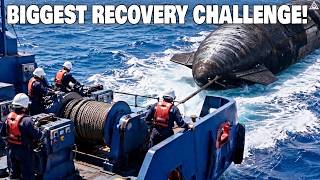
Ship 40 is adrift in the Indian Ocean, 850 nautical miles off Western Australia. Three ships are attempting to tow it at walking speed. The rocket is listing, with a forward flap dipping under water.
Ship 40 was never supposed to survive splashdown; the plan was for it to tip over and sink. Its survival left SpaceX with a priceless engineering asset but no built-in method to recover it.
The Norman Ranger, an anchor handler with 280 tons of bollard pull, can easily pull Starship. The hard part is the attachment point: Starship lacks the reinforced towing points of an oil rig.
Sailors must physically attach a bridle to the rocket from small boats, risking collision or injury due to the rocket's unpredictable rolling in the waves.
The Norman Ranger's AIS status changed to 'restricted maneuverability,' indicating it is attached to something. The convoy has stopped drifting and is now heading toward Dampier.
Starship lacks a keel, making it roll, yaw, and pitch unpredictably. Its flaps act as crooked rudders, creating a feedback loop that can turn a tow into a wrestling match.
Drag increases with the square of speed, but the real danger is the jolt when the tow cable snaps straight, spiking the load and potentially breaking shackles or hard points.
Stainless steel is vulnerable to chloride in salt water, which attacks welds, tile attachment points, and hinges. This corrosion threatens the forensic evidence the recovery aims to preserve.
The recovery operation costs an estimated $350,000 per day for three vessels, totaling over $3 million in nine days. Each mile towed costs about $7,000.
Under the Outer Space Treaty, Starship remains SpaceX's property regardless of where it lands. No one else can claim it, similar to how Apollo 11 engines remained US property.
Dampier is an iron ore port, not a spaceport. Lifting the rocket out requires specialized cranes and cradles that must be scheduled, adding another layer of complexity.
Starship's journey through space took under 2 hours, but the last 850 miles may take 2 weeks because the ocean only allows travel at walking speed. The recovery is a test of seamanship and patience.
The recovery of Starship Ship 40 is a monumental engineering and logistical challenge, highlighting the gap between spaceflight capabilities and maritime recovery. The mission's success hinges on preserving forensic evidence while battling the ocean's forces, all at a significant cost.
Why was Starship Ship 40 not designed to be towed?
It was engineered for specific loads like launch, re-entry, and tower catch, not for being dragged through ocean swells.
02:54
What is the bollard pull of the Norman Ranger?
280 tons.
02:39
What is the catenary in towing?
The sagging curve of the tow cable that acts as a shock absorber.
07:14
What is the main risk of a jolt in towing?
The load spikes, potentially breaking shackles or tearing out hard points.
07:28
What is the weakness of 300 series stainless steel in salt water?
It is vulnerable to chloride, which attacks welds and attachment points.
07:43
What is the estimated daily cost of the recovery fleet?
About $350,000 per day for three vessels.
08:41
What legal principle protects Starship from being claimed by others?
Article VIII of the Outer Space Treaty: an object launched into space remains the property of its owner.
09:53
Unexpected Survival
Ship 40 was never meant to survive splashdown, making its recovery a unique engineering challenge.
01:42Starship is a Terrible Boat
Highlights the fundamental design mismatch between a spacecraft and a seafaring vessel.
06:02Saltwater Corrosion Threat
The forensic evidence is being degraded by the very environment needed to recover it.
07:43Legal Protection
Space law ensures SpaceX retains ownership, preventing any 'finders keepers' scenario.
09:53Speed Contrast
The stark difference between hypersonic flight and walking-speed towing underscores the challenge.
10:50[00:04] just to recover ship 40 from the middle of the ocean, but bringing it home may be harder than a pirate's hunt for buried treasure because Starship was never designed to be towed across open water. One bad attachment point, one
[00:17] powerful wave, or one sudden spike in tension could buckle the vehicle and wipe out everything the recovery crews have worked for over the past several days. So, why is towing Starship so much harder than it looks? Let's dive in.
[00:31] Right now, as you're watching this, a 50-m 100-ton stainless steel rocket is 50-m 100-ton stainless steel rocket is adrift in the Indian Ocean, 850 nautical miles off Western Australia. Three ships around it trying to drag it home at the
[00:43] speed of a man walking, and it is not riding well out there. SpaceX went quiet days ago, but the last images showed ship 40 floating strangely high, listing to one side, the forward flap on the low side already dipping under, not sinking,
[01:00] but not right, either. That list matters. What's keeping it alive are its huge methane and oxygen tanks, empty, sealed, acting as flotation chambers. Nobody knows how sealed they still are. A rocket has no bilge pump, no crew
[01:14] checking compartments, just plumbing, valves, and vents never meant to soak in salt water for weeks. Water could be trickling in right now, and from 100 m away, everything would look normal. Until the freeboard drops, that flap
[01:28] digs deeper, and things start moving fast. It has drifted over 400 km since splashdown, but as of right now, the drift has stopped. For the first time, the whole group has turned and started crawling toward the Australian coast.
[01:42] They've got a line on it, but getting a rope on this thing and getting it home are two very different problems, and the distance between them is the most expensive stretch of water on Earth because here's the detail almost
[01:55] everyone is missing. Ship 40 was never supposed to survive. The plan was splash down, tip over, sink like every Starship before it. SpaceX's whole philosophy is catching these vehicles with a tower on
[02:09] land, nothing else. So, when Goa Australis, the observation ship at the splash down zone, arrived expecting debris, it found a spacecraft instead, whole, riding the swells like it had every right to be there, which left
[02:24] SpaceX holding priceless engineering evidence in the middle of nowhere with nothing built to bring it back. Within days, two more ships left Dampier. First out, the Norman Ranger, a Norwegian anchor handler with 280 tons of bollard
[02:39] pull, built to drag oil rigs across oceans. Pulling Starship is the easy part. The hard part was never the tug. It's the other end of the rope. An oil rig is built to be towed. Bollards, fairleads, reinforced brackets, steel
[02:54] designed to spread the strain. Ship 40 has none of that. It was engineered for very specific loads, the crush of launch, tank pressure, re-entry heat, and the grip of the catch points where the tower's arms are supposed to hold
[03:07] it. Every one of those was modeled and tested. Being dragged sideways through ocean swells for 2 weeks was never on the list. And you can't just throw a loop of rope around it, either. Believe me, the internet has suggested it. The
[03:20] skin is thin stainless steel. A line around the hole would slide, dig in, and cut through it like wire through cheese. The catch hard points are strong, sure, strong enough to hang the entire rocket in still air. But hanging is clean and
[03:34] vertical and controlled. Towing is chaos. The force yanks, twists, changes downward under the weight of the cable itself. A structure strong enough to
[03:47] hang a rocket is not automatically strong enough to to one through the sea, which brings us to the men in the small boats. Because before any towing happens, somebody has to physically attach a bridle to this thing. That
[03:59] means putting sailors in a small craft alongside 50 m of rolling steel that over. The rocket and the boat don't ride the waves in the same rhythm. One bad swell can slam the boat into the hull, snatch
[04:14] a slack line tight as a whip, or put a man in the water. This isn't rocket science. It's seamanship, old, dangerous, unforgiving. A thousand kilometers from the nearest help. We don't know exactly how they rigged it,
[04:28] but for the better part of a week, the fleet fell into a rhythm you could read off the tracking map. Ships closing together at dawn to work, then drifting apart westward through the night, giving back what they'd gained. Work, drift,
[04:41] work, drift. And somebody out there is filming every minute of it. Go. weeks, and she sailed with a professional camera crew aboard. The silence isn't because nobody's watching. It's because the footage belongs to
[04:56] SpaceX, and they'll release it when this story has an ending they like. Which leaves the rest of us reading the one source they don't control. Because the ocean has a way of telling on people. Every large vessel broadcasts its status
[05:10] over AIS, and a few days ago, the Norman Ranger's quietly changed to restricted maneuverability. In plain language, this ship is attached to something and can no longer move freely. Soon after, the westward drift
[05:23] stopped. For the first time, the cluster of dots on the map turned and started crawling toward Dampier. They've got a line on it, or at least they've got something on it, because a line doesn't mean a tow. Early on, the Ranger was
[05:37] showing speeds under one knot. That's not hauling, that's holding. Before you can drag something 850 mi, you first have to stop it rolling and wandering long enough to work on it safely. So, the first real victory out there may
[05:49] not have been pointing ship 40 toward Australia. It may simply have been stopping it from escaping any further into the Indian Ocean. And that's where the real fight begins. Because here's an uncomfortable truth.
[06:02] Starship is a magnificent flying machine and an absolutely terrible boat. A real ship has a keel, a spine along the bottom that keeps it tracking straight and fights the roll. Ship 40 is a smooth cylinder lying on its side. It rolls, it
[06:17] yawns, it pitches, and nothing keeps it pointed where you want it. Worse, it has those big flaps, the same fins that steered it so beautifully through the atmosphere. In the water, a half-submerged flap becomes a crooked
[06:30] rudder. If one side digs in deeper than the other, the vehicle starts to swing sideways. The more it swings, the harder the water shoves it. The harder it shoves, the deeper the flap bites. A feedback loop that can turn a smooth tow
[06:44] into a wrestling match in seconds. SpaceX spent years teaching Starship to control itself in the sky. Out here, the ocean is doing the controlling. That's why speed matters so much. Drag rises with the square of speed. Double it, and
[07:00] the force on those attachment points nearly quadruples. But steady speed isn't the real killer. The jolt is. The tow cable hangs in a deep curve between the two vessels. Sailors call it the catenary. And that sagging loop of steel
[07:14] works like a shock absorber, soaking up the mismatches tug and rocket ride different waves until it doesn't. Tug crests a wave, rocket drops into a trough, the curve snaps straight, and for two or three seconds, the load
[07:28] spikes. That's when a shackle fails or a hard point tears out of the hole. Toes aren't killed by average force. They're killed by one bad second. And all the while, a second clock is ticking. Because stainless steel isn't magic. The
[07:43] 300 series alloy Starship is built from have a well-known weakness, chloride, salt water. It attacks exactly the places engineers care about most. Welds, tile attachment points, hinge hardware. And that's the cruel irony here. The
[07:58] reason to recover ship 40 is forensic. Those white streaks on the heat shield, the cracked tiles, the seams where hot gas snuck through are the evidence telemetry can't show you. Every day at sea, salt water seeps into those same
[08:12] cracks and smudges the fingerprints. So, the real question of this mission was the real question of this mission was never can they tow it? It's this. Can evidence, but slow enough not to destroy the evidence they're trying to save? And
[08:27] that tension has a price tag. Nobody's published the contracts, but a vessel of this class starts around $100,000 a day on a short-term charter. And that's the floor before the premium you pay to get a ship moving on 48 hours notice. Three
[08:41] vessels out there, call it $350,000 a day, and you're probably being generous to SpaceX. Nine days gets you past 3 million, and that meter didn't start with the tow. It started the day Go Australis first pulled alongside 3 weeks
[08:57] though. Trackers have clocked this convoy between 1 and 3 knots. Call it 2, about 48 nautical miles a day, which means every single mile of ocean they
[09:09] drag ship 40 across costs somewhere near $7,000. starts over. Crane time, a custom cradle, inspection crews, port fees.
[09:21] never fly again. Except if the evidence inside reveals one flaw that would have doomed a future flight, a tower catch, a vehicle worth far more than this entire fleet, the tow pays for itself many times over. The
[09:37] valuable part of Ship 40 isn't the steel, it's the mistake SpaceX hasn't And if you're wondering why some lucky fisherman can't just grab it first, he Under Article VIII of the Outer Space Treaty, an object launched into space
[09:53] stays the property of its owner no matter where it lands unless formally When Jeff Bezos pulled Apollo 11's engines off the Atlantic seabed, they were still US government property after four decades underwater. Ship 40 isn't a
[10:09] shipwreck. Legally, it's closer to a warship. There's no finders keepers in space law. And even if everything holds, the weather, the welds, the nerve, Dampier isn't the finish line. It's an iron ore port, not a spaceport. Getting
[10:23] a rocket out of the water there means cranes, cradles, spreader beams, heavy lift capability that has to be scheduled, not summoned. The ocean forced SpaceX to tow this thing. Only a harbor will let them lift it. After
[10:36] that, strip the valuable hardware in Australia or ship the whole vehicle across the Pacific. Both are their own saga. Here's the thought I keep coming back to. Ship 40 finished the fastest part of its journey in under 2 hours.
[10:50] part of its journey in under 2 hours. Space, reentry, hypersonic descent, a pinpoint splashdown. Flawless. The last 850 miles may take 2 weeks because the ocean only lets it travel at the speed of a man walking. SpaceX taught Starship
[11:05] how to survive the sky. Nobody ever taught it how to survive the sea. And somewhere out on the Indian Ocean tonight, three ships are crawling toward the coast of Australia dragging the answer behind them on the end of a rope.

⚡ Saved you 0h 11m reading this? Transcribe any YouTube video for free — no signup needed.