

Why 4 Raptors Failed to Ignite
44sTechnical failure details and the near fuel-rich event create suspense and educational value.
▶ Play Clip"Delivers on the promise of a detailed update with real technical insights, though some sections are padded with site progress updates."
The video provides a detailed recap of SpaceX's Starship Flight 13, highlighting the successful booster landing attempt, ship survival and splashdown, and the deployment of Starlink satellites. It also previews the ambitious goals for Flight 14, including a potential ship catch and orbital operations, while discussing infrastructure progress at Starbase and the Space Coast.
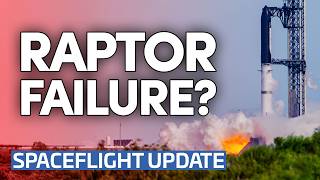
After a hold at T-57 minutes, Starship proceeded to launch. The previous attempt aborted due to four Raptor engines failing to ignite from oxygen turbo pump issues. Starship can tolerate a maximum of two engine outs before aborting on the pad, down from three for earlier versions.
Booster 20 had six engines replaced in Megabay 1. A verification test on Pad 2 spun up oxygen pumps on the new engines without methane, a half spin prime. The launch was initially targeted for July 23rd but was delayed due to weather.
One launch commit criterion was visibility from ground cameras to observe the heat shield through max Q. Heavy cloud cover scrubbed the attempt. SpaceX revealed Starship is allowed to launch through lightning, a change from previous scrubs for anvil clouds.
All engines ignited at T-10 seconds, and Starship lifted off from Pad 2. First-time views from the booster's engine bay showed Raptors firing in unison, highlighting the frost and glow of Raptor 3 engines.
Booster 20 shut down 28 of 33 engines, leaving five burning. Ship 40 ignited its six engines in a staggered sequence, separating both vehicles. The booster flipped and relit all 33 engines for the boostback burn, which ended early (26 seconds vs. planned 38).
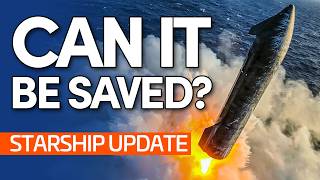
Booster 20's landing burn started with 10 out of 13 engines, dropped to eight, then five, before hitting the water hard. The failure likely delays a booster catch on Flight 14, but doesn't rule it out entirely.
Ship 40 performed brilliantly, all engines stayed lit, and it completed the in-space relight of a Raptor engine, a key objective. The vacuum and sea level engines were cut nearly simultaneously, a new behavior.
Ship 40 deployed all 20 Starlink version 3 satellites, six of which carried cameras to image the heat shield. Footage has not yet been released.
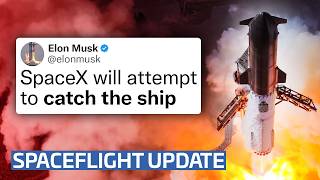
The successful in-space relight gives Starship the best chance yet of reaching orbit and an onsite recovery. Elon Musk confirmed that unless problems show up in flight data, SpaceX will attempt a ship catch on Flight 14.
Ship 40 performed a flawless reentry, belly flop, and landing burn, touching down softly in the Indian Ocean. Unlike previous splashdowns, it did not explode and remained floating and transmitting data for over 12 hours.
Satellite imagery showed Ship 40 floating alongside support vessel Go Austalis 56 hours after splashdown. The batteries are designed to last around 48 hours, but the ship continued transmitting data.
At Launch Complex 39A, the tank farm spooled up for testing, and work continued on the booster quick disconnects. The chopsticks were moved vertically for the first time, indicating progress toward Florida launches.
The first of two launch towers at Space Launch Complex 37 has reached full height, though significant work remains including flame trench and tank farm construction.
Both Flight 14 vehicles are in production. Ship 41 is receiving engines, and Booster 21 is lagging behind. Cryogenic proof testing has been completed for some components.
The current license allows the ship to reenter from orbit but only permits landing in the Indian Ocean, not at Starbase. Modifications are needed for a ship catch at the launch site.
Flight 14 would likely deploy Starlink satellites into orbit, demonstrate long-duration orbit (up to 48 hours), and attempt the first ship catch at Starbase. A booster catch is unlikely due to the landing burn issue.
Ship 42's aft section was moved into Megabay 2, making it fully stacked. Booster 22's transfer tube and ship 42's flaps are being prepared for assembly.
Flight 13 was a major success, with Ship 40 surviving splashdown and completing key objectives. Flight 14 promises to be even more ambitious, with a potential ship catch and orbital operations, but faces regulatory and technical hurdles.
What was the cause of the four Raptor engine failures on the first Flight 13 attempt?
The oxygen turbo pumps on those four engines failed to ignite.
01:05
How many engine outs can Starship tolerate before aborting on the pad?
A maximum of two engine outs.
01:30
What was the duration of the boostback burn on Flight 13?
It lasted 26 seconds instead of the planned 38 seconds.
04:18
What was the outcome of Ship 40's splashdown?
It did not explode and remained floating and transmitting data for over 12 hours.
08:19
What is the maximum time Starship can stay in orbit before reentry?
Up to 48 hours.
13:04
What is required for a ship catch at Starbase on Flight 14?
FAA license modifications to allow landing at Starbase instead of the Indian Ocean.
11:57
Ship 40 Survives Splashdown
First Starship to survive splashdown intact, a major milestone for recovery.
08:19In-Space Relight Achieved
Successful Raptor relight in space is critical for orbital missions.
07:00Lightning Launch Criteria
SpaceX now allows launches through lightning, a significant change in weather constraints.
02:22Booster Landing Burn Failure
The failure impacts booster recovery plans and Florida timelines.
04:18Flight 14 Ambitious Goals
Potential first ship catch and orbital Starlink deployment.
12:24[00:01] spectacular performance as flight 13 is now in the history books. The booster completed most of its objectives and the ship performed flawlessly. We're going to give you a full rundown of exactly what happened and even take a quick look
[00:13] into the not-so-distant future at Starship's 14th flight as that may be closer than some might [music] think. As always, we have all of that coming up always, we have all of that coming up and more on this week's Starship update.
[00:38] countdown here. After a small hold around the T- 57-minute marker, Starship proceeded smoothly through propellant loading and right through the gate at T- 60 seconds without any additional holds being called out. As the count came down
[00:51] to ignition, everybody was watching very closely. This is the point on the first attempt when booster 20 ignited some of its engines before aborting at the last possible moment due to four Raptors failing to ignite. And we now know what
[01:05] those four Raptors failed to ignite. from the oxygen turbo pumps on those four engines. Two additional engines had the same problem but still managed to ignite. The turbo pumps are what feed
[01:18] propellants into the engine, one dedicated for liquid methane and the other for liquid oxygen. But thankfully, these four never ignited though. Otherwise, it would have been a very fuel-rich event since the methane side
[01:30] was operating just fine. We also learned that Starship will only tolerate a maximum of two engines out before calling an abort on the pad. For version one and two boosters, that number was three. So, it's quite interesting to see
[01:43] for the next attempt, booster 20 ran a quick verification test on pad two with its six new engines having those installed and swapped out for the faulty units in megabay one. It was essentially
[01:55] a sort of half spin prime. They spun up just the oxygen pumps on those engines methane was involved, though, they did not need the detonation suppression system or the DSS. After SpaceX replaced six engines on Booster 20, confirming
[02:10] during their third attempt stream, and rolled both vehicles out for stacking, Flight 13 was initially targeting Thursday, July 23rd. But that didn't last very long, though, as Thursday's attempt was called off fairly early due
[02:22] interestingly, one of the launch commit criteria this time around was being able to see the rocket from ground cameras, so SpaceX could observe the heat shield through max Q. With heavy cloud cover, that just wasn't possible. But while
[02:35] we're on the subject of weather, SpaceX revealed something pretty interesting during the third attempt stream. Starship is allowed to launch through lightning. This comes after a Chinese Long March 3B rocket was struck by
[02:47] lightning on ascent and still completed its mission successfully. The fact that lightning seems like a relatively new development. Previous flights, like Flight 10, were scrubbed for anvil clouds and storm activity in the area,
[03:01] Florida operations, but obviously this is not Florida. It's pretty strange to say this out loud, but lightning no longer seems to be a major concern. I mean, as long as the winds cooperate, we could realistically see a Starship
[03:14] which is pretty important if SpaceX wants to meet their higher launch cadences, as weather will not always be perfect, especially in Florida. Now, back to the countdown. The hold use kicks in around T minus 10 seconds. All
[03:27] engines ignite simultaneously and Starship is released from pad two into the South Texas sky. After it punched through max Q, SpaceX gave us some stunning first-time views from the booster's engine bay, showing the
[03:39] Raptors firing in unison. I mean, how wild is it to be seeing both frost and glow from heat existing in such close proximity here? Like that's just Raptor 3 in a nutshell for you. Next up was hot staging. Booster 20 shut down 28 of its
[03:53] 33 engines, leaving five still burning. Ship 40 then ignited its six engines in a staggered sequence, separating both vehicles. The ship continued toward orbit while the booster, for the first time with a version three variant,
[04:05] successfully flipped straight upward as intended and relit all 33 engines for the boostback burn. The boostback looked mostly clean, but it ended a few seconds early. According to SpaceX's timeline, it was supposed to last 38 seconds, but
[04:18] only lasted for 26. The website later confirmed the early cutoff, though they didn't exactly share why. Unlike Booster 19 on flight 12, Booster 20 did manage landing burn. It started with 10 out of 13, then dropped to eight, and then an
[04:32] off-nominal five before hitting the water pretty hard. Albeit not as hard as Booster 19, cuz that was basically supersonic. Unfortunately, that landing burn failure means we probably won't see a booster catch on flight 14, but it
[04:45] does not rule out a catch entirely, but more on that later. Additionally, no means Starship's arrival to Florida could slip even further, unfortunately. Reusing a booster even once will give SpaceX some buffer in production,
[04:59] while continuing launches from Starbase with other units. Without that, the Florida timeline will likely get pushed deeper into the production queue. Hopefully, if Booster 21 lands as intended, then Booster 22 could be
[05:12] caught and either reused in Florida or make room for Booster 23 on the Space Coast. Now, let's talk about ship. On the last flight, Ship 39 made the seco, but about 40 seconds into its ascent burn, one of the Raptor vacuum engines
[05:25] shut down unexpectedly. While that demonstrated engine-out capability and its targeted trajectory, it meant that other infant objectives, like the in-space relight of a Raptor, had to be called off. Ship 40, by contrast,
[05:38] performed brilliantly. All engines stayed lit, and it maintained its the rest of the mission to proceed. Something new happened at engine flights that reached this point, the vacuum and sea level Raptors were all
[05:52] essentially cut at the same time, not even a quarter second apart even. On down several seconds before the sea level engines, mainly for trajectory precision. Running every engine for the full duration is almost certainly for
[06:05] 33 engines on booster for its boost back. It's simply more efficient. If you of time, then you have more power to fight against gravity. All of this is Starship's full payload capacity. While
[06:20] design upgrades, a big part of the challenge is also optimizing the software and current hardware behavior. When the time came, Ship 40 oriented the direction facing the vehicle is traveling, and successfully deployed all
[06:35] 20 Starlink version 3 satellites. We know six of those carried cameras to image the heat shield, but we have yet to see any footage from them just yet. that and release his said footage soon. And honestly, I really have to hand it
[06:48] to SpaceX here. The views on this flight were incredible. And if you would like a third-person view of Starship on your wall, check out our high-quality flight 13 metal prints, plus some celebratory merch, all available at
[07:00] shop.nextspaceflight.com. We are incredibly proud of these, and we the ascent burn for ship was nominal, SpaceX was able to complete the in-space relight objective. This successful short burn gives Starship the best chance yet
[07:13] of reaching orbit and an onsite recovery very soon. We even have confirmation from Elon. Unless problems show up in the flight data, SpaceX will attempt a ship catch on flight 14. That's exciting. We've already seen the three
[07:26] boosters caught so far. Pulling off a version 3 ship catch before a version 3 booster catch would really highlight how far things have come since the version 2 far things have come since the version 2 era. Back then, at least early on, ship
[07:38] really struggled hard, and it failed on its first three flights overall. And finally, we come to the last phases of flight. Reentry, the belly flop, and heating and then began the return to launch site phase. Once again
[07:52] demonstrating excellent cross-range and control capability as it aimed for the the cameras overall is just wickedly cool. Like that never gets old, genuinely. Ship 40 then simulated an alignment maneuver towards the tower
[08:04] pseudo flat spins I've ever seen. Especially for a vehicle of that size. After 1 hour and 5 minutes, Ship then lit its sea level engines one last time, flipped engines down, stepped down to two engines, then one, and landed softly
[08:19] in the waves of the Indian Ocean. Talk about picture perfect here. But here's the real cherry on top. Unlike every previous Starship splashdown, Ship 40 did not explode when it hit back over onto its side in the water. Even better,
[08:34] as of T plus 12 hours, the vehicle was still floating and still transmitting data. Despite antennas being literally underwater. Plus, our friend Harry Stranger was able to task this satellite imagery showing Ship 40 floating
[08:47] alongside support vessel Go Austalis 56 hours after splashdown. I guess we can finally say Ship 40 put the ship into Starship Okay, never mind. Bad joke. Moving on. The batteries are designed to last around 48 hours. And they'd have to
[09:02] is capable of staying in orbit before having to reenter and land. We still 40. SpaceX has tried to recover ships exploded. It seems they had largely given up on hopes of recovering one
[09:15] after flight. But clearly they were not prepared for it to actually survive this time because there it is and look at how glorious it looks. Fingers crossed they bringing parts of Ship 40 back to Starbase for very thorough analysis. And
[09:30] a brand new rocket garden hopefully going up right over there. Flight 13 was certainly a great step forward and one of the more memorable missions as of exciting real soon. Meanwhile, on the Space Coast, someone seems to have
[09:44] missed the memo about which pad flight 13 was launching from, as the Starship tank farm at launch complex 39A spooled up for testing big time. All jokes aside though, we are getting closer and closer to Starship's long-awaited debut from
[09:58] of time before the first vehicles make their way over, hopefully in the next couple of months. Over at launch complex 39A, besides the aforementioned tank farm testing, work has been mainly ongoing on the booster quick
[10:11] disconnects. SpaceX attached the middle section of the methane BQD hood before removing it to allow workers to access this area again, and then reinstalled it been on the move. This time with some
[10:23] very large vertical travel for the very first time. They were raised slightly back in late June, likely just a functional test. But, these latest movements are significantly larger. And it's about time, too. Those chopsticks
[10:35] have been sitting on that tower for more than 3 years. As we've covered before, pad 39A will support the very first Starship launches from Florida. It's encouraging to see more of the site coming online and being properly tested,
[10:48] from the tank farm all the way up to the chopsticks. At Space Launch Complex 37, the first of two launch towers has finally risen to its full height with tower module. Seriously, I mean, I come to Starbase for 2 weeks, and suddenly
[11:01] Florida. Good grief. Even so, the site is still some time away from supporting its very first launch. There is a huge amount of work left inside the tower, plus digging and building a flame trench, plus the
[11:15] tank farm and ASU, and so on. Although, some hardware is already on site for those. So, stay tuned. Coming back over to Starbase, SpaceX is already full steam ahead in preparing for the next flight and for more in the future in the
[11:28] megabase and in Starfactory. Both flight 14 vehicles are already well into their completed cryogenic proof testing at Massey's, where it was loaded with liquid nitrogen and liquid oxygen to verify structural integrity. Meanwhile,
[11:42] ship 41 has begun to receive its six engines ahead of static fire testing. boosters appear to be lagging behind ships in production and testing, and we But still, it shouldn't delay flight 14 too significantly. Booster 21 isn't the
[11:57] only possible bottleneck, though. If flight 14 is truly going to orbit, modifications from the FAA. They're not major, but they matter. Right now, the license allows the ship to reenter from orbit, but it only permits landing in
[12:12] the Indian Ocean, not at Starbase. Currently, the only vehicle authorized to land at the launch site is a booster. So, that obviously needs some what you think the path to flight 14 looks like from here, and when you'd
[12:24] expect it to launch. So, what would flight 14 actually do if it reaches orbit? It's a great question. First, the booster would almost certainly need to before attempting a tower catch. The risk is still too high otherwise. So, we
[12:37] can likely rule out a booster catch for this time. The ship would aim to deploy version three Starlink satellites once again, but into orbit for the very first operational constellation right away, but they would give SpaceX a lot of
[12:50] valuable on-orbit testing data. I mean, they did great last time, so hopefully then go on to demonstrate staying in orbit for a longish period of time, a maximum of 48 hours according to SpaceX. It will then deorbit by igniting a
[13:04] hopefully be the first reentry over to Starbase, and the first catch of a ship at tower two. The production of even later flight vehicles is also proceeding nicely. As just before flight 13, the aft section for ship 42 was moved into
[13:17] Megabay 2, meaning that ship is now fully stacked. And into Megabay 1, and the booster's final aft section before the engine bay. Now, just after flight 13, SpaceX rolled booster 22's Falcon 9 size transfer tube into megabay
[13:33] 1 and one of ship 42's F flaps and both raceways into megabay 2 for attaching to before ship 42 is ready for crowd testing at Massey's and hopefully booster 22 isn't too far behind either. As we all know, Starbase never sleeps.
[13:49] So, the progress will always continue. Starship flight 13 was certainly a great one, but it will surely pale in comparison to what lies ahead. Looking towards flight 14 and onwards, go ahead and tell us what will SpaceX actually
[14:01] perform on flight 14. Booster catch despite the issues or actually push for find out. Let us all know in the comment section down below. I'm Max Evans from NSF. Thank you so much for watching and I'll catch y'all next time.
⚡ Saved you 0h 14m reading this? Transcribe any YouTube video for free — no signup needed.