
Starship Survives Splashdown?!
44sThe dramatic survival of a massive steel ship against all odds, with emotional reactions and a surprising outcome, is highly engaging and shareable.
▶ Play Clip"Delivers a detailed breakdown of the booster failure and ship survival, but the title overpromises a 'reveal' that is mostly speculation."
SpaceX's Starship Flight 13 achieved a historic milestone with Ship 40 surviving a soft splashdown in the Indian Ocean, but Booster 20's landing failed due to engine issues. This video analyzes the booster's engine failures, the ship's survival, and the implications for future flights.
Ship 40 survived a splashdown, a first for Starship, floating intact and transmitting telemetry, though venting fire from the nose cone.
At T+2:06, the engine bay glowed red, indicating overheating. During landing, only 8 of 13 engines lit, and 3 of those shut down prematurely, leading to a hard impact in the Gulf.
Flight 12's booster failure was caused by heat damage to propulsion components and engine alarm misreads. SpaceX fixed hardware and logic, but similar issues recurred.
Three engines started but died, suggesting issues downstream of ignition (feed, pressure, heat). The glowing engine bay may be linked to heat-related failures.
B20 hit the Gulf hard, well over target speed, but remained under control until impact. Its condition is unknown.
Ship 40 performed a soft splashdown, tipping over after 8 seconds but not exploding. The fire from the nose was due to venting methane from header tanks, not a failure.
All 18,000 heat shield tiles survived, allowing engineers to study them. Only a few were missing despite the highest max-Q in Starship history.
Ship 40 relit a Raptor engine in space for 14 seconds, a key test for deorbit capability, essential for Artemis missions.
20 real Starlink V3 satellites were deployed and all made contact, linking via lasers within minutes—a 20 for 20 success.
Flight 13 was a major step forward for Starship, proving the ship's survivability and key capabilities, but booster recovery remains a challenge. SpaceX will likely delay booster catches until engine reliability is proven.
What was the root cause of Booster 19's failure?
Heat damage to propulsion components and engine alarm misreads.
02:53
How many engines lit for Booster 20's landing burn?
8 engines lit, but 3 shut down prematurely.
04:03
Why did Ship 40 vent fire from the nose cone?
Leftover methane from header tanks boiled and vented, igniting on hot surfaces.
08:29
What was the duration of the Raptor relight in space?
14 seconds.
11:16
How many Starlink V3 satellites were deployed and how many made contact?
20 deployed, all 20 made contact.
11:44
Starship Survives Splashdown
First time an intact Starship floated in the ocean, a major milestone.
00:02Engine Shutdown Mystery
Engines started then died, pointing to unresolved heat issues.
04:15Heat Shield Data Recovery
All 18,000 tiles survived, providing unprecedented data.
09:52Raptor Relight in Space
Critical for deorbit capability and Artemis missions.
11:16Starlink V3 Deployment Success
20 for 20 satellite deployment and laser link-up.
11:44[00:02] a giant Starship survived that deadly splashdown. Even Elon couldn't believe it. That's a genuine milestone in SpaceX's history. But, there's a catch, one problem that just won't die. The engine fault is still here, and this
[00:16] time it nearly killed Booster 20 and turned the whole flight into a disaster. So, what exactly went wrong? And what did SpaceX reveal about it? Let's find out. To be honest, there has never been a flight this dramatic, this emotional,
[00:31] and I mean that. This one made grown adults cry actual tears of joy. Because for the first time, millions of people, you and me included, watched a giant hollow steel ship, that's Ship 40, hit the ocean and not immediately explode.
[00:47] Okay, yes, it was venting fire from the nose cone, but it did not blow up, which left us with this absolutely surreal image, a steel whale breathing fire, bobbing in the Indian Ocean. Even Elon couldn't help himself, posting on X,
[01:02] "Starship is intact, floating in the ocean and transmitting telemetry." But, that raises questions. Why was fire coming out of the nose? Why didn't it explode this time, when every ship before it did? And is SpaceX actually
[01:15] going to tow Ship 40 home? Those are the exact questions flooding in from you guys after the flight. Even my grandma demanded I explain this one to everyone today. So, don't hesitate to hit subscribe to support me. But, that juicy
[01:29] answer, I'm saving it for a few minutes from now. Because if you clicked on this video, I know what you're actually dying to know first. What on Earth happened to to know first. What on Earth happened to Booster 20? Okay, Booster 20. Let's talk
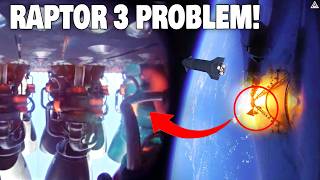
[01:42] about what actually happened. T plus 2 minutes, 6 seconds. The engine bay is glowing, not warning-light glowing, visibly red, plumbing lit up like the inside of a forge. Hold on to that image, it matters later. T plus 229,
[01:58] hot staging. Six engines on ship 40 slammed to life while it's still bolted to the booster. A fireball punching straight down into the top of B20, and the vehicle just takes it. That's the design. Light the ship first, shove off,
[02:11] never stop thrusting. Then the booster starts its trip home. All 33 engines flare for the flip, then the outer ring drops away, then most of the middle, and by T plus 250, just three center engines are still burning. That step down is
[02:26] deliberate. The booster is burning off weight every second, so it needs less and less muscle. And those center engines are the ones that can pivot, the steering engines. Cut everything at once and you smear your trajectory. Step it
[02:38] down and you land the burn on a dime. And this boost back, flawless. Say it plainly, because 2 months ago this exact maneuver killed booster 19. The investigation found two culprits, heat, hot gas during ascent cooking components
[02:53] in the propulsion system, and the engine alarm settings misreading which engines were healthy. Sick engines and a watchdog making bad calls. SpaceX changed the hardware, rewrote the alarm logic, built a new startup sequence.
[03:08] Tonight, that fix passed its exam start to finish. When they deliver, you say to finish. When they deliver, you say so. Then B20 goes quiet. Engines off, coasting, falling. A 20-story steel building dropping out of the sky,
[03:22] steering on grid fins alone. And here's what the plan says happens next. Pay attention to the numbers because they're the whole story. 13 engines light to slam the brakes, then down to five to fine-tune, then three to touch the
[03:36] water. Why 13 first? Because this thing is falling at terminal velocity, and almost all of the stopping happens in those first seconds. The 13 do the It's a semi truck coming down a mountain. You brake hard and early at
[03:50] the top, so that by the bottom, you're barely rolling. Miss the braking at the top, and nothing you do at the bottom saves you. The command goes out, "Eight lit. Eight." Two of the three center engines, six from the middle ring, and
[04:03] it didn't look like the clean staged ignition we've seen on the catches. It looked scattered. Then, seconds in, three of those eight quit. Why did they quit? Nobody knows yet. And that detail is the one keeping me up tonight,
[04:15] because those engines didn't fail to start. They started and then died. That points downstream of ignition, feed, pressure, heat. Remember that glowing engine bay from T+206? Heat on ascent was half of flight 12's
[04:29] official root cause. I can't prove tonight's glow is connected. So, B20 came down on five engines, and here's why five wasn't enough. Because I know what some of you are thinking. Flight eight finished its landing on three
[04:42] engines and got caught by the tower. True. But, flight eight lit 12 of 13 for the braking phase first. The three engine finale only works because 12 already killed the speed. B20 never got its braking phase. Eight engines instead
[04:56] of 13, dropping to five, meant it simply never shed enough velocity. And altitude is the one thing you can't buy back. Five engines at the bottom of the fall is the semi truck grabbing the brakes at the bottom of the mountain. The booster
[05:10] did the only thing physics allows. It hit the Gulf hard, well over its target speed. What condition it was in after that impact, nobody said yet. I'll cover that when the data comes out. A steel tube meeting water at that speed rarely
[05:23] walks away. But, here's what it did do. It made it all the way down. Under control. Burn running, grid fins steering, no fireball in the sky. March 2024, flight three, booster 10
[05:37] faced the same exam. Got two engines out of 13, and detonated at 1,500 ft, higher than the tip of the Empire State Building. B20 got eight, held five, and flew its whole profile to the ocean surface. Same weak joint, radically
[05:53] question I can't answer and can't stop asking. Were those engines flagged as unhealthy after boost back? If this had been a catch attempt, a booster flying home to a tower with people's life's work bolted to it, would it have been
[06:07] cleared to come back? We have never seen SpaceX make that call in public. So, I'll make the prediction, no booster catch on flight 14. A Megazilla catch means trusting 13 engines to answer on command over the pad, over the tower,
[06:23] over everything they've built. After tonight, that trust isn't earned yet. Expect one more Super Heavy on the seafloor before they bring one home. It's a little late, but better slow and safe than fast and sloppy. Do you agree?
[06:36] If you do, drop a yes in the comments. And now, for the part you've been waiting for. That's right, Ship 40. History. Several firsts in a single flight. 1 hour and 5 minutes after leaving Texas, on the far side of the
[06:49] planet, west of Australia, a 15-story steel tower comes screaming out of the sky over the Indian Ocean. It just survived plasma hot enough to cut metal. It flips from belly flop to vertical. Three engines light, then two, then one.
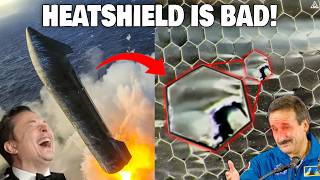
[07:04] Three engines light, then two, then one. T plus 105 18. The tail touches the water. Heat shield splattered with white scars from the ride down. 8 seconds later, it tips over. They always tip over. 170 ft of empty steel can't float
[07:18] standing up. And this is the moment. This is where every ship before it died. 2 months ago, Ship 39 flew almost this exact profile, touched down soft, tipped, and vanished in a fireball you could see from space. We'd watched that
[07:33] ending so many times we stopped calling it a failure. Ship 40 tipped over, and nothing happened. The engine section vents boiling the ocean around it silver white. Flames crawl from the nose down the hole. A steel whale wrapped in fire,
[07:48] rolling in the swell. And over that exact image, the SpaceX host says, calm >> That is the softest splashdown we have ever had with the Starship there in the >> The crowd at Starbase is going insane.
[08:02] Well, the thing on their screen is on fire. And yeah, that fire freaked people out. Flames pouring out of the nose cone of a ship that just barely survived. But, here's what most people don't know about Starship's anatomy. The nose isn't
[08:15] empty. Tucked up in there are the header tanks, small reserve tanks holding the landing propellant. Liquid methane, liquid oxygen kept separate from the main tanks, so the landing burn always has clean settled fuel to drink. After
[08:29] splashdown, whatever's left in those tanks has to go somewhere. Cryogenic methane sitting inside warm steel boils. It's a soda bottle in a hot car. Pressure climbing and climbing. So, the ship vents it through relief valves.
[08:43] That methane hits air, finds an ignition source on a hole still hot from reentry, and burns off. That flame isn't the ship dying. That's the ship exhaling. Now, full honesty, the way we do things here, SpaceX hasn't officially explained the
[08:57] venting. That's the physics read, and it fits everything on camera. If they say different, I'll correct it. But, here's the part that gets me. The fire and the survival are not two separate stories. Think about what the old fireball
[09:09] actually was. Ship tips, hot engine section slaps the water, leftover methane and oxygen slosh together inside crumpled tanks, find the heat, boom. That recipe needs three things: leftover propellant, a breach to let it mix, and
[09:24] a spark. Every previous splashdown served up all three. Tonight, the recipe broke. Partly because this was the gentlest arrival ever. Less impact, tank stays sealed, nothing mixes. And partly, this is my read, because of that very
[09:39] fire. Venting means the propellant was leaving the ship in a controlled burn-off instead of pooling inside waiting. The thing that looked like danger was probably the reason there was no disaster. And the payoff is massive.
[09:52] Dan Huot said it live. First time in history an intact Starship has floated in the ocean. He called it a dream scenario, and here's why. On every previous flight, the heat shield data mostly died with the ship. The nose
[10:05] section breaks off and sinks fast. So, engineers got a charred tail to study while the part that matters for a ship catch went to the bottom of the sea. Tonight, all 18,000 tiles came home floatable. Huot said you could count the
[10:19] missing ones on one hand. On a flight that deliberately flew the highest max-Q in Starship history, specifically to beat those tiles up, they stressed it harder and it came back cleaner. So, are they towing her home? I love this ship,
[10:33] too, but let's do the math. She's floating west of Australia. Starbase is in Texas. That's not a tow. That's half a lap of planet Earth dragging a 170-ft steel tube that's taking on water and still burping methane. Not happening. An
[10:47] Australian port, closer. And SpaceX does have a recovery team out there with drones and camera boys. They plan to get close, but every ship before this one was studied and left to sink, and SpaceX hasn't said a word about this one. I
[11:01] don't know. Nobody does. But, for the first time ever, the question exists at all. That's the win. And look, while everyone's staring at the floating ship, don't let the quieter wins slip past because two of them are historic. 39
[11:16] minutes into the flight, ship 40 relit a Raptor in space. And not the little 3-second blip they've done before. 14 seconds. That's the burn NASA has been waiting on. The maneuver that says this vehicle can leave orbit on command. No
[11:31] engine relight, no Artemis, no moon. Flight 12 had to skip this test entirely. Tonight they didn't just run it, they ran it long. That's a box checked in permanent ink. And the payload, 20 Starlink V3 satellites out
[11:44] the door. The first real V3s ever flown, not simulators, the real thing. Every single one phoned home. All 20 made contact, and all 20 linked up over lasers within minutes of deployment. First try, 20 for 20.
[11:59] Whatever you think of SpaceX's timelines, that number deserves a hat tip. If you jumped out of your chair watching that whale wave, drop a go ship 40 in the comments. See you at flight 14.


⚡ Saved you 0h 12m reading this? Transcribe any YouTube video for free — no signup needed.