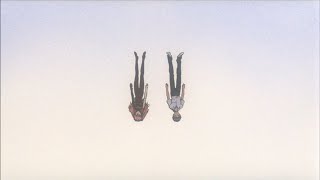

The Misunderstood Final Scene of Evangelion
45sChallenges common fan interpretations and promises a fresh take on a famously debated ending.
▶ Play Clip"The title accurately reflects the analysis of the final scene's thematic purpose."
This analysis explores the final scene of 'The End of Evangelion,' arguing that its true power lies not in literal interpretation but in the emotional and thematic contrast it creates with the preceding optimistic sequence. The video examines how the scene challenges the film's own hopeful message about personal growth.
People overanalyze the literal events of the final scene, missing its broader thematic purpose conveyed through feeling.
The scene before the finale is dreamlike and hopeful, with soaring music, bright imagery, and uplifting dialogue, creating a sense of blissful harmony.
The final scene immediately contrasts with a devastated wasteland, dark sky, blood-red water, and no music, emphasizing the harsh reality outside instrumentality.
Shinji and Asuka are isolated on the beach; the composition shows them close yet far apart, symbolizing the return of barriers between souls.
The final scene challenges the previous optimism, showing that growth is not simple and that Shinji regresses, questioning the ease of healing.
The final scene of 'The End of Evangelion' uses sensory contrast to challenge its own optimistic message, reminding viewers that personal growth is difficult and that even after a breakthrough, regression is possible.
What is the main argument of the video about the final scene of End of Evangelion?
The final scene's power comes from its emotional and thematic contrast with the preceding optimistic sequence, not from literal interpretation.
How does the preceding sequence create a sense of optimism?
Through soaring orchestral music, bright imagery (stars, glowing crosses), and uplifting dialogue, creating a dreamlike, heavenly feel.
0:40
What visual and audio elements create the harsh contrast in the final scene?
A devastated wasteland, dark sky, blood-red water, no music, only the sound of waves crashing.
2:46
What does the composition of Shinji and Asuka on the beach symbolize?
Their isolation and the return of barriers between souls; they are close but feel far apart.
3:11
What message does the final scene convey about personal growth?
Growth is not simple; even after a hopeful breakthrough, regression is possible, and healing is difficult.
4:38
Misplaced Focus on Final Scene
Identifies a common misinterpretation of the scene's purpose.
Uplifting Sequence Description
Vividly describes the sensory elements that create the optimistic mood.
0:40Harsh Contrast of Final Scene
Highlights the immediate shift in tone and its emotional impact.
2:46Challenge to Optimism
Articulates the central thematic conflict of the film's ending.
4:38[00:00] people think too much about the final
[00:01] scene of the End of Evangelion well that
[00:04] makes it sound like I think people
[00:05] shouldn't care about it this is one of
[00:07] my favorite scenes in any movie ever and
[00:09] it deserves all the attention and
[00:11] speculation that it gets however I think
[00:13] a lot of people maybe get too deep into
[00:15] the speculation of what is literally
[00:17] happening here or what the characters
[00:19] are exactly thinking and they failed to
[00:21] grasp the more General thematic purpose
[00:23] of it because it wasn't stated directly
[00:25] in words I think a lot of what makes
[00:27] this final scene valuable to me can be
[00:29] drawn simp from how it feels to watch it
[00:31] not even needing to question what's
[00:33] going on symbolism what Shinji is
[00:35] thinking when he chokes Asuka or why she
[00:37] says disgusting the finale is placed
[00:40] right after a very uplifting and hopeful
[00:42] sequence the orchestral score Soares as
[00:44] Shinji appears to come to understand his
[00:46] tendency for escapism and as he hears
[00:49] the final words from Ray cowo and his
[00:51] mother ultimately resolves to reject
[00:53] instrumentality return to the real world
[00:55] and make more real connections with
[00:57] other people on top of the score heavy
[00:59] Reverb is placed on many of the voices
[01:01] delivering sometimes esoteric yet
[01:03] ultimately uplifting
[01:05] [Music]
[01:13] [Music]
[01:22] statements and Visually the sequence is
[01:25] filled with lots of bright imagery or
[01:27] shots of light against the darkness like
[01:29] the Stars against the background of
[01:31] space or the glowing crosses Rising
[01:33] above a destroyed world with light now
[01:35] breaking through the clouds all of these
[01:37] sensory elements combined to deliver a
[01:39] dreamlike feel Heavenly even without
[01:41] thinking about the narrative the visuals
[01:43] the music the dialogue wash over the
[01:45] viewer like a blanket of pure optimism
[01:47] in the face of the world's destruction
[01:49] it's appropriate as this scene takes
[01:51] place in the goo the divisive barriers
[01:54] between Souls have been broken down and
[01:55] everyone exists in a state of blissful
[01:57] Harmony it is in this state that Shinji
[01:59] is is able to realize that he had made
[02:02] positive connections even friendships
[02:04] with other people and he's able to
[02:05] decide that he wants to try continuing
[02:07] to overcome the barriers between people
[02:10] and make more real Connections in the
[02:12] moment it feels like a powerful decision
[02:14] to take the harder path on which he has
[02:15] already been hurt many times but also
[02:17] the one that's more mature and rewarding
[02:19] the feeling is one of ascending above
[02:21] everything beyond the destruction past
[02:23] previous conflicts and hardships
[02:25] achieved through the simple will to get
[02:27] better it's beautiful the music Fades
[02:29] out Shinji says goodbye to his mother
[02:31] and the Evangelion floats away into the
[02:33] vastness of space we get the sense that
[02:35] it could have ended there but it can't
[02:38] there's one more
[02:40] [Music]
[02:46] final we are immediately greeted with
[02:49] shots of a devastated Wasteland the sky
[02:51] is dark the land is ravaged and the
[02:53] water is the color of blood there is no
[02:55] music no Heavenly orchestral score just
[02:57] the red waves crashing against the beach
[02:59] the immediate feeling is one of ju
[03:01] opposition to the previous sequence the
[03:03] world outside instrumentality is not
[03:05] nearly as wonderful we have been brought
[03:07] back down to earth and it feels harsh
[03:09] and unforgiving the next two shots
[03:11] expand on this we first see Shinji and
[03:13] Asuka laying next to each other on the
[03:15] beach from high above the composition
[03:17] emphasizes that the two characters are
[03:19] isolated there's nothing and no one else
[03:21] around them from farther away they
[03:22] appear close together but the next shot
[03:24] isolates them from each other putting
[03:26] their arms on opposite sides of the
[03:27] screen the barriers between Souls have
[03:29] returned they are alone on this beach
[03:31] with only each other and even then they
[03:33] feel so far apart again these two shots
[03:36] and shinji's following actions serve as
[03:38] a contrast to the anywhere can be
[03:40] paradise sequence it reminds us what it
[03:42] means to leave instrumentality being put
[03:44] back into a world where people don't
[03:46] immediately understand and love each
[03:47] other this is highlighted by the imagery
[03:49] and the audio it puts us into an
[03:51] experiential State fundamentally
[03:53] different from the one in which Shinji
[03:54] made the decision to heal grow and
[03:56] Conquer hardship it forces us to think
[03:58] that maybe that decision only could have
[04:00] been reached in that state of bliss
[04:03] because even if it will all be okay as
[04:04] long as we have the Sun the Moon and the
[04:06] Earth Shinji chose to destroy the world
[04:08] as we know it and now it looks like this
[04:10] even if anywhere can be paradise he now
[04:12] has to share it with the person most
[04:13] Central to his self-hatred even if it's
[04:16] possible to make real connections with
[04:18] other people he has to do it with the
[04:19] embodiment of his social failure outside
[04:21] of instrumentality he doesn't have the
[04:24] strength to grow at least not right now
[04:26] in fact he's in a mental state much more
[04:27] selfish and destructive than he was at
[04:29] the start of the movie of course that's
[04:31] not to say that it's impossible for him
[04:33] to grow or that the previous sequence's
[04:34] pep talk was wrong but this is how the
[04:36] movie chooses to end the final scene of
[04:38] the End of Evangelion is a challenge to
[04:41] its own optimism the choices of imagery
[04:43] audio and Direction make us immediately
[04:45] feel that growth is not as simple as a
[04:47] bunch of beautiful phrases stated over
[04:49] pretty music and ethereal visuals and
[04:51] they delivered that message much more
[04:53] effectively than any possible internal
[04:55] monologue or dialogue explanation from
[04:57] the characters it more subtly prompts us
[04:59] to question how easy is it really and
[05:01] puts us more into the director's heads
[05:03] space dealing with how difficult it is
[05:05] to decide to heal from Rock Bottom to
[05:06] stick with it to stay consistent with
[05:08] your personal growth to not stagnate or
[05:10] regress aelion gives us one of the most
[05:13] beautiful uplifting sequences in all of
[05:15] fiction and immediately follows it up
[05:16] with shinji's crushing regression into
[05:18] the state where he decided everyone
[05:20] should die because in our lowest moments
[05:22] we can still logically know that there
[05:24] is hope that there is a way out that
[05:26] there is potential for good as long as
[05:27] we keep living but even then it still
[05:30] feels like
[05:35] this I hope you enjoyed this short
[05:38] little video I've been thinking of it as
[05:40] kind of like a companion piece to the
[05:42] aelian G Leon video I made a couple
[05:44] years ago and I was able to finally put
[05:46] it into words after getting the chance
[05:48] to see end of Eva in the theater back in
[05:50] March which was really cool if you have
[05:52] any thoughts leave a comment I would
[05:54] love to hear it remember to go outside
[05:56] and have a good rest of your day
[06:00] [Music]
[06:06] the composition emphasizes oh hello Cat
[06:12] Cat come on
⚡ Saved you 0h 06m reading this? Transcribe any YouTube video for free — no signup needed.