
Hidden $150 Bonus & Free TSA PreCheck
51sReveals two valuable but little-known perks that can offset the no-fee card's lack of a typical signup bonus.
▶ Play Clip"Title suggests a takeover, but the video delivers a balanced, nuanced analysis with both pros and cons."
The Fidelity Rewards Visa Signature Card, a no-annual-fee card offering 2% cash back on all purchases when deposited into a Fidelity account, is gaining renewed attention as a simple, effective option for 2026. The video provides a detailed analysis of its benefits, including travel perks and the potential for compounding returns, but also critiques the alignment of credit card rewards with long-term investing goals.
Earns 2 points per dollar on all eligible purchases, redeemable at 1 cent per point into a Fidelity account, effectively 2% back with no caps or categories.
Up to $100 back in rewards points for application fees, a valuable perk for frequent travelers.
No publicly advertised bonus, but a $150 bonus after $1,000 spend can be found through targeted mail or online searches.
Provides secondary coverage, meaning your personal insurance pays first; only reimburses deductibles and leftover costs, unlike primary coverage offered by other cards.
The Visa Signature Luxury Hotel program often lists hotels at higher rates than booking directly, making the perks (upgrades, breakfast) less valuable.
An unadvertised portal offering 6% back on hotels and rental cars, but requires price comparison to ensure true value.
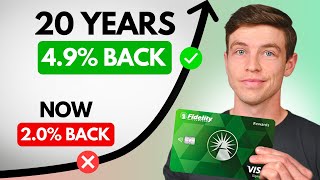
Investing monthly cash back into an S&P 500 index fund at 8% annual return can increase the effective earning rate from 2% to 4.91% after 20 years.
Credit card rewards are best for short-term savings, while investing requires long-term consistency. Card features change every 3-5 years, undermining a 20-year plan.
Using points for travel can save more money than 2% cash back, and those savings can be invested separately for potentially greater returns.
The card is ideal for those tired of complex travel card strategies and devaluations, offering simplicity, no annual fee, and a way to invest rewards automatically.
The Fidelity Rewards Visa is a solid, simple option for those prioritizing ease and long-term investing, but its true value depends on personal spending habits and commitment to investing rewards. For travel optimizers, other cards may yield higher savings through strategic point redemptions.
What is the standard cash back rate on the Fidelity Rewards Visa?
2% on all purchases (2 points per dollar, redeemable at 1 cent per point).
01:24
What is the minimum redemption amount for Fidelity rewards points?
2,500 points ($25), though recently removed for some customers.
02:18
What is the main difference between primary and secondary rental car coverage?
Primary coverage pays first without involving your personal insurance; secondary covers only deductibles or leftover costs after your insurance.
04:24
What travel benefit does the Fidelity Visa offer for Global Entry or TSA PreCheck?
Up to $100 back in rewards points when you apply and pay the fee with the card.
02:48
How can you potentially get a signup bonus for the Fidelity Visa?
Look for targeted mail offers or search online for a $150 bonus after $1,000 spend.
03:14
Why does the video argue that the luxury hotel collection is overpriced?
Hotels booked through the Visa portal are often more expensive than booking directly, making the perks less valuable.
05:30
What is the effective earning rate after 20 years of investing the 2% cash back in an S&P 500 fund (8% annual return)?
Approximately 4.91%.
08:36
What are the three main reasons the presenter gives for not using this card?
1) Card features change every 3-5 years, not 20. 2) Other cards earn higher rates on key spending categories. 3) Travel points offer better savings potential.
11:04
What type of rental car coverage does the Fidelity Visa provide?
Secondary coverage.
04:24
What is the unadvertised feature of the Fidelity Visa regarding travel bookings?
Its own travel portal that gives 6% back on hotels and rental cars.
06:53
Unlimited 2% Cash Back
Establishes the card's baseline value: a simple, no-category flat rate that competes with other 2% cards.
01:24Global Entry/TSA PreCheck Credit
A rare perk for a no-annual-fee card that can offset the card's lack of other premium benefits.
02:48Compounding Boosts Effective Rate to 4.91%
Demonstrates the power of investing rewards over 20 years, showing how a 2% card can effectively yield nearly 5%.
08:36Misalignment of Credit Cards and Investing
Challenges the core premise of the card, arguing that short-term card features and long-term investing are fundamentally mismatched.
10:37Travel Points Offer Higher Savings
Provides an alternative viewpoint: strategic point redemption can save more money than cash back, and those savings can be invested.
13:47[00:01] boring credit card get a lot of unexpected attention with a bunch of Rewards Visa Signature Card. Now, I found that to be interesting because for years and it's always been a decent option for those who value simplicity.
[00:15] And that's because it's got no annual fee and it earns a flat 2% cash back on into an eligible Fidelity account to invest and hopefully grow over time to be worth above 2%. However, to me, this card's always just been okay and not
[00:28] a lot of other credit cards out there. But with all these Fidelity videos curious, and I wanted to see if I was missing something. And it turns out that I think this credit card here might have quietly just got really good for a
[00:41] lot of people going into 2026. So, in this video, I want to go over all this pretty underrated option for the average person. But, I also want to explain why right card for everyone, including myself. And that's because there's one
[00:55] big issue I have with a credit card like this that basically makes it easy for me that issue, let's start off here by quickly going over what this Fidelity cool benefits that you don't normally find in a $0 card. So, first, like I
[01:09] immediately is going to give this credit card a much wider appeal to more people. fees, which is going to be another benefit that's usually found on more the one spending multiplier that you're going to get here is an unlimited 2%
[01:24] cash back on everything with no caps or category restrictions. That makes this a want to worry about keeping track of which credit card to use for different makes this a competitive catchall card that's going to fall right in line with
[01:37] cards that also earn 2% back on everything like the City Double Cash, the Apple Card when Apple Pay is used. Now, if you read the fine print on going to be earning Fidelity rewards points here. So, they tell you that
[01:51] you're going to be earning two points per $1 spent on eligible net purchases. cent per point rate into certain Fidelity accounts where you can then effectively have that cash back grow over time. But just make sure you do not
[02:05] that Fidelity might give you, like gift cards, for example, because those are going to get you below 1 cent per point, which is devaluing those rewards. Now, customers with their credit card have the option to redeem the rewards points
[02:18] account, or you can choose to redeem them on demand whenever you want to account instead. However, they also mention that there's a 2500 point means that you basically need to earn at least $25 worth of rewards before you
[02:34] But that information does seem to be outdated because Fidelity also recently that 2500 point minimum for people that have been using this card for a while. I of customers have been asking for because it's going to allow for more
[02:48] invest. So, you do have to give credit where credit's due when companies make positive changes like this. Now, another benefit that's really cool to see here on this card is that you can get up to $100 back in rewards points
[03:01] when you apply for either Global Entry or TSA PreCheck and then pay the this benefit alone, you're going to be coming out with positive value. But that that is lacking here in terms of benefits, and that is going to be a
[03:14] consistent visible signup bonus. So, this Fidelity Visa doesn't actually offer on the main website for this card. However, I did manage to find another link by just searching around on Google that had a bonus worth 150 bucks after
[03:27] spending $1,000 within the first 90 days of account opening. I've also personally received a bunch of mail offers for this card over the years with many of those well. And then I've also seen plenty of Fidelity customers mentioning online
[03:39] through email, too. So, I just wanted to mention that it is a small negative that signup bonus on this card, but there are some special offers out there. So, if then just be patient and make sure you look around for a bonus. Now, I've also
[03:54] that this card is supposedly able to provide in the form of some travel other travel protections, as well as a luxury hotel collection that the benefits like room upgrades, complimentary breakfast, a $25 daily
[04:10] though these benefits do exist, the true value that they're able to provide is as good as advertised. So, for example, the terms for the car rental coverage already have personal auto insurance or
[04:24] damage, then this benefit reimbures you for only the deductible portion of your administrative or loss of use charges from the car rental company. In other words, for renting cars here in the US, the coverage provided with this credit
[04:38] already have car insurance. So, in the event of theft or damage to your rental with your own insurance first, and then this benefit will kick in if there's still certain costs left over for you after that. What you really want here is
[04:51] rental coverage. So, I'll go ahead and leave a link down below to a few of in the description. And that's because with primary coverage, you're going to card against any theft or damage to a rental car without needing to use your
[05:05] there's always a bunch of other details that you want to make sure you go ahead and research and then understand when it comes to insurance in your own personal the Fidelity Visa's secondary auto rental coverage is better than nothing,
[05:18] because it's not primary. Then for the luxury hotel program that you're going to get access to with this Fidelity card, this is referring to the Visa again, you can see all these benefits here that they list when it comes to
[05:30] booking within this program, like upgrades, free breakfast, and credits to point out here is that this program has a big emphasis on luxury properties, which you can see with brands like Peninsula, Park Hyatt, and Shangri Law
[05:43] you actually visit the Visa website to search around for places to stay within these benefits probably aren't worth that much relative to what these hotels mentioned that Park Heights were in this collection, and I just stayed at the
[05:57] went ahead and looked up the price for a random two night stay here in November and it's going for $1,833 through the visa portal. But if I just the same exact dates on Hyatt's website directly, I'd have to pay $1,645
[06:12] for this twoight stay, which is nearly 200 bucks cheaper. So, would it really Visa to get maybe some very minor benefits? For most people, the answer to that question is likely no. And there's actually plenty of other premium travel
[06:25] have way better luxury hotel programs with better benefits that can really meaningful way. Now, not every hotel booked through Visa is going to be more expensive, and you should always be comparing prices and seeing exactly what
[06:38] travel portal, but the takeaway here is that this hotel benefit that's sort of is most likely mediocre at best because it's sort of just a generic Visa get too excited about it. Also, outside of this Visa Signature luxury collection
[06:53] portal, the Fidelity Visa actually does have its own travel portal. That's kind because Fidelity on its website doesn't advertise this portal whatsoever. With this portal, you're able to earn 6% back on hotels and rental cars that you book
[07:06] here, which is pretty good again for no annual fee card. But the same holds true and what you get when booking within this portal to see whether or not it's else. All right. Now, after talking about all these benefits, that is going
[07:19] here that people really get this credit card for, and that is the ability to invest your rewards for your future where that 2% back that you're earning on everything can effectively grow into a much higher rate over the years. So,
[07:31] video, I do think this card is looking better and better for a lot of people going into 2026 as we compare it to the other credit card options you have that I have with a card that's focused on investing your rewards. So, let's
[07:44] about whether or not I think this card is really going to be worth it for you spending levels are going to be different and the amount of cash back directly tied to your spend. But, let's say that you expect that you'll be
[07:57] spending maybe around $3,000 per month here or around $36,000 per year. That means that at a rate of 2% back on everything, you would earn around $60 of cash back per month or around $720 of cash back per year. And since investing
[08:10] over the long term, let's also say that you're going to be looking to invest these rewards every single month over the next 20 years. So that would be $720 of cash back earned after 1 year at a rate of 2% back before any of that is
[08:23] invested. That's $3,600 earned after 5 years at 2%, $7,200 earned after 10 years and $14,400 earned after 20 years. Now, we're not annual spending numbers here just to kind of keep things simple for this
[08:36] example. So spending will naturally go up over the course of two decades. But cash back earned every single month into a Fidelity account, let's say that we're going to invest that into a lowcost S&P 500 index fund that returns an average
[08:49] of 8% per year. Now, when we go ahead and calculate the return that we're going to effectively increase year after year as we factor in both cash back and time. So that means that after one year, we're going to have $720 of cash back
[09:03] plus $27 of interest. Dividing that by the $36,000 of spending that we did over going to give us an effective earning rate of 2.08% and that's going to be just slightly higher than the advertised 2% rate. However, those 8% annual
[09:17] returns from the S&P 500 are not going to be guaranteed to happen every single year because some years can be higher and then other years can be lower or closer to an 8% annual return on average is to be consistent and then invest the
[09:30] same way over a long period of time. So then that means after 5 years again we've earned a total of $3,600 of pure cash back during that time. But by cash back during that time. But by investing we've also earned around $8861
[09:42] of interest as well. So combined that adds up to give us a 2.45% effective earning rate. Then after 10 years we've earned $7,200 of cash back and then earned $7,200 of cash back and then $3,776.76
[09:57] earning. And after 20 years, we'd have $14,400 of cash back and a crazy $20,94122 of interest for a super high 4.91% credit card and then investing our cash back. Now, that was a lot of numbers and
[10:12] it all sounds really good in theory because once you get past years 10 to 20 is when you really start to see the power of compounding grow your 2% back on everything into 3 to 5%. But 10 to 20 years of investing your credit card
[10:24] rewards consistently in the exact same way month after month, that's going to to the point where this card becomes truly worth it over other no annual fee cards earning 3 to 5% back today. So that is going to bring me to the issue
[10:37] this, which is that in my opinion, credit card rewards and investing have misaligned goals and timelines. To me, credit card rewards, whether that's cash they're really best used to save money in the short term, whereas investing is
[10:51] term. This is something that I feel really strongly about, but I like to keep my credit card strategy and my investing strategy completely separate. this Fidelity Visa card in my wallet. And there's really three main reasons
[11:04] why I feel this way. Number one, I feel this way because investing is something consistently over the course of many decades to see any real results from you need a credit card that's going to offer the same features and benefits for
[11:18] 20 plus years if part of your plan for investing is to invest your rewards. But issuers and their partners are changing their cards features, nerfing benefits, and even devaluing rewards roughly every 3 to 5 years or even less. So, to bet on
[11:32] a certain credit card like this one here from Fidelity, staying the same for 20 willing to make. Number two, the cash back earned here from this Fidelity card back earned from any other credit card out there. So, because there's plenty of
[11:46] other cards earning 2% back on everything or even 3 to 5% back on key spending categories like gas, groceries, dining, and more. I'd prefer to earn the that if that was my goal. And then just set up automatic investments into
[11:59] separately. That would allow me to accomplish my goal of investing automatically, simply, and consistently over decades. And at the same time, I'd by just optimizing my spending categories with maybe a little bit of
[12:13] Plus, I'll likely be able to earn a few valuable signup bonuses along the way as well. And reason number three why I feel that credit cards and investing are best kept separate is because I personally believe that the best opportunity to
[12:26] cards is going to be with travel. I talk about my own credit card strategy all believe in having a heavy focus on earning points and miles on credit cards can then be moved to different airline and hotel programs to book flights and
[12:41] hotel stays. Why? Because my whole purpose here behind using credit cards in the first place was to build credit while also saving money on travel in my early 20s. So when I was working my first job out of school, I really wanted
[12:53] to travel, but I also wanted to save and invest as much money as possible while I investing that money and have the most time for that to grow and compound over only problem with all that stuff was that my budget was incredibly limited.
[13:06] then learning how to leverage those points to redeem and save money on travel that I wanted to do, I was able to basically travel for cheap while I was young and invest as much as possible in my early 20s. Both of which I'm very
[13:19] very soon. I'd actually make the argument here that if you're earning you learn how to redeem those points very strategically to save money on to spend money on anyway, then those travel savings can then be invested and
[13:34] grown over decades to greatly exceed any 2% cash back earned and invested with just this Fidelity Visa. And that's why I don't have this card. It's not that think it's a solid option for a lot of people, but it's really because I value
[13:47] credit cards. So, if I'm able to leverage my points miles to save money savings like I've been doing for a while now, that is going to be paying me more in the future. While the travel that I get to do as well right now, thanks to
[14:02] me dividends as well in the form of memories that I have every single day. So, with all that said, is this Fidelity credit card worth it for you then? Well, and feelings on keeping credit card rewards and investing separate, then
[14:15] that goes both for people who prefer to earn cash back or points and miles for travel. But if you value simplicity and just having one really good no annual have a way to invest that cash back with a really solid company like Fidelity or
[14:29] fees and dealing with all these updates and changes to the more popular credit then I do think this Fidelity credit card can be very much worth it. It's got some nice additional features like no foreign transaction fees and a global
[14:43] entry or TSA pre-check credit on top of all the main benefits that Fidelity did, which is cool. And I've talked about this before, but a lot of people are really just fed up with all the BS of devaluations and increasing annual
[14:55] fees on a lot of travel credit cards out there in today's world. So, opting out think we're going to see more and more people do as we head into 2026. And I perfectly fine thing to do. And this card is going to be a really good option
[15:09] space. With credit cards, you want to find what works best for you. And I do think this Fidelity credit card is going to be a great choice for a lot of people much about playing the whole travel credit card game or even maybe traveling
[15:22] think about this card in the comments section down below. Are you someone could you ever see yourself switching over to it? And if you want to learn more about why exactly I think the credit card game has changed forever
[15:34] make sure to go ahead and check out this video over here on the screen next. But video over here on the screen next. But as always, thanks so much for watching.



⚡ Saved you 0h 15m reading this? Transcribe any YouTube video for free — no signup needed.