Why Do Mushrooms Make Animals Trip?
40sThe question is intriguing and the answer reveals surprising evolutionary theories, sparking curiosity and sharing.
▶ Play Clip"The title is a genuine question that the video directly addresses, delivering on its promise without exaggeration."
The video explores three leading scientific theories for why mushrooms produce psilocybin, a compound that causes hallucinations in animals. It discusses possibilities ranging from evolutionary accidents to spore dispersal mechanisms, concluding that scientists have not yet reached a consensus.
Psilocybin might be an evolutionary accident, similar to human vestigial traits like wisdom teeth or tailbones.
Soil fungi produce bitter or toxic chemicals to deter herbivores, and psilocybin could serve a similar defensive role.
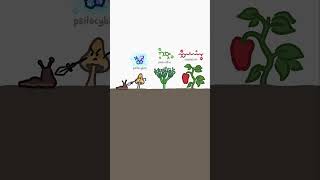
Psilocybin might help spread spores: a slug eats spores, gets disoriented, is eaten by a toad, which then carries the spores far away.
Despite extensive research, scientists still lack a unified theory on psilocybin's purpose.
What are the three main theories for why mushrooms produce psilocybin?
It might be an evolutionary accident, a leftover from a past species, or a way to deter herbivores or spread spores.
00:02
How could psilocybin aid in spore dispersal?
Psilocybin might help mushrooms spread their reproductive spores over longer distances.
00:28
Do scientists have a definitive answer on psilocybin's purpose?
No, scientists still do not have a single unified theory.
00:40
Psilocybin as an Evolutionary Accident
Explains that psilocybin might be a random byproduct of evolution, similar to vestigial traits in humans.
00:02Psilocybin as a Deterrent
Suggests that the bitter taste or toxicity of psilocybin could repel herbivores, a common defense in soil fungi.
00:15Psilocybin for Spore Dispersal
Presents a fascinating chain where a slug eats spores, gets tripped, is eaten by a toad, which then carries spores far away.
00:28No Consensus in Science
Highlights that despite research, the scientific community has not reached a unified conclusion on psilocybin's function.
00:40[00:02] животных испытывать галлюцинации? [музыка] Вот три из наших лучших теорий. Во-первых, производства псилоцибина. Возможно, это соединение — результат эволюционной случайности, как наши «вдовьи пики», или реликт прошлого вида, как наши
[00:15] [музыкальные] бугорки на копчике. Ещё одна версия заключается в том, что это может помочь им отпугивать голодных животных. В конце концов, почвенные виды вырабатывают всевозможные химические вещества, горький вкус или токсины которых отпугивают травоядных животных. Третья идея заключается в том, что псилоцибин помогает грибу
[00:28] распространять свои репродуктивные [музыкальные] споры на большие расстояния. Например, если слизень съест судороги, спровоцированные действием псилоцибина. [музыка] Этот одурманенный слизень с полным брюхом спор может привлечь внимание жабы, которая может съесть слизня, а затем
[00:40] отпрыгнуть далеко, прежде чем [музыка] он выкакает споры. Таким образом, несмотря на многочисленные исследования, у ученых до сих пор нет единой теории о том, как псилоцибин воздействует На данный момент суть в том, что в плане научного понимания
[00:54] научного понимания псилоцибина еще есть над чем to our scientific understanding of psilocybin, there is still so mushroom for improvement.
⚡ Saved you 0h 01m reading this? Transcribe any YouTube video for free — no signup needed.