
The Real Villain of Willy Wonka
45sChallenges a beloved childhood film by revealing Grandpa Joe as a controversial villain, sparking debate and curiosity.
▶ Play Clip"Title accurately reflects the video's core argument about the Grandpa Joe meme and its societal implications."
This video analyzes the internet meme culture surrounding Grandpa Joe from the 1971 film 'Willy Wonka & the Chocolate Factory', arguing that the widespread hatred for the character reflects a deeper societal tendency to blame the poor for their poverty while idolizing wealthy industrialists like Willy Wonka, despite Wonka's morally questionable actions such as using slave labor.
In 2004, anonymous authors Umpa and Lumpa launched 'Say No to Grandpa Joe', a satirical website criticizing Grandpa Joe as lazy, misogynistic, and a bad influence. The meme gained popularity after a 2010 viral rant by sports commentator Jim Rome.
The memes target the 1971 film version of Grandpa Joe, not the 1964 novel or the 2005 Tim Burton remake. The 1971 film significantly changes the character, making him appear lazier and more burdensome.
Burton's 2005 film closely follows the novel, including details like the pink glass boat. Grandpa Joe is sweet and supportive, giving Charlie money and celebrating his golden ticket without selfishness.
The 1971 film omits Mr. Bucket, has Grandpa Joe jump out of bed only when he learns he can go to the factory, and changes the tone to absurdist comedy. These changes make Grandpa Joe seem lazier and more of a burden.
The Grandpa Joe meme symbolizes the 'lazy poor' stereotype. It reflects a worldview that blames the poor for their poverty while idolizing billionaires like Wonka, despite Wonka's exploitation.
Willy Wonka uses slave labor (Oompa Loompas), fires all his workers to protect intellectual property, and extracts wealth without providing jobs. The 1971 film glorifies him uncritically.
Charlie's family is impoverished because Wonka fired Grandpa Joe. The meme blames the victim of Wonka's capitalism rather than the capitalist himself.
Burton's Wonka is socially awkward and hated, subverting the glorified image of the industrialist genius. The 1971 film, however, uncritically admires Wonka.
The Grandpa Joe meme reveals a cultural tendency to condemn the poor as lazy while excusing the exploitative actions of the wealthy. The video encourages viewers to resist this narrative and be more skeptical of those who resemble Willy Wonka.
Who created the 'Say No to Grandpa Joe' website?
Two anonymous authors going by Umpa and Lumpa.
Which version of Grandpa Joe is the primary target of the memes?
The version from the 1971 film 'Willy Wonka & the Chocolate Factory' starring Gene Wilder.
02:14
How does the 1971 film's Grandpa Joe differ from the novel's version?
In the 1971 film, Grandpa Joe jumps out of bed only when he learns he can go to the factory, and he encourages Charlie to try the fizzy lifting drink, whereas in the novel he is sweet and supportive.
04:16
What is the 'Condescending Wonka' meme used for?
To sarcastically tear down someone's foolish opinion.
08:09
What did Roald Dahl originally write Charlie as?
Black, but the publisher made him change it.
09:27
Why did Willy Wonka fire all his workers?
He was worried that spies from other companies were stealing his chocolate-making secrets.
10:32
What does the video argue the Grandpa Joe meme reflects about society?
A tendency to blame the poor for their poverty while idolizing wealthy industrialists.
07:30
How does the Tim Burton remake portray Willy Wonka differently?
As intensely socially awkward, germophobic, and with daddy issues, universally hated.
12:17
Meme as a Reflection of Societal Attitudes
Reveals the core thesis: the meme symbolizes blaming the poor while idolizing the rich.
07:30Willy Wonka's Moral Failings
Highlights the hypocrisy of criticizing Grandpa Joe while ignoring Wonka's exploitation.
08:48Irony of Blaming Grandpa Joe
Points out that Wonka's firing of Grandpa Joe caused the family's poverty.
11:35Burton's Inversion of the Industrialist Myth
Contrasts the glorification of Wonka in the 1971 film with Burton's critical portrayal.
12:17[00:00] In 2004, two anonymous authors going by the name's Umpa and Lumpa launched the satirical
[00:13] website Say No to Grandpa Joe. The website states it's tongue-in-cheek purpose as such. Willy Wonka and the Chocolate Factory is a well-loved movie based on the wonderful book Charlie and the Chocolate Factory.
[00:25] Parents love it, children love it, heck, we even love it. That does not mean it is perfect. Our goal is to expose the dark underbelly of the story, to reveal, once and for all, the truth about the only real villain in the movie, and no, it's not slugworth, it's Grandpa
[00:41] Joe. Look at me! Look at me! The website goes into detail on all of the reasons they hate Grandpa Joe. He's ill-mannered, slovenly, misogynistic, perverted, hard-hearted, vindictive, selfish,
[00:59] cruel, a slacker, and he's a bad influence on Charlie. For several years, the meme remained a niche internet curiosity, like, can you believe it some people hate the character you're obviously supposed to like? But the idea Skyrot gets in popularity after a viral rant by sports commentator Jim
[01:15] Rome on the character in 2010.
[01:38] Characters that make my blood boil in film, Grandpa Joe, yeah, fuck that guy. And while most of the memes are just as much of a joke as the original website, I think
[01:54] it's also true that they are often shared sincerely, and that they satisfy a white-hot anger towards the so-called lazy poor. So why did this happen?
[02:14] It has to be noted that the vast majority of the memes around Grandpa Joe are solely about the version of the character that appears in the 1971 film, Willy Wonka, and the Chocolate Factory starring Gene Wilder. And not the character as he appears in the original 1964 novel, Charlie and the Chocolate Factory,
[02:30] or the Tim Burton directed remake of that name that came out in 2005. So it's worth thinking about why this version of the character draws the most ire while the other two do not. The chief selling point of the Tim Burton remake seems to be that it would do what the original
[02:44] film did not, by being as faithful to the source material as possible. With at least one huge exception, we'll get to later. Tim Burton's film has a nearly identical plot to the novel, and even includes tangential
[02:56] chapters like the anecdote of Willy Wonka selling a chocolate palace to an Indian Maharaja. It includes all of the competing chocolate companies in the early parts of the story, it makes sure to tell you the name of the chocolate bar, Charlie finds the golden ticket in, which
[03:10] is the same as it is in the book. But was for some reason different in the Gene Wilder version? Like there's a lot of care put into getting everything exactly right.
[03:22] The aesthetics of the world are detailed, perfect recreations of what is in the novel. For example, in the book, we get this passage about the boat Wonka has on the chocolate river. It was a large open rowboat with a tall front and a tall back like a Viking boat of old,
[03:35] and it was of such a shining, sparkling, glistening pink color that the whole thing looked as though it were made of bright pink glass. That's exactly what appears in Burton's film, whereas the filmmakers of the first movie read that passage as Willy Wonka has a fancy boat, and so the vote in that movie looks like
[03:51] this. All of this is part of Burton's attempt to evoke the kind of whimsy the book does. The music choices put a layer of sentimentality over everything. The narration is warm and comforting, like the story is being read to you by your parents
[04:03] before bedtime. It was not faster or stronger, but more clever than other children. So in a lot of respects, Burton's film is the book, just on screen. And that is true for Grandpa Joe.
[04:16] As in the book, Grandpa Joe is very sweet in all of his scenes. He gives Charlie money so he can buy more chocolate and get a golden ticket. He celebrates when Charlie gets the golden ticket before he learns that he gets to go to the factory as well.
[04:28] He doesn't sing a song about how he has a golden ticket, rather than Charlie, and he doesn't encourage Charlie to try the fizzy lifting drink that nearly gets him kicked out of the competition.
[04:41] The Burton movie also doesn't exclude Mr. Bucket in the household, which makes it feel like Grandpa Joe is being less of a burden on Mrs. Bucket. Both the book character and the remake character are written so that the audience is rooting for Charlie to help Grandpa Joe, though obviously the fact that the Burton film is not as popular
[04:57] as the original is also why people tend to focus on this Grandpa Joe, rather than this one. The Gene Wilder movie is very different from either of the other entries in the franchise.
[05:12] There are major plot differences between the characters. There's no Mr. Bucket, Grandpa Joe only jumps out of bed when he learns that he himself is going to go to the factory. A lot of the intrigue about where Willy Wonka gets his workers and what his competitors are
[05:24] up to is emitted. The movie changed so much of the original book that Roll Doll actually hated it, thinking among other things that have put too much emphasis on Wonka and not enough on Charlie. With Grandpa Joe specifically, the changes can make it seem that he is putting a bigger burden
[05:37] on the family than he is in the other versions of the story, and that he's just being lazy rather than genuinely frail. But again, the biggest difference between this film and the other chocolate factory stories is tone. It actually shocked me how much of an absurdist comedy this movie is, especially in its first
[05:52] half, which had sort of been erased from my memory for a decade, overshadowed by its opulent second half in the factory. But in that first half of the story, Willy Wonka and the Chocolate Factory is not a film that takes place in reality.
[06:05] Everything is heightened and insane, and everyone is insanely obsessed with Willy Wonka's chocolate. Teachers are teaching percentages by using Wonka's chocolate as an example. The president of the United States has wonka chocolates brought to him because even he wants
[06:19] a golden ticket. And the movie has these hilarious cutaways to random characters that feel more at home in an Austin Powers movie, or an SNL sketch. In this one, a woman's husband has been kidnapped and the kidnappers want her to give them
[06:32] her Willy Wonka chocolate bars, and she's like, hmmm, husband, or chocolate.
[06:47] There is so much build up about how special getting to go to the factory is that when Charlie finally gets the ticket, that movie celebrates this with 1, 2, 3, 4, 5, 6, 7, 8, 9, extremely
[06:59] long shots of Charlie running through London while the music swells. It's glorious. In his only display of cinematic self-restraint, Tim Burton only used two shots for this moment. So it's in the context of this absurd setting where everyone unquestioningly will do anything
[07:15] for chocolate, where chocolate is the most important thing in the world. That grandpa Joe suddenly regaining the ability to walk just because he gets to go to the chocolate factory is the least silly thing that happens. But the memes about grandpa Joe aren't really about grandpa Joe, though they sometimes
[07:30] make fun of his other qualities. The main reason the character is meamed is because he is seen as the perfect example of a poor person who is poor because they are lazy, a leech on society and a burden on their loved ones.
[07:42] And though the profasiveness of the meme doesn't mean people actually think about the character this way, like it's still usually a joke, it does strike at a deeper perception about how the world works and who is to blame.
[07:54] So why is it the grandpa Joe's of the world provoked so much rage? Why not, you know, freaking Willy Wonka himself.
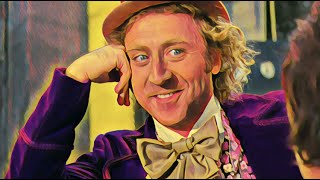
[08:09] Grandpa Joe isn't the only character from this movie who is the subject of a meme. You've probably seen this image more times than you can count. On KnowYourMemes.com it's called CondescendingWonka and it's used to sarcastically tear down someone's foolish opinion on something.
[08:21] It's not hard to figure out why this character is idolized. All of the build up to Wonka's factory is build up to meeting Wonka himself. And everyone up until that point looks up to him. He dresses fantastically and is our guide to this fantastical world, presented as all knowing
[08:36] and all-seeing. On top of this, Gene Wilder's performance is magnetic and often hints at a deeper layer to the character behind his eccentricities. But Willy Wonka, not a good person, is.
[08:48] If we're going to tear down Grandpa Joe for the economic consequences of his actions, then why not, Willy Wonka as well? First and foremost, being he uses slave labor? Yeah, let's talk about the Oopalumpas in their history.
[09:02] So in the original edition of the novel, the Oopalumpas were described as African pigmies. But after the film was announced, the NAACP argued that Wonka going to Africa picking up workers and bringing them back to England to work in his factory.
[09:14] Sort of, well, pretty much resembled slavery one-to-one. Doll actually agreed with the criticism. And in a new edition, they took out the pygmy background, and in the art they were drawn as white people similar to hippies.
[09:27] Also, in fairness to Doll, he originally wrote Charlie as black, but the publisher had him change this thinking that audiences would reject a black protagonist because, wow, nothing's changed. Then in the Gene Wilder movie, the Oopalumpas were made even more fantastical with their
[09:42] orange skin, green hair, and white eyebrows, further distancing them from any racial connection. The Burton films revised all of this in the opposite direction by having all of the Oopalumpas played by De Broe, a Kenyan British actor with Indian parents.
[09:55] That film also depicts Wonka trekking through the forests of Lumpa land and shows the Oopalumpa society before Wonka takes them to his factory. So the franchise has both tried to steer away from these colonial implications and then tried
[10:07] to embrace them. But in either case, it's hard not to look at Wonka for what he is. A colonialist, capitalist who brings the people of one country to another so that they will do labor for him without him having to pay them actual money, he pays them with
[10:19] cocoa beans. Now, the reason the Oopalumpas are in this story at all is interesting, though, because they are the answer to the initial mystery in the story. In all three versions, before the plot starts, Wonka gets worried that spies from other companies
[10:32] are stealing his chocolate making secrets, so he fires all of his workers and replaces them with Oopalumpas who all live in the factory, allowing him to shut the factory away from the rest of society, which heightens the intrigue for Charlie and the reader as no one can tell
[10:44] them what's in there before they get there. How does Willy Wonka run his factory without workers? He has Oopalumpas. It's also a plot point that really brings together a full picture of what kind of person
[10:56] Willy Wonka is and why our reaction to him as a character is so strange and interesting, because we are on some level meant to react with a level of awe and wonder at Wonka. That's what everyone in the story is doing, and everyone who gets frustrated with him throughout
[11:09] the film is immediately comically punished, leaving Wonka always looking like the victor. But again, Wonka fired all of his workers just to maintain intellectual property, and then he replaced them with slaves.
[11:21] All of the wealth the factory produces is wealth that he extracts from society without putting anything back in the form of jobs. You want to skewer Grandpa Joe because he allegedly doesn't provide for his family while feigning sickness? Well, why is Charlie's family impoverished in the first place?
[11:35] It's because Grandpa Joe used to work at the chocolate factory and then was one of the people Wonka fired. You're living in poverty, Charlie, just so this rich f*** can profit off the chocolate you love rather than a different rich f***. Let's pump the brakes a little bit here.
[11:48] These are just movies, and these are just memes, but what I find interesting about all of them is that it points to a way of viewing the world that is pretty common. Memes are in some sense true. They become popular because they strike a chord with us, not just as a piece of humor but
[12:03] as a representation of our values. They do not need to search very hard for examples of people blaming the poor for their poverty and calling them lazy while turning around and portraying billionaires as eccentric and brilliant. I suppose this is actually one of the things I like about the Burton remake.
[12:17] Even though the 1971 film is, in my opinion, much more fun to watch, the portrayal of Wonka as this intensely socially awkward, germophobic shut-in with deep-seated daddy issues that everyone, like pretty much uniformly hates, is a hilarious inversion of what we've come
[12:31] to expect of the mythical industrialist genius. Meanwhile, in the wilder film, they're glorifying Wonka right up until the credits. It always feels very strange and a little bit uncomfortable that the way Charlie wins is
[12:43] just that he gets to have the factory, but only on the condition that he runs it the way Wonka wants it to be run. It doesn't feel like a victory, it feels like child abuse. But the movie still uncritically looks up to Wonka.
[12:55] I think it's really easy to fall into the trap of thinking about the world in these easy tropes. And when I watch Willy Wonka and the Chocolate Factory, I wish we could resist the urge to condemn people as grandpa Joe's, and be a little more skeptical of people trying
[13:09] to be Willy Wonka. This video is brought to you by Mooby, a curated streaming service showing incredible films
[13:21] from all around the world. If you watch my channel, you probably love movies and are thirsting for something that feels new. That's where movie shines. Every day, movie adds a new film, whether it's a movie by an emerging talent or from an established director.
[13:34] What that means is that there's always something fresh to discover. I especially love that it's a place to be exposed to non-English titles. It's the easiest way to jump the 1-inch tall barrier. So if you want to try Mooby and have your own personal little film festival that you can
[13:46] stream anywhere anytime, you can get it for free for 30 days by going to mooby.com slash just right. That's m-u-b-i.com slash just right for a whole month of great cinema for free.
[13:59] Thanks for watching everyone, and a big thank you to my patrons for supporting me on Patreon. Keep writing, everyone.
⚡ Saved you 0h 14m reading this? Transcribe any YouTube video for free — no signup needed.