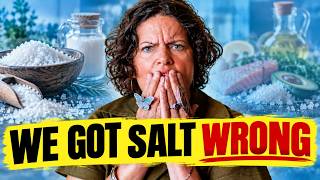

Salt is NOT the enemy!
60sChallenges a common health belief with a surprising study, creating curiosity and debate.
▶ Play Clip"Delivers on the promise with a solid study and actionable steps, though the soy segment feels like a separate video tacked on."
This video challenges the common belief that salt is bad for you, citing a 2021 European Heart Journal study of 181 countries that found higher sodium intake is linked to higher life expectancy—but only when combined with a real-food diet. The presenter explains the study's findings, offers five steps to improve your relationship with salt, and then pivots to discuss soy as a metabolism-boosting food, emphasizing the importance of choosing organic to avoid glyphosate.
A 2021 European Heart Journal study of 181 countries found that countries with higher sodium intake also had higher life expectancy, contrary to common belief.
The benefit of sodium is only seen when eating real, whole foods. Each extra gram of dietary sodium was associated with a 2.6-year increase in healthy life expectancy.
Ultra-processed foods, high in bad oils, flours, sugar, and sodium, are harmful. This type of sodium 'will kill you.'
Fasters need more salt because when glucose and insulin drop, the kidneys release sodium. This can lead to symptoms like keto flu, fatigue, and heart palpitations.
Table salt is highly refined and washed with chlorine. Choose high-quality artisan salts tested for microplastics and toxins, like Redmond Sea Salt.
Salt cravings are a sign of a maxed-out nervous system. Sodium helps calm the adrenal glands and pull you out of fight-or-flight, so cravings indicate stress.
Monitor blood pressure, especially if you have hypertension or cardiovascular issues. Consult your doctor and bring the study to the conversation.
Soy is a complete protein, high in fiber, low in carbs, and rich in phytoestrogens, which can speed up metabolism and reduce menopause symptoms.
Soy is one of the most heavily sprayed crops with glyphosate, a carcinogen. 48% of all GMO foods are soy, and 75% of global soy is GMO. Always choose organic.
Seven ways to eat soy: edamame, soy nuts, tempeh, soy milk, tofu, miso, and soy sauce. Each offers different textures and flavors.
The video challenges the conventional wisdom that salt is universally bad, showing that when paired with a real-food diet, it can support longevity and nervous system health. The key is to choose high-quality salt, avoid ultra-processed foods, and monitor your health markers.
Salt and Longevity Study
This is the core evidence that challenges the common belief that salt is universally bad.
00:27Real Food vs. Processed Food
The distinction between sodium in whole foods vs. ultra-processed foods is crucial for understanding the study's results.
02:27Salt for Fasters
Practical advice for those who fast, linking sodium to kidney function and common fasting symptoms.
05:38Salt Cravings and Nervous System
Connects salt cravings to nervous system stress, offering a new lens for understanding dietary cravings.
11:07Soy and Glyphosate
Highlights the prevalence of GMO soy and the health risks of glyphosate, emphasizing the need for organic choices.
25:48[00:00] So are you waking up really tired, dragging yourself through the day, three o'clock you crash? I have some really interesting news for you about one of the biggest nutritional myths on the planet
[00:14] and that is that salt is bad for you. I want to re-pattern salt and listen to this study because it can help you with all those symptoms that I just talked about. Hear me out. There was a study,
[00:27] a 2021 European Heart Journal study that looked at the health of 181 countries. And they wanted to see if the countries that had a higher sodium intake,
[00:45] if they had a lower life expectancy. And what they came out of the study with is finding the exact opposite, that the countries that had a higher license expectancy also had a higher sodium intake.
[01:06] How is this possible, and what do we need to know? So in this video, I want to walk you through this, because this is not licensed to go grab the salt and just start salting everything.
[01:20] I want to explain why this study got this result, and I want to more importantly explain how it maps to your health and why you might want to start a very new relationship to salt.
[01:36] Now, I want to thank you all for the feedback on my new nervous system questionnaire. It is a free gift to all of you. And this comes up in this video. I want you to know your nervous system state.
[01:49] I left the link in the notes so that you can map every single health habit to your nervous system state. So it's in the notes. Check that out. It's going to come into play in this video. So stay tuned for this. Here's what the study found is that the countries that
[02:08] eat real food, real whole food, had a higher sodium intake when they were eating that real whole food. So they were salting their food, but they were eating real food. And when those,
[02:27] that was the magic that if they ate real food and they added sodium to their diet, they had a 2.6 year increase of healthy life expectancy for every extra gram of dairy sodium
[02:46] intake. Now, here is the important part to this. These countries do not eat an ultra-processed food diet. Ultra-processed food is what you're going to get in your fast food. It's what you're
[03:00] going to get in the middle of your grocery store. These are your bad oils, your bad flours. These are high sugar and they're high sodium. And in that combination of style of eating,
[03:12] that type of sodium will kill you. This reminds me a lot of the fatness that we for years went low fat. And then all of a sudden what ended up happening is everybody gained weight.
[03:27] It's because we didn't understand that there was low fat, that there were some fats that were helpful and there were some fats we needed to get rid of. I also saw this in the carbohydrate world
[03:40] where all of a sudden we're like, all carbs are bad, and everybody stayed off of carbs. But we forgot to say that there are nature's carbs with fiber, and those carbs are good.
[03:53] And the carbs that come with ultra-processed foods, the refined flours and sugars, not good. This is a little bit of a twist on that. What this study said, and they really pointed this out when I dove into the study,
[04:07] is in combination with the real food diet, it actually sodium increased life expectancy and decreased all-cause mortality at the same time.
[04:22] So it prevented disease and kept you living longer in a healthier way. Now, I do want to say that the authors of the study were obviously cautious about making sure that people didn't run out and just go cart launch with salt.
[04:40] So I want to walk through five steps with you all of how you look at salt and change this relationship and do it in a healthy way. So here we go. I'm going to walk through the five steps.
[04:54] First, you got to eat real food. So this isn't putting extra salt into your diet because you watched this video. Your first step to making salt work for you
[05:09] is you're going to go from an ultra-processed food diet to a real food diet. I have done so many videos on that. So really important that we add this to the diet that these countries did.
[05:25] Step number two that I want you to think about is that if you are fasting, you need more salt than the typical person. And most of you that come here to my channel, you guys are fasting.
[05:38] And so what ends up happening is that you require more salt because when glucose goes down and insulin goes down, it signals to your kidneys to release sodium.
[05:54] Now, I kind of like this as a kidney cleanse. It's a great way to get the kidneys to release what it might need to let go of. But if you decide to go into like a three-day water fast, going into the fast, I want you
[06:10] to think about making sure you have plenty of sodium before you go into the fast and a real food diet. And when you come out of the fast, I want you to think about, okay, well, maybe I will
[06:23] add more salt in because I just depleted my kidneys of sodium. We have also many times, we've all been here talking about Element T, which is a sodium, potassium, and magnesium
[06:36] addition that I recommend when you fast. We'll leave links below. You can also go to the website and they have a whole recipe where you can make this on your own. But if you are fasting regularly,
[06:50] I want you to consider adding more salt in. It's the things like keto flu, the things like fatigue during fasting or heart palpitations, what that is can often just be a sign that your salt levels have gone too low.
[07:07] So it's a really easy add-in to just do some salt. I mean, it can be as simple as you just take your finger on the salt and you just add it into your mouth. Redmond Sea Salt actually has, I don't know if they still have this,
[07:22] but they have these salt rocks that they had sent me years ago when I first started teaching fasting. And they're like, oh, your fastest can lick this rock when they're fasting. I don't know if they still have that.
[07:35] But at the time, I was like, that seems precarious. I can't imagine sitting here with you all on a video and saying, you can't have food for so long, but you can lick this rock. I'm pretty sure y'all wouldn't come back to my videos.
[07:49] I don't know. Let me know in the notes. So, fasters, we want to consider bringing sodium in. Step number three I want you to think about is the type of salt.
[08:03] So this salt Redmond Sea Salt the reason I like it is it is tested as the salt for microplastics so many salts have plastics in them have toxins in them So if you have a favorite salt I not trying to bring you over to Redmond I just offering this up as what I
[08:23] know. But if you have a favorite salt, email the company and ask them what, you know, tell me if you have tested for microplastics. Salt tends to be one of those foods that has more microplastics
[08:40] than others. So that's the first thing when we're looking at type of salt. Second thing is what about our table salt? Okay, you know the one with the woman with the umbrella on the front wrapped
[08:54] around the outside of the salt container, or what about if you go to a restaurant and there's salt, that is chlorinated salt. So table salt is highly refined, and it has been washed with chlorine.
[09:10] If you're going to mimic this study and start improving your relationship to salt and using salt for your health benefit, this is not chlorinated salt. We need to make sure we're
[09:24] using a high quality salt. I can tell you that I know that Redmond sea salt comes in a little travel bottle, like this big. I take it with me when I travel all the time, so that when I have
[09:38] it in my purse, so when I sit down at a meal to eat a meal, I just start to shake and pull out my own little shaker. And I know I got my salt is in good, is healthy salt. So there's so many artisan
[09:53] salts out there. There's flake salts, there's rat fine salts, there's salts with spices. You can do all of them with a whole foods diet. I just want to make sure you're doing salt that has been tested
[10:06] for many of these toxins. Because now, if it's toxic toxins, we're not going down a health and longevity path. Number four, and this one is really interesting and ties into what I said
[10:20] in the beginning of the video. So what's with the crash at three in the afternoon? What's with waking up exhausted every morning? What condition comes with dragging yourself
[10:35] through the day? That has to do with a maxed nervous system. This is why I created my nervous system questionnaire is I want you all to start to think about your health habits through the
[10:50] lens of your nervous system. When we look at salt, and especially those of you who have a craving for salt, I used to be one of these people. I still have my moments. But what we need to address
[11:07] is that when you are in a state of fight or fright, I called it in the nervous system questionnaire, I call it the yellow zone. When you are in a yellow zone or a red zone of nervous system,
[11:21] where your nervous system is completely maxed out and you're in a freeze state, you often will crave more salt. Okay, why do you crave more salt? Remember, everything I'm teaching
[11:35] you here on this channel is that your body is always doing the right thing at the right time. so when a craving goes up for salt it is an indication that your nervous system has hit a
[11:51] maxed out state because what sodium does is it pulls you out of fight or flight it nourishes your adrenal glands and calms them down it doesn't prime your parasympathetic nervous system it's not
[12:07] like it moves you into parasympathetic, but what it does do is it starts to relax your nervous system and pull you out of a fight or flight. This is why you crave it, because you're intelligent,
[12:21] and your body's like, give me something so that I can move towards a relaxed state. This is very analogous to what I taught you with blood sugar. Our sugar cravings happen because our blood sugar
[12:39] dropped and your intelligent body is like, oh, I need that blood sugar to go up, so let me give you a sugar craving so that you will start to move the blood sugar in the right direction.
[12:54] The craving for salt is an indication that your nervous system is under stress and it needs some assistance. Again, check out my NSQ.
[13:06] I really spent a lot of time on it to help you all. It will come with a list of foods to eat and things to think about for each specific nervous system state.
[13:18] But salt craving, stressed out nervous system. Crashes at 3 in the afternoon. waking up tired and jogging, a nervous system that is maxed out. So we can use salt with whole foods to start to repair that system.
[13:36] Step number five I want you to think about is the fact that you still should watch your numbers. So one of the things I appreciated about this study was that the authors,
[13:48] I think they probably understood that what they were bringing forward to the world could create a lot of chaos. And it could cause a lot of doctors to get upset. It could be, you know, people were eating an ultra-processed food diet.
[14:02] It might be that all of a sudden, you know, they start adding salt in. There's heart attacks, blood pressure, right? We don't want that. I don't want that from anybody watching my YouTube videos. So let's watch your numbers.
[14:14] and the most important number is blood pressure. So if you have high blood pressure and you're on blood pressure medication, if you have had any kind of cardiovascular situation,
[14:28] I always want you to run this past your doctor because I want you to be safe. But one of the best ways to run this kind of stuff past your doctor is to bring the study to him or her.
[14:43] So you can email it to them. So I'm linking the study that showed that people who eat a real food diet have a really healthy outcome with salt. Go ahead and bring that to your doctor so that your doctor can see what I'm reporting back to you.
[15:01] And that way you're now talking to your doctor in a language that he or she understands and respects, which is science. I am not just pontificating on this, but when I saw this study, I was like, wow, we've got to change our relationship to salt.
[15:19] So those are your five steps. You're going to go to real food. You're going to make sure if you're fasting that you are doing the right things. You want to make sure that you are eating the right type of salt.
[15:32] um you want you can if you have salt cravings you want to look at the stress levels um and you want to watch your numbers those of you i just want to point out that are struggling with with fasting
[15:48] this may be the key so please let's start to have conversations about this those of you that need more help with this kind of stuff come into my membership group it's called the reset academy
[16:00] this is where we coach people me and my team of coaches and we help everybody over there try to customize this kind of information for the right specific need of your body here are your three
[16:15] action steps first i want you to go to your pantry right now and i want you to look at what type of salt you have is it a table salt if not if it is i want you to go next time you at the store I want you to look at the salt and look for artisan salt
[16:34] If that's too complex, I will leave codes for Redmond Sea Salt because I've already vetted this one. It may be helpful for you. I'll leave the links. And you can sometimes find these at the grocery store as well.
[16:46] So know your salt. That is the first one I want you to do immediately. It's easy to do. Okay, second thing I want you to do is if you are a faster and you're in my world as a faster, I want you to start thinking about how you can bring salt into your fasting window.
[17:07] So this would be like put it in some water. I've even done with fasters before. I've done things like take some nut butter and put some salt on top of nut butter.
[17:19] We've done three-day water fasts with bone broth. You can salt your bone broth. That could be really helpful. But in your fasting window, I want you to see what kind of drink you can drink or just take your finger, put some salt in your mouth,
[17:36] and see if your symptoms are better, if your fasting window experience is better. So we've got our quality, and we know that when we fast, we need to make sure that we're adding sodium in.
[17:50] Last thing, and this is a big one, but I'm just going to keep putting it out there. Let's start making a move from ultra-processed foods to whole foods. So as you are making healthier choices, let's get off the packaged foods.
[18:05] Let's get off the bad oils. So let's talk about oils for a second because that is a key thing. I want you to, when you go to look for your salt in your pantry, I want you to go and look for what type of oils you have.
[18:19] If you have vegetable oil, canola oil, cotton seed oil, soybean oil, I just want you to get rid of them. Those are killing you. They are raising your blood pressure.
[18:31] They're leading you towards all kinds of diseases. Let's just get rid of them. Disease is really expensive. So if you're like, wait, I just bought it. I want you to lean into olive oil, avocado oil, sesame oil.
[18:44] I mean, olive oil is one of my favorite. It's what we have here in our house. We have links for a company that is like the highest quality olive oil. We'll put it down there for you all. But the third step, action step, I want you to start taking is looking at oils
[19:01] because bad oils raise your blood pressure. They lead you towards harmful diseases. So as we start to bring back salt, let's make sure that the offenders that make salt not work in our body,
[19:16] that we're getting that out of our system. So hope this was helpful. Let me know. Put in the comments if this was new information, if you're going to follow my action steps.
[19:28] Let me know your favorite salt. But most importantly, let's change our relationship to salt because it can be a nervous system regulator. And that is a very important part of health,
[19:40] is bringing us back into a balanced nervous system. We're going to talk about the number one food that feeds up your metabolism. Think about that for a second. This food, I'm not talking about taking a food away.
[19:53] I'm talking about adding a food in and you get a faster metabolism. And we're going to talk about seven ways you can make this food. Because the interesting part is this food could be a health food or it could be a toxic food,
[20:08] depending on the type that you get. So let's dive in and look at that. first, let's just say what the food is. It is soy. And I've done a lot of videos on soy because I'm really trying to bring soy back.
[20:22] In all my books, I've written a ton about the phytoestrogens that are in soy. They are so helpful for women. And I think one of the challenges we have in believing this is that there was an old research that said, oh, my God, if you eat soy, you're going to start to get cancer.
[20:37] And I can tell you firsthand that I interviewed Dr. William Lee on my Resetter podcast. We'll link it here below. You can listen to it. And he was one of the authors on the study that came out and said that soy was carcinogenic.
[20:55] And what he said is when, and you go listen to yourself, but that when they went back and re-looked at, I still don't understand how this happens, but when they went back and they re-looked at the data,
[21:07] that they realized that the person interpreting the data misread the estrogen metabolite that it increased. You have three estrogen metabolites, and one of them is toxic, one of them stores in the body,
[21:21] and one of them is protective, and that soy actually increased the protective estrogen. And this particular author looked at just total estrogen, not, he didn't break it down into protective estrogen.
[21:37] So William Lee's like, soy is incredible. He even went on to tell me that it's one of the greatest tools for stopping blood flow to tumors that form in the breast.
[21:49] We need to bring soy back. But for the sake of this video, we're going to talk about how it speeds up your metabolism. So here's why soy is so great. So first, you have to remember that it's high in fiber.
[22:01] It's a legume. A legume is a bean. It's high in fiber. low in carbs and it's a complete protein that's important because an incomplete protein won't have as many amino acids and we're always needing amino acids to be able to make neurotransmitters
[22:18] and hormones soy has a complete protein it's high in fiber and it's low in carbs which what does that do for you those of you that have been following me here for a while what have i been teaching that fiber does and protein does and get and bringing the carb load down it kills hunger
[22:36] so fiber and protein are very filling which makes soy a top food for anybody who's trying to lose weight and it's you can put salt on it we'll talk about that in how you can make how you do it but
[22:50] it's crunch it can have a crunch to it those of you that you know like it you have to use your fingers sometimes to open it up, those soybeans, because they're covered with a little enclosing, so it's an experience, let's just put it that way. So a little bit more, less accessible than
[23:08] just pulling a chip out of the bag, so you have to work a little bit for it. But here's the real magic of soy, it's all in its phytoestrogen, and you make estrogen, and plants make estrogen,
[23:20] and the estrogen that plants make when they go into the human body helps support your total estrogen load just like I said that Dr. William Lee noticed and there was a 2020 review that found
[23:34] eating phytoestrogen rich soy speeds up metabolism leading women women to burn total fat throughout the day now you mix that with another study I found a 21 review that found that phytoestrogens
[23:49] in soy increased estrogen level and decreased menopause symptoms. So with this one food, you can burn more fat and you can feel better. Now, when we look at menopause symptoms like
[24:03] depression, fatigue, brain fog, weight gain, when we are adding in foods that are reducing those symptoms, it actually also reduces that emotional eating that so many of us, I've been there myself,
[24:17] that have been conditioned to do. So, yes, it helps with those symptoms, and it speeds up your metabolism. They're also incredibly high in antioxidants. They're great in, they're packed with phytoestrogens.
[24:32] That combination is going to lower inflammation. So those of you that feel like you getting bloated you feel puffy from anything from your life from menopause it can really bring that inflammatory component down Now there is a downside to soy that we need to talk about and that that the
[24:51] type of soy you get matters. So the first thing I want you to know is you always, always, always get soy organic. End of story. If it's not organic, it does not have these benefits and let me tell you
[25:05] why. Soy is one of the most heavily sprayed crops, and it is sprayed with a chemical called glyphosate, a chemical that, if you live in America, I'll explain this in a moment, but our president is
[25:20] now allowing this chemical to be sprayed on all of our food, and as of this week, as I am doing this video, as of a few days ago, he has given immunity to Bayer, which is a company that makes
[25:34] glyphosate that if anybody gets damaged or health comes from glyphosate, you can't sue Bayer. This is a major problem. So here's what you need to know about soy that's sprayed with glyphosate.
[25:48] So a 22 study found that soy is the biggest GMO crop in the world, making up 48% of all genetically modified foods. 75% of all soy grown worldwide is also genetically modified.
[26:03] So this isn't just in America. I know in France and in Mexico and maybe in Italy, but mostly France and Mexico, I do know that they have outlawed the spraying of glyphosate on foods.
[26:18] And the thing that's so harmful about spraying and about non-organic soy is that it's genetically engineered, meaning that they have changed its original state.
[26:34] Now think about that for a moment. The earth gave us something spectacular, and we change it at the seed level. We genetically modify it so it's not giving us the same healing powers that it once did.
[26:49] Then we spray it with a pesticide that you're going to see here in a second is carcinogenic and harmful to your thyroid. Can you see where all of a sudden you're like, wait a second, health food, not health food.
[27:03] So glyphosate specifically, soybeans can tolerate large amounts of glyphosate. So when you are eating those little soybeans, like if you do edamame, what you're really getting is a little tablespoon or teaspoon of glyphosate.
[27:20] And glyphosate is carcinogenic. The World Health Organization has declared it carcinogenic. Bayer and Monsanto, the owners of glyphosate, have paid more than $10 billion in cancer lawsuits
[27:35] to 40,000 people who have developed non-Hodgkin's lymphoma from their exposure to glyphosate. Glyphosate is a persistent environmental pollutant.
[27:48] It does not break down easily. It accumulates in soil. It travels outside the area in which it's sprayed, so you can have an organic farm that doesn't spray, and you can have a farm next to it that sprays, and too bad.
[28:01] It's going to go over to the organic farm, and it will negatively impact plants, animals, and people. and it is a sad day here in America that we are allowing soy to be infiltrated into our food system
[28:16] because it is not a good, it is not a healthy chemical. So when you go to get soy because you want to increase your metabolism, which I hope you go and do, we want to make sure that it is organic.
[28:30] Now there are seven delicious ways you can eat soy. My favorite is edamame. So, you know, when you go and get Japanese food and they give you a bowl of edamame, and you can do fun things with it. Like I like to put flake salt on top of it.
[28:44] I had friends over for dinner the other night, and that's exactly a bowl how I served it, and I put some flaky salt on top of it. You can boil edamame. You can steam the whole beans.
[28:56] You can put it in salads. You can take it out of its little sleeve, and you can put it into salads. So it's a really easy go-to. A lot of stores have it conveniently pre-made. Again, just make sure it's organic.
[29:10] Second thing you can do is something called soy nuts. These are soybeans that have been roasted, and they're great. You just dry roast them, put them on a cookie sheet, put them in the oven, and they're great topping for salad.
[29:23] Or you can do like that crunch. They're great for the crunch. We also, the third way you can cook it is tempeh. Tempeh. In Eat Like a Girl, one of the chefs that created the recipes for this book was plant-based,
[29:36] and she has a bunch of great tempeh recipes in here that I would encourage you to go and look at. And tempeh is nutty. It's fermented. It's super high in nutrients.
[29:51] You can treat it like ground meat. You can chop it up. It's fermented. It's lightly fermented. Anything fermented is going to give a new probiotic profile.
[30:05] So check out tempeh because there's a lot of fun things you can do with it. Okay, the fourth thing you can do is soy milk. But you've got to be really careful with soy milk because there are a lot of fillers. I would encourage you to actually go and try and make your own soy milk.
[30:22] Or just look at the ingredients. Make sure there's not a long list of ingredients. Look for things like citric acid and maladextrin sometimes gets put in soy milk. But soy milk is an option.
[30:35] A lot of people like it in their coffee in the morning. Okay, one, two, three, four, five. The fifth one is tofu. This is one of my favorites. Anywhere I go, I order tofu. And tofu is interesting because some people go, well, I don't really like the taste of it.
[30:49] But tofu actually just takes on the taste of anything you put with it. It's kind of a different texture. Some people don't like the texture, but I personally like the texture. I like to put it with some soy sauce, some rice vinegar, some scallions, some garlic, and a tiny, little, tiny bit of honey.
[31:08] And it really, and then brown it in a fry pan, and it can be quite tasty. Okay, sixth thing is miso. Every time I go to a Japanese restaurant and they offer miso, it is a yes.
[31:21] So miso is also a form of fermented soy. So remember, anything you ferment is not only going to have the same nutritional qualities, so not only are you getting the phytoestrogens, but you're getting the bacteria, the probiotics,
[31:36] that will help support a healthy gut. So, you know, with miso, you can turn it into a paste. You can rub it on chicken or on steak, so it doesn't just have to be soup. There are three main types of miso, red miso, which is intensely nutty and savory,
[31:53] yellow miso which is kind of more in the middle and white miso which is gentle and sweet so there's a real variety that you can have fun playing with so try which one and see which is your favorite
[32:05] and the last one way to get soy in is through soy sauce I don't think you're going to get that much in through soy sauce that you're going to start to lose weight but it's a great addition if you
[32:18] don't like to do salt maybe you don't like the taste of salt maybe put a little bit of soy sauce on. And keep in mind, those of you who are gluten-free, you can do tamari. That's the way I do it, so that you can still get the taste but not get the gluten. But I really wanted to emphasize
[32:34] the importance of soy for you all. It has gotten a bad rap. It is great for menopause symptoms. It's great for raising your estrogen. And it turns out it is fabulous for losing weight.
[32:46] If you have a great soy recipe, put it in the comments. We all want to know. And as always, I hope that helps. If this helps, you're not going to want to stop there. Check out this video.

⚡ Saved you 0h 32m reading this? Transcribe any YouTube video for free — no signup needed.