
DoorDash is a Rip-Off in 2026
59sReveals shocking price markups and hidden fees that make delivery apps a terrible deal, sparking debate and saving viewers money.
▶ Play Clip"Delivers on the promise with concrete examples and data, though some items are debatable and the list is subjective."
In this video, the creator discusses ten items and services that they believe are no longer worth spending money on in 2026, covering topics from food delivery apps to concerts. They provide specific examples, pricing data, and alternative suggestions for each item, emphasizing the impact of inflation, shrinkflation, and changing market dynamics on consumer spending.
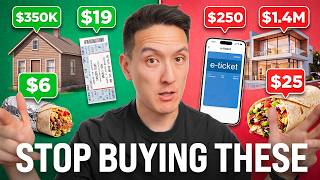
DoorDash and Uber Eats are no longer worth the cost due to delivery fees, service fees, bag fees, taxes, tips, and menu markups. Average orders are 30-40% more expensive than eating at the restaurant. DashPass is $9.99/month, but even with it, a Chipotle burrito costs $22.16 vs $15.35 in-store. Without DashPass, it's close to $29.
Average new car costs ~$50,000 with monthly payments around $750. 10 years ago, payments were ~$490. Financing $50,000 over 72 months at 7% interest results in $11,376 in interest. Investing $750/month in an S&P 500 index fund could yield over $1.1 million in 30 years. Better to buy a 3-5 year used car in cash.
Upgrading iPhone every year is unnecessary as differences between models are minimal. Phones cost over $1,000. Waiting 3-4 years between upgrades allows for meaningful improvements without annual spending.
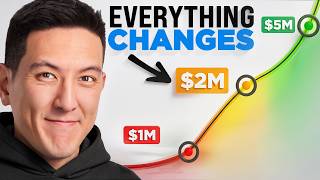
Actively managed funds have expense ratios of 0.75%-1.5%. ARK Innovation ETF is down 40% over 5 years while S&P 500 is up 65%. Only low single-digit percentages of funds outperform benchmarks. Low-cost index funds like VOO have 0.03% expense ratio. Over 30 years, $500,000 at 8% growth yields $5M with 0.03% fees vs $3.8M with 1% fees.
Extended warranties are overpriced and high-margin. Premium credit cards often extend manufacturer warranties for free. Exclusions and the likelihood of forgetting the warranty make them not worth it.
The wellness industry is projected to hit $7 trillion globally, selling overpriced items like $25 smoothies and $300 yoga sets. Basic habits like walking, sleeping 8 hours, drinking water, and eating real food are more effective and free.
Renting is cheaper than owning in every large metro. Homeowners pay 36.9% more per month than renters. Example: Bay Area $1.2M starter home costs ~$8,500/month vs $5,000 rent. Unless staying 10-20 years, renting is better.
Spending on designer goods, Coachella tickets, or club tables doesn't improve net worth. The difference between being on track for retirement and ahead is a few hundred dollars per month. Ask: 'Would you still want it if no one could see it?'
Price difference between fast food and casual dining is negligible. A double Quarter Pounder meal is ~$14, which could buy a better, healthier meal at a local spot. Pizza can cost $40. Costco still offers value with $1.50 hot dog and ~$10 pizzas.
Concert tickets have become expensive, often $200-$300 plus fees. Factors include COVID pent-up demand and Taylor Swift's Eras Tour normalizing high prices. Ticketmaster fees add ~$75 to a $200 ticket. Alternative: see local artists for ~$20.
The video concludes that many common expenses have become overpriced in 2026, and consumers should reconsider their spending habits. By avoiding these ten items, individuals can save significant money and make more financially sound decisions.
DoorDash
service
Uber Eats
service
DashPass
service
Chipotle
service
S&P 500 index fund
tool
ARK Innovation ETF
tool
VOO
tool
VTI
tool
FXAIX
tool
Chase Sapphire Preferred
service
American Express Gold
service
Capital One Venture
service
Costco
service
Ticketmaster
service
Cathie Wood
person
Taylor Swift
person
What is the average cost of a new car in America as of early 2026?
About $50,000.
02:24
How much more expensive is an average DoorDash order compared to eating at the restaurant?
30-40% more expensive.
01:19
What is the expense ratio of low-cost index funds like VOO?
Around 0.03%.
07:10
According to S&P Global, what percentage of actively managed funds outperform their benchmarks?
Low single-digit percentages.
06:57
What is the monthly cost difference between owning and renting in the Bay Area example?
Owning costs $8,500/month vs $5,000 rent, so $3,500 more per month.
11:35
What is the projected size of the wellness industry?
$7 trillion globally.
10:03
What is the average new car payment as of early 2026?
Around $750 a month.
02:24
What is the interest paid on a $50,000 car loan over 72 months at 7%?
About $11,376.
03:04
What is the fee for DashPass per month?
$9.99 a month.
01:32
What is the percentage of homeowners who pay more per month than renters?
36.9% more.
11:21
Food delivery markup
Reveals that menu items are marked up 1-2 dollars or up to 30% on delivery apps, making them a poor financial choice.
01:19Opportunity cost of new car
Illustrates that investing $750/month could yield over $1.1 million in 30 years, highlighting the true cost of a new car.
03:46Active funds underperform
Cites S&P Global data showing most active funds underperform benchmarks, supporting the case for passive investing.
06:57Renting vs owning
Provides concrete data that renting is cheaper than owning in every large metro, challenging the traditional American dream.
11:21Status spending test
Offers a simple question to evaluate status purchases, a practical technique for mindful spending.
13:09[00:01] to myself, well, this is a good deal, but times have really changed. Inflation shrinkflation that companies are practicing have made me rethink a lot of the way that I spend money in 2026. So, I want to go over the 10 items that I
[00:14] believe are no longer worth your money and in the cases where there are Starting with number one, which are food delivery apps. So, DoorDash and Uber Eats are just no longer worth their money anymore. In 2014 to 2016 when food
[00:28] delivery apps were taking off, still a novelty and I think that many people had the sentiment of, wow, this is really great. They're so convenient, so easy. I normally get from across town in my delivery app. And back then, oftentimes
[00:41] these apps would subsidize the cost of getting your food delivered because they took on a lot of venture capital money delivery for the customer in order to acquire more customers and then get them
[00:54] increasingly clear that in 2026, food delivery apps are one of the worst financial decisions that you can make because not only are there delivery fees, there are service fees, bag fees, taxes, and you have to tip as well.
[01:07] That's not even mentioning the biggest culprit of them all, which is that menu items are often marked up once they hit the DoorDash or Uber Eats app. You can go to any restaurant's actual website and then compare the prices on DoorDash
[01:19] and everything in the app will be one to two dollars more and some are even up to 30% more expensive. In fact, as of April 2026, the average DoorDash order is now commonly 30 to 40% more expensive than just eating at the restaurant itself.
[01:32] The only way to have a somewhat reasonable DoorDash price is to have their DashPass subscription service, which is $9.99 a month. That means you have to spend money on a subscription in order to get your food delivered at a
[01:45] reasonable price. Let me just show you guys this example from Chipotle. So, first off, a burrito is $15.35 in the app, which is about one to two you get to the checkout screen, it's $22.16
[01:58] in total, and that's me with DashPass saving on the delivery fee and the about $3.50. Now, I personally have DashPass because my credit card gives it to me as a benefit, but if you didn't have DashPass, you're looking at close
[02:12] to $29 for a burrito delivered to you, and that's more than twice the price of money, and I would say if you're going to get food to go, just pick it up yourself and uninstall food delivery apps altogether. The second item not
[02:24] worth your money anymore are brand new cars and new car payments. The average new car in America now sells for about $50,000, and the new car payment averages around $750 a month as of early 2026. Even just 10 years ago, the
[02:38] average new car payment was around $490 a month, and 5-6 year loans were pretty standard with a lower interest rate of 4%. But these days, because of the combination of interest rates and higher prices of cars themselves, the car
[02:50] payments to own a brand new car is exorbitantly expensive. The most common way that Americans buy cars now is to stretch out the loan to 6, 7, or even 8 a depreciating asset for longer than most people even want to keep their
[03:04] cars. Let me show you the actual math on a $50,000 car financed over 72 months at a 7% interest rate. You're going to pay about $11,376 in interest over the course of this loan. That's $11,000 plus dollars gone
[03:18] for the privilege of driving a car that's going to be worth maybe $25,000 you do a 6-year or 7-year loan as well, you might be underwater on the car for the first couple of years, which means that you owe more on the loan than what
[03:31] totaled your car or if you needed to sell it, you might have to write an real opportunity cost of owning a brand new car, though, is quite a lot more because you could do a lot more with that money instead. If you invested $750
[03:46] a month and you put that into a low-cost S&P 500 index fund over the next 30 years, that amounts to over $1.1 million in potential money you could have had. brand new car and I just don't think it is worth it here. Now, a good
[04:00] alternative here to buying a new car is just to buy a 3 to 5-year used car in cash or perhaps with a small loan. That way, most of the depreciation has to 5 years used and therefore you would essentially be getting a 30 to 40%
[04:14] discount on what the car retailed for initially. Personally, I would rather drive a 3-year used Toyota, for example, that I own 100% of than a brand-new car where I have to owe payments on it for the next 7 years of my life. Moving on
[04:27] upgrading your iPhone every single year. Apple's job is to get the most money that it can from its customers and they are very good at that goal. They're one companies in the world and the way they do this is by coming out with a refresh
[04:41] of their hardware every single year like clockwork. Since the iPhone was introduced in 2007, Apple has literally had an event almost every September announcing their next model. Early on, this was fine. We would see huge
[04:54] factor. Phones would get smaller, thinner, faster, etc. But these days, there's hardly a difference between the iPhone 14, and iPhone 15, and iPhone 16, as an example. The only upgrade that might be worth it is if you're going
[05:08] from an older-ish model, say the iPhone 11 or iPhone 12, to the newest model, factor and the many different cameras it has. Also, with phones getting so costly these days, now over $1,000, it's
[05:20] as long as you can before upgrading. If you can wait 3 to 4 years before buying enjoy meaningful upgrades without spending money every 12 months. unless there's something very specific about the newest release that appeals to
[05:35] me and can't be substituted for in my current device. So, I just don't think worth it anymore and I see many people fall into this trap of upgrading every product cycle. So, if that is you, just know that you might be falling for
[05:48] some of the best in the world, so I get why that happens. The fourth item on our investing world, and that would be investing in an actively managed mutual fund. An actively managed mutual fund is a fund where a professional portfolio
[06:03] manager and their team actively pick stocks and try to beat the market. Now, treatment that you are getting by investing into this fund, you usually pay an expense ratio somewhere between 0.75% and 1.5% of your total investment
[06:17] every single year. One famous actively managed ETF, for example, is the ARK line of ETFs by Cathie Wood. You can see that the ARK Innovation ETF has a management fee of 0.75% listed on their website. And while there may be times
[06:30] outperforms the S&P 500, you can see that in this case with the ARK Innovation ETF, it's down 40% over the past 5 years, while the S&P 500 is up over 65 to 66% in that same time period. Now, you could have made the case for an
[06:44] actively managed mutual fund, perhaps in the '90s or early 2000s, but these days there's so much data out there about how actively managed funds, they often don't even beat the S&P 500. According to S&P Global from the 20 years from 2005 to
[06:57] 2025, the number of funds that outperform their benchmarks was in the low single-digit percentages. You can see the percentage of funds here that underperform their benchmarks are mostly in the 85 to 90-plus percentages. That
[07:10] fund. That means most of these people are just not beating the S&P 500. In 2026, there are so many passively managed ETFs like VOO, VTI, FXAIX, and these are all low-cost index funds with an expense ratio of around 0.03%.
[07:26] That's a $3 fee for every $10,000 you have invested over the period of a year, and that's very low. The difference in fees can have a big impact on the outcome of your portfolio over time. So let's say you have $500,000 invested and
[07:39] let's say you have $500,000 invested and your portfolio grows at an 8% rate for 30 years. If you're in a low-cost index fund paying 0.03%, you'll end up with around $5 million at the end of those 30 years, but if you're in an actively
[07:51] managed mutual fund paying 1% a year, you end up with around $3.8 million. That's $1.2 million of a difference gone, not just from performance, but actually just from fees. So, these days I don't think there's much of an
[08:04] argument for having an actively managed fund anymore. If you have a 401k, I you're invested in and make sure that you're not invested in anything with too high of an expense ratio. So, if you see that you're invested in anything with
[08:16] over a 0.25% or 0.3% expense ratio, I would seriously consider an alternative investment or an alternative fund if there is one. Another item no longer worth the money in 2026 are extended warranties. Now, I've talked about this
[08:29] in another video, but if you're usually at a Costco or say a Best Buy and you're laptop or TV, sometimes they'll ask you to buy a 3-year extended warranty for that product. But, I don't think this is worth it for a few reasons. So, first,
[08:43] if you have a premium credit card like the Chase Sapphire Preferred or the American Express Gold or maybe some of the Capital One Venture cards, these manufacturer's warranty by an additional year on eligible purchases for free.
[08:57] Best Buy for coverage that you already have as part of a credit card benefit that you own already. Another con is that extended warranties have exclusions for damages that happened to your product, which would be a huge bummer.
[09:11] Extended warranties are usually overpriced and one of the highest margin products in all of retail for a reason. They try to prey on your emotions and you're making this big purchasing decision that you don't want to risk
[09:24] damaging. But, the truth is that the company selling it is hoping that you misplace your warranty, forget that it exists, or just lapses by the time your product needs fixing. So, I just stay away from extended warranties. I just
[09:36] understand that if it breaks, I will eat the cost and buy another one. The sixth item today that's no longer worth your money anymore are wellness products. would take care of yourself, maybe through a face mask, a massage, a nice
[09:49] bath, or some skin care products. But these days, it's a full-blown industry that uses your anxiety against you to ensure that you buy overpriced things for your health. I'm talking about the $25 smoothies at Erewhon, the $300 Alo
[10:03] Yoga sets, or perhaps peptides and GLP-1s that promise you that you're happier. The wellness industry is projected to hit $7 trillion globally, and most of it is on selling you the idea that you need to buy these items in
[10:16] order to feel healthy and well. I personally think there's no secret to just pretty boring activities. I would bet that if you took a walk every single day and you slept a full 8 hours a night, you drank water, you ate real
[10:29] foods and not processed ones, and you did exercise, that you would feel really think that the wellness industry is becoming a shortcut industry. People work, and that's what wellness is becoming. So, I would say if you can
[10:42] happier, and you don't need to spend money for that either. Now, this next the money anymore financially, that people are going to buy, and that is a starter home. A starter home used
[10:56] to be the American dream, but it also used to be a lot more affordable based on the math. For example, in 2016, so 10 years ago, the math on a starter home used to made it so that the cost of owning was very comparable to the cost
[11:08] of renting. Back then, you had 4% mortgage rates, and home prices were still somewhat recovering from the 2008 financial crisis. But these days, the landscape is a lot different, especially with mortgage rates sitting around 6.5%
[11:21] According to LendingTree, renting is cheaper than owning in every large metro, and they found that, quote, US homeowners with a mortgage pay 36.9% more a month than renters. So, here's an example from my home, the Bay Area. A
[11:35] $1.2 million starter home here with 20% down at a 7% mortgage rate is roughly $8,500 a month after property taxes, insurance, and maintenance. A comparable home with the same number of bedrooms might rent for $5,000 a month in the
[11:49] same area. That means at least here, you would be paying $35 extra per month just for the privilege of owning. So, unless you really wanted to stay in that exact location for the next 10 to 20 years, then perhaps you were better off renting
[12:02] some people might still buy a starter home for the psychological benefits, such as the fact that you own the place, you never have to worry about packing up nice to have a fixed payment, even if it's not the most financially sound
[12:16] decision. So, a starter home in 2026 is no longer worth the money. Now, this money, and that is any spending relating to status. In our society these days, and so people are spending money in order to show off to others that they
[12:31] have money. This could be in the form of designer goods, tickets to Coachella, buying a new car that they can't afford, or renting a table at a club for $2,000 in order to have bottle service. And the problem with spending money on status is
[12:44] your net worth at the end of the day, nor does it help your financial foundation. And the problem with America these days is that the difference between being on track for retirement and ahead financially, and being
[12:56] difference of a few hundred dollars per month. And that's what I try to teach couple hundred dollars per month can make a huge difference in your life later on. So, I don't think spending money on status is worth the money at
[13:09] thinking about a status purchase, I want you to ask yourself the question, would you still want the item if no one else could see it? If the answer is yes, then to impress other people that you don't really care about. Then, it just becomes
[13:24] budget or not. All right, moving on to the next item, which is number nine, fast food. Now, I'm a huge fan of fast food, okay? I grew up on McDonald's, I King as a kid. But, these days, I've noticed that the price difference
[13:38] between fast food and just casual dining is pretty negligible. When I went to looked at the menu prices, and I saw that a double Quarter Pounder meal was close to $14, which means that at that point, I don't think fast food is the
[13:52] value option that many American families are used to eating anymore. For 14 bucks, I might be able to go to my local taqueria or my casual sit-down spot, and I would get a way better meal, and definitely healthier, too. That's
[14:04] food and casual dining has almost completely closed, the quality gap, I feel like is still pretty massive. I would much rather pay $14 to $15 to a getting real food, rather than to a fast food chain that's probably shipping
[14:19] frozen food in from their factories from across the country. Another type of fast especially in the last 10 years, is pizza. I have definitely spent $40 for a pizza pie in the last year, and I just thought that that was a rip-off for what
[14:33] it actually was. The only saving grace out of all of this is probably Costco. They still have the $1.50 hot dog deal, and their pizzas are usually about $10. but I still love the fact that they still have value items, especially at
[14:47] their food court. And the 10th item no longer worth your money are, unfortunately, concerts. 10 years ago, you could have bought a concert ticket to a pretty big artist for between 50 to $100 for the night. Now, that wasn't
[14:59] exactly cheap, but it was still doable for a lot of people and their budgets. the year of 2015 and 2016 going to that it wasn't that big of a deal in terms of an expense. But, these days,
[15:13] go to a concert, the immediate place where my mind goes is, "Okay, is this going to be a $100 concert, or is this going to be more like a 200 or 300 or the Ticketmaster fees, the transportation getting there plus the
[15:27] at the concert, it might be quite a lot around Thanksgiving of last year and I remember it being about 50 dollars and I said to myself to my head, "Wow, that's pretty cheap." But then I realized that
[15:40] par for the course and maybe even on the expensive side. I think there are many factors contributing to the fact that concerts are way more expensive, the first being COVID. During that time, a lot of concerts weren't being held and
[15:53] so when concerts finally started back up again, there was so much pent-up demand. spending during COVID and now they were willing to spend more for a concert ticket. Now, I also want to blame Taylor Swift. Yes, I'm going to blame her
[16:05] because when she came out with the Eras Tour after canceling her tour that was prices for these tickets just became astronomical. Social media magnified and normalized the price that people were willing to pay to go see her and so I
[16:18] people that were online at the time and they just think that concerts just cost blame companies like Ticketmaster. Services, processing fees, facility fees, delivery fees, but guess what?
[16:31] It's still just a digital ticket, so what are the fees even for? These days it's not uncommon to see a 200 dollar concert ticket on Ticketmaster and then all of a sudden it's 275 dollars after all the fees are said and done. The
[16:44] alternative I would recommend here is to see a local artist or a smaller venue show, so sometimes paying 20 bucks to see an up-and-coming artist in a 300 person room is going to be a way better experience than seeing a megastar for
[16:57] nosebleed section of a stadium. So, that's it. Those are the 10 things I think are no longer worth your money in 2026. Of course, I'm sure I probably with some of the things that I have on this list. I would still love to hear
[17:11] from your budget over the last few years or if you you think some things are you really enjoyed this video, I think you would enjoy a video where I deep dive into the car payment trap of 2026. I will leave it linked right here. I'll
[17:25] see you in that video or a future one on the channel, hopefully, and thank you the channel, hopefully, and thank you for being here again. All right. Peace.
⚡ Saved you 0h 17m reading this? Transcribe any YouTube video for free — no signup needed.