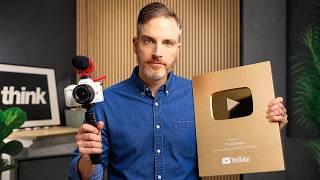

Don't Start a Podcast for Money
41sThe host challenges listeners to check their long-term passion, a common mistake that sparks self-reflection and shares.
▶ Play Clip"Title and content align perfectly; delivers exactly 12 actionable lessons from genuine experience."
Sean Cannell shares 12 hard-earned lessons from publishing over 500 podcast episodes, covering everything from finding your passion to staying consistent. This episode provides actionable advice for anyone looking to start or grow a podcast, emphasizing the importance of video, simplicity, and a clear mission.
Don't start a podcast just for money; choose a topic that genuinely interests you and can sustain your curiosity for years.
Write down your reasons for podcasting. The more reasons you have, the less likely you are to quit. Reasons come first, results come second.
Find what you are passionate about, good at, and can be profitable. Narrow down to a niche you can sustain for at least 100 episodes.
Synthesize the core idea of your show. For Think Media Podcast: 'Unfiltered tips for building a profitable YouTube channel.'
Personal brand is the last differentiator. Write down what's unique about your personality and voice. Don't just copy others.
Consider brand consistency and searchability. You can change it later if needed—Think Media Podcast was originally Think Marketing Podcast.
Decide on structure: solo rounds, interviews, co-host debates. The format should support your promise and be sustainable.
Don't force a co-host unless they add genuine dynamic and pull better content. A good co-host can help scale, a weak one can hurt.
Complexity is the enemy of execution. Start with minimal viable product: webcam, USB mic, light. Level up as you grow.
Video adds complexity but ROI is worth it. YouTube is the #1 podcast platform. Cut clips for social media. Use Buzzsprout for audio distribution.
YouTube is the largest podcast platform and best for discoverability. Upload video natively to YouTube and distribute audio via RSS to other platforms.
Stay top-of-mind by posting regularly. Batch record episodes. 99% of podcasts that break through have over 100 episodes and continue for at least 6 months.
Success in podcasting comes from passion, clarity, and consistency. Focus on providing value, keep your setup simple, and embrace video to maximize reach and impact.
What is the first lesson for starting a podcast according to Sean?
Start with passion and curiosity, not just for money.
00:53
Why should you stack your reasons for starting a podcast?
More reasons reduce the likelihood of quitting; reasons come first, results come second.
04:03
What three factors should intersect when choosing a podcast niche?
Passion, proficiency, and profit.
07:39
What is the promise of the Think Media Podcast?
Unfiltered tips for building a profitable YouTube channel.
10:53
What is the 'last true differentiator' in a world of AI and information overload?
Personal brand.
17:34
What was the original name of the Think Media Podcast?
The Think Marketing Podcast.
22:41
What is the key consideration when deciding on a co-host?
The co-host should add a genuine dynamic and pull better content out of you; don't force it.
26:54
What is the enemy of execution according to Sean?
Complexity.
29:53
Why is video podcasting worth the added complexity?
Because YouTube is the #1 podcast platform and video allows content repurposing for social media clips.
32:14
What is the recommended approach to consistency?
Post regularly, batch record episodes, and commit to at least 100 episodes over several months.
46:08
Passion Over Profit
Emphasizes that money should not be the primary motivator; genuine passion leads to long-term success.
00:53Complexity is the Enemy
Highlights a common pitfall for beginners: overcomplicating tech and workflow, which kills consistency.
29:53Video ROI
Strong case for video podcasting despite its challenges, backed by YouTube’s dominance as a discovery platform.
32:14Consistency as Cheat Code
Directly ties consistency to breakthrough results, citing that most successful podcasts exceed 100 episodes.
46:08[00:01] but it's not really growing or making money, this episode could save you years. Sean Cannell has published over 500 episodes, generated over 50 million views on YouTube, and driven millions in revenue from this style of content.
[00:14] >> Consistency is the cheat code. Don't be complaining that your podcast failed months. Narrow down your podcast to something you could sustain for at least 100 episodes. That's the real benchmark. Am I going to be just as curious and
[00:26] passionate about this today as I am right now in 3 years? But if you want to start with like the greatest chance of absolutely cutting through the noise, crushing it, making money, whatever, having this point dialed in is a massive
[00:39] >> So in this episode, I'm asking Sean to break down the 12 lessons he's learned the hard way that he wishes he knew before starting so that your podcast can avoid mistakes, grow faster, and become profitable.
[00:53] Sean, I'm pumped for this conversation. After podcasting for 5 years now, what someone who's thinking about starting? >> Yeah, I'd say start with passion and curiosity. Don't start a podcast just for the
[01:09] And so when I think back to now doing this for 5 years, been on YouTube for a couple decades, but specifically a podcast and a video podcast, um that podcast and a video podcast, um that started in 2020. And I started certainly
[01:22] understanding the business upside. Our business was already established, so it was an extension of the main channel, Think Media. Started what's called a Think Media podcast, this very channel. Um but I would say that knowing it could
[01:36] make money, I think it's an important mentality to go in that it's like I'm going into this for the message. I'm going into this for the mission. I'm geek and I love talking about YouTube and interviewing other people. I am
[01:48] truly passionate about this, and I'm truly curious about this, and I'm shocked that I've been actually actively creating YouTube content since 2007 when I started for a small local church in an hour north of Seattle
[02:01] that we're coming up on almost 20 years of YouTube itself. I'm still geeking out over analytics. I'm still so I the horse I picked, I'm glad I did cuz I want to keep riding it. And so I would
[02:14] about starting a podcast, you know, do you have a message, a burning curiosity, a topic that will keep you genuinely interested in and that you want to explore. If you do a topic that's like, "Oh, this is a trend
[02:28] cash from this." I just think you're not going to stick with it. And the cool thing is that money could be a byproduct, but you want to start your podcast with something that um you're passionate about and you you never know
[02:43] but I would ask yourself, "Am I going to be just as curious and passionate about this today as I am right now in 3 Like can I commit to this through 3 years? Is this the type of books I like
[02:55] what I research online? Is this the type of Instagram accounts I follow? Like I'm obsessed with this topic? That's just a huge advantage because by the way, podcasting is fun.
[03:07] something that that you're passionate about. Podcasting is it's fun to now you have an outlet in something like, I don't know. That's a great >> I had you know, I did martial arts for a little bit Sean and my master told me a
[03:23] lot of people when they do a martial art they get to black belt then they stop. And I remember my master telling me that he realized he actually stayed in the same discipline, he stayed in the same martial art and didn't go try another
[03:35] he realized black belt's just the beginning. Like there's actually a whole phrasing of like, "Okay, but am I doing this in 10 years?" Potentially, right? whatever, but to be starting from that place of that it's that deep of a
[03:50] black belt I'm still going to keep training. Even at what proficiency this thing goes really well, I'm still going strong. What's the second thing? >> So then secondly I'd say get ruthlessly
[04:03] clear on your why and then stack your reasons. So why do you want to do a podcast and then how many reasons can you write out while doing it? So if you're listening to this on audio
[04:16] to this later if you though are at a place where you can start typing on your phone or pull out a piece of paper like write this down cuz if it's not written, it's not real. Why do you want to start a podcast? Why? And then what
[04:32] are additional reasons? I've learned that reasons come first, results come that reasons come first, results come second. So if you have more reasons than likelihood of quit quitting. Like, you know,
[04:45] Cuz I think it'll be fun, it'll be a hobby. What's your reason? I don't know, I want to make money one day. Whereas if somebody else's list was and you could up with? I want to build my network and connect
[04:57] with interesting people that I could interview. I want to grow my own skills and be able to study the topics I'm better at communicating about it. I want to have a chance of making extra money. I want to explore new ideas. I want to
[05:11] and all of a sudden you're like, man, my reasons like why are you even doing that? Well, let me tell you 13 things. >> I love it. You don't need that many things, but get ruthlessly clear on your why and then
[05:24] ruthlessly clear on your why and then stack your reasons. And so why could be community building reason, why could be because you feel a calling from God that you've got fire burning in your bones,
[05:37] something to say, you're passionate about apologetics, you're passionate and so you want to contribute to that and then there could be additional reasons. So, you have a core why. And
[05:53] of the Think Media podcast was a business vehicle. but I saw, okay, the you know, the potential of doing video podcasting. And I was betting on video podcasting in 2020. I'm more convicted on it today.
[06:07] When you look at YouTube going all in on actual podcasting infrastructure with distribution to YouTube Music, podcasting, the Spotifys, Apples, and Netflix. Podcasting is just getting started. So, it's like I looked at it as
[06:20] yes, an engine of the core mission of our company, which was already to help 1 create a full-time living doing what they love while making a difference in the world with YouTube. So, the the why was there, but then when you have
[06:34] reasons because I like interviewing really interesting people that I can learn from. Like, you know, a while back I interviewed an AI expert and the conversation like so fundamentally got me thinking
[06:47] so fundamentally got me thinking different, got me excited, re- lit my fire, got me Sean, how do you stay so motivated? How do you stay so, you know, passionate? By the way, having conversations with high-level people who
[07:00] like fuel my fire. Like, so there's so many ancillary benefits, the reasons of them, why I love doing the Think Media podcast. Is
[07:12] really worked hard. And here we are at episode 500 and still going. So, get ruthlessly clear on your why and then stack your reasons. >> Start with passion, get clear on your why. What's the third lesson you'd pass
[07:26] some case studies I wrote down as I was preparing these notes. Is choose a niche kind of already mentioned that, what's your why or can you be curious about your why or can you be curious about this, excuse me, for years? But
[07:39] are you passionate about, what are you proficient at? What's profitable? That's What are you passionate about? Yes, but also what are you proficient at? You've what could be profitable if you want to make money.
[07:51] Brainstorm those topics. Narrow down one you could sustain for at least 100 >> Yeah. >> Narrow down your podcast to something episodes. That's the real benchmark. But let's talk about some of our Video
[08:05] Ranking Academy students. So, Kimber Lee has a true crime podcast. She shared a picture in our group recently uh of Joe Rogan number one on Spotify
[08:17] and her podcast True Crime podcast number two at that time. Crazy. >> So, and by the way, like true crime, I don't care about it. I don't listen to hold me. She does, and what's interesting is we know that the
[08:31] love It doesn't matter that there's competition. Sure, there is, but like >> Yeah. >> So, there's a big market. She's interested in actually researching it and the stories and uncovering maybe
[08:46] about. Oh, this crazy story in history with a serial killer, you know, like who knows? So, she finds that story, okay. And then it as it's grown. So, it's interesting. That's a really
[08:58] interviewed a couple times on the Think Media podcast. He runs the Daily Financial News. That's a niche he can go deep for years on and it's actually, you does it five days a week. And it was an extension of his lifestyle
[09:13] where he is actually legitimately passionate and curious about the daily financial news. He would study it for himself before he ever made coffee, and start reading about the daily
[09:25] So, then he's like, what if I turn that into a show? And so, that became his video podcast and has turned into a multi-six-figure income. The Think Media profitable YouTube channel. It was a niche that here we are, you can go deep
[09:40] on it for years. Five years later, we're still talking about it. I bet we're still talking about it 5 years from now. And so, uh another one was uh Meda DeVor podcast. Um that's her name if I'm pronouncing it right, but her niche is
[09:55] learn to recognize narcissistic manipulation, see it clearly as it's happening, and respond in ways that shut it down. She does this as a solo round, she's not interviewing anybody, but it's a niche she can go deep on on years. You
[10:08] pressure test. Will people still be dealing with high-conflict people or narcissistic relationships and dating and in marriage 3 to 5 to 10 years from want the newest financial news? For sure. Will people still want to grow a
[10:22] it's even bigger. Well, you know, so it the strategy of thinking ahead and finding the alignment of that, I think we got to speed up for the episode yeah, choose a niche you can go deep on for years is a big lesson I learned now
[10:38] after posting 500 episodes. >> Well, it's helpful that framework of What's at the intersection of passion, proficien- proficiency, and profit? I through. Okay, so let's say you've got your niche down, what advice do you have
[10:53] where do you go from there? >> Okay, so number four is define the >> Okay, so number four is define the promise of your show. And so, um starting and growing a profit- profitable YouTube channel. Pretty
[11:06] simple. We've um tried to spice that up. I don't even think you know the phrase. I don't think our team knows. I wrote it once, never told anybody, but you try to come up with a tagline. It was like unfiltered
[11:20] tips for starting a profitable YouTube channel. That's what I came up with. Unfiltered was slightly a unique word, like we're going to be raw. Tips, just to be clear. Core promise, YouTube channel. And then the keyword profitable
[11:33] subscribed to this podcast is we are unapologetically build a sustainable business around their YouTube efforts and their video podcasting efforts. So, there was my sentence. It's like define the promise
[11:49] that's good because you can tell that most people haven't done this work. They haven't synthesized the core idea of what their show is about, and then considered that even if
[12:03] any way for it to be unique? We're not the only YouTube tips podcast, but I do think the way we've emphasized, of course, building a real business, leaning heavy entrepreneurship as well as creators, whatever. So, bottom line,
[12:18] show. And I think sometimes people think about the Lego the logo, they think about colors. Yeah. Branding and all that stuff I think is really the promise of the show is much more
[12:32] going to get. People aren't out here like, "Wow, I really watch your podcast There's got to be that experiential at this point, too, you might define the format. I looked ahead and was like,
[12:47] I all I want to do is what we just said, unfiltered tips for building a actually gave me flexibility in the format. I do solo rounds. I interview people. I've had a different co-host in
[13:01] the past. You're now the co-host. Now you do solo rounds. We have Think Media We interview top 1% creators. We interview business top 1% creators. We interview business owners. But it Then the filter is
[13:14] on you know, tips for YouTube. We drift a little if it's something that's also do. Those episodes usually don't perform as well, but like why you should something. Sure. It's not really really the promise of the show, but what's your
[13:27] And you might start thinking about the format. Sometimes the format itself can be the value if it is always an interview show, but I wasn't the format was flexible. The promise is the anchor,
[13:40] around that. And I think especially if you want to build momentum. Now, I get be like, that's very constricting because I'm at episode zero. I haven't experiment. I think there's a place for that. Consider I started a video podcast
[13:55] after already building a multi-million subscriber YouTube channel. >> I actually would say that the Think Media Podcast was one of the most >> Mhm.
[14:07] Because of in a way the mistakes I made >> Yeah. >> Think Media's weakness in a way, even though I believe it's very focused, is it's so variety. We've
[14:20] editing software that's gained subscribers, DaVinci Resolve, they click subscribe, and they might not care about 70% of the other stuff we post on the channel. That can happen here, but I would say
[14:35] most focused digital asset that I've launched And I think what helped me do that was the 10 years previous. So, as far as, you know, trying to add massive value to listeners, this isn't just 5 years of
[14:50] experience, it's 15 to 20 years of experience that just says, you know, there A, if you experiment and even launch other That like those can be the learning curve. One of the guys I just
[15:04] Podcast said it was channel number five that he finally reached success on >> Yeah. >> before number five when it clicked. It depends on what season you're in. But if you want to start with like the greatest
[15:16] noise, crushing it, making money, whatever, having this point dialed in, define the promise of your show, is a massive edge. >> The number one thing that I see kill new
[15:29] creators is not lack of effort, it's just you're using a process that's too complicated to repeat. And that's why I want to tell you about Riverside, who is you've been thinking about starting a podcast, doing interviews, or even just
[15:42] recording content with a guest, Riverside makes the whole process super simple. And I'm not just saying that, we use it. First, the recording quality, you can record up to 4K video with separate audio and video tracks for each
[15:54] person. And Riverside records locally on each person's device. So, that just means if the Wi-Fi takes a dip mid-recording, you didn't lose the here's the part that ties in so well with what we're talking about today.
[16:08] Riverside actually has this AI-powered editor that lets you edit your video by editing the text. You don't need to learn a complicated timeline. It removes the filler words, cuts out the pauses, and generates captions. And their magic
[16:22] clips feature automatically puts your best moments into shorts, TikToks, Reels automatically. And for podcasters, Riverside actually hosts and distributes your show to Spotify, Apple Music, and YouTube all from one dashboard. So, if
[16:38] content, but you get hung up on the whole how do I produce this part, this is the answer to keeping things simple. Use code Think Media at checkout for 1 month free of Riverside's Pro Plan.
[16:53] Again, that's code Think Media at checkout. Link is in the description and >> Well, I mean, and we're four lessons in to this conversation and none of these have to do with recording anything. Mhm. That actually, I mean, that says a lot,
[17:06] you know right now, you know, and I know that Think Media, like we have often fear in the face, press record. But, if you're advising someone on a they're like, if you want the strongest start, it's going to involve actually it has
[17:20] like you with a notepad with your thoughts with a computer maybe brainstorm with AI or something. Okay. So, number five here, the fifth lesson, you called this find your uniqueness, don't copy,
[17:34] you? >> So, personal brand is the last true differentiator in a world full of AI and information overload. We did this thing called the our emergency web class and did a free report and it had many shifts
[17:49] in it. One of the shifts is personal brand is the only differentiator left. Personal brand is the only way to be unique in a world where information and content and YouTube channels and podcasts are more
[18:02] >> Mhm. >> But what cannot actually be copied is your unique DNA. Truth is, God gave you a unique fingerprint that nobody >> Yeah. >> AI and a ChatGPT script can start
[18:16] sounding very the same as everybody else's. I was actually just watching about the absolute uh crisis colleges are facing >> Mhm. >> And not even well. But as I was watching
[18:29] like, if only these kids knew how to prompt well, then these these articles wouldn't be getting picked up because they might just go like, "Write me a >> It's just the requirement. >> on World War II."
[18:42] >> And and that's the whole prompt for my, you know, whatever AP class. If you're in AP, would you really be using AI? Probably cuz you're extra smart. Uh And so, like uh ultimately, and and you put that
[18:56] in, it spits it out. And so, personal brand, as well as also not letting your brand descend into AI slop and garbage and laziness, um and keeping the excellence high, it is is it's your uniqueness. So, okay,
[19:09] Sit down, and there's a lot of brainstorming you can do along with this episode. What is unique about you? Um sit down and study a few other shows. you admire? >> Mhm.
[19:23] >> Um what are you noticing about that what other shows do? The vibe, the energy, the atmospheres, the the pace. Even in your own niche. It's actually >> Mhm. >> I think. Like just what's happening in
[19:36] >> Because when you act you you get into issues if you're like you just study the best, you should be studying different formats, different models. But you're like, "Okay, what are they doing?" Maybe their episodes are always
[19:48] >> Mhm. >> Maybe there is something shorter, you go deeper. Maybe you go more case studies. You're really thinking analytically here. And then write down your personality. What what's unique about
[20:01] your personality, your lens, your voice? Um you know, it's interesting to have a trust or some trusted voices or a mentor or a conversation with, you know, even somebody on our team. Feedback is priceless. And so you want to pull out
[20:18] is like some people might say it's just about being authentic. a lot of us haven't necessarily done a ton of self-awareness and self-discovery. And maybe if you eventually identify that unique thing
[20:32] it's not like a surprise cuz you do know yourself, but if until you write it down you're like, "Oh, this is what I lean into." Like it's important that I show up because I am kind of sarcastic and cynical and sometimes funny.
[20:45] And that's part of my So that like that's an element of the show. Like if I miss that, then I'm missing a piece of my uniqueness. Or maybe I'm more stoic, more So bottom line
[20:57] So bottom line is is to really find your uniqueness. Of course it feels crowded and it is. I think it's also a myth that things are super crowded. A lot of people quit podcasting. This is part of a series and
[21:09] show notes where we cover some of the stats and the data. But most people never get past episode, you know, three or 20. And not only that over a million podcasts started back in the pandemic, but now it's dropped to
[21:23] about a quarter million a year. That still feels intense, but it's not as bad as you think when you really look at the math. So, all the sea of sameness? And it doesn't need to be super radical. You're not looking
[21:35] >> Yes. >> You're just amplifying your strengths and weaving those into your show. >> Well, you know, all of this sounds you know, awfully similar Sean. Just like to be transparent to like an onboarding
[21:47] like a YouTube coaching call or starting to strategize. Like this is no different starting ground of like what we go through in our entire process. And so listening thinking about getting into podcasting, specifically video
[22:00] podcasting, tapping into the power of YouTube. Right now you can actually apply for a free call with our team at viralvideocoach.com. It's not for everyone, but if you're able to talk with someone on our team, I
[22:12] >> Yeah. >> all of these things and just have about actually look at you if you already have a channel or if you already strategize your next steps. And that's totally free by the way. So you're
[22:27] totally free by the way. So you're welcome to apply at viralvideocoach.com. because this is actually where I think a lot of people start. Naming your show What have you learned about names for podcasts?
[22:41] Well, I've learned that actually I mean, this show is kind of funny. I So, fun fact about the history of this Think Media Podcast, it started as the Think Marketing Podcast.
[22:57] The The name of the show day one in 2020, January 1st, was the Think Marketing Podcast. And what I thought was I thought that was like tangential to Think Media. I thought it was kind of clever. I wanted to focus it on um
[23:14] was YouTube growth, but it was like email list building. Um and whatever, what was funny was I maybe did like 100 episodes or and it kind of worked, but there was this day when
[23:29] um I think I brought it up, and at the time uh saying something, too. And they were like, "Why is it even called the Think Marketing Podcast? Like, why wouldn't we call it our own brand name? Like, the
[23:42] is already the company name." And I was like, good point. Like, okay." And then it was like, "Do we change it?" Um I think that reveals a couple things. You know, was that a bad name? No, but
[23:56] what are you thinking about brand consistency and etc. I'd also say Think Media is in a way meaningless besides the meaning it's come to take on from you also could say I I I I've often thought, you know, if it had YouTube in
[24:13] subhead, not the main name just cuz of copyright stuff. But like, it might You Podcast, unfiltered tips for building a profitable YouTube YouTube is a do. But if it even had the word video in it,
[24:29] about. Do you want to be searchable? Do you want it to be findable? Do you already have a brand name? Is it going to be named after your first and last name, the Sean Cannell Show? Is it going to be named
[24:41] a hybrid of something where, you know, real estate tips with Sean Cannell? Is it going to be named And so, you could overthink this. I think the cool thing you should think about it. The second thing is you clearly can change it. We
[24:54] did, and you just kept building. I mean, you know what? There's some old names or old playlists out there and maybe a few images, but you can pivot. It's like it's not ideal if you've built some momentum, but you can. We did.
[25:07] terms of like just logistics, technically. Do you remember? Like >> Uh I mean, it's always frustrating. You just have like how many thing places is it written? How many places, you know? So, um uh when it's it's never fun. It's
[25:22] just go It's the right thing to do and like So, um and then when I say number from the start. I do think that um it's not In a way I
[25:35] didn't say it was only interviews. What do I mean by format? Is it solo rounds? Is it interviews? Is it co-host debates? Is it reaction commentary? Is it flexible? Well, ours is a flexible mix a mix uh for this show.
[25:49] But I would argue that in a way the format is is pretty set. And what I mean by format would be like the structure. Like we already teach the 3A formula. >> Teach off numbered points. Um have a
[26:01] finds its way even into interviews and I believe our community resonates with that cuz we we don't want to waste listeners' time. Pack value per minute. So, um that's a lot of nuance. Zooming out for the person that's like, you
[26:14] know, help me. And I think we could go lightning round for these final five points. But yeah, what what Eventually you do have to make this decision. You and people that do one-on-one coaching with me, this is the main thing they
[26:26] process. Do I go this direction or that direction? And having a it's not conversation can go on, where do you want to be in a couple years? Where uh what do you see this turning into? Do you want it to scale? Do you want it
[26:41] Is if it's not the Sean Cannell Show, could a co-host come on it someday, know, just interesting questions to think about and uh that actually brings us to number seven, which uh you can drop that
[26:54] >> Yeah, 100% I mean speaking of co-hosts, like how what have you learned about co-hosts if you're want to do a podcast where it's not just yourself every time? with this. Um Heather was our co-host here in the
[27:06] Travis on Video Influencers. Now I'm co-hosting a show with you. I've hosted things in my church media and pastoral career. So I've done a lot of different Really quick on this. Don't force this. If you have
[27:20] >> That's a good point. >> So it's like that's Is there even Um but do they add a genuine dynamic? These are good reflection questions. Are >> Mhm. >> Are you only getting a co-host because
[27:35] you saw other people do it? Is it necessary Like do they add a genuine dynamic? Do they pull better content out you? The pro of more than one person on a podcast is I think the conversation. Is there healthy disagreement? I think
[27:48] >> Mhm. >> And like let's look at somebody that Patrick Bet-David. He has a show called the PBD Podcast. And he has built It hasn't always even been the four people that are typically
[28:02] on there. I think it's three or four people. He's got um Vinnie and he's got uh yeah, three to four co-hosts. And I've watched them craft the show. They like want disagreement.
[28:15] >> Mhm. >> They they want pushback, polarization on >> They they want pushback, polarization on the ideas. So solo rounds can lack that to speak to both perspectives, but it helps you like process the ideas. But at
[28:28] the same time, um you know, a weak co-host might not actually add to the content and that could create a dynamic, you know? So you but probably for most of us you're going to do solo rounds or you're going to be
[28:43] going to be the one who's fighting for the listeners to make it valuable. But a good co-host can help you scale by really dividing and conquering. Maybe you delegate different opportunities and stuff. Let Let us know, by the way, if
[28:58] you have any questions thus far for a follow-up episode, even on this episode. You'd have to be on the YouTube version of this to comment. Um of this to comment. Um and we would love to to go deeper in any
[29:10] of these details because what this also might look like is a partnership. Are them? Are you actually partnered? Like Benji and I partnered on Video Influencers and we both wrote the book YouTube Secrets. And so, it's it was
[29:23] almost by default that we would, you know, co-host episodes. So, this is a over the years I wasn't thinking this strategically. I each month and year. Now, I'm looking back hoping to add value to listeners to
[29:39] than they maybe normally would have of building out their podcast. podcast without running into tech, right? So, the eighth lesson here, I'd love to hear your reflection on tech and what's required, how fancy do you go,
[29:53] podcast? >> So, yeah, for speed here, let's just hit videopodcastguide.com. So, we because we have this podcasting covered this um videopodcastguide.com
[30:07] totally free. You're going to get a checklist. You're going to get um access to a couple different videos that'll walk you through different setups, whether you want to keep it dead simple,
[30:19] and like Riverside, um or whether you want to be in person with multi-camera setups. I would say this, the one big idea is complexity is the enemy of execution.
[30:33] >> The more complex your workflow gets, lights to turn on, microphones, again, the more angles of footage you captured and then how is that getting edited? And then it's how big are those file sizes and how big So, you never and especially
[30:49] don't even know the second order consequences of complexity. shows do you want to do a week? Well, how much editing is that? How many thumbnails is that? How much upload is that? Complexity is the enemy of
[31:01] So, that's why number eight is keep your tech simple and then build systems because you want the minimum viable product to get things published, to get things
[31:15] you're starting. And then level up as you go. We're sitting in Las Vegas at Anderson Studios with an behind us and a and a level of complexity.
[31:28] But that this also was not even how we shot already a multi-million dollar media company. And even at that level when it was episode 1 January 1st, 2020, it was it was much simpler. And I don't know if
[31:42] time. So, it's like keep it simple, build it up as it goes, but if you want to go down that tech rabbit hole and be resource at a really high level with the just entirely free, video podcast guide.com. If you go to that URL or
[31:56] click the link in the show notes, what we're happy to send you over such great launching your video podcast. >> Can you explain the difference between a ninth lesson learned here is actually to embrace the video side of podcasting.
[32:14] >> Yeah, so what's fascinating is I understand there's a lot of confusion here and this would just be on the assumption that if you're clicking on this video thinking about starting a podcast audio only I would beg and plead
[32:29] podcast audio only I would beg and plead with you to embrace video because the the challenge. So, I think this is best understood, not to get like really isolated in gender gender
[32:44] uh you know and differences and whatnot, but friends of mine that are content creators, I have heard that are female have said that have had audio podcasts have been like, "I don't want to do
[32:56] video. It's a whole thing." Now it's a complexity of the tech, but it's also instead of just like getting up and just talking into my microphone in my pajama pants, no makeup. They're like, "Now filming a video podcast is like a hair
[33:10] day, a makeup day, a lighting thing of tech. It just added just say? We just said complexity is the enemy of execution. So, there's no doubt podcast, if it's excellent, is still heavy. Video isn't just like twice as
[33:27] It's It's much more complex. Camera presence, lighting, set design. But the opportunity of posting specifically the opportunity of posting specifically on YouTube makes it worth it.
[33:41] The challenge is real, but the return on investment is worth it. So, lean into friction talk you out of it. Figure out systems for all of the above. So, it's shoot one episode, batch produce multiple episodes.
[33:55] Um and and just and bite the bullet. And again I mean that might depend for in even some, you know, dudes out there, no makeup, no shower, dude doesn't shower, you know, whatever. Like like still, it's it's the
[34:08] complexity of is it multi-angle, what's the workflow, what's the editing. Video adds a lot more complexity. Big headline, the ROI is worth the challenge. And again, watch a few of the previous episodes of like why now is a
[34:20] at all the data. We're not going to hit all that here. It Video is worth the exploding. And when you do so, you're going to be even just the fact you've upload. What's the difference between an audio podcast
[34:34] and a video podcast? An audio podcast is audio only. A video podcast, I would say, is content that is still consumable and it that can have a good experience in the audio format, but you've just turned the
[34:48] You know, when I watch Joe Rogan interview people, I don't see him make >> Yeah. >> He sits down and has an audio >> What do they do though? They turn the camera on. What does that mean? It means
[35:02] not only can they upload videos and now video on Apple and on Spotify cuz those platforms, but then you also can cut clips out of it, you could do that the return on investment. When the asset's done, it becomes the most
[35:15] valuable asset in your business. Is the fact you have that audio asset I'm just saying it's worth getting camera ready, it's worth figuring out That's what I would say. >> Where would you recommend to post this
[35:30] know what to do with the audio version, you're uploading that, but where would >> Yeah, so you're going to upload that video native to YouTube. You're going to that. >> Yeah. But then in that case, it's only
[35:44] going to be on YouTube in video format and then when you create a playlist and check the box to call it a podcast, then YouTube understands any video you move over into that playlist will go out on
[35:59] >> Got it. >> So the way to associate that video also experience of what is called a podcast, and then that's where you get a podcast tab on your YouTube channel. It'll say videos, shorts, posts, live, podcasts.
[36:17] That podcast tab is anything that gets added to that playlist, but then you opportunity to use something like Buzzsprout, which is what we use to distribute our audio podcast. And you can use free
[36:32] tools that basically just get you an RSS feed and it'll start going to Apple and Google and Audible and all these places, but Buzzsprout makes it like dynamic ads and and
[36:45] data and all kinds of things that it's a big advantage. It's really worth it. And so we'll link to Buzzsprout. It's also part of the tools we'll recommend to Totally worth it. So then the question is and I'm actually I have to do my
[36:58] is and I'm actually I have to do my research as places like Spotify are evolving and Apple, it is a question of do you have to do that manually or can you I'd imagine you just upload the video version at some point in your
[37:10] workflow you are separating a video file, probably an MP4 >> Yes. >> .mov, MP4 file that has video and audio that's uploaded to YouTube and is uploaded and distributed to Apple and
[37:23] Spotify and the experiences on these platforms is becoming more user-friendly. Like on Spotify it's like the same, meaning you see you see the post, there is a video version, there's an audio version and it's like their
[37:36] whole user interface will figure that out. But basically Spotify can't play >> So this is in a way kind of a moving target or you just want to stay current with trends and the unique platforms. You can
[37:50] go so deep on any one of these platform you Spotify has its own interface, monetization thing where the bar is like pretty low. If you've done like three of uh listen hours.
[38:04] So uh and then paying good RPMs, it's like very vast and so we're kind of in the absolutely It also that actually again, listeners
[38:17] out of it. Cuz there's real complexity to like multiple versions, multiple formats. Yeah, let's zoom out. Again, as I'm not all in different niches, but when we talk about 5 years, 500 episodes, we're
[38:31] figures have been generated from this podcast, multiple millions of dollars. would you want to build an asset that you can work from home that earns you 50k a year as a hobby? Would you want to build an asset that
[38:46] you could work from home and do on the go and create a format and do something you love and you're passionate about, tip number one, take away number one, you want to start? How long does that take? A couple years usually to build
[38:59] the momentum. But that's the ROI on the other. Would you want continuous high business? Keeping those things in mind is why you're embracing the complexity. YouTube, and you say that YouTube is the primary platform. Easy to say, right?
[39:15] You're the YouTube guy who then started a podcast. So, obviously video podcast is happening on YouTube. But why is this your primary platform? Why are you so >> Yeah, we kind of covered this in the previous point just because when you do
[39:28] um you know, get that video file done, upload it to YouTube. But a couple reasons. Number one, YouTube is actually the number one platform for podcast. It's bigger than Spotify and Apple. So,
[39:40] it'd be funny if you said, "I'm a serious podcaster." You go, "Okay, cool. So, you're like on YouTube?" Well, no, I just do audio. serious." Now, I understand and that's not to
[39:52] invalidate audio only podcast. But if if it's like literally the biggest place, cuz you didn't turn the camera on. So, the problem to solve is turning the other reasons. YouTube is the number one place people
[40:06] discover new podcasts. Why? Because YouTube's a better place to discover things in general. It's better search, it's better algorithm. The only place on audio that I've noticed I I know Spotify has some kind of
[40:19] You'll get different things shown to you on your home feed. They're always But in like Apple, you if you don't search it out or go to charts, underneath an episode is like listeners also listen to.
[40:33] >> So there's like very minimal discoverability. It's not that it's >> Maybe people search on Google itself and find your podcast, unlikely. >> Yeah. >> But YouTube is algorithmically
[40:46] driving content to individuals, plus it's the second largest search engine in the world. So basically podcast episodes can rank and YouTube is the number one podcast platform. And again, if you've done
[40:58] >> Yeah. >> So um YouTube is king. Treat it that way and then also embrace video and distribute everywhere. >> So lesson number 11 here is learning the
[41:11] unique skill stack for each platform. stack? >> Okay, so if we've embraced the challenge, we're talking about lessons to know after 500 uploads.
[41:24] And if you're going to embrace video, you're adding more complex complexity. And if you do so, you have to realize that video podcasting and audio podcasting are not the same product. Maybe another way to put it is when you
[41:36] upload a video to YouTube, it has a skill stack. What is your you're filling out the file file you're filling out the title, you're filling out the tags, you're uploading a thumbnail. There is no thumbnail on audio
[41:48] So it's interesting also to consider that there's some of the best YouTube titles are only a good title when you have a >> Yeah. >> Whereas if you actually uploaded that
[42:01] like dang it, it's a lot of work. I'm already trying to title one thing. And differences, but it's just knowing that a really good title thumbnail combination on the video version of your podcast might be terrible on the audio
[42:15] version. And so there's actually times on the Think Media podcast where they're experience we're like, okay, well someone's going to see the thumbnail, they're going to see the title. That's one experience. All they see on audio is
[42:28] just the text. So that's they're not the same product. So that just requires um different thinking. And um and this is figureoutable. I mean, I'm you're kind of being overloaded with insight for information you really don't
[42:42] just taking it kind of to an advanced level that where this thing would evolve level that where this thing would evolve to at scale could be just mastering Apple? Is there anything different on Spotify? And I just I touched on that a
[42:55] These platforms in and of themselves have their own homepages, algorithms, uh you know, ways of suggesting things, ways of optimizing things. Sometimes upload additional clips on Spotify.
[43:10] almost like the vertical. And and so they're adding these different features. Let me ask Let me encourage individuals Don't stress out about that. Like almost start, but if you're taking it to advanced level,
[43:23] 5 years later we're talking about this. Like that's what advanced would look >> So give me the stress-free path. Because we've covered a lot. We're 11 lessons deep. We have one more. What's the stress-free path? Are you
[43:36] >> Uh stress stress-free a path number one is punch fear in the face, start before you're ready, and define your experience though as as practice. Maybe it blows up, but I'm going to
[43:50] actually start my first thing that's way more about experimenting, practicing, developing my voice, and man if it turns into something cool, but I actually I've defined my why. I'm so early in the game, I just need to stop sitting on the
[44:03] sidelines listening to the Think Media podcast. And I need to actually just get I'm not even really sure what I'm doing. I don't have an existing business. I don't have an existing offer. And I need to start
[44:15] but the second best day to start is right now. yeah, but I still want to like get everything perfect because if I'm going to build you just don't understand like how valuable it is to have a year under
[44:28] >> Yeah. >> Like it could be lame and boring of you just talking to your friends, but like you're going to learn so much in a year of let's say podcasting. But that's path A. Path B
[44:41] if you're a little ways down the journey, if you have an existing product or you have an existing offer or you have an existing business, then the most logical thing is to reverse engineer a podcast
[44:53] show that would support the existing thing you want to do. If you have an existing church, maybe the point is to grow deeper with your congregation. Or if you have a church, but you want to help other pastors because you've
[45:05] leadership or something. It just means you're already doing the thing. Those are one of the two paths is like keep it super simple. Start in practice or start with a level of clarity but still start before you
[45:18] of clarity but still start before you feel ready because I feel on episode 001 >> Mhm. >> then don't stress out about micro >> then don't stress out about micro optimizing Spotify. What I would say is
[45:31] episode, but the simple stat keep your tech stack simple. Personally, I would start virtual cuz you could sit at a home office or your other office. Webcam or nice camera, USB mic, light,
[45:43] >> Done. >> And go to you know video podcast guide.com and we talk through some other you know, we just have we'll walk you Um but that's it. And and start simple and
[45:56] then maybe someday you build a studio and someday you do some other stuff. But clarity of the thing you're already doing using the podcast as a way to >> So this final lesson has to do with consistency. It has to do with
[46:08] episodes, I think you have full clearance to walk us through this. But what have you learned about consistency when it comes to podcasting >> Yeah, I mean I actually would almost go a little bit
[46:21] Recently I've talked a lot about like um who cares if you even post weekly? >> Yeah. Yeah. >> Uh cuz the YouTube algorithm doesn't know, vid- videos are being judged on their
[46:34] But on a honestly on podcasting, I think >> Mhm. >> And consider that audio, you know, is people who click subscribe or followed you.
[46:46] But they're not It's not as much of an algorithm, right? So if you want to stay top-of-mind and tip-of-tongue, if you want to stay top-of-mind, you need to >> And also the fact that it's going to work on you. And that's why I would be
[47:02] asking you to create a simple workflow. Something simple, something sustainable. Again, if you're like going to record some video podcast interviews at home Riverside, um you a lot of people will batch those.
[47:17] >> Wow. >> Um you know, there's stories in our week, but they'll shoot four interviews in one day and get themselves a month of >> And then you still need to prepare for those, but like
[47:31] schedule, but you're just scheduling like, you know, and it's assuming you take a day off or it's your one day off a month or something and you shoot it 9, and you got them all in the can. Like,
[47:43] whatever. Consistency is the cheat code. And what I've learned, too, is it's also just some episodes I thought were going to blow up, were that good are now still getting views years later cuz they rank in
[47:57] search and suggested by the YouTube algorithm. But consistency is the cheat things out. There's highs, there's lows. We had 12 days when literally our channel got The podcast channel got
[48:10] hacked and got The name was changed. Thank God did. They just made them unlisted. They tried to run a Tesla live streaming scam footage and get you to transfer crypto. >> Oh my goodness.
[48:24] >> You know, YouTube kicked it back to us. Massive channels clicked like an email or a Google install thing and they got like cookie >> Scary. Um and so, you know, get your two-factor
[48:38] authentication on and lock stuff down. But here's my point. It's like from >> Yes. >> to good to to different to seasons where like I would say it was kind of in still a level of quality but maintenance mode.
[48:50] but, you know, just checking the box, getting solid interviews in. >> We happen to do two episodes a week. Sometimes you drop down to one. The baseline is more now than than Well, it's more than one a week on average for
[49:04] >> Mhm. >> Um but the baseline was one a week. So, always two. That's what I was like, I'm commit to the long haul. Consistency is the cheat code. There is so many ancillary benefits
[49:18] of just keep showing up. You stay on schedule. And again, some of the stats where the podcasts that make money, the podcasts that break through 99% don't. It's the ones that get over 100 episodes that are still in it at
[49:32] least 6 months later. And things get really interesting on month 18 through month 24, about that 2-year mark. Consistency is the cheat code. Don't be when you tried it for 4 weeks or even 4 months. Consistency is the cheat code.
[49:46] Consistent quality, consistent brand, consistent message, consistent posting. That's what I'd recommend. >> Sean, thanks so much for sharing your experience here today. Podcast, when is your first episode dropping? What's the
[49:58] took away from these 12 lessons that Sean has shared? We'd love to hear and engage with you. Please like, rate, share, review, wherever you're watching or listening. This is the Think Media Podcast. I'm Nathan EsWine, and I can't
[50:12] wait to connect with you in a future episode.
⚡ Saved you 0h 50m reading this? Transcribe any YouTube video for free — no signup needed.