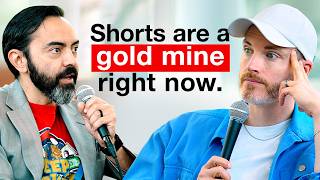

The secret to viral shorts: series not singles
51sReveals the counterintuitive strategy of committing to a daily series for 60 days, which led to 12 million views per day.
▶ Play Clip"The title uses '2026' as a hook, but the content delivers genuine, actionable strategies that remain relevant regardless of the year."
In this podcast, Pat Flynn shares the strategy behind his wildly successful YouTube Shorts channel, which now generates 12 million views daily. He explains how committing to a daily series, embracing authenticity, and focusing on consistency over perfection can build a loyal audience. The conversation covers practical tactics for hooks, editing workflows, and creating brand language that turns casual viewers into fans.
Pat Flynn initially dismissed short-form video as a waste of time, but realized that 60 seconds daily builds a routine and relationship. He started a separate channel without linking it to his existing audience, focusing on counting uploads rather than views.
Key to success is being relatable. Pat shares his process of opening Pokémon packs daily, including both good and bad pulls, to create genuine content that resonates with viewers.
Editing time dropped from 45 minutes to 15 minutes per video by learning shortcuts, building a library of sound effects, and creating a repeatable template.
The most important factor is making content episodic using the E.A.S.Y. framework: Episodic, Authentic, Structured, and Yields a result. This creates anticipation and makes it easy for viewers to subscribe.
Viewers watch every video because they want to see what happens next. By not providing a conclusion upfront, each short creates a 'to be continued' feeling that builds a dedicated following.
A short jingle and recurring question ('Should I open it or should I keep it sealed?') became the show's signature. Over time, sound effects and catchphrases build an insider culture that engages the audience.
To apply this to other niches, identify a common urge in your target audience and turn it into a series. Example: a public speaking coach had students record daily 'Day X of public speaking without filler words' with a tip at the end.
Short-form content should be treated as its own medium, not just a trailer for long-form. Most people discover creators through shorts, so the value must be self-contained.
The first few seconds must grab attention visually or with an intriguing question. Practice hooks daily until you find a repeatable framework that stops the scroll.
Viewers called out Pat's unusual thumbs. Instead of hiding them, he leaned in, naming them 'Diglett thumbs.' This became a beloved part of the channel's lore and a signature at conventions.
Pat created a friendly rivalry with another creator over finding a rare card. This generated comments, anticipation, and even led to joint speaking engagements.
Many people quit before giving their content time to catch on. Pat emphasizes committing to a 30- or 60-day experiment because you cannot control the algorithm, only your output.
The core takeaway is that short-form success comes from showing up daily with a consistent, authentic series that builds anticipation. By focusing on what you can control—upload frequency and gradual improvement—you give yourself the best chance to break through.
What is the E.A.S.Y. framework mentioned by Pat Flynn?
Episodic, Authentic, Structured, Yields a result.
08:40
How long did it take Pat Flynn to reduce his editing time from 45 minutes to 15 minutes?
He learned shortcuts, built a library of sound effects, and created a repeatable template over about 30 days.
03:05
What was the key insight about short-form content vs. long-form content for discovery?
Short-form should be treated as its own medium, not just a trailer for long-form, because most people discover creators through shorts.
15:20
What is the 'biggest mistake' Pat Flynn says kills early views?
Giving up too early before giving the content time to catch on.
45:05
How did Pat Flynn turn a perceived flaw (his thumbs) into an asset?
He embraced the criticism, called his thumbs 'Diglett thumbs,' and it became a beloved part of the channel's lore.
35:43
What is the recommended minimum commitment for a short-form content experiment?
30 to 60 days to gather enough data and give the algorithm time to find an audience.
45:05
How did the public speaking coach apply the series framework?
He had students record daily 'Day X of public speaking without filler words' and gave a tip at the end.
10:15
What role do jingles and sound effects play in Pat's shorts?
They create brand recognition and build anticipation; viewers expect them and notice when they are missing.
07:15
What was the result of the friendly rivalry Pat created with another creator?
It generated high engagement, comments, and even led to joint speaking engagements.
40:25
How many views per day does Pat Flynn's Shorts channel currently get?
12 million views per day across all platforms.
06:05
The Series Framework Is the Secret
Pat reveals that the core of his success is making content episodic, authentic, and structured, which creates anticipation and makes subscribing easy.
03:31Short-Form Is Its Own Medium
This insight shifts the perspective from treating shorts as ads for long-form to recognizing them as primary discovery tools.
15:20Hook Is Everything in Short-Form
Pat emphasizes that the first few seconds must grab attention, and practicing hooks daily is essential for finding a repeatable framework.
27:54Turn Flaws into Brand Assets
Pat's embrace of his 'Diglett thumbs' shows how leaning into imperfections can create memorable brand language and deepen audience connection.
35:43Consistency Beats Perfection
Pat's advice to commit to a 30-60 day experiment and focus on uploads rather than views is a powerful counter to the perfectionism that paralyzes many creators.
45:05[00:02] Normally, I would have given up by then, but the whole goal, again, wasn't views or subscriber counts. It was to count uploads, not views. >> Right now, you're getting 12 million views per day on YouTube Shorts.
[00:15] >> And climbing. Day 35 rolls around. One of those videos hits 750,000 views. All those previous videos all started to climb as well. When a person just not a priority for you. >> Total time every day it takes then right
[00:30] >> 20 minutes, cuz I'll open a pack, right? >> And hitting it on every platform. >> Oh my goodness. One of the biggest opportunities for growing a following right now is YouTube Shorts and short-form content. And we
[00:43] podcast today breaking [music] down tactics, breaking down the mindset, the philosophy. So, if you want to get and if you also want to earn more money in your online business or get known if
[00:56] you're starting from zero, lock in because this podcast with Pat Flynn is >> Pat Flynn is an entrepreneur, author, and content creator who's built millions of subscribers and generated billions of views across his platforms. And today,
[01:09] lessons he's learned to grow your own brand. >> Pat Flynn, right now, you're getting 12 million views per day on YouTube Shorts. >> It's crazy. >> And this is on a new channel that you
[01:22] >> Yes. >> So, I need to know all your secrets, all whole short-form playbook. >> I'm ready, man. >> But first, tell tell me the story. What is this channel? What's the vision? How
[01:34] >> Yeah, so I have a Pokémon YouTube channel that was all long-form. In fact, ago and talked about how short-form is kind of a waste of time, right? You can't build a relationship 60 seconds in in just 60 seconds, but I was wrong.
[01:46] You can do that if 60 seconds happens every day, right? half hour of time with somebody, and you're building a routine, you're And if you can do it right, you become a part of a person's daily routine, and
[02:01] you show up in ways that you never thought possible. So, although I had a made sense for me to just insert shorts into that channel, but again, I wanted to experiment, and myself, I always use myself as a case study to try to teach
[02:13] other people. So, I created a separate channel, didn't link to it from anything I had, didn't even put my face on it, and it was just the whole goal was to go 60 days of opening a pack of Pokémon cards daily, and I recorded the
[02:25] good card at the end or a bad card, I always just shared anyway. You know, a the good hits, but I wanted to be relatable. That was a big part of this. The R word, relatable, is so important today because everything is so fake and
[02:38] no matter what happens, I'm just going to go daily." 30 days into the 60-day I wasn't getting very many views. Normally, I would have given up by then, But the whole goal, again, wasn't views or subscriber counts, it was to count
[02:52] >> Mhm. >> buddy Alex says. And so, day 35 comes although I didn't get a lot of views, there were a lot of things that were already happening. My editing time for these videos went from 45 minutes per
[03:05] to about 15. >> How'd you do that? Go deeper on that. you learn how to be more efficient with it and optimize that. I learned the shortcuts. I started to build a library of all the sound effects and all those
[03:17] was really helpful in this case versus the other experiments that I tried on TikTok and in Reels and in Facebook is that I had a format that was repeatable. I had a structure, and I made it episodic, and that is the secret. The
[03:31] secret is in the series. In fact, this even goes back to the first time I really got interested in in in a weird TikTok, and it was this guy in a weird TikTok, and it was this guy named um a guy kicking rocks,
[03:44] name of the channel. I saw a video, and it was literally a guy just kicking a rock and said, "Day one of kicking a rock until it becomes a I was like, this is the stupidest thing. Little did I know, 60 days later I was
[03:57] watching this thing transform and I was so emotionally invested in this rock track its weight and all this stuff and it's just like, what is happening here? because there was something to look forward to, because there was
[04:09] what the end result was. And that's previous shorts, but this time, I mean, kind of inherently in a pack of Pokémon cards there is a mystery in each one. You don't know what you're going to get.
[04:21] [snorts] again, I wanted to continue to try to get to 60 days. Also, by day 30, try to get to 60 days. Also, by day 30, I had 30 pieces of data from 30 previous >> Such as? >> Such as, I noticed that when I was in
[04:36] >> Such as, I noticed that when I was in person at a card shop and I had that transaction to purchase the pack that I was going to then open, those videos there was something different. Most
[04:48] Me, I was starting in an interaction and you were kind of there with me as it was happening. And then we go and see if it was worth how much I ever spent. not worth it to open it, but it's entertaining and and it's fun and I love
[05:01] Pokémon and and and deep in that space. Day 35 rolls around. Day 35 rolls around. One of those videos hits 750,000 views. Kind of just I mean, it wasn't like anything drastic
[05:13] catch that day and it did incorporate those changes that I made previously. It was done in a card shop and I, you know, started to get familiar with getting quicker to the hook and retaining people. 750,000 views. All those
[05:25] previous videos all started to climb as well because a person would find that the older one. >> And it's very scrollable. It actually is >> right.
[05:39] After a couple days later, they said, I've watched every single one of these. right? And that is the secret to growing followers and subscribers on these channels. It's what happens next. I wasn't providing
[05:53] going to happen next or that curiosity before. This time it was baked into And then by day 60, I was like, "Okay, I'm going to keep going with this." And I'm going to keep going with this." And today I'm on day 647
[06:05] And we are seeing about 12 million views per day across all platforms cuz it's that same video and I publish it on Instagram as a reel. And that same video also goes on now
[06:17] Facebook. It also goes on TikTok. It also goes on Snapchat. And across all of sometimes a video will do really well on one and kind of not perform extra well Sometimes it goes well in all of them and sometimes it bombs. But that's the
[06:33] cool thing about Shorts and short-form. Every day is like a new opportunity, long-form video and I'm creating one video per month or one video every other video, you kind of have to wait a while till you get another chance. Not to
[06:48] data that then tells you what's working and what's not. So that's why for anybody starting any short-form content, I say go daily because that's going to what's not. I wrote about that sort of effort in my book Lean Learning. You
[07:01] action you take. So in the world of content, publish faster. You'll learn There's very little risk in publishing a video that bombs because you have tomorrow and then the next day and the next day. And then over time optimizing
[07:15] videos. Actually, I think a big thing that happened was I took a lot of my podcasting brain and my kind of episodic show brain and put it into this series. And I created a little jingle at the beginning. And it's should I open it or
[07:29] should I keep it sealed? Very inspired by like the Empire theme song or you know, all those like little old 50s kind of jingles. the way. I gave them that tune. It's it's a audio file that nobody will have
[07:42] made it sound great after my after my little wave file I gave them. Uh and that is at the beginning. So, I flip the pack in 1 second. Should I open it or should I keep it sealed? A question that I now propose to the
[07:56] viewer that sticks them around that keeps them stuck to wonder, well, should >> Totally. >> Right? So, so the long-form storytelling that I've learned is now shortened and compacted into a 60-second
[08:09] >> And the show name itself, the concept itself, the idea itself is a question >> Yes, and it's a question that a lot of collectors ask ourselves all the time. That's the other thing. It hits a general audience because it's so quick
[08:26] time watching somebody open Pokémon, but it opens a question that then I deliver on and that and and I yield that result for them at the very end. Right? The the the secret is in the series and and I have an acronym. It's it's easy. Right?
[08:40] It's episodic, it's authentic, right? Just like right now. You're you're real life. Um it is something that is structured. So, that format again makes it very easy for me. I know what tomorrow's going to be like because it's
[08:53] every time. It's the same structure. People are expecting that. And then uh why? It yields a >> I got so many questions and so many strategies to get into, but
[09:05] strategies to get into, but first, for listeners that would be like, okay, cool. I want to follow that format, but I'm in insurance, I'm in real estate, I'm an online marketer,
[09:17] you know, I'm a coach. What would you recommend? How could that look or how If you give a couple examples. If we just now get stuck, like I see the idea, but you're tapping into giant IP, Pokémon, and you you tap into a lot of
[09:31] but there's a certain level of scale to it. So, what is the format to get business owner, entrepreneur, or content creator all the way to their concept for what they might do daily for short form? >> I got you. So, you want to think about
[09:46] important. You don't just kind of create randomly. Cuz it's one thing to go go >> Yeah. >> Right? So, for your target audience, have. What is an urge that they that they that they have? Um and how do you
[10:02] reverse engineer that into a challenge or a series? Right? For example, I know somebody who's teaching people uh how to public speak. So, he's got students of his recording themselves daily talking to
[10:15] the camera, and the hook is day one of a public speaker without any filler words. >> Day two, day three. And it gives you something to look back on to see like
[10:27] >> But he's got his students there, and then he gives a tip at the end, right? Whereas traditionally, a person who is maybe teaching that would start a video I'm a professional speaker, and I'm going to give you a tip on how to be a
[10:40] words." And then they go and like by then, people are gone. >> Yeah. >> Start the video in the middle of the >> That is the big secret with educational content. Don't set it up. Just go right
[10:54] somebody going through a transformation and maybe struggling cuz it's in the early days. Or especially with that hook, it's like, "Well, let me see. Are >> Yeah. >> So, now I'm stuck, and I'm going to
[11:07] see if this person's doing what they say they're going to do. And then the "Oh, you did a good job." and those kinds of things, right? So, that's a really cool way to feature a student to then come in with some education in the
[11:19] middle of a story that it that builds. Right? And then after 30 days, they they can go back to the content from day one and go, "Here's how much you've >> And now, of course, with any marketers, we want to show the transformation. It
[11:32] just took 60-second spurts for 30 days to show it versus one long video which for. >> Interesting. So, >> Interesting. So, I'm curious. Your story is so cool, but
[11:44] became like a second channel. You started multiple YouTube channels. Income business side of things you've all done. This whole new era you're like taking over the Pokémon world. You have your long-form channel. You start your
[11:57] though with the name of the show. >> I didn't No. Oh, you didn't? No. >> 6 days to to discover the short I open it format. >> So, what did you name You named it all short pocket monster?
[12:11] >> the same brand. >> And then it was like, well, these are >> I'm kind of short. >> Got it. So, so the channel name the show name was discovered actually after some experimentation. 6 days you're figuring
[12:24] experimentation. 6 days you're figuring it out. Uh but I guess my question is how would you recommend somebody who already they have their pre-existing social media or accounts? Maybe their channel is named Pat Flynn, their first
[12:36] and last name Sean Cannell. And I'm seeing some people do like 100 days. So, to commit to this for 655 days of the same show. Do you recommend like spurts them? >> a that's a great idea and often what I
[12:51] want to commit forever. And again, I didn't know I was going to do this for this long. Just so happened that it worked after the 60-day experiment. But you do need to give something an amount of time. And the time is a tool that can
[13:04] what's coming and and what to do at least within that certain time frame. So, perhaps you wanted to try to lose weight, for example. Like and and then work out every day for 30 days. Come follow me on this transformation. But
[13:18] You were literally on the treadmill sweating. know. This is People are very bumpy on [snorts] on my middle of the story what's happening and then now I have to to see what's what
[13:31] be something like that something transformational it could be kicking rocks right whatever it is you just have to do it for a period of you're going to be you know documenting this journey.
[13:45] full-time on YouTube here at Think Media and one of the things we discovered from analyzing their channels is that there's five stages of YouTube success. So our team got together and we actually created a free resource you can check it
[13:59] out at mycreatorquiz.com and what it does is it will walk you through a series of questions that will get you fierce clarity on where you're at on YouTube right now what's holding you back and what you need to do next to
[14:14] unlock that next level of views and subscribers. So it only takes about three minutes it's entirely free just go to mycreatorquiz.com or click the link in the show notes. All right let's dive back into the podcast.
[14:26] right let's dive back into the podcast. >> Are you a proponent of starting fresh channels if somebody's debating if they want to start a new channel or not you >> I did for experimental purposes because I knew if I put it on my existing
[14:39] only successful because your other one. What's really funny is I started the second one and that one is now out performing the long form in terms of views and subscribers were at 2.7 million subscribers now in a year and a
[14:51] 2.2 on the long form one it's different audiences though. There there there is some overlap but there is a large number of people a large population who do not >> Interesting and that makes sense. >> Because there are people who will only
[15:05] Right and this is really really important to understand the content form content you take these clips out and right you're trying to get people to the bigger thing at the long form podcast whatever it might be that is the
[15:20] wrong way to think about why you do those clips. You do those clips because never listened to the full thing otherwise. Who who who can discover you from that clip, right? The content is in the clips now. When I get recognized in
[15:35] most of the time it's like, "I I watch your shorts." Not the longs. >> But hang on though, are you doing shorts of your long-form >> Uh I am now. I am now. So, like any special
[15:47] >> What do you mean by the content is in the clips? Meaning the special moments could discover you, but your show of opening packs is different than that. >> It's different than that. Yeah, I just went on a tangent for those who maybe
[16:00] with pulling from existing long-form content. >> And and the big idea is that if we want to reach new people and strangers, strangers need like a low commitment. That's why 30 seconds.
[16:13] That's why these short-form This it gives And And if you do it well at not everyone's going to move over, but it's a chance for them to get to know found you otherwise. You have that content already. You could publish a
[16:26] clip daily and maybe use a tool like ManyChat to grab those people who are interested in what you have to offer and on the platform to email or something. >> Okay, so I'm curious if you were to do a case study with your advice, algorithmic
[16:41] listener I'm shocked how much I get this question. It happens a lot. Okay, Sean, I already have a YouTube channel. It's been 10 years. I haven't really done anything with it. The channel's maybe
[16:53] kind of confused. And And do I start a new channel? I've already uploaded 400 I started it. Do I start it there? And then my traditional advice is kind of like, well, if you were going to start, you you were doing like gardening
[17:07] channel and now you've moved into real estate and you're trying to and you have algorithm would definitely be confused there. But if it's a personal brand or talked about the same thing, the channel is aligned.
[17:20] I'm curious. And this kind of is a tangent into short-form in general. Do you think I should start a new Do you think I should start a new channel if I was to start focusing on,
[17:33] let's say, something like something related daily to the Bible. I'm a Bible nerd, read the Bible all the time, leadership principles from the Bible, And I have a YouTube channel that has over
[17:46] 100,000 subscribers that is my first and last name, Sean Cannell. It is total chaos. Like, it's what it's like cooking videos, I interviewed it's like all over the place. >> Not Bible-related stuff.
[18:00] >> There's one or two Bible videos on there, there's random I vlogged for 60 days, it is a lot of things. And it's, um, you know, 16 years old. Okay, so there's that channel. Then there's like my personal Instagram,
[18:15] um, that you know, bio is like I help people grow on YouTube, get my book YouTube Secrets. And I do personal stuff there. And so, the the question then becomes is, um, I don't want to launch anything
[18:29] new at this exact second, but that what I'm describing is something I will 100% And my thought would be, would you start like a new feature account if you were me? And if you were to start short-form
[18:43] Actually, you got me piqued. I would do short-form videos cuz that makes a lot short hits of maybe what does the Bible really say or like something from the Bible, okay. You have a maybe enough context to say,
[18:58] yeah, you could build it up on your personal brand channel, you could go all to do something else with that, or would you start a fresh account? And for listeners, it's also kind of dovetails over to how you see algorithms and how
[19:11] algorithms learn now if they've got baggage from the past versus fresh accounts. >> Uh I'm not anybody who works at YouTube. I know and I happen to be in a Discord with the people who work on the
[19:23] that like what and how that works exactly. From everything you've just told me, it >> account.
[19:35] >> Correct. You can reference this new account on your existing platforms, are interested in that. And I think that's the way to go about it. The major thing to think about here is from the audience's perspective and how like you
[19:49] can just replace the word algorithm with audience. Would the audience be confused if you talked about all these kinds of things, especially when it comes to You can't expect a person to go in and start to like read your history and look
[20:01] seeing what's popping up now. >> Yep. >> Yeah. >> new video every day, I'm going to And And for 30 days, I'm going to pull out a verse in the Bible and I'm going to ask
[20:14] think that means. >> Yep. Oh, yeah. Boom. You have 30 days of content, you have this interaction, it's different, we're getting you to help a person or the audience understand maybe or how to
[20:28] relate it to something personal if you'd like. >> That's how I'd go about it. >> Yeah, that's a genius idea. Now, probably there'd be subscribers that are
[20:40] disengaged, there'd be subscribers that actually would be interested in that cuz would either unsubscribe or not, but there also is a lot of confusion. So, word audience, I feel like in some cases, there's
[20:53] don't matter. They almost become like inactive. And And then I guess my point is if you wanted to leverage that asset, like as that sits there, I sometimes wrestle with and I think this is the exact thing people feel,
[21:07] even if it's 300 subscribers or 300,000, I've already posted hundreds of videos. It's already a personal brand channel. And if I just push it hard, do I unlist leverage that as an asset to build from, or would you still say start fresh?
[21:21] wouldn't do anything with older videos and trying to remove things to kind of the perception in most cases. I mean, there's going to be edge cases and maybe
[21:33] opportunities to do that in some some cases, but in general, I think not only >> Yep. >> Having a separate channel where you know these kinds of content exists, structured videos about this particular
[21:45] topic, it's just going to help wrap your head around where that goes and then those kinds of things. >> Okay, I really want to get into some tactics still, and there's so many already, but continuing on that a little
[21:59] channels, this might be news to you. I'm just curious your take. I caught that Gary V was doing some kind of a talk, and then they screenshotted some B-roll, and he talked about there's
[22:12] a reason why we started Gary V Wine on Instagram and Gary V Jets, as in the football team. And he started these niche accounts even at the expansion of his personal brand. Do you think that's an extension of
[22:25] like fandoms or audiences around niches? >> Potentially. Gary is an anomaly. >> I went into his office a couple of years ago and I saw like 40 people who manage >> You know, you see how many people are working behind the scenes there and
[22:40] one doing all of this. So he >> He can cast the vision, but then he puts footage all day long, do their full-time job. >> like to try to attempt to do a percentage of what he does, which is
[22:52] actually not just him, is you're going to drive yourself nuts. So I would focus on one thing at a time, but to your point, creating separate siloed platforms for different audiences or
[23:04] different messages may make sense, but I think >> Yeah. >> And you might not even need the others. >> And would you when we first talked, when I first heard about this Shorts Pocket
[23:17] Monster channel, you said you shot this all by yourself, edited it all by >> Still. >> And that's still true. Only me. That's important for me for a couple of reasons. One, to continue to
[23:30] who's busy and who is, you know, managing all this stuff and has a family. It's like I'm still able to find time to do it. And this is why really important to me because I don't have a lot of time.
[23:42] and I'll get to a point 600 episodes later where I've kept up daily. And I do >> Well, hang on. Hang on. Hang on. Hang on. And now do you personally posting it on all those
[23:56] >> Not very long. Very quick. I've gotten it down to 2 >> And you upload it to Snapchat and title and title it and upload it to Instagram and do the captions.
[24:08] >> Do you just do it on your phone? >> Uh I do it on my laptop. >> I edit on my laptop. I use ScreenFlow just cuz it's it All these editing tools It's just what works for you. Does it look clean? Does it, yeah, whatever. So,
[24:22] I have my library of sound effects, my library of of GIFs that I use. I have the jingle with the text that pops up in a master template that I just copy and structure down. It's kind of the same thing repeated every day. But, that's
[24:37] >> Totally. And so then so total workflow, now that you know and you've built momentum and it's actually insane. The headline of like solo
[24:49] solo busy dad business owner builds, you know, 12 million view a day channel. >> 40-year-old opening cardboard with hard >> 40-year-old opening pieces of cardboard with no AI,
[25:03] >> no help, and a simple phone and laptop, >> and a passion and a dream. >> and passion and a dream, and grit and a and the hustle and the love builds channel. So, it's
[25:17] proves it done like for anybody who said, you know, I'm too busy to start a social media. You are really are It actually is inspiring to hear your Like, you're finding a way to do it. >> Yeah, I just interpret when a person
[25:30] just not a priority for you. >> Sure. >> Yep. >> How can you make it a priority? How can you get yourself to get off your butt
[25:42] now to do your >> 12 minutes. >> Oh, uh 20 minutes cuz I'll open a pack, right? >> And hitting it on on every platform. >> It takes a total 20 minute turnaround to
[25:54] million views a day. >> Before I came here to Social Media episodes because I'm going to be gone for I was gone from home for 3 days, or I just scheduled them. So, they're all they're all ready to go. They're going
[26:07] 8:30 p.m. Pacific. >> Oh my goodness. If you've been feeling stuck on YouTube or you wish you were getting results faster, I recommend checking out viralvideocoach.com. You know, years ago in my life, I was
[26:20] experiencing chronic pain in both arms. It was up to a level 10. It was so frustrating. My hope was actually going down, and I ran into a bunch of dead ends. I bought some books on it. I didn't actually read them. I'm sure the
[26:33] books were good. I bought some online courses, and again, did about half, but still found my stuff unable to fully solve the pain. But then everything changed when I hired a specialist. And that really is what viralvideocoach.com
[26:47] Think Media that will give you the accountability and the support and the feedback so that you can see the things that you can't see, the opportunities on your channel, fixing what's broken. And whether you want to start and accelerate
[27:01] or whether you're an expert and a business owner that wants more leads and customers and just wants the shortcut to doing YouTube right. So just go to fill out a short form, and then we'll walk you through all of the next steps.
[27:16] could use that as well. And with that, let's dive back into the podcast. So okay, I mean there's a lot of that the systems you're breaking down, the simplicity, the time it takes to get there. It's cool to start and tweak it
[27:29] in. I want to hear now then uh tactics for anybody that wants to get views on shorts, any platform, maybe the nuances of different platforms. And you recently did a 30-day challenge and you did a 14-day challenge
[27:42] Uh you could take this however you want to start it and I just want to pull it apart, but like what what is working? What are the tactics for getting views videos right now? >> Uh hook is everything.
[27:54] >> I mean it's the most important thing. And with the students of mine we had >> hook? >> Attention-grabbing moment. like a hook is necessarily a sentence, although it's part of it.
[28:07] >> could be what you see or what's happening or some interesting kind of then you kind of go, "Well, here's how I got here." Right? You share those moments that are interesting up front because people are literally flipping
[28:20] something that captures their attention. >> What have you learned that makes a great visuals, right? I had a friend of mine who was opening packs two of Pokémon in in his own way. And he was just starting by showing the pack and talking
[28:36] like 12 seconds to get to the point where he was opening the pack, which is what we all want to see. But we said, "Well, what can you include visually up front that would stop people and then give you permission to now talk for 12
[28:49] seconds and then open the pack. Well, he started filming himself going to Target and every video starts with him pulling something off the rack. And now that very relatable moment, the thing that we all hope to see at Target,
[29:03] that pack coming off, becomes the start and he uses a voiceover. The voiceover is a very big uh tool that we could use to fine-tune after the fact. >> You're a big fan of voiceovers. That
[29:17] >> That you do. >> entirely a voice voiceover. video is voiceover. It's like voice in my head, kind of Dexter style. Less and that is great. >> Different target audience.
[29:31] >> Different target audience, yes. That allows us to craft the story after which I know is going to be a separate topic or discussion, you know, we capture hundreds of hours of content across multiple cameras, right?
[29:44] moments and putting them into a story. The voiceover becomes the glue >> Yeah. >> between that. So it's less vlog and more you're with me here and you get a voice inside my head. With the voice inside my
[29:57] head. Anyway, going back to shorts, the hook, right? So practice the hook every day until you get that framework and structure that is repeatable because that is when a person will start now start to follow because they follow not
[30:09] there's a big confusion here. A lot of people go, "Hey, if you liked the video, please follow and subscribe." It's like that's what a like is for. People follow coming next or they want the same thing that's going to happen tomorrow. And
[30:22] this is why daily is important, too. I love shorts because it's to me like fishing. Imagine going fishing, you put the perfect bait on the perfect hook and you cast the perfect cast in the perfect
[30:36] then you don't get a fish, which is pretty often. What do you do? You pack it up after that one video? Then cast again. You cast over here. You maybe try a faster retrieve, a slower retrieve. You never know that next cast could be
[30:49] >> Yeah. >> And that is what is so fun to me about short-form video. Every day is a new cast to potentially catch the big one. example, you learn the pattern. Oh my gosh, they're biting the uh purple
[31:04] margarita colored Robo Worm today. Okay, I'm going to stick with that here conditions. And then you just like you're just crushing it. >> Yeah, okay. So, do you have any favorite business examples or just of of hooks
[31:19] um that could inspire listeners? >> There's a guy who in our challenge he >> Yep. >> Uh Drew, I think is his name. He started you could do this on Canva. And and he also did a little jingle he got inspired
[31:33] showing bet you didn't know you could do this on Canva. It takes 2 seconds, which going to teach me? >> It's a good That headline is the hook itself. The show name is a hook. >> So,
[31:48] after starting that series in our challenge, he's getting an average of about 150,000 views per video. Some of them have gotten millions, right? Cuz sometimes you get the lunker. And every video starts the same. You scroll
[32:00] through, it's just like bet you didn't bet you didn't bet you didn't bet bet time. But the education comes after that. And getting clients. And now Canva knows who he is. And it's like all this stuff is
[32:13] happening as a result of that. Right? It's just removing the complication not just in production and what to film, but for the consumption, it's easy to subscribe, especially if you're in that world and that's something
[32:27] >> Okay, so what would be the next thing? I mean, is it what comes after the hook or is there other tactics for crafting >> Yeah, I mean, there's a there's a lot of sense, right? Not going overboard, sound effects, and little like
[32:41] screen, it goes right? sounds that people recognize, and they didn't come right away, right? I've slowly added over time. I've I've just continued to refine
[32:54] >> If your videos take you 20 minutes to edit, you put the price of >> Uh not always. >> On a more vintage pack that's slower to thinking of. >> But if I'm opening one that's like $3,
[33:09] >> So, does that take a little bit longer? You have to use some sort of way to source the info? >> an app, and it just I mean, I even This is an app called Collector where you can kind of track your collection and stuff.
[33:21] was like, "Hey, can you build uh a screenshot feature for me that you can the screen? I think a lot of other creators and myself would enjoy that." what I use now. It's just like
[33:35] a detail working on your workflow to get an element dialed in. >> Okay, if you describe one of your shorts, and you were to just say, or What we're talking about here for those who haven't watched the channel, and
[33:48] they should just to even get inspired for their own niche, their own content. But you've got a music jingle. Does music play under in it it? three songs that I use every time. One is more of like
[34:01] >> to it, yep. >> Not just a jingle, but there's music. >> Sound effects. >> There's visuals if when necessary, what I would see, the price. Price pops up on a certain card. What other visuals or
[34:13] >> will also So, I again, I learned this over time. It's like, "Okay, well, I'll talk about what I hope to see, right?" There's often like a very expensive card opens that loop.
[34:25] I then learned to show that card so that people can see it and look out for it at like, "Oh, I hope we get the Mega Charizard." or whatever. else of the card you're hoping for. >> Yes, from Collector now.
[34:38] from eBay or >> that cuts in. >> Yeah. >> like little swooping noises that I stuff. Um eventually, one day I randomly added
[34:50] this meme sound from a Vine long time ago, where a guy was doing this Who's they show like a silhouette of a it is. There's a There's a meme from a 5-second Vine of a Clefairy [snorts]
[35:05] being shown, but the guy goes, "It's Pikachu!" It's like really loud and Um I I added that when I pulled a Pikachu one day. And then, the next day people were like, "You should always do that." Like the
[35:18] commenters. They're like, "Where's the It's Pikachu?" So, I just now I add that sound effect whenever I pull a Pikachu. And when I forget to do it, >> Wow. >> Because they expect that, right? When I
[35:31] change the song to something completely random one day, they notice that. >> the song Like some other things happened like over time. This is This is going to be a little scared to do this and put themselves out there. So, the the camera
[35:43] is really close to my hands, right? Cuz I'm opening these packs, which means you >> And I have very weird, strange-looking thumbs. They're club thumbs. They're >> curious. I was checking them out, yeah. >> Uh there I call them Megan Fox thumbs
[35:57] me feel better. I call them Nintendo thumbs as well cuz I'm like, "Oh, they >> Okay. >> Um they're short and kind of fat. >> And then, in the beginning days of this video series,
[36:10] >> They're like, "Oh, this guy's thumbs are nasty." Puke emoji. And I was like, oh, like wanting to hide, right? Um but I was like, "You know what? I want to embrace this cuz this is me." That like, "Great, you're pointing out
[36:23] >> Yeah. >> So, I literally call them out one day thumbs. They're kind of like Diglett thumbs." Diglett is a Pokémon that kind >> Okay. >> Fast forward to today, when I go to a
[36:38] card convention, I am signing Diglett cards all day long. uh Pokémon that nobody really cares about, but now when they see a Diglett >> Yeah. That's deep. >> Um and like people are you should tattoo
[36:52] Diglett on your thumb and it's just like, you know, one time I was at an the should I open it guy?" That's what I'm called now. The I'm not even Deep should I open it guy?" And they're like, "Let me see your thumbs."
[37:05] >> Yeah. To verify. [laughter] >> That's amazing. So, I mean, there's so much there like I I would recommend listeners that are new to you uh your >> because there's so much genius that you do,
[37:22] community building. What would you almost call those? You'd almost call them like uh lore. >> It's uh it's it's part of the culture of >> the brand language. >> Brand language moments, audio. And what
[37:35] I want people to hear and I don't know if I'm missing anything, but it's like over time that and that's another layer. It's not just sound effects, jingle, music, the editing, sometimes some other things, but you're making the short-form
[37:48] show also have reoccurring themes or >> Characters, like the thumb. >> your thumb becomes a character. >> Yeah. >> Exactly. Um it is it is amazing to see
[38:00] the elements and principles of storytelling still mattering here. The other thing that uh there's so much to unpack with just the there's so much to unpack with just the six 60-second short, right? Um
[38:13] they >> Cuz platforms allow you to go 90 >> 3 minutes now. 3 everywhere now. Yeah. >> It's >> hour, but Instagram's three.
[38:26] >> Yeah, just all three. Yeah. So I mean I've done 90 seconds, 120 seconds but generally speaking it's 60 to 90 seconds. >> Um, I've I then started a sub-series within this series.
[38:38] >> Okay. >> So on Sunday, I have what's called is a is a set of Pokémon from 2017 it was >> Okay.
[38:50] >> And it has a particular Charizard, a rainbow rare Charizard in that that is a creator from a long time ago who did the same challenge but not in short find this Charizard. >> How much does one of these packs cost?
[39:04] >> That's expensive though so you >> It's expensive in the world of Pokémon, >> $80 a month to do it every Sunday. >> $80 a month for so 20 * 4? >> Of the black guy though? >> Of of the uh, the Burning Shadows guy.
[39:19] >> Uh, so so it is now I'm on pack 416 >> Of Burning Shadows. >> without yet having found this Charizard.
[39:32] >> But how rare is the Charizard? Super rare. You might be doing this for 10 pull it. But I'm doing exactly what I want to do. I'm building anticipation. I need to know >> It's a disappoint People have renamed it
[39:45] >> Yeah. >> They say it's never going to happen. >> Like 400 bucks. It's like 900. I could have bought 20 of them by now. advantage because I have access to these cards and I can pay for them, but again
[39:58] >> Yeah. >> that people can expect on Sunday that I >> Yeah. >> Right? I literally get that comment. My >> Um, the other thing about this and and and something in a brand and in
[40:12] >> Yes. have >> rival. there's a good book from Patrick Bet David of called Choose Your Enemies Wisely. And it's been said in marketing that you should have an enemy. Is that
[40:25] the same as a rival? >> Uh a rival is maybe a friendlier enemy. beef with with a >> Yes. >> A marketing enemy or the thing that
[40:37] >> enemy is AI, right? So, that's your positioning. long form videos which recommend people subscribe and and and that'll be coming have a whole separate conversation. But I feel like your rival is your son.
[40:51] >> Uh he has become a rival, yes, on that, right? Cuz he's he's quote-unquote stole passing it back and forth. Uh another rival on the long form And we personified time by buying a kitchen timer and putting googly eyes on
[41:05] >> Why Steve? Because that's kind of a name you can get angry at, right? Steve. It >> this character around with you. Steve merch. We sold out in an experiment 500 plushy
[41:20] Steves, which again is just a soft version of a kitchen timer with googly >> What time did you set since they were printed all the time? >> 2:31, which is 151 minutes, which is a callback to our
[41:32] >> Okay. >> They sold out in 2 minutes. >> Crazy. >> Another part of the brain culture in the form channel I have a rival, which is sort of like a friendly enemy. Um where
[41:45] with an enemy you might have beef, a rival you might have pork. And that's We kind of go back and forth and we kind of dig at each other in our own cuz he does a daily channel as well. >> So, you're just you're any reference to
[41:58] He's not actually on the channel. >> He's not on the channel at all. No, but quote-unquote pork, if you want to call it that, is there is a set of Pokémon out there called uh team up. And in this there is a very, very expensive card
[42:12] called Latios Latias that they these two Pokémon make like a heart shape. So, lovebirds card, right? That's just like the nickname for it. Um and he's like, like, "No, I'm going to get it first." Well, I ended up getting it first, and
[42:26] he still has yet to get it. So, every time I reference anything related to that set or this card or those Pokémon, I I do a little dig at him. I put a screenshot of his face crying, or I just kind of mention it, and then he has now
[42:39] called me deep Diglett monster and talks about my thumbs in a kind of kind of not a really nasty way, but like he just Again, we pass it back and forth. And the comment that the the crowd loves it. They love this back They're like, "I
[42:53] this is the friendliest rivalry, and I can't wait to see what the next part is on stage in person together now because of this rivalry. We've been invited together to speak and talk and teach about YouTube and shorts, and we talk
[43:07] about our rivalry. And again, we'll do a little digging and kind of elbowing each other when we're there kind of thing. It's just become a friendly rivalry that people can enjoy and another insider thing for people who watch
[43:19] >> It's powerful. I mean, I think I think I don't know if you'll love these examples, but I think they they they illustrate I think uh Jake Paul and Logan Paul as controversial as they are have used
[43:32] hack >> Casey KSI, right? prime. >> And then if And then you start thinking about that, you think like you know, uh I'm sure there's a level of
[43:45] master media people that they sometimes pressure. And And UFC and WWE has thrived off that. That as people start ramping up to a fight, how Yeah, so then there's that rivalry or even in like maybe Drake versus Kendrick, and any
[44:00] kind of rivalry makes both you know, it gets people invested, it gets people interested. >> A minor detail is that See what I did there? That's a test. Uh it it is that it doesn't have to be a rivalry. Just I
[44:14] think the important thing are these the the the the brand language that you create over time that people who are on the inside know about. People on the >> It's just like the secret menu at In-N-Out. If you ever come to the West
[44:26] In-N-Out, they're going to tell you about the secret menu because they want >> Yes. >> And getting your fries animal style with onions and cheese on it. Like all that kind of stuff. Those things help the
[44:39] because they know something that others don't. Like this whole Pokémon thing is literally a case study for everything that I taught in Super Fans. Super Fans was written before I even got into
[44:52] >> And you had already done it, but now you're doing it like a hundred X. You >> Yeah. >> It's powerful. Okay, uh kind of form. What's the biggest mistake most people make that's killing their views
[45:05] early. >> Mhm. is never going to work." You have to stick with it. You have to give it time. This is why a 30-to-60-day experiment works really, really well because
[45:18] views. You keep going cuz that is what you can control. You can control the uploads. You can't often control how those uploads get seen or perceived or how the algorithm treats them, right? And if you base your success on
[45:31] something that you cannot control, I mean, that's a that's not a great Right? So, you can control how much you upload and then give yourself a chance you can then assess whether you want to keep going or not because you've stuck
[45:44] with it for that many days. And like I said, day 35 just get started. Get out of your own way. And the other thing is over perfecting and trying to make it look really nice, right? It's like that's a I
[45:58] need the best camera. I I the perfect editing. I need like the some of the stuff that goes most viral and sees the most discovery or is just For sure. >> There's a guy
[46:12] who had a a channel called Sailing with Phoenix. This guy who worked a corporate job at a tire company quit. And his first video is like I'm I'm quitting my job. I hate this life. I'm going to cash out my 401k and I'm going
[46:25] to sail and I'm just going to I'm just going to sail to Hawaii. >> And he had the whole world watching. He gained 2 million followers in a week >> cross-platform because day one of sailing to Hawaii with my cat.
[46:41] Day two, his cat's name Felix. >> Snarla. I mean it the thing too is like you know, at some point that's no longer a shorts tactic. It's like just an >> Correct. Yeah, and everybody was so inspired. They were following him.
[46:56] >> the clearly took the risk and the time and the energy for him to do it. He >> But his videos weren't perfectly produced. Whether you're kicking rocks moment, that could all be captured in short form
[47:09] and as long as it's consistent, right? You can't build a relationship with >> Uh and you have that courage to show up, then you have at least a chance for things to happen.
[47:21] >> Genius advice. If people want to build a relationship with you, in the description everything. >> cards. You can me, just uh send me over some Pokémon cards. No,
[47:33] I'm just kidding. Um long walks on the beach. Um Deep Pocket Monster and Short Pocket Monster on YouTube probably the best places to go to literally see a lot of this in action, right? Um and then Pat Flynn on all social media channels.
[47:45] >> Amazing. And Think Media Podcast, like, rate, share, review this one for sure. future conversation with Pat Flynn all about long form and he crushed it in the you for being a part of this community. Until next time, my name is Sean
[47:59] profitable YouTube channel. Keep crushing it, and we will [music] talk crushing it, and we will [music] talk soon.
⚡ Saved you 0h 48m reading this? Transcribe any YouTube video for free — no signup needed.