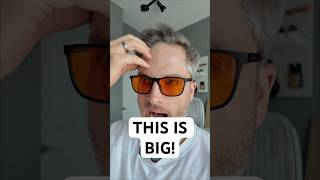

YouTube Algorithm History in 42 Seconds
42sQuick historical insight reveals how algorithm changed, appealing to creators seeking to understand the platform.
▶ Play Clip"Delivers substantive information about algorithm changes, though the 'huge change' label is slightly overblown given incremental evolution."
The video explains the evolution of the YouTube algorithm from 2005 to 2026, culminating in a new semantic AI-driven system. It outlines three major changes—semantic IDs, watch history clusters, and satisfaction signals—that now prioritize relevance and viewer satisfaction over raw watch time. This shift enables smaller niche channels to reach the right audience without going viral.
YouTube algorithm evolved from keyword-driven (2005-2012) to attention-driven (2012-2015) to interest-driven, and now to semantic AI-driven (2026).
From 2005 to 2012, the algorithm relied on metadata like tags. Tags mattered, but this led to keyword spamming.
From 2012 to 2015, YouTube prioritized watch time, rewarding videos that held viewers' attention.
Later, YouTube learned viewer preferences to recommend videos they are likely to enjoy.
YouTube CEO confirmed AI now powers recommendations. The browse feed was rebuilt around watch history clusters.
Homepage groups content by hyper-specific viewer interests, e.g., 'home service business owners researching pricing' rather than broad 'business' category.
AI understands video content contextually, not just tags or keywords. Three key changes: semantic IDs, watch history clusters, satisfaction signals.
YouTube reads the actual video content, not just the title, to understand its meaning.
Priority shifted from total watch time to whether the right viewers loved the video.
The semantic algorithm allows niche channels to reach the ideal audience without going viral.
The YouTube algorithm's 2026 update prioritizes semantic understanding and viewer satisfaction, offering smaller channels a better chance to connect with their target audience. Creators should focus on high-quality, niche content that resonates deeply rather than chasing broad virality.
What were the three eras of YouTube algorithm before 2026?
Keyword-driven (2005-2012), attention-driven (2012-2015), and interest-driven.
00:01
What changed in January 2026 regarding YouTube recommendations?
YouTube CEO announced that AI is now behind recommendations, and the browse feed was rebuilt around watch history clusters.
01:12
What are watch history clusters?
Hyper-specific groupings of viewer interests (e.g., 'home service business owners researching pricing') used to organize the homepage.
01:40
What is the semantic algorithm?
An AI-driven algorithm that understands video content contextually, including what is shown and said, beyond just tags or keywords.
01:53
What are the three key changes in the 2026 algorithm?
Semantic IDs, watch history clusters, and satisfaction signals.
02:08
What replaced total watch time as a priority?
Satisfaction signals: whether the right viewer loved the video.
02:38
AI Integration
Confirmed by YouTube CEO, marking a significant shift in how recommendations are made.
01:12Hyper-Specific Grouping
Watch history clusters allow precise targeting, benefiting niche content creators.
01:40Semantic Understanding
AI can now comprehend video content contextually, changing SEO strategies.
02:08Opportunity for Niche Channels
Small channels can reach ideal audiences without virality, leveling the playing field.
02:50[00:01] algorithm again, and there's some bad news and some good news. Let me explain. Before we go forward, we have to go back and do a brief history of the YouTube algorithm. From 2005 to 2012, the algorithm was keyword driven. So, that
[00:14] means that things like tags mattered cuz that was the metadata that supported and any YouTube guru that tells you that tags matter is a loser. Then, from 2012 to 2015, we entered into the attention driven algorithm. This was a big deal
[00:29] because before, people would spam keywords in their titles or their tags. They might put Justin Bieber in there to try to get more clicks, and it worked back then. But, what changed in 2012 was YouTube started to look at watch time.
[00:43] How long can your video actually hold someone's attention, not just get them to click. Then, the algorithm evolved again to the interest driven algorithm. YouTube, in a very precise way, learned who you are and what you like, and that
[00:58] influenced which videos were being recommended to you. But, most people again. But, before we talk about what the new algorithm prioritizes now, we have to look at two specific months this year where things changed. In January
[01:12] 2026, YouTube CEO published his annual letter on YouTube's own blog. He confirmed that AI is now behind recommendations. AI is getting involved in everything, dude. 1 month later, the browse feed was rebuilt around viewer
[01:26] watch history clusters. This is where things get really interesting as far as the opportunity on YouTube right now. Before this, the homepage was grouped in broad topics like cooking, tech, business. But, now these watch history
[01:40] clusters were much more specific. Now, instead of just being grouped as you're into business, it could be grouped as home service business owners researching pricing and hiring. That's a completely different level of precision. Which
[01:53] brings us to the new era of YouTube, 2026, which is the semantic algorithm. change is significant. Instead of YouTube just understanding your tags or YouTube just understanding your tags or even the keywords in your script, AI can
[02:08] now understand everything that is shown in your video and everything that's being said and what it means. Three things happened because of it. Number one, semantic IDs. YouTube reads what your video actually is, not what you
[02:23] titled it. Number two, we just learned about it, watch history clusters. YouTube groups viewers by specific, hyper-specific interest, not just broad hyper-specific interest, not just broad topics. And number three, satisfaction
[02:38] signals. It's no longer minutes matter most, did someone just watch the whole most, did someone just watch the whole video? It's did the right person love the video? The semantic algorithm is why
[02:50] a small specific channel can now reach exactly the right person without going exactly the right person without going viral.
⚡ Saved you 0h 02m reading this? Transcribe any YouTube video for free — no signup needed.