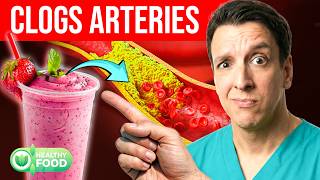

Breakfast Smoothie = Liquid Candy?
40sReveals that a seemingly healthy smoothie has as much added sugar as a slice of cake, shocking viewers who think they're making a healthy choice.
▶ Play Clip"The title perfectly matches the content – the video systematically exposes 15 categories of 'healthy' foods that are harming arteries, exactly as promised, and offers practical alternatives."
This video exposes common foods marketed as healthy that actually contain high levels of added sugar, sodium, or unhealthy fats, contributing to artery clogging and heart disease. The speaker provides specific examples like smoothies, vitamin waters, soups, granola, yogurt, and plant-based burgers, and offers practical, healthier alternatives. The core message is to ignore front-of-package buzzwords and always check the nutrition label.
A commercial breakfast smoothie with 27g of added sugar contains as much sugar as a large slice of cake, despite marketing as healthy.
Harvard study: people who consume more added sugar have a 38% higher risk of dying from heart disease.
Vitamin water with 27g added sugar is another example of a 'healthy' drink that is actually glorified liquid candy.
Minuteade lemonade has 27g added sugar; Monster Energy has 54g (two large slices of cake).
Some iced tea brands contain 67g added sugar in one can, exceeding a regular Coke.
A 'light' soup can contain 680mg sodium (30% daily max) plus processed red meat, harmful for blood pressure.
Gatorade protein bar has 23g added sugar (more than a Butterfinger) and 360 calories, making it a candy bar in disguise.
Veggie burger patty contains half the daily saturated fat and more than half the recommended salt, often from coconut or palm oil.
A single bag of lentil chips has over 3g of salt, more than half the daily recommended amount.
A 'low-fat' granola product with 20g added sugar per serving equals a Butterfinger bar, despite buzzwords like 'whole grains' and 'natural flavors'.
Craisins (dried cranberries) contain 26g added sugar per 40g serving – more sugar than cranberries – with sugar listed first in ingredients.
Atkins pepperoni pizza has over 1,000mg sodium and 50% daily saturated fat, plus processed red meat.
Catalina dressing lists sugar as the first ingredient; healthier alternatives are olive oil and vinegar.
Chobani yogurt has 14g added sugar and 20% daily saturated fat; other low-fat yogurts have up to 18g added sugar, akin to candy.
Randomized trials show diet can shrink plaque in arteries; a previous video covers this in detail.
Many foods marketed as healthy contain excessive added sugar, sodium, or unhealthy fats that can silently clog arteries. The most effective defense is to ignore front-of-package claims and always read the nutrition label, and to choose whole, minimally processed alternatives.
Innocent smoothies (no added sugar line)
tool
Evivve frozen smoothie mixes
tool
Red Bull Zero Sugar
tool
Monster Zero Sugar
tool
Celsius sparkling energy drink
tool
Minuteade zero sugar lemonade
tool
Health Valley low-sodium soup
tool
Campbell's unsalted soup line
tool
Muscle Milk zero sugar protein drink
tool
Zero Bars protein bars
tool
Dr. Prager's veggie burger
tool
Previous video on reversing artery plaque
link
What does the liver produce when you consume too much refined sugar?
It produces VLDLDL particles that get stuck in artery walls and form plaque.
01:27
According to Harvard, how much higher is the risk of dying from heart disease for people who consume more added sugar?
38%.
01:43
How many grams of added sugar are in a typical Vitamin Water?
27 grams.
02:09
How many grams of added sugar are in a can of Monster Energy?
54 grams.
02:34
What is the sodium content of the 'light' soup can mentioned?
680 mg (30% of daily maximum).
05:43
What percentage of daily saturated fat does one veggie burger patty contain?
About half (50%).
11:08
Why do plant-based burgers often have high saturated fat?
They use coconut oil or palm oil, which are more concentrated in saturated fat than butter.
11:25
How much added sugar is in a 40g serving of Craisins?
26 grams.
15:14
What is the first ingredient in Catalina dressing?
Sugar.
16:58
How many grams of added sugar are in the Gatorade protein bar?
23 grams.
08:37
Smoothie = liquid candy
Highlights how a 'healthy' breakfast smoothie contains as much added sugar as a slice of cake, revealing deceptive marketing.
01:04Potassium salt blood pressure benefit
A randomized trial showed even partial salt replacement reduces strokes and deaths, offering a practical dietary tweak.
07:54Coconut oil raises heart disease risk
Contrary to popular belief, coconut oil increases cholesterol and APOB, accelerating plaque formation.
10:37Salad dressing sugar trap
Reveals that many salad dressings have sugar as the top ingredient, undermining the healthiness of a salad.
16:35Artery plaque can be reversed with diet
Provides hope and scientific backing that dietary changes can shrink arterial plaque, motivating lifestyle change.
19:31[00:00] It's shocking how many foods being sold to us as healthy actually help clog up our arteries year after year without us even noticing. And I'm not talking about junk food here.
[00:13] We all understand that's not good for us. I'm talking about foods we are constantly told are heart healthy. Granola, smoothies, yogurt, healthy oils, veggie burgers. Some of these foods actually speed up
[00:27] formation of black in our arteries and help clog up your blood vessels. So today we're gonna cover some of the worst offenders out there and also let's talk about what to eat instead. Take this breakfast smoothie for example.
[00:41] Smoothies are supposed to be healthy, right? Package says 21 vitamins and minerals. 11 grams of protein, pictures of fresh fruit. At the bottom it says fruit, yogurt, whole grain. I mean, this sounds great.
[00:53] But every single thing in the front of a package is marketing. None of it matters. The only thing that matters is in the back. Check the nutrition label in the back. It'll say carbohydrates.
[01:05] Then sugars, this includes all sugars, including natural sugars in fruit or milk. What you wanna check are the added sugars. 27 grams of added sugar. Guys, this is the same as in a large slice of cake.
[01:19] So you pick up this healthy looking drink. You think you're doing good. You're actually having glorified liquid candy. When we consume too much refined sugar, our liver produces these small particles
[01:33] called VLDLs and pumps them into our bloodstream. These particles can get stuck inside the artery wall and form plaque. According to a study from the Harvard School of Public Health,
[01:45] people who consume more added sugar have a 38% higher risk of dying of heart disease. Okay, here's another one that blew my mind. I decide no more sweet drinks.
[01:57] I'm gonna be healthy. I'm just gonna have water. So I pick up one of these vitamin waters. Vitamin's are healthy, water's healthy. The bottle says natural flavors. Sounds great, but remember, nothing on the front matters.
[02:09] Check the label in the back. 27 grams of added sugars again. Another big slice of cake. I had no idea they had this much sugar to this stuff. Okay, what about lemonade? Lemonade is healthy, right? Minute made lemonade, you guessed it.
[02:23] 27 grams of added sugars. This is insane, I'm not making this up. Okay, what about energy drinks? That's like having a cup of coffee, right? It just wakes you up. It's good for you. A can of monster energy has 54 grams of added sugar.
[02:39] Two big slices of cake. This is more sugar than a regular size can of coke. Okay, how about tea? Ice tea? Tea is healthy, right? Come on. Some brands of iced tea have 67 grams of added sugar in one can.
[02:54] Okay, this is a pretty big can, but 67 grams is absolutely insane. So all of these prepackaged, pre-made ultra-processed drinks can be a massive trap. You really have to keep your eyes peeled.
[03:07] Now, of course having something sugary once in a while is not a big deal, especially if you're healthy. But most of us Westerners already consume too much of this stuff. And if it's hidden in plain sight like that, it becomes really, really hard.
[03:20] I mean, this is an uphill battle. Okay, let's talk about better alternatives because we want to spot the problems, but we also want to bring solutions to the table. Obviously you can make your own lemonade or your own smoothie at home.
[03:32] It's quick, it's healthy, you can't go wrong with that. A couple leaves of kale or whatever greens into the blender, one banana, some frozen berries, your favorite milk, done. 10 seconds, zero added sugars.
[03:44] And you can add protein powder to that if you want. Now, for people who don't have time to make their own smoothie, they want something faster, they want something pre-made. There are some brands out there with no added sugars.
[03:56] Innocent has a line of smoothies with no sugars added. And Evive sells the frozen, blended fruits and veggies in a smoothie mix. Okay, more healthy options, tea and coffee that you make yourself at home.
[04:10] Some of the healthiest drinks you can possibly have for your heart. Tea tea is fantastic, matcha is great. And there are some commercial energy drinks for people who want something that's pre-made
[04:22] that have no sugar added. There's a Red Bull Zero and a Monster Zero Sugar. I would still recommend the coffee or the tea over these very processed drinks, but some people are going to buy something pre-made in a can anyway, might as well go for the
[04:37] better product. By the way, I don't sell any of the products named in this video, I don't have a relationship with any of the brands, so I don't have skin in the game. Okay, another one I found is Celsius. No sugar, it's got a sparkling energy drink.
[04:50] There's also a Zero Sugar lemonade product from MinuteMade. They all use sweeteners, usually artificial sweeteners. And there's a vitamin water with Zero Sugar added. Now if you want to sweeten your homemade tea or coffee or lemonade or whatever it is,
[05:05] one option are natural sweeteners like stevia or monk fruit, they contain zero calories. There's also allulose for people who prefer that. It's not zero calories, but it is low calorie. Let's talk about another devil in disguise.
[05:18] So I'm trying to eat healthy. Let me have some soup. Soup is healthy, right? Pretty much everyone agrees. Let's say I grab this can at the store, it says light on top, 190 calories.
[05:30] That's not bad. Gluten free. This sounds healthy. The website makes it sound even better, source of vegetables, quality ingredients, no artificial flavors. I mean, this looks pretty textbook. But remember, the only information that matters is in the back.
[05:44] This can has 680 mg of sodium. That's 30% of the maximum recommended for the whole day in this one can. And it contains some bacon, which is a processed red meat link to heart disease and some cancers.
[05:59] So this is not a healthy food, especially if you have heart issues. Okay. What about this one? No bacon. And it has some broccoli in it. Gluten free again. This looks great, 690 mg of sodium.
[06:12] It's even more than the other one. Now if you have a cam like that once in a while, that's not a big deal. And some people are more salt sensitive than others. So it doesn't have to be cookie cutter.
[06:24] But if you have blood pressure issues, or if you have heart disease, this is not the type of thing you want to be eating on a regular basis, eating too much salt, too much sodium triggers are sympathetic nervous system and causes our blood vessel walls to contract.
[06:40] And that raises our blood pressure. High blood pressure causes damage to the artery walls and accelerates plaque and heart disease. So what's a healthier option? Well, obviously you can make soup at home and control exactly what goes in there.
[06:55] Also there are some brands of pre-made soup in the market that have no salt or very little salt added. All valley has some cans with 55 mg of sodium.
[07:07] That's a lot less. That's 12 times less than those cans we looked at. Even Campbell's has had to come out with an unsalted product line because people are becoming more and more aware of this issue. Another option is potassium salt, which is still salty, but it lowers blood pressure instead
[07:23] of increasing it. Some people don't like the taste of potassium salt, others don't notice the difference. One option is to mix 50, 50 or 75% regular salt, 25% potassium salt, one randomized trial
[07:39] had 10,000 people replace 25% of their regular salt with potassium salt. And over five years, even that partial swap reduced the number of strokes and the number
[07:53] of total deaths. So it's pretty powerful. Okay. We've seen some products labeled gluten-free and how that doesn't necessarily mean they're healthy. It's basically a sound bite that companies use to trick you, to suggest to you that the
[08:09] food is healthy. Another big one that they use a lot is protein. Protein has a health halo, so companies use this on packages all the time suggest that the food is healthier, so you have to be extremely careful.
[08:23] This gatorate bar, for example, leans hard on the protein sound bite. The front of the package says protein, not once, but twice, and they show athletes in their marketing.
[08:35] It's a whole show, but look at the back. This has 23 grams of added sugar. That's more than a lot of candy bars. A butter finger candy bar has 20 grams of added sugar. So they call this a protein bar, but this has more sugar than protein, 20 grams of protein
[08:51] and 23 grams of added sugars. If we call this a sugar bar, that's some more honest marketing, right? But of course, they're not going to do that. This also contains 360 calories, which is a lot for a small snack that's not going to keep
[09:05] you full very long. So this is a candy bar. That's what it is, but of course, their marketing is to present it to you like it's a healthy sports food. It's complete platinum nonsense. Look at this one.
[09:17] Three drink, 19 grams of added sugar in this. It's in the range of a candy bar. So how do you get people to buy this? Well, you call it a protein shake, repeat protein again on the top, repeat protein again
[09:30] on the bottom. Three times they use the protein sound bite on the front of this one. You see what they're doing here, right? This is not an accident. This is pure manipulation. We all know sugar is bad, but we all like the taste of sugar.
[09:43] So they give you what you like, but they tell you that it's something else. They just write protein, vitamins, fiber, sports, all kinds of buzzwords on the package. It's just basic psychology.
[09:55] So don't fall for this. All right. What are healthier alternatives to get your protein? Obviously, I'm going to recommend that you get most of your protein from actual foods, from healthy sources, fish, seafood, legumes like lentils, beans, soy, some lean white meats, fermented
[10:15] dairy, seitan, all great sources. And for people who want a supplement, protein powder is fine. And for people who want a bar, who want something pre-made like a quick snack, there are some better products in the market.
[10:28] These zero bars, I found these much lower in sugar. Muscle milk has a drink with 20 grams of protein, no sugar added. Many other examples. All right. Another big sound bite that's used to manipulate you is plant-based.
[10:43] You can look at this veggie burger, plant-based, big letters on the front. Again, on the bottom, vegan, you already told me it's plant-based, high in protein, there it is again. Now you can recognize this. Remember, nothing on the front matters.
[10:56] Look at the back of the package, nutrition label, that's legally enforced, so they can't game it. That's the thing. More than half of the recommended salt and about half of the saturated fat for the whole day in just one patty of about 100 grams.
[11:11] So again, this is okay once in a while, maybe as an occasional treat, but it's not something you want to be eating on a regular basis, especially if you have heart issues. Wait, this is vegan.
[11:23] How can it have a lot of saturated fat? Saturative fat is supposed to be butter and steaks, right? Sure. But coconut oil, palm oil, those are even more concentrated in saturated fat than butter.
[11:35] Now a lot of these imitation meats, these plant-based products, use coconut oil or sometimes palm oil, so you've got to watch out for that. Coconut oil is another one that has a health halo in some circles of wellness, but it's not
[11:51] a very healthy food, unfortunately. We have a whole video on coconut oil, basically their randomized trials looking at it, raises your cholesterol, and raises your April B, which is a more reliable metric of risk of heart
[12:04] disease. Eating a large amount of coconut oil speeds up black, it's not ideal. Just because it comes from a plant doesn't mean it's healthy. And talo is another one that's pushed in some communities, the current health administration
[12:18] in the United States, got to create this myth around talo that it's a health food in part because it's natural. The reality is there's nothing scientific to back that up. The documented health effects of talo don't look good, it's not a great option.
[12:34] Okay, this snack really got my attention and not in a good way. Lental chips, plant-based, no artificial blah blah, the usual mumbo jumbo, none of this stuff means it's a healthy food.
[12:46] This has more than three grams of salt in one little bag, more than half of the recommended amount of salt for the whole day in one little pack of chips. Okay, what are some healthier options for snacks? Popcorn that is unsalted, for example, or you can add your own salt, unsalted nut mix is
[13:02] another great one. Healthy fats has some protein. And again, you can add salt yourself, you're probably going to add less than the company, or you can mix some regular salt, some potassium salt.
[13:14] And if you're looking for a veggie burger, black bean burger, with a side of avocado, can't beat that. Some commercial brands of veggie burgers that are better, also Dr. Prager's has a veggie burger, low in sodium, low in saturated fat, no added sugar.
[13:29] I don't buy any of these products, we're just passing along products that we found that seem healthier. So if any of you guys know these are other brands, by all means comment below so everyone can see.
[13:41] Okay, another sound bite they use to manipulate us, low fat. Take a look at this granola product, granola is supposed to be healthy, right? As usual, package looks beautiful. Pushes all our buttons, pictures of beautiful fresh fruit, all kinds of buzzwords on this one.
[13:57] No artificial flavors, no artificial colors, no preservatives, free from unwanted ingredients. Could you be more vague? I mean, that doesn't mean anything, what's an unwanted ingredient?
[14:09] Naturally flavored with other natural flavors. Is this a joke? It's hard to believe this is actually written on a package. Naturally flavored with other natural flavors, I mean it's mumbo jumbo.
[14:21] It's almost like they're making fun of the consumer. Like let's see how dumb we can make this sound and see if they'll still buy. I had to double check that this was an actual real package. Anyway, what else does it say? It's whole grains, it's a good source of fiber, it's a low fat food, it's non GMO.
[14:38] This package should be studied in psychology. They really went all out on this one. Anyway, look at the back, 20 grams of added sugar guys. They're serving, right? This is the same as a butter finger bar.
[14:50] Once you know what to look for, it's almost like they can't trick you. You see, right through all their mumbo jumbo. Okay, here's another one that absolutely blew my mind. I decide no more processed foods, I'm just going to eat something healthy, I'm going to have
[15:03] some fruit. Look at these crazins, dried cranberries, the usual mumbo jumbo, no artificial flavors, no preservatives, nutrition label. Which 40 grams has 26 grams of added sugars.
[15:18] There's more sugar than cranberry in this thing. In fact, when you look at their ingredient list, they write dried cranberries, but when they break it down by components, sugar comes before cranberries, right?
[15:30] Because this is enforced by law, you have to list them in order of amount. So this is another useful trick to check these things. Cranberries are naturally very bitter, so I guess this is how they make it delicious. They just add a boatload of sugar to it.
[15:42] Like since in retrospect, I just didn't realize how much sugar they add to this stuff. Just have some dried fruit without added sugar, regular raisins or prunes or whatever, way better than this stuff.
[15:54] Okay, here's another dog whistle. They used to manipulate us and tell us the food is healthy when it isn't. Low carb. Look at this one. Atkins pepperoni pizza, low in carbs, high protein, of course, that one's everywhere.
[16:08] This has over 1,000 milligrams of sodium per serving. That's almost half of your daily recommended maximum, 50% of the saturated fat for the whole day in one serving, and it has pepperoni, which is a processed red meat.
[16:21] So this is a terrible meal for someone who has heart disease. If you want a low carb meal, have a healthy low carb meal, grilled salmon, side-of-green vegetables, head and shoulders above this stuff.
[16:33] Okay. What about salad? Salad is healthy, right? Well, depends how you prepare it. Having a salad makes us feel like we're doing something right. So then we're more relaxed about what we put on the salad or on the side.
[16:48] Look at this dressing. Classic Catalina dressing, pictures of beautiful fresh vegetables. The usual lines, no artificial flavors, no MSG. So here again, this has so much sugar in it, they have to list it in first place.
[17:02] It's the number one component in this dressing. So what's a healthier dressing, extra virgin olive oil, balsamic vinegar. Can't go wrong with that. But if you prefer to have no oil completely fine, you can have some avocado with your salad
[17:18] or some crumbled pieces of nuts in there or some olives, whatever floats your boat. Okay. Let's look at some more examples of manipulation. These Oreos, they actually change the shape of the food to signal to us that it's healthier.
[17:31] Oreos Thins. This makes it sound like it's thinning, right? Well, it definitely isn't. First ingredient, sugar, second ingredient, flour, refined carbohydrate, third ingredient,
[17:43] Paul Moil, high insaturative fat. This is not a good snack at all if you have heart disease. Okay, another tricky trickster is yogurt. Look at this chobani, only natural ingredients, gluten free, yada yada, the usual, label 14 grams
[17:59] of added sugars. And 20% of your saturated fat for the whole day, in one little cup of yogurt of about 100 grams. Look at the ingredients, cane sugar is number two. So saying natural ingredients doesn't mean anything, cane sugar is perfectly natural.
[18:15] It could be 99% cane sugar, and you could say all natural. So this whole natural and unnatural, it doesn't mean healthy. This is manipulation used by internet gurus and companies with marketing.
[18:29] And this one isn't even the worst yogurt out there, it's not even close. Look at this one, low fat yogurt, low fat usually means a high sugar, 16 grams of added sugar. This one's even worse, pictures of fruit, we're all over that at this point.
[18:43] Hey, it's light and fluffy, whatever that means, reduced fat, of course, gluten free, vitamins, nothing artificial, the usual song and dance, but what does it have, 18 grams of added
[18:56] sugar? That's in the ballpark of some candy bars. It's seven Hershey's kisses to make up this much sugar. So you give your kid a cup of yogurt, you think you're giving them a healthy snack, you're actually giving them glorified candy essentially.
[19:10] Okay, healthier options for yogurt, unsweetened yogurt, you can add your own fruit or you can add a sweetener like stevia, zero calories, zero added sugars, or you can add your own sugar
[19:22] at home to it. Let's face it, you're probably going to add less than these commercial products do. And you know exactly what's in there, you're not getting game by some company. Guys, a lot of people don't realize it's possible to shrink the plaque in our arteries to reverse
[19:38] that to some extent with diet that's been shown in randomized trials and we cover that in this previous video. So check it out and I'll meet you in there.


⚡ Saved you 0h 19m reading this? Transcribe any YouTube video for free — no signup needed.