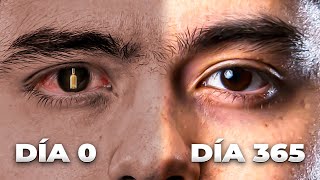

Why I Started Drinking at 14
50sRelatable story of peer pressure and starting young, sparking empathy and debate.
▶ Play Clip"Delivers a genuine personal story with real benefits, though it's more of a reflective vlog than a guide."
The video is a personal narrative about the creator's decision to quit alcohol after more than a decade of drinking, starting at age 14. He details his journey from using alcohol to fit in, gain confidence, and manage stress, to the realization that it was causing more harm than good. He shares the benefits of sobriety, including improved focus, self-perception, and relationships, and offers advice on questioning one's own drinking habits.
The creator started drinking at age 14, and on April 28, 2024, decided to quit completely. He has been sober for over a year and claims his life has never been better.
He started drinking to fit in with friends, which he admits is cliché but was a real motivation at a young age. He was often younger than his peers, which influenced his lifestyle.
As he got older, he realized he was drinking not just to fit in but to feel confident. He lacked self-confidence and used alcohol to lower his defenses and talk to people, especially those he found attractive.
During his entrepreneurship years, he used alcohol to manage stress from working 12-16 hours a day. He would drink heavily on weekends to escape, creating a cycle of escape and return.
Alcohol is a central nervous system depressant that decreases brain activity, altering mood and behavior. It impacts the part of the brain controlling inhibition, leading to relaxation and confidence, but effects can turn negative, causing anger, depression, or anxiety.
He realized that alcohol was bringing more harm than good. He didn't like feeling the need to drink every weekend, the lack of control, or the depressed feelings after drinking. He decided to quit to break the cycle.
The first month was the hardest due to missing the relaxation, habit, and social pressure. People questioned why he wasn't drinking, and he initially went out less, but non-alcoholic drinks helped.
He had time to work on himself, writing down thoughts and reflecting on life. This gave him clarity and helped him plan to solve his problems.
Quitting changed how he saw himself, from being dominated by a substance to being in control, calm, free, and confident. This improved his self-perception enormously.
2024 was his year of greatest personal and financial growth, largely because he no longer had mental fog every weekend, giving him more time to invest in himself and his projects.
His weekend plans changed radically. He now chooses plans and friends more carefully, leading to more fulfilling experiences and deeper, more genuine friendships.
He discovered he could achieve everything he thought alcohol did for him without it. Fitting in was about being with the right people, confidence came from keeping promises, and stress was managed through exercise and deep conversations.
He might drink again at important events like a friend's wedding, but he doesn't see it happening soon and has no desire. If he does, it will be in moderation and not to escape.
He advises questioning why you drink: to fit in, gain confidence, out of habit, or to have fun. There are no right or wrong answers, but understanding the reason is important.
The creator concludes that his year without alcohol was incredible, helping him focus professionally, personally, and mentally. He hopes to continue sober but if he ever drinks again, it will be responsibly and without guilt, knowing life is truly better sober.
At what age did the creator start drinking alcohol?
14 years old.
00:01
What was the initial reason the creator started drinking?
To fit in with friends.
00:43
What is alcohol classified as in medical terms?
A central nervous system depressant.
05:04
What negative feelings can alcohol cause after its effects wear off?
Anger, depression, or anxiety.
05:29
What did the creator use to help him in the beginning of quitting?
Non-alcoholic beer and non-alcoholic drinks.
07:43
What was the creator's greatest year of personal and financial growth?
2024.
09:03
What did the creator replace drinking with to manage stress?
Exercising, having deep conversations, and giving himself space to think.
10:35
What is the creator's stance on drinking in the future?
He might drink at important events but only in moderation and not to escape.
11:04
Alcohol as a Depressant
Provides a medical explanation for the effects of alcohol, grounding the personal story in science.
05:04Improved Self-Perception
Highlights a key psychological benefit of sobriety: feeling in control and confident.
08:49Focus and Growth
Directly links sobriety to increased productivity and personal growth.
09:03Self-Sufficiency Realization
Challenges the belief that alcohol is necessary for socializing or confidence.
10:09Question Your Drinking
Offers actionable advice to reflect on the reasons behind drinking.
11:43[00:01] I started drinking alcohol before I turned 18 , exactly at the age of 14. And on April 28, 2024, I decided to quit completely. I've been sober for over a year and honestly my life has never been better. So today
[00:15] I'm going to tell you and then I'm gone. As I've mentioned several times, I was always 2 years younger than my generation. That is to say, when I entered university, people were around 18 years old and I was 16. That was almost the case for my entire life. And
[00:28] this, although not so rare, had a great impact on my lifestyle, because I did everything before. My friends started drinking alcohol at 15 or 16, and therefore I started at 14. When I started more than 10 years ago, it was for a
[00:43] particular purpose: to fit in. I know, it sounds very cliché, but when you're very young it's very well, it was the birthday of one of my best friends. We were going to sleep there and it was easy for me to start drinking. Everything was normal up to that point. I didn't
[00:58] develop an addiction, far from it, but it would be the first drop in the cup. allow it, but I always found a way. And although I knew it was wrong, I didn't really have any idea of the damage I was doing to my body and my
[01:13] developing brain. But to be honest, there was so much positive advertising about alcohol that it even seemed good. It was and is everywhere, in movies, in music, on social media, and it's something
[01:26] everyone was doing. So, taking it seemed normal to me. Now, this video is not meant to demonize alcohol consumption, because I believe that, like everything we consume, the secret lies in the dose. Everything in excess is bad,
[01:38] problem is not alcohol, but why we drink it and the relationship we have with it. But I'm not getting ahead of myself. From about 14 to 17 years old was when I lived through my high school years and my first nightclubs. I used to go there every
[01:52] practically the perfect excuse to have fun, and I genuinely do have very good memories and very good times from those years, so I don't think it's all bad. But here the first few drinks were starting and I would get a
[02:06] little carried away from time to time. However, after the 17-year-old stage, I realized that alcohol was already a part of my life. That is, I used to consume it almost every week because I was going to parties, clubs or events, and I started to
[02:19] notice that I wasn't taking it anymore for the same reason. Before, it took 100% to fit in, but now there was something more. I no longer felt pressured to drink, and I was actually drinking for another reason, and that was to feel confident. Like almost
[02:34] everyone, I too was a person with insecurities. I felt uncomfortable with my myself in general. And the problem is that if you don't feel good about yourself, you won't others either, and you'll be even less confident talking to people,
[02:49] especially if you find them attractive. Then I realized that because I didn't trust myself, I needed to drink alcohol to lower my defenses and talk simply to have fun. That's why I also say that alcohol is like
[03:03] liquid confidence, because it was going to give you that courage that maybe you didn't have. And for me this was one of the main problems, that is, I drank alcohol because I lacked confidence and drinking was a faster way to gain it. It was
[03:16] myself and then develop the confidence I really lacked. And like anyone else, the years passed and I had some good and some bad experiences with alcohol. But I did notice something in particular. Every time
[03:30] I drank too much, I was usually very unfocused, tired, and unable to concentrate the next day. This could also last for several days, not like a hangover or a hangover as such, but more like a foggy
[03:44] or mentally unfocused feeling. This obviously didn't allow me to reach my full potential, but it didn't seem to be a very serious problem either. Years passed and the presence of alcohol not only did not disappear, but rather intensified. I started
[03:57] entrepreneurship and unintentionally it became a way to manage stress. I would spend 12 to 16 hours working during the week and on the weekend, as if it were absolutely necessary, I would take it out on alcohol and so the endless cycle continued
[04:11] . This is when I realized a harsh truth: since I started drinking, I had never stopped. Obviously he didn't drink every day, but he did drink you might see this as normal, but something inside me
[04:26] just told me it wasn't . In other words, why was it so necessary to take it every weekend? And while I do believe there is a point where you can drink and have fun comfortably, my problem was that I almost never
[04:38] stayed there, I always went further. And it wasn't just my consumption habits, but also my mental state, that was wrong. Because when I drank, I didn't do it moderately; I did it with the intention of taking a little more and escaping my
[04:52] current state. I was looking to escape from all the stress of work, from all my insecurities, and sometimes even from myself. The problem wasn't alcohol, it was that I had problems and I used alcohol to escape from them.
[05:04] In medical terms, alcohol is literally a central nervous system depressant. Basically, this means that it is a drug that decreases brain activity, altering mood, behavior,
[05:17] means that alcohol directly impacts the part of the brain that controls inhibition. That's why you feel relaxed, more confident, and much less anxious. But the effects of
[05:29] alcohol do not last and can quickly turn into negative feelings such as anger, depression, or anxiety. So if you feel sad or down after drinking , you're not alone. It happened to me, and I strongly remember having several
[05:43] nights where I would come home drunk and feel genuinely very sad, with very bad feelings towards myself. And this was something I really didn't want anymore. And the worst part is that it all became a never-ending cycle, because when I finally
[05:57] had free time on the weekend to reflect and solve my problems, I did alcohol. This made me I recovered I already had to go back to work. In short, he would escape,
[06:11] return, and then escape again. My relationship with alcohol was difficult because I did n't understand the impact it had on me. I didn't temporarily return to my problems, but postponing them only made everything worse. And it was right here that
[06:24] I realized that alcohol, besides harming me, no longer served a purpose in my life, or at least not one that I wanted. In my opinion, alcohol used to help me fit in, then to gain confidence, and finally to manage
[06:38] stress. But the truth is that the effects of alcohol brought me more harm than good. I didn't like feeling like I needed to take it every weekend. nor the feeling of not being in control of my life, much
[06:50] less the feeling of becoming depressed just from drinking. Deep down I knew I had to stop, so I told myself, "The only way to break out of this cycle and find out if I'm addicted to this is by quitting, and so I decided to stop drinking for a
[07:05] undoubtedly the hardest, both because I missed that feeling of relaxation and because of the habit and the social pressure. Although it's not as intense at my age , when you say you don't
[07:18] drink, people ask you things like, "Why aren't you drinking? Is everything okay? Do you have a problem?" Alcohol is truly the only drug for which you have to explain why you don't drink. At first, I even found myself
[07:30] going out less and making fewer plans because I'd say things like, "Why go out if I'm not going to drink?" It seems completely ridiculous to me now, but it really happened to me . At the beginning, using things like
[07:43] non-alcoholic beer and non-alcoholic drinks in general was a big help, mainly to combat the difficult to go to clubs and have fun without drinking, which seems absurd to me—that I couldn't have a good time without a substance— but it happens. Then
[07:57] you get used to not having it as an option, and it really surprises you that when you burn that bridge in your mind, you can have just as much fun without needing it. External stimuli and from then on, everything was an uphill battle. So here are
[08:09] the benefits I experienced. First and foremost, I had time to work on myself. I started writing down my thoughts and was able to reflect on my life and my feelings. Instead of just working and escaping with alcohol, I
[08:22] began to dedicate time to myself. This gave me clarity on what I had put together a plan to solve my how to explain this, but quitting drinking changed the way I
[08:35] saw myself. I went from having an image of myself as someone dominated by a substance to one of someone in control, calm, free, confident, and in charge of my decisions. My self-perception simply improved
[08:49] enormously. I think it has to do with the fact that I knew it was bad for me and I kept doing it constantly. So, being able to make the decision to take a break made me feel strong. Second, I became incredibly focused. Without a
[09:03] doubt, 2024 was the year with the greatest personal and financial growth I've ever had. And although It's due to many factors. A major factor was that I no longer had that mental fog every weekend, which gave me much
[09:15] more time to invest in myself and my projects. Third, my weekend plans changed radically. Before, I'd go out almost anywhere I was my close friends, alcohol would liven up any atmosphere. And this didn't
[09:30] lead me to the best places or the best experiences. I practically went out just for the sake of going out, and since I stopped drinking, I've started choosing my plans and my friends more carefully. Now I actually do things and go to places
[09:43] where I truly enjoy myself, which over the course of the year made me feel more fulfilled and more present in my life, as if I were finally enjoying it more. Obviously, this made me get closer to some
[09:56] people and naturally drift away from others, because now I only spend time with the people I really want to talk to, and we have deeper conversations , more genuine friendships, and generally a greater sense of fulfillment. And
[10:09] fourth, I discovered that all those functions that I thought alcohol did... I accomplished things in my life, and I can actually do them without it. Fitting in had nothing to do with drinking, but with sitting at the right table with the
[10:22] right people. Feeling confident wasn't about drinking until I was completely wasted, but about keeping my own promises. And since I promised myself I would stop drinking and I was succeeding, I felt more and more self- assured, and it showed.
[10:35] Finally, to manage stress, I replaced drinking to forget with exercising, having deep conversations, and simply giving myself space to think, which is much healthier and more beneficial. In other words, everything I thought
[10:48] alcohol did for me, I discovered I could do without it. It sounds caught in that cycle, you really feel like you ca n't have fun, de-stress, or fit in without it. Now, the million-dollar question: will I ever drink again? The
[11:04] answer is probably yes. Maybe at some important event like a friend's wedding, now that I'm entering that stage of my life, and although today I really don't I don't see myself drinking anytime soon, nor do I have any desire to at all. I know life
[11:17] is very long, but if there's one thing I'm sure of, it's two things. First, that I don't need alcohol in my life, and second, that if I ever do it again, it will be in moderation and not to escape from anything. I definitely don't want it to ever
[11:31] or a weekly routine in my life again. I just want it to be habit or need. My recommendation, more than telling you to drink or not
[11:43] , is to question why you do it. If it's to fit in, do you really need to be there? If it's to gain confidence, there's no better way to build it. If it's out of habit, do you really want to keep doing it? And
[11:56] if it's to have fun, can't you do it any other way? There are no right or wrong answers, just question it. You can say, "I want to have fun and fine, there's nothing wrong with that. And as I said, I don't demonize alcohol. I think there are
[12:10] They were definitely good to him, but I don't think he has to be present in every situation. The important thing is to understand the reason behind our actions. And if you're going to do it, do it responsibly and because you're
[12:23] many videos, my goal isn't for you to be like me, but for you to strive to be better. I feel that whoever listens to me can learn from my experience and live their life better. I interpret this path that God has placed before me as making my life a
[12:36] canvas. That is, you can spare me what I've done wrong, and you can take what I do well and do it even better. That's why I try to use this learning in my life, hoping that it can make yours a little
[12:49] easier or happier. And in conclusion, for me, this year without drinking was incredible. It helped me focus professionally, personally, and mentally. It gave me a break I hadn't had in a long time and allowed me to see more clearly what I
[13:03] want for my life. I hope to continue like this for many more years, but if at some point I start drinking again, I will do so responsibly, without Guilt, and knowing that life is truly much better sober. As always, a pleasure to serve, and I'll
[13:16] see you soon in another video. Bye.

⚡ Saved you 0h 13m reading this? Transcribe any YouTube video for free — no signup needed.