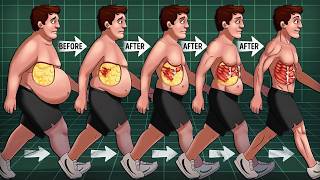
Walking Is Too Easy? Think Again
44sChallenges the common misconception that walking is ineffective for fat loss, creating intrigue.
▶ Play Clip Gravity Transformation - Fat Loss Experts
"The title accurately reflects the content, as the video provides nine specific, actionable walking tips for fat loss, though it slightly overpromises by implying a quick fix without emphasizing diet enough upfront."
This video dispels common myths about walking, arguing that when done strategically, it is one of the most efficient fat-burning tools. The speaker presents nine actionable tips to maximize calorie burn, including using a weighted vest, setting daily step goals, tracking progress, and walking after meals and workouts. The core message is that consistent, focused walking, combined with proper nutrition, can effectively reduce belly fat without over-stressing the body.
Adding a weighted vest (or backpack) with 10-15% of body weight can increase calorie burn by 10-20%. It also builds strength in stabilizer muscles in the core, hips, glutes, and legs.
Aim for at least 10,000 steps per day (roughly 1.5 hours of walking) to ensure consistent high energy expenditure. For faster results, push to 12,000-15,000 steps.
Use a fitness tracker, smartwatch, or smartphone to monitor daily steps. People often overestimate their movement; tracking reveals actual patterns and holds you accountable.
A 20-minute post-workout walk leverages depleted glycogen stores, improving fat oxidation and aiding recovery without hindering muscle repair.
Using a treadmill incline or outdoor hills increases muscle engagement in glutes and calves. A 5% incline boosts calorie burn by over 50%, and 10% more than doubles it.
A 10-15 minute leisurely walk after eating lowers post-meal blood sugar spikes, improves insulin sensitivity, and aids digestion through peristalsis.
Unlike high-intensity cardio, walking reduces cortisol (stress hormone), promotes better sleep, and enhances recovery. This makes it sustainable and ideal for those already training hard.
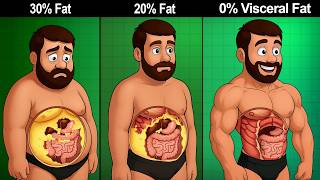
Intermittent power walking (e.g., 2 minutes brisk, 3 minutes normal) improves metabolic flexibility and is more effective for burning visceral fat than steady-paced walking.
Walking amplifies fat loss only when combined with a calorie deficit and adequate protein intake (0.7-1g per pound of body weight). It is a multiplier, not a miracle.
Walking, when done strategically with resistance, incline, pace variation, and consistency, becomes a powerful, sustainable foundation for fat loss and metabolic health, far more effective than chaotic high-intensity workouts alone.
By what percentage can adding 10-15% body weight via a vest/backpack increase calorie burn?
10-20%.
01:11
What is the recommended minimum daily step target for fat loss?
At least 10,000 steps per day.
02:20
Why is walking after weight training particularly effective for fat burning?
Because glycogen stores are depleted, making the body more likely to use stored fat for fuel.
04:06
How much does a 5% incline increase calorie burn compared to flat walking?
Over 50%.
05:24
What is the physiological mechanism by which post-meal walking reduces blood sugar spikes?
It stimulates peristalsis, the contractions that move food through the digestive tract, improving insulin sensitivity.
06:32
What hormone does walking lower, unlike high-intensity cardio?
Cortisol (stress hormone).
06:58
What is the recommended protein intake per pound of body weight when trying to lose fat?
0.7 to 1 gram per pound.
09:06
What is the term for the alternating-pace walking technique mentioned?
Brisk bursts or intermittent power walking.
07:49
What is the key principle behind walking's effect on fat loss mentioned in the conclusion?
Walking is a foundation that keeps metabolism active all day, unlike chaotic high-intensity workouts.
09:32
Weighted Vest Boosts Calorie Burn by 10-20%
Provides a simple, quantifiable way to significantly increase the metabolic cost of walking without increasing impact.
00:56Consistent Step Targets Beat Random Movement
Highlights the importance of a measurable and consistent workload (10-15k steps) for adapting the body to burn more energy.
02:05Post-Workout Walking Exploits Glycogen Depletion
Leverages a known physiological state to shift fuel usage toward fat, while also improving recovery via increased blood flow.
04:06Incline Walking Doubles Calorie Burn Without Joint Stress
Demonstrates a low-impact substitute for running that engages more muscle mass and dramatically increases energy expenditure.
05:12Walking Lowers Cortisol, Improves Fat Loss
Contrasts walking with high-intensity cardio, showing how the correct hormone profile (low cortisol, good sleep) is essential for losing belly fat.
06:58[00:00] You've been told a thousand times that walking is too easy to actually burn fat. It's what lazy people do when they're not ready for real exercise, right? But here's the funny thing. Almost every shredded guy or girl you see on stage, every athlete who stays lean year
[00:14] around and every trainer who understand how the body actually burns fat, all of them walk. They just do it differently than the average person scrolling through their phone at two miles per hour. The truth is, if you know how to walk strategically, it becomes one of the most efficient
[00:28] fat melting tools on the planet. And it does it without frying your nervous system, without wrecking your recovery, and without forcing you to live off of caffeine-loaded pre-workouts just to survive the next gym session. So in this video, I'm going to give you nine walking tips that can actually melt belly fat
[00:44] faster, and if you follow even half of them, you'll start seeing changes not just in your waistline, but in your overall energy, focus, and metabolism. The first and maybe most overlooked secret is to walk with resistance.
[00:56] I'm talking about walking with a weighted vest. Not a heavy one that makes you waddle, but just enough extra weight to trick your body into burning significantly more calories with every step. An alternative can also be a book bag that you fill with some extra weight.
[01:11] Studies show that even adding 10 to 15% of your body weight through a vest or a backpack can raise your calorie burn by 10 to 20%. And that's before we even talk about how it strengthens your stabilizer muscles. Every step forces your core, hips, glutes, and legs to stabilize that added load, which
[01:27] builds strength, balance, and coordination all at once. Think of it like turning a light jog into a full body strength and conditioning workout except it's still low impact. And here's the beauty, because you're strengthening your posterior chain and your core while you walk,
[01:41] your body becomes more metabolically active even when you're not walking. Over time you'll notice your lower back feels stronger, your legs feel more solid, and you'll find yourself naturally burning more calories throughout the day.
[01:53] And you can even progressively overload your walks by adding more weight to your weighted vest over time as you get stronger. The second tip is about consistency, and that's where a minimum step target comes into play.
[02:05] Most people walk when they feel like it. They go for a stroll after dinner or they take the stairs instead of the elevator once in a while, but that's not a fat loss plan, that's random movement. If you want your body to change, you need to give it a measurable, consistent workload
[02:20] to adapt to. That's why setting a minimum step goal of at least 10,000 steps per day is so powerful. For most people, that's roughly an hour and a half of total walking spread out throughout the day. And it guarantees you're keeping your energy expenditure high even outside the gym.
[02:35] But if you want to really accelerate belly fat loss, push that to 12,000 or even 15,000 steps. It's not about hitting those numbers with one long boring walk either. You can split them up into shorter sessions, morning, midday and evening, and don't forget
[02:49] your daily steps at the grocery store to the office, and while walking your dog, they all add up. The key is consistency. Every day that you hit that number, you're not just burning calories, you're reinforcing a habit that keeps your metabolism running high.
[03:02] Of course, none of that matters if you're just guessing your numbers, which brings us to tip number three, track everything. It doesn't matter whether you're using an Apple Watch Fitbit or a Ring or just your phone.
[03:14] If you're not tracking, you're only hoping you're doing enough. You can't improve what you don't measure. The average person assumes they're walking 8,000 or 10,000 steps a day, but when they finally check the data, it's usually closer to 3,000.
[03:27] That's barely over a mile. Once you start tracking, something interesting happens. You become more aware of your movement patterns. You'll notice which parts of your day are sedentary, which habits are holding you back, and you'll
[03:39] start finding little opportunities to move more. Getting further away, taking calls while walking, or adding a quick 15-minute evening stroll. These micro movements add up, and the simple act of tracking holds you accountable in a way
[03:52] that feels effortless. It becomes a little dopamine hit, watching that step count climb as you get closer to your goal each day. Another great tip is walking after lifting weights. This one flies under the radar, but it's a powerful strategy for burning more fat while
[04:06] improving recovery. When you lift weights, your body primarily uses glycogen, or stored carbohydrates for energy. After your workout, those stores are depleted, which means your body becomes more susceptible to burn fat for fuel.
[04:18] That's why walking after training is such a perfect combo. It's low intensity enough to wear it won't interfere with muscle recovery, but it still keeps your heart rate elevated in that fat oxidation zone. Think of it as extending your workout after burn window.
[04:32] Plus, unlike running or hit, walking won't leave you sore, tired, or drained for your next lifting session. In fact, it does the opposite. It increases blood flow, speeds up recovery, and reduces soreness. You can think of it as active recovery with fat burning benefits built in.
[04:47] Just 20 minutes of walking after your workout can make a measurable difference in how quickly your body uses stored fat for energy. The only caveat, don't magically expect it to burn fat if your overall diet is off.
[04:59] It's a multiplier not a miracle. Speaking of multipliers, the next tip is one of the simplest yet most effective ways to increase your calorie burn, walking uphill. Whether it's on a treadmill, incline, or a hill outside, incline walking turns your
[05:12] basic walk into a series fat burning workout without the joint stress of running. When you walk uphill, your glutes, hamstrings, and calves work overtime forcing your body to burn far more energy to overcome gravity.
[05:24] Research shows that even a 5% incline can increase calorie burn by over 50%, compared to flat walking, and going up to a 10% incline more than doubles it. But the real benefit isn't just the calorie count, it's the muscle engagement.
[05:37] When walking shapes and tones the lower body, improves posture and stimulates the same muscle fibers that running does, but without the pounding impact. It's one of the few ways to build muscle endurance and burn fat simultaneously, perfect for anyone
[05:50] who wants to get leaner legs and a tighter core without adding stress to their joints. Now let's talk about one of the most underrated habits for improving digestion, stabilizing blood sugar, and yes supporting fat loss, walking after your meals.
[06:05] You probably heard people say that walking after eating helps with digestion, but it's not just broscience, it's actually backed by research. Several studies show that even a short 10 to 15 minute walk after a meal can significantly lower post meal blood sugar spikes and improve insulin sensitivity.
[06:20] That matters because high blood sugar and insulin resistance are closely linked to stubborn belly fat. By stabilizing blood sugar after your meals, your body stays in a better metabolic environment for fat burning throughout the day.
[06:32] Post walking right after eating helps with digestion by stimulating something known as peristalsis, the contractions that move food through your digestive tract. It's a simple relaxing habit that keeps you from feeling bloated while subtly improving
[06:45] your body's fat burning efficiency. Just make sure to keep it light, think leisurely pace, not power walk right after a big meal. Now let's move on to one of the most overlooked advantages of walking. It's effect on your hormones and recovery.
[06:58] This cardio, especially when done excessively, spikes cortisol, your body's main stress hormone. High cortisol makes it harder to lose belly fat because it signals your body to hold on to energy reserves, particularly around your midsection.
[07:11] Walking on the other hand does the opposite. It lowers cortisol, promotes better sleep, and improves overall recovery between workouts. It's the perfect fat loss tool for people who are already training hard and need to recover without adding more stress to their system.
[07:25] You can walk every single day without burnout, and instead of interfering with your lifting, it enhances it. That's why top physique athletes, even during their hardest cuts, always rely on walking as they go to form a cardio.
[07:37] It burns fat while keeping your body's hormonal balance in check, which is a rare combination that makes it sustainable long term. The next tip might surprise you because it sounds almost too simple. Very your pace.
[07:49] Instead of walking at the exact same comfortable pace every day, try mixing in short bursts of faster walking, almost like intervals. This is sometimes called brisk bursts or intermittent power walking, and research shows it can be
[08:02] significantly more effective for burning visceral belly fat than just steady casual walking. The reason is due to something known as metabolic flexibility. When you challenge your body with small surges of effort, your heart rate fluctuates between
[08:14] aerobic and anaerobic zones, improving your body's ability to switch between fuel sources. For fat loss, that's huge. You don't need to sprint, even alternating between two minutes of brisk walking and three
[08:26] minutes of normal pace can make your sessions far more effective. Plus, it can help break the monotony, making your walks feel more purposeful and athletic. Now of course, we have to talk about the foundation. You're diet.
[08:38] Because no matter walking, no matter how strategic, will melt belly fat if you're eating in a calorie surplus. You can't out walk a bad diet. Eating increases calorie burn, but you have to give your body a reason to use stored fat
[08:51] for energy, and that only happens when you're in a calorie deficit. That means you need to be eating fewer calories than you burn, while still getting enough protein to preserve muscle mass. Protein is crucial because it not only protects your lean tissue, but also increases your metabolism
[09:06] through the thermic effect of food. Aim for at least 0.7 to 1 gram of protein per pound of body weight. When you combine that with consistent walking, your body becomes a fat burning machine. Every step you take now, pulls energy from stored fat rather than the food that you
[09:20] just ate an hour ago. So if you're serious about melting belly fat, dial in your nutrition first. Walking will help amplify those results dramatically. Finally, all these tips tie together into one central principle.
[09:32] Walking is not a fallback activity. It's a foundation. It's the thing that allows your metabolism to stay active all day long instead of shutting down the moment you sit at your desk. It's the most accessible, most consistent form of movement that human beings are built
[09:46] to do. When you stack just a few of these nine walking tips together, like the weighted vest for added intensity, the daily step goal for consistency, tracking to stay accountable, and post workout walks for recovery and fat burning, you're not just walking anymore.
[10:01] You're burning hundreds of extra calories per day, and you're training your body to burn fat around the clock. So if you've been struggling to lose belly fat, stop thinking you need to add more chaos, more hit, more exhaustion, more restriction, try to just add 10,000 steps per day.
[10:15] This is a habit that's simple enough to do daily, powerful enough to change your physiology and sustainable enough to become part of your regular lifestyle. And at the end of the day, it's not the flashy workouts that get you lean.
[10:27] It's the habits you repeat every day without fail. And few habits burn fat, strengthen your body, and clear your mind as effectively as walking done the right way. So that about wraps it up. I hope you've enjoyed this video and have gotten at least one new tip to accelerate the fat
[10:42] loss you experience from walking. If you have, make sure you subscribe to this channel, and if you want to learn how to lose a substantial amount of body fat or you want to build muscle faster without all that typical trial and error that most people go through, you can try my free six week shred.
[10:57] You'll get a workout plan, a six week meal plan that will come with a 42 recipe cookbook and will be entirely based on your preferences, and you'll also get a coach to guide you through the entire process and answer any questions that might come up.
[11:09] To find out more, you can click the link below in the description, or you can head straight on over to my website at gravitytransformation.com. I'll see you guys soon.
⚡ Saved you 0h 11m reading this? Transcribe any YouTube video for free — no signup needed.