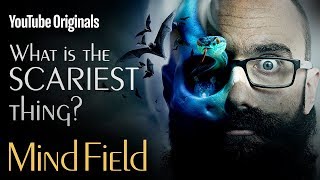

What Is the Scariest Thing Possible?
45sOpens with a universal, thought-provoking question that immediately hooks viewers and promises a surprising answer.
▶ Play Clip"The title promises a deep dive into universal fear, and the video delivers with science and experiments."
This video explores the concept of the 'scariest thing possible' by delving into the psychology of fear, how fears are learned through conditioning, and the neurological role of the amygdala. It argues that the ultimate fear is not death but something more universally panic-inducing, tied to innate aversions like isolation and loss of control.
Thunder, shadows, snakes, spiders, and sharks are scary to some but not all, so the scariest thing must be universally terrifying regardless of age, culture, or neurology.
To find the scariest thing, we must understand how fears are born in the mind, specifically through the amygdala and its role in associating experiences with innate aversions.
Michael is conditioned to fear a purple square through electric shocks, demonstrating that the brain can learn to fear almost anything via association with pain.
The amygdala acts as a 'spider' spinning a web of fear, connecting experiences to innate aversions like pain, suffocation, and isolation, which are tied to survival and death.
Although death is central to fear, not everyone fears it (e.g., courageous acts, suicidal individuals), so the scariest thing must be something even more panic-inducing.
In horror films, removing rational shields (e.g., knowing it's a movie) makes fear stronger; real-world fears are learned through stories and language, activating the amygdala.
Modern fear of not having a phone (nomophobia) stems from our innate aversion to isolation, as humans are social animals and isolation threatens survival.
Isolation connects to many fears (e.g., public speaking, rejection) and is linked to increased health risks and mortality, but extreme isolation may not be universally terrifying.
Fear of the dark arises from sensory deprivation and loss of control, tapping into ancestral dangers of predators, but it is not innate at birth.
The scariest thing possible is not death but the combination of isolation, loss of control, and sensory deprivation, which tap into deep-seated innate aversions and are universally panic-inducing.
What is the role of the amygdala in fear?
The amygdala determines the danger of something and helps remember what is important for survival.
06:12
What is nomophobia?
The fear of not being connected or not having your phone.
12:37
How does language contribute to fear learning?
Language activates the amygdala through stories, allowing imagination to create emotional impact and teach fears.
11:09
Why is death not the scariest thing according to the video?
Because not everyone fears death; courageous acts, elderly acceptance, and suicide show that something else can be scarier.
09:07
What are innate aversions?
Sensations like pain, being sick, suffocation, and the need to breathe that are instinctively avoided and do not need to be learned.
06:57
Conditioned to fear a purple square
Michael's physiological response to a harmless shape skyrockets, showing how easily fear can be artificially created.
04:28Isolation chamber experience
Michael describes losing the ability to distinguish dreams from reality, highlighting the terror of extreme isolation.
14:25Baby not afraid of the dark
The humorous reveal that a fetus is not afraid of the dark, emphasizing that fear of darkness is learned, not innate.
16:19[00:00] Everyone is scared of something, but is there something that everyone is scared of?
[00:19] What is the scariest thing possible? So what is the scariest thing?
[00:43] Is it thunder? Shadows? Being burned alive?
[00:57] No. It's also not pipes or needles, snakes, spiders, sharks. Those things can be scary to some, sure, but not to all. So here's what I mean by scariest.
[01:11] I want a thing, an object, an action, an idea that at my disposal would be guaranteed dualistic fear and panic in anyone who might happen to walk into this room right now,
[01:23] regardless of how old they were, their cultural backgrounds, their abilities, or even their neurology. An adventure towards this ultimate terrible thing must necessarily focus on the womb.
[01:38] No, not the kind you came from, but the womb in which fear itself gestates. The mind. To find the scariest thing, we must understand how fears are bored.
[01:53] Where are we going?
[02:10] Don't worry about it. Only two things matter. One, I've got plenty of gas, so what could go wrong? And two, our destination is a little bit spooky. And we're going to learn.
[02:22] In order to truly grasp what makes the one true serious thing, well, we need to dive deeper into how we learn fears.
[02:38] To start out, I commissioned a fear conditioning demonstration on me. You've probably heard that exposure therapy can help people overcome their fears.
[02:55] Well, the same principles can be used to create fears. Hello, Michael. I'm Dr. Tom Klaus-Vozianek from Caltech. And today, we're going to do some fear conditioning. Do you have any heart conditions or any serious major medical conditions?
[03:09] No. Okay. You've done this to people before. A hundred times. And they were all okay? They were all okay. Yeah, everything worked out okay. All right, I'm ready. Okay, perfect. The protocol for fear conditioning involves my being electrically shocked
[03:25] and startled by the sound of a human's screen in connection to visuals I see on a screen. Bioelectric sensors monitor my body's physiological reactions. For example, my perspiration,
[03:38] an indirect measure of fear that you can't consciously control. Is this how you run this at Caltech? Yes, this is exactly the same way. Exactly the same way. Minus the restraints, of course.
[03:50] Oh, okay, yeah. Everything else is solid to your conditions. As your usual? Yes. Absolutely. Alright, I'm game. Let's help science. The goal of this procedure is to condition me to be scared of something I never feared before A mundane harmless geometric shape Something normal people don find threatening at all
[04:28] A little bit more scared of the square right now. A clear pattern emerges. My senses are being assaulted only when the purple square is on screen.
[04:46] But am I actually being conditioned to fear a purple square? Alright, Michael, you're all done.
[04:59] How was it? Well, it felt like I was one of Pavlov's dogs. I couldn't help what I was doing, and I was being trained to do it in response to something, and that something was an otherwise very unassuming geometric shape.
[05:13] Exactly. For Pavlov's dogs, you had a bell and food, something positive at the end, but in fear conditioning, you have something reversible and negative at the end. And it worked. Once my brain associated the purple square with being shocked,
[05:26] My physiological response to the square went up and stayed up. The mere appearance of a simple geometric shape made me scared enough to break a sweat. The results showed you physiologically really ramped up to that purple square specifically.
[05:41] You quickly learned to be afraid on a physical level. You showed fear. I came in here today, normal old Michael, but I'm leaving as a brand new Michael who is afraid of purple squares. the human brain can learn to be afraid of almost anything.
[05:58] To better understand how this works, we need to look at what's going on neurologically. What happens in the brain during fear conditions? Well, what we know is that over evolution,
[06:12] over millions of years, we've developed these defensive circuits in our brain. And the amygdala sits on the front of the memory systems of the hippocampus. And the amygdala seems to play an important role in determining what the danger is of something in the world.
[06:27] It tells us what we should be remembering, what we should be learning that is important to survival. Our brain actually has two amygdalae, one in each hemisphere. The function of the amygdalae is at the center of fear research,
[06:41] which covers human behavior ranging from the risk of birth to high risk takers, like free soloist Alex Honnold. Ancient humans who avoided danger and survived long enough to reproduce became our ancestors.
[06:57] They populated the world with creatures like us, organisms that instinctively avoid and are averse to potentially dangerous sensations. Things like pain and being sick, suffocation, the need to breathe.
[07:13] We don't think those feel good, and you don't have to learn to not like them. not like them. Even a newborn is distressed by them, which makes them innate aversion.
[07:25] Fear is the anticipation of these innate aversions. When the purple square was paired with electric socks, my amygdala quickly made that association and began consciously and unconsciously
[07:37] around the fear in me whenever I sparring. For this reason, I want us to think of sensations as flies, and our amygdala as a meaty little A spider spinning a web of fear.
[07:56] The web is pre-stocked with our innate aversion. Whenever an experience is associated with an innate aversion, it's like a fly landing on the web. This alerts the amygdala spider which leaves a powerful connection between that experience and the innate aversion it associated with In my case that innate aversion was pain which probably isn a serious thing for everyone because well some people have a high pain tolerance
[08:25] Others can learn to suppress their fear of pain, and of course, some people enjoy pain. But the point is, now, that new experience will stay trapped in your web of fear. a new member of the library of things that scare you,
[08:39] to find the scariest thing, we must wander through the darkest recesses of the web. Everything caught in your web of fear is somehow connected to death. Avoiding it, dividing it,
[08:52] is, after all, what makes fear useful. It's why we are still here today as a species. So, if death is at the very center of all of our webs of fear, Does that make death the scariest thing?
[09:07] Well, although many people say death is their number one fear, not everyone is afraid of it. Many acts of courage require caring more about others than your own life. Some older people say they're ready to die.
[09:21] And what about those who commit suicide? Sadly, for them, something else was scarier than ending their own life. So, death isn't exactly the answer we're looking for.
[09:34] The scariest thing will be something else on all of our webs that is panic-inducing even to those who want to die.
[09:53] Stay navic. Wouldn't you know it? I've run out of gas. Guess I'm just going to have to walk down this desolate, foreboding road in search of a gas station. Luckily, this is just a movie.
[10:06] My rational mind knows that I'm safe, and it will use that to inhibit my amygdala's fear response. Well, what a great way to make a horror film scarier, right? Take away one of the rational mind's shields, and the amygdala's fear response won't be as inhibited.
[10:23] what we're about to see really could happen, and perhaps will. Of course, we don't just learn fears from first-hand experiences.
[10:36] Throughout our history, we have used images and words to teach fears to one another, to prepare the next generation for various dangers. These high school boys and girls are having a hop at the local soda fountain,
[10:51] innocent of a new and deadly menace lurking behind closed doors. Marijuana, the burning weed with its roots in hell. Why do humans have to tell stories to share fears from generation to generation and person to person?
[11:09] Language is virtual reality. So when you tell someone a story, you're not just describing, you know, a crocodile, for example. the language in the story has a kind of emotional impact on the listener.
[11:22] So when I tell you some scary story about crocodiles, the amigas being activated by the words and the scenarios, allowing the imagination to sort of play with these ideas and scenarios. So you're concocting imagery.
[11:34] So it has a double whammy. And you're getting a very good sense that we should stay away from this kind of thing in the future. As a species, we're very dependent and vulnerable compared to other animals. We don't have sharp teeth and, you know, big claws.
[11:47] We're not very fast. It takes us years and years to be self-sufficient. So what's happening during those years of development is that we're getting all this information about the environment, true stories. And part of that is to know what to be afraid of and what to not be afraid of.
[12:05] Hello! Hey, hello! Okay, being alone is kind of scary, right? Oh but you know what I actually not alone I am always connected No reception of course I mean what is this a horror movie Yes it is And you know what I actually getting a little bit scared right now
[12:25] A new fear, by the way, has developed into the last few decades. You see, a while ago, no one had a cell phone. No one was ever connected through the Internet constantly. But now, many of us, most of us are. And so that's the new normal.
[12:37] And what's abnormal now is not being connected, not having your phone. psychologists give that fear a name. It's a real thing that's being studied, and it's called nomophobia.
[12:49] Anyway, the point is, the scariest thing possible, hmm, what could it be? Well, an important ingredient might be our innate aversion to isolation.
[13:03] Why are we afraid of being alone? Human beings are social animals. We need each other to survive. So if we're alone, it lessens our chances of survival. And there's been a lot of research now that shows that when people isolate socially,
[13:17] it actually leads to things like increased heart problems, increased cancer risk, physical issues, mortality. It's very much directly tied to the sense of survival and avoidance of death.
[13:29] What I find interesting about isolation is I think it helps us capture a lot of tertiary and beyond fears that don't seem to be directly connected to death, but are, in a way, through isolation.
[13:42] For instance, the fear of public speaking. Yes, well, that taps into your fear of rejection. And when you feel like people don't like you, you feel alone. And so putting yourself out there,
[13:54] having that possible fear of rejection when you're speaking in public and not knowing how people are going to perceive you, that's very scary for a lot of people. which doesn't necessarily mean that you will directly die.
[14:07] However, it connects to our innate aversion to isolation, which, through evolution, we have learned is a bad thing that can lead to death, and so we're afraid of it, avoiding. Absolutely. In the very first episode of Mind Field, I spent 72 hours in an isolation chamber.
[14:25] For three days, I had no contact with the outside world. I had no clock or window, and the lights never went out. The scariest part, though, wasn't being alone. I could handle that. The worst part was being separated from the natural cycles of the earth I was so accustomed to.
[14:43] Night and day. Time. The disorientation and helplessness caused by that made me distressed and made them a reason why, while in the room, all of my dreams also took place in the same room.
[14:57] I soon became unable to tell the difference between when I was dreaming and when I was awake. I was terrified. Extreme isolation like that is not normal or healthy, but we all respond
[15:09] differently. There are people who love living by themselves in the middle of nowhere, and with sufficient forewarning of the effects, I think I could have handled it better. So just being all alone probably isn't the scariest thing. So then, what is?
[15:24] Oh, you know what would make this scarier? Perfect.
[15:41] Let's talk about fear of the dark. Children and adults and myself often don't like the dark. No. Okay? Why? The sensory deprivation. It leads you to feel like you're out of control.
[15:54] Like, you don't know what's going to be happening. And at the same time, predators tend to come out at night. So when we think that's the caveman days, they tend to attack later on in the day when you can't see them.
[16:06] And so there's a natural inclination for us to fear the dark. We don't know what's lurking out there and there's a lot of things that can come and hurt us. My wife is pregnant right now. I mean, it's pretty dark inside my life.
[16:19] Is my kid scared of the dark in there? Nope. Why? Nope.
⚡ Saved you 0h 16m reading this? Transcribe any YouTube video for free — no signup needed.