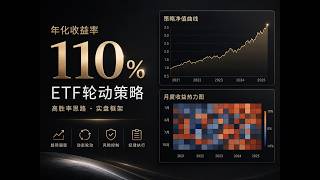

ETF轮动策略年化35%?我们复现后发现真相
45s揭秘高收益策略的真相,引发观众对量化投资的好奇和质疑。
▶ Play Clip"The title promises a strategy replication, but the video reveals significant flaws and limitations, making it more of a critique than a straightforward how-to."
This video replicates and tests three ETF rotation strategies from a Chinese public account called '小西湖的量化之路' (Xiao Xi Hu's Quant Road). The strategies use adjusted momentum, and the video analyzes their performance, revealing that while the backtests show high returns, the actual results are sensitive to start dates and candidate selection, with some strategies underperforming simple equal-weight buy-and-hold benchmarks.
The video replicates three ETF rotation strategies from a Chinese quant blog, converting R code to Python and standardizing execution. The strategies use momentum, which is a well-documented anomaly in finance.
Momentum (追涨) is a proven anomaly since 1993, working across stocks, bonds, commodities, and forex. In A-shares, sector rotation is strong, so momentum-based rotation can work, but it lags in fast-moving markets.
The strategy uses adjusted momentum: calculate the average return over the last 20 days (base momentum), divide by the volatility of daily returns over the same period. This identifies stocks rising steadily, not just rising.
Five steps: 1) Calculate adjusted momentum, keep only positive values. 2) Sort by momentum. 3) Select top N (or all if fewer). 4) Weight positions by adjusted momentum (not equal weight). 5) If all momentum values are negative on rebalance day, hold cash.
Three tests with different candidate pools and rebalancing frequencies. The original backtest from 2024 shows good returns, but replication reveals issues: sensitivity to start date (e.g., 35.8% vs 23.5% annualized), and underperformance vs equal-weight buy-and-hold in some cases.
For A-share leader stocks, original claimed 110% annualized, but replication shows 83.7%. However, equal-weight buy-and-hold of the same 22 stocks yielded 81.3%, meaning rotation added only ~2% alpha, and the equal-weight had higher drawdown.
The strategy's success depends heavily on the candidate pool, which is subjectively chosen. The original author selected stocks like 年贷时代韩武记, which may have survivorship bias.
A three-ETF strategy (纳指, 呼声300, 红金强速) with low correlation (~0.2). Replication shows annualized returns of 47.4% (original) vs 47.7% (replicated), with lower volatility (44.4% annualized, 2.33 Sharpe, 14.3% max drawdown).
Gold ETF was held 70% of the time, with average weight 57%, and gold rose over 100% in two years. The strategy essentially auto-buys gold, which worked well but is not a diversified edge.
The rotation strategy did not beat any of the three ETFs' individual returns. Also, it underperforms in bear markets (e.g., negative 4.5% annualized from 2021-2023).
The momentum rotation strategies show strong returns in backtests, but they are highly sensitive to start dates and candidate selection. The edge comes more from the chosen assets (e.g., gold) than from the rotation logic itself, and the strategy fails in trending-down markets.
Momentum is a proven anomaly
Establishes the academic basis for the strategy, making it credible.
00:26Adjusted momentum formula
Core technique for filtering stable risers, not just any rising asset.
01:16Rotation adds minimal alpha
Reveals that the strategy's edge is small compared to simple buy-and-hold.
03:47Gold drove returns
Highlights that the strategy's success was due to asset selection, not rotation.
05:17Strategy fails in bear markets
Important caveat for investors considering momentum strategies.
05:54[00:00] 嗨大家好,今天我们来复现三个ETF轮动的策略 我们复现的是一个公众号叫小西湖的量化之路 它发表了三天关于一天负动量轮动的策略 它的最高演化有感觉预感
[00:13] 我们觉得效果非常好 所以今天来聊一下这个策略 它总共做了三个策略的回测 它的公众号详细描述了它是如何实现的 并且附上了R元的代码 所以我们将它转换成Python代码
[00:26] 并且统一了使它能够执行的口径复现了一遍 总的来说基本上手艺是能对上 但是也发现了很多有意思的点 动量就是追涨 这个听起来看起来像是反护的行为
[00:38] 但是它是少数被学术界反复验证过的经济现象 在93年的时候就被验证过 在过去几个月长得好和比较低 总体内大概率还会接着涨 在股票 债券 商品 外汇里都是成立的
[00:51] 因为A股里面板块有弄的现象特别明显 集体行业不好 总会有板块在涨 所以拿动量作为反方能动这个思路可能是通的 但我们也知道任何指标它都是有滞后性的
[01:03] 当缺陷烦恼的时候 动量它会反应的比较慢 假设我们用20日窗口来计算动量的话 它可能要连续滴好几天 这个动量才能变成负值 然后这个亏损是无法避免的 它这三个策略用的是同道逻辑
[01:16] 它使用的指标叫做调整动量 继续认算 首先是计算最近20天的平均收益率 把它计作基础动量 然后再计算最近20天的日收益的波动率
[01:28] 然后用基础动量再除益波动率就得到了调整动量 它的定义区类似于一个短期的价格率 这样的目的就是在找到那些再上涨而且是要涨得稳的标题要大起大落的整个调仓流程是这样子的首先第一步是计算调整动量是保留那些动量值大于0的标底
[01:49] 第二步是按照调整动量来排序 第三步是选择top while 如果不足的话就全部选择 第四步是根据每一个标底的调整动量 不一化来计算持仓
[02:01] 也就是说它并不是等权持仓的 第五步就是Ti一直性 如果在调装日当天所有的动量值都是负值 那么就会空藏 它总共做了三个测试
[02:13] 这三个测试区别就是 它们是用不同的候选值1F 以及不同的选当频率和参数 整体回测它都回测了从2024年至今的全部收益
[02:25] 看起来效果是非常不错的 接下来我们来就一个讲一下 首先第一个是A股的板块一天负轮动 我们按照原文的指定假设 浮现得到了感知23.5 首先是A股的档快一点负能动
[02:37] 原文计算得到的年化收益是35.8% 我们看到原文的执行得到是23.5% 改成P加1执行后是26.9% 反而更高了一点
[02:49] 在会议中我们发现一个细节 就是原文把科创50记当做了基准 就放进了会议室里面 所以这个策略是可以买入基准再和基准对比的 另外一个是我们发现在同时间段 科创50涨到年化52%
[03:03] 而我们的策略是26.9% 并没有跑过几轮 同时我们发现这个策略还有两个问题 一个是它对起始的日期太敏感 我们使用每五天调仓 从哪一天开始算 结果却有比较大的差距
[03:16] 最好的调仓日年化是36.3% 最差的是22.1% 天差14个点 所以原来35.8%很有可能就是采钻好的香味上面所以比较公平的过程是使用滚动调装资金分五份做牌来跑
[03:32] 这样计算出来的年化收益是28.4% 我们认为这才是真实的水平 另外一个是时间冲突太短 回测从2024年开始表现很好 但如果我们将回测日期往前挪到2021年
[03:47] 年化率变成负的4.5% 也就是说在2022年到2023年那个年市里面 整个板块的蝴蝶 这个流动策略表现得非常差 第二个产品是A股的龙头股冷冻 这也是三个策略表现最好的
[04:00] 原文声称的年化收益是110% 我们复现下来 按照T3的逻辑 计算出来是83.7% 这样一看年化83.7%的收益应该很高 但是我们做了一个对照
[04:12] 如果把它选的这22只A股的龙头股 等权的买入 什么都不做 仅持有 他年化收益也达到了81.3% 也就是说轮动只供现了两个点 而且等权的下涨还更高
[04:25] 所以我们发现他这套逻辑 最重要的其实是这个候选的持续的该怎么决定 原文一讲还是通过主观来确定的 我们在回购的时候选这些股票
[04:37] 难免有后市竞得 尤其是他选择了年贷时代韩武记这样的票 第三个是全面后的跨市场一天候选 他只有三个标题 分别是纳指,呼声300和红金强速
[04:49] 这三支预想复它的相关性是比较低的 它们相关性都只有0.2左右 而且这一片我们几乎是完美出现了 羽毛温室的年化收益是47.4%
[05:02] 红跑出来是47.7% 而且它是每天调仓 预想复的波动又比较低它的年化44.4%差不多2.33回射14.3%这在这三个科里面感染是非常好的
[05:17] 但是它收益是从哪里来的 我们查查来看 其中黄金铁压迫在七成的时间里 都在池塘里面 它的平均省重是57% 这两年的金价涨了100%以上
[05:30] 是一个典型的低波动慢扭 正好涨在条线多样的省里上 比如说这套策略在两年干的事情就是自动满仓黄金 它也确实做对了 比较有意思的点在于
[05:42] 在这三个ETF上的轮动的策略的收益 并没有跑过这三个ETF的任意的收益 它最低的也没有跑过 所以我们就总结一下 就是说我们附近的这个策略 它的实际收益确实是比较真实的
[05:54] 但是核心问题在于 我们如何能够比较客观的选择那些候选的池子 因为站在当前时间点去选过去的那些涨得比较多的
[06:07] 难免是有过失进的 我们在讲上无负限的时候发生的几个问题 一个是它文档里说的是它用的是T加1 但是实际代码里用的是当地日数盘加成交 我们回头发现这个其实影响并不大
[06:19] 因为我们是一个比较低频的客人 第二个是我们发现我们在做这种对比的时候 我们不仅应该要和指数对比 就呼音300或者科广文明对比 而且要和这个等权持仓地形对比
[06:32] 因为我们要做轮动的策略 要基带等权持有的策略 这样才更加有说服力 那第三个是 这策略本身上都是趋势跟踪的 在流逝的时候 它会赚了很多 帮你放大收益
[06:44] 但是在趋势反转 停市的时候 这样反而会亏的工作 所以说这个策略 并不能够在所有的风格下 全部都成立 好 以上就是本期的 小明星的我们的三一经
⚡ Saved you 0h 06m reading this? Transcribe any YouTube video for free — no signup needed.