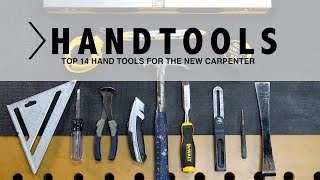

14 Hand Tools for 20 Years
45sThe promise of a curated list of tools that lasted 20 years sparks curiosity and credibility for beginners.
▶ Play Clip"The title accurately reflects the content: a straightforward list of beginner hand tools used by an experienced carpenter."
The video provides a detailed list of 14 essential hand tools recommended for beginner carpenters. The tools have been used by the presenter for over 20 years and are suitable for any project size, from small tasks to large builds.
12 out of 14 hand tools have been used for 20 years; recommended for beginners.
Highly versatile tool; separate video linked in notes.
Self-explanatory; useful for hinges, hardware, and power tool accessories.
Great for cutting and pulling nails.
Preferences: S-wing, straight claw; comfort in hand is key.
Used for transferring or creating angles; useful in woodworking.
3/4 inch chisel recommended; full set ideal when affordable.
Essential for setting nails.
Thin design; used as hand extension for prying and scraping without damaging finishes.
Personal preference; presenter uses 25 ft Fat Max due to hand size.
Most used pry bar; good for demo, prying, and pulling nails.
For long straight lines on concrete, plywood, drywall, etc.
Small level for checking level and plumb on small tasks; can be used with other tools.
Good size for tight spaces; recommend 4 ft or longer when affordable.
The video offers a practical, experience-based guide to selecting hand tools for carpentry beginners, emphasizing that personal comfort and versatility are more important than brand or cost.
What is the recommended hammer type for finish and rough carpentry?
A straight claw hammer (S-wing).
01:14
What is the primary use of a sliding T-bevel?
Transferring existing angles to other materials or creating new angles with a protractor or speed square.
01:30
Which chisel size does the presenter recommend keeping on hand?
A 3/4 inch chisel.
01:45
Why does the presenter like the pry bar scraper?
It is thin, can be used as an extension of the hand, and works behind finished trim without damaging the wall.
02:00
What tape measure does the presenter prefer and why?
25 foot Fat Max, because it fits his hand size.
02:15
What is the most used pry bar according to the presenter?
The flat pry bar.
02:31
What can a chalk line be used for?
Making long straight lines on concrete, plywood, drywall, and other materials.
02:47
What size level does the presenter recommend as a starter?
A 2-foot level, with a recommendation to upgrade to 4 feet or longer when affordable.
03:16
20-Year Tested Tools
Demonstrates that the list is based on long-term durability and usefulness, not just sponsorship.
Hammer Preference
Straight claw preference offers a concrete buying tip for beginners.
01:14Pry Bar Scraper as Hand Extension
Innovative use case shows how a tool can increase safety and precision.
02:00Tape Measure Personalization
Emphasizes that tool ergonomics matter more than specs.
02:15Level Size Recommendation
Practical advice balancing portability with accuracy for a beginner.
03:16[00:00] If you're just getting started in carpentry and you're not quite sure on what hand tools you're going to need, then stick around. 12 out of the 14 hand tools that I have here in front of me have been in these pouches for the past 20 years. I use them for everything, no matter the size of
[00:14] the project. Therefore, here's a list of all 14 hand tools that I recommend buying and having with you while working on any project. A lot of these tools might be familiar to you already, but some of them may not be, so let's quickly walk through them together. But before I do that, please remember to
[00:29] like and subscribe to the channel so you don't miss out in any of my weekly content. All right, first up is a good speed square. This thing has so many uses, but I won't get into it here because I did a video on it already, and I'll leave that link in the notes section below. Second is a good
[00:44] 6-in-1 screwdriver. This tool is pretty self-explanatory, and it has many uses not only for the things that you're installing like hinges and hardware, but for the power tools and accessories you're using to do the job. Next is end cut pliers. Now you might not be familiar with these, but they're great for
[00:58] cutting nails, and they're really good for pulling nails as well. Fourth are utility blade. This tool gets a lot of use from opening boxes, the cutting sheet rock and installation to sharpening your carpenters pencil. Fifth is a hammer. There are hundreds of hammers out there, but I personally
[01:14] like the S-wing. I prefer a straight claw rather than a curved claw for both finish and rough carpentry, but whatever hammer that you get, just make sure it feels really good in your hand. Next up is the sliding T-bevel. This tool shows up mostly in woodworking, but it's great for transferring existing
[01:30] angles to other materials, or you can use it in conjunction with a protractor or even a speed square to create new angles. Moving on to the wood chisel, there's always a need for chisel work, from hinges to shaving off material just to get something to fit better. I found that having a
[01:45] three quarters chisel on me at all times is great for almost any carpentry project. God willing, and when you can afford it, I would definitely recommend buying a whole chisel set. Number eight is a nail set. What can I say? When you need to set nails, this is the tool to have. Moving on to number nine,
[02:00] this might be my favorite tool, the pry bar scraper. This tool is not only great for prying and scraping materials, but I use this thing as an extension of my hand, so if I'm working on something, I don't want to get my fingers in a way, I let this pry bar get in the way and let it do the work. The other great
[02:15] thing about this bar is it's very thin, making it easy to get behind finished trim without damaging the wall. 10 is a tape measure, obviously an important tool. Picking the right tape measure is totally a personal preference, but for me, and because of my hand size, I like a 25 foot fat max. For more
[02:31] information, check out the video I did on how to choose the right tape measure. Number 11 is the flat pry bar. This is a great demo tool, able to pry and pull nails, and sometimes I use it in conjunction with a smaller bar. This by far is my most used pry bar. Number 12 is a chalk line.
[02:47] This tool is great for making long straight lines and almost any material. For example, it can be used for snapping lines on concrete for lining up walls, plywood for making cuts, drywall, you name it. Lucky number 13 is a torpedo level. Having a small level like this in your pouch to check
[03:01] level and plumb on smaller tasks is very handy. It can be used alone or actually can be used in conjunction with other hand tools for marking lines. Last but definitely not least, a good level. This one here is a two foot level. It's a pretty good size because it fits within most tight spaces.
[03:16] It's also big enough then to give you a pretty good accurate reading on larger things as well, but when you can afford it, I would definitely recommend getting one that's at least four feet or bigger. Well, I hope this list of hand tools has helped to answer your question of what to buy. Now it's
[03:29] up to you to figure out when to buy. Leave me a comment below or a question. Like or subscribe to the channel, and I'll see you in the next video.
⚡ Saved you 0h 03m reading this? Transcribe any YouTube video for free — no signup needed.