
What is an ETF? (Simple Explanation)
45sClear, jargon-free explanation of a core investing concept that beginners need, with high search demand.
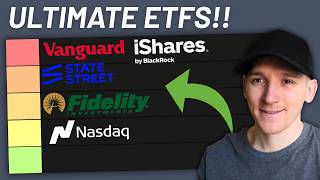
▶ Play Clip"Delivers a solid, informative ranking of popular ETFs, though the '2026' in the title is a bit premature."
This video provides a comprehensive overview of Exchange-Traded Funds (ETFs), explaining what they are, how they work, and how to choose the right ones for your portfolio. The presenter ranks popular ETFs by their usefulness, discusses key concepts like indexes, providers, and fees, and offers practical advice on tax considerations and asset allocation.
ETFs are containers of investments listed on exchanges, making them easy to trade. They can hold various assets, from individual assets to thousands of stocks.
An index is a set of rules governing what a fund holds. The S&P 500 is the most popular, tracking the 500 leading US shares. Other examples include the Nasdaq 100 and world indexes.
Major providers include Vanguard, iShares (BlackRock), and Invesco. To choose, determine what you want to buy, find providers in your country, and compare fees.
Core ETFs are broad, popular funds used as the basis of a portfolio. Specific ETFs focus on niches like growth, value, or dividends, usually for smaller portfolio parts.
US citizens buy US-domiciled funds. Non-US residents face 30% withholding tax on dividends and estate taxes on US property. UCITS funds (often domiciled in Ireland) reduce this to 15% and avoid estate taxes.
Use platforms like TradingView to compare ETF price performance. Past performance is not indicative of future results.
Dividend ETFs focus on companies paying high cash dividends. However, high dividends may mean lower total return compared to growth indexes. Total return (dividends + capital appreciation) is key.
Bonds pay interest and trade at a price. Interest rate changes affect bond prices. The classic 60/40 portfolio is less effective now due to low yields and price volatility. Long-term bonds are more volatile than short-term.
Bitcoin ETFs have high expense ratios (25 bps) that compound over time; consider direct Bitcoin purchases. Gold ETFs also have fees. Sector-specific ETFs (e.g., semiconductors) may have higher fees and volatility.
The main asset classes are commodities (gold, Bitcoin), bonds, equities, and real estate. Over long horizons, returns tend to even out: cash/bonds ~7%, stocks ~10%, Bitcoin has been higher but volatile.
The video emphasizes that choosing ETFs involves understanding your investment goals, tax situation, and fee structures. By focusing on core indexes and being mindful of costs, investors can build a diversified portfolio suited to their needs.
What is an ETF?
An ETF is a container of investments listed on an exchange, making it easy to trade from any brokerage account.
00:27
What is an index?
An index is a set of rules that govern what a fund holds, such as the S&P 500 or Nasdaq 100.
01:06
What is the difference between US-domiciled and UCITS ETFs?
US-domiciled ETFs are subject to 30% withholding tax on dividends for non-US residents, while UCITS ETFs (often domiciled in Ireland) reduce this to 15% and avoid US estate taxes.
04:44
What is the 12-month trailing yield?
It is the cash dividends paid by a fund over the past 12 months as a percentage of its price.
12:48
Why might high dividend ETFs have lower total returns?
High dividend companies are often in mature industries with less capital growth, so total return (dividends + price appreciation) may be lower than growth indexes.
14:10
How do interest rate changes affect bond prices?
When interest rates rise, bond prices fall, and vice versa. Long-term bonds are more sensitive to rate changes than short-term bonds.
18:05
What is the expense ratio of the Bitcoin ETF mentioned?
25 basis points per year.
21:45
What is the typical annualized return for stocks over long horizons?
Around 10% per year.
24:14
Tax trap for non-US investors
Explains the significant tax differences between US and non-US domiciled funds, crucial for international investors.
04:44Dividend vs. total return
Highlights that high dividend yields often come at the cost of capital growth, impacting long-term returns.
14:10Bond price mechanics
Clarifies the inverse relationship between interest rates and bond prices, essential for understanding bond ETFs.
18:05ETF fee drag
Warns against high expense ratios that compound over time, using Bitcoin ETF as an example.
21:45[00:01] biggest ETFs, ranked by their popularity and usefulness within a portfolio. I Exchange. I know these things like the back of my hand. I'm going to give you experience about what people actually use and what they buy and for what
[00:15] be listed down in the description below. If you're watching a video like this, your investing journey. So firstly, let's go over the different terms I'll Funds, what are they exactly? Well, a
[00:27] fund is just a container with investments in it. And how do we trade that? Well, that fund will be listed on an exchange, hence Exchange-Traded Fund. And that just makes it easy for you and I to find the fund and trade it easily
[00:41] from any different brokerage account. What can the fund hold? Anything it What can the fund hold? Anything it wants. It can hold 100 different stocks, 50 different stocks, 1,000 different stocks. It can trade with one individual
[00:54] asset in there. An ETF is just a container. It makes it easy for you and I to trade it from any different brokerage account. Now, the most popular brokerage account. Now, the most popular ETFs usually are large indexes. An index
[01:06] is just a set of rules that govern what the fund holds. So, the S&P 500, by far the most popular, the 500 leading shares in the US. There are certain rules around that fund where they invest most of the money into the largest companies,
[01:21] companies, if they fail to meet those rules, they will be excluded from the fund. New companies will be added in. And that is an index with rules. And you can create a fund that also follows
[01:33] those rules, and so that's an index fund, and that will be traded on the exchange, very easy for us to gain access to. You also have the Nasdaq 100, 100 leading companies on the Nasdaq Exchange, non-financial companies. And
[01:46] which does a lot of world indexes, right? So, you can invest in, you know, world stock market, right? And so, those indexes are basically a set of rules. The fund can follow those rules, and if we want to, we can buy shares in that
[01:59] fund as well. So, you've got ETFs, just a container. Indexes, a set of rules governing certain investment principles, and then you have the ETF providers, Vanguard, iShares, and Invesco. There
[02:12] are many others, right, from different banks and everything else. actually, all you have to do is figure out what do you want to buy, and then figure out who provides it in your country and with the specifications
[02:26] and then who's the cheapest, cuz you don't want to be paying very high fees. That's it. So, hopefully that explains who's providing these, how they actually to them. For the S-tier of ETFs, I've only included what is known as core, and
[02:41] you may see this when looking for different ETFs and with different providers. So, BlackRock do this very often, where they will name their different ETFs core. Core means this is a core position. This is what most
[02:54] people are using as the basis and bulk of their portfolio. When you see something like core, that means it's a broad, very popular ETF. As you start getting more specific, for example, the ETF may focus on something else. It may
[03:07] focus just on growth companies or just on value companies or just in dividend companies. That won't be core, and that usually is for a smaller part of a portfolio for some specific need that you may have.
[03:19] looking at is these indexes, right? The S&P 500, the total stock market, which is basically all of the shares in the US listed on public exchanges, or the Nasdaq 100, which tracks the 100 leading
[03:34] non-financial companies on the Nasdaq exchange. Notice also that the Invesco QQQ, the Nasdaq 100 index, is the most popular, and Vanguard do not provide this. Vanguard just have a rule that they don't uh have ETFs that track
[03:49] assets listed on specific exchanges. So, their S&P 500, you'll have companies in here listed on the New York Stock Exchange and on the Nasdaq. what? We're just going to track these 100 leading non-financial shares on the
[04:02] Nasdaq exchange." That's very popular. Vanguard still don't produce that as of making this video. So, we have to figure out what we want to buy, what we want to the top three or four providers that actually provide that index that we want
[04:16] to gain access to via the ETF, then we can figure out what the fees are, and that's going to be the best option for us. So, for example, with the QQQ, the QQQ is more for institutional investors who want to get in and out
[04:29] there's much more assets under management, but the fees are higher. If you're putting the QQQ in a retirement account, go for the QQQM. The fees are thing. So, it's about what we want to gain access to, then we can go to a list
[04:44] and find out what the most popular ETFs are that track the thing that we want, us, who has the lowest fees, and we can choose that provider. A really important tip before buying any ETF is to make sure you understand the difference
[04:57] sure you understand the difference between US funds and non-US funds, and there is a big difference in the tax treatment between those two things. So, if you're a US citizen, you live in the US, then you're going to be buying US
[05:09] domiciled funds. No problem. You already know your income tax bracket and be an issue for you. Now, if you live outside of the US, a problem arises. The US has very high taxes for US
[05:26] property. Now, funds domiciled within the US are known as US property. And if you live outside of the US, you may be liable to pay taxes on any of the gains
[05:38] that you make from them. So, for example, the US has a 30% withholding tax on dividends and payments. And if you hold the US property, but you live outside of the US, so you're not a US citizen, you're not US domiciled, then
[05:52] you'll be paying 30% withholding taxes on any dividends or income that you receive from the property that you hold. Now, to make things more complicated, depending which specific country that you live in, your country may have a tax
[06:05] treaty with the US that reduces that withholding tax as well. Some countries do, some countries don't. But if you live outside of the US and you hold US property, which these funds are, let's say you get a dividend of $100, well,
[06:18] the US is going to take $30 of that. That's not great. Now, also, if you do live outside of the US and you hold US property, which these funds are, in an estate uh redistribution, after you pass away, the US has a very hefty
[06:34] estate tax as well on that US property that you own. obviously, you don't want to be paying these things. So, what the ETF providers have done is basically created these two different
[06:48] types of jurisdictions. You have US domiciled funds and you have non-US domiciled funds. It's the exact same fund, it tracks the exact same thing, but depending where you live, you're going to choose one or
[07:01] the other. So, for example, let's look at iShares here from BlackRock. You can see their most popular fund in the equities world is the S&P 500 ETF. You can see the assets under management
[07:15] we're looking at USD. So, this is a US fund. You can see the ticker is IVV, that's the ticker of the fund. If I'm a US citizen, I'd go ahead and buy that. However, if I'm English living in the UK or somewhere else,
[07:31] maybe I don't want to buy that fund domiciled in the US because I don't want else. So, what iShares do and a lot of other providers is that they domicile the exact same thing
[07:43] somewhere else, most of the time in Ireland. So, you can see here this is exactly the same thing from the same provider. This is iShares. This is the Core S&P 500 ETF. And notice this right here, UCITS. UCITS is a European
[07:57] It's basically a bit of legislation. We don't have to worry about what it is, but it's legislation that allows for the creation of ETFs that are domiciled within Europe. And if I hold this fund domiciled in
[08:12] Ireland, those taxes don't apply to me. So, because Ireland, I don't have to pay any of those estate I don't have to pay any of those estate taxes to the US. Also,
[08:25] taxes either. So, any payments from this fund do not have any of that US withholding tax in them. The only difference is that this fund is domiciled in Ireland and not the US. It's the same companies, it tracks the
[08:38] exact same thing. This is basically just getting around those US tax withholding rules. Now, Ireland itself still pays 15% withholding tax to the US. So, that happens at the fund level. You
[08:53] can't get around that, but 15's better than 30. Then when they make payments out, I may be also taxed at my prevailing income tax rate or not. You can work that out for yourself. But, if you live outside of the US for the most
[09:05] part, you'll be buying UCITS funds domiciled in Ireland because the tax and simpler. Notice that this fund, even though it's the same thing, has a completely different ticker, CSPX.
[09:18] And if we go down to the key facts, you'll see here that the total expense ratio is different than the US domiciled fund. UCITS funds are typically slightly funds. But, you can see the domicile here is
[09:32] you don't have have worry about estate taxes or anything else. We can also come down here notice that these are listed in different places, right? So, these are
[09:45] the London Stock Exchange, Euronext Amsterdam, right? So, if you're in Europe or a different country, you'll probably be looking at funds that are You can go ahead and buy the US funds, no problem, but you're going to open
[09:59] yourself potentially to uh a higher tax liability and more complex tax affairs traded on exchanges, it makes it really easy to track the performance of them, just like any other asset, because they have daily price data. Now, we can very
[10:14] what we do is go and find the fund that we might want to buy or trade. So, maybe it's IVV from BlackRock. Maybe it's VOO from Vanguard. They actually track the the exact same price data. Or you can get the Invesco NASDAQ 100 Index, which
[10:30] is QQQ. Find the ticker, and then you can go and software, and you can compare the performance. This is TradingView. recommend it. You just sign up with an email address, you can get all of this.
[10:43] Um but what we can do is go up to the top, and SPY, that's the S&P 500 Index, but you can search for VOO if you want the Vanguard Index, and then I've just compared it. So, press the plus button,
[10:56] and I've compared it to the Invesco QQQ, and also this index here, which is an emerging markets ETF. So, many different indexes track many different things. They all list on exchanges. We can get the price data. You can see here that
[11:08] the NASDAQ 100 Index is the best performing, then the S&P, and then the emerging markets index here. Now, past performance isn't an indicator of future compare the price performance of all of these
[11:20] indexes. You can compare exactly how they behave, trade over time, and if you major ETFs, I put them in the S tier. From now on, I won't tier the ETFs, I'll just tell you exactly what they do. It's not that they're good or bad, they just
[11:33] focus on different things. You as an investor may prefer one versus another. So, let's look at dividend ETFs. Dividend ETFs focus on companies that pay high dividends in cash, right? So, companies they make cash, they return
[11:45] that to you. A high dividend is worked out as how much cash do they pay you in relation to their share price. That's worked out as a percentage, and companies that pay high cash dividends, they will be focused on in these
[11:57] dividend ETFs. That's great. We get more cash back, and a lot of people love these because they like the idea of getting paid cash into their account, you know, every month or maybe every quarter. These ETFs are all different.
[12:09] quarterly. If you're a long-term investor you have to figure out what the best option is for you, though, because option is for you, though, because high dividends may be great, but what we
[12:22] should really look at over the long term is the total return. That is all of the dividends play paid plus or minus the actual capital appreciation of the stock, right? So, the price going up. Now, just because something pays a high
[12:35] dividend doesn't mean that the total return is going to be better than, for example, the S&P or the Nasdaq 100. So, you need to look at the total return over time. The way that we can do that is pretty easily. So, on any index page
[12:48] where you see a an index provider or an ETF that you want to buy, you can see all of this data. This is the S&P 500 ETF from iShares. Now, what you want to be looking at is this, 12-month trailing yield.
[13:01] from this fund. So, if you buy into this, you're getting 1% back a year in cash. And the 30-day SEC yield, that takes a look at the most current yield that you might be getting on an annual basis. So,
[13:14] now, the dividend yield is slightly lower. Uh maybe the price has risen a lot, and the cash dividends that are paid hasn't haven't risen, and so the yield as a the has gone down. Even though the cash may
[13:27] be the same, cash may have even risen, it looks like and I know this as of making this video, the price, the actual price of this fund has gone up a lot. appreciation, which has obviously reduced the percentage of cash as a
[13:41] So, at around 1%. Now, that's a 1% yield that we get back. Is that good or bad? Well, neither, right? What you want to look at is the total return. So, what you can do is ask AI just like I did, what's the total
[13:56] annualized 10 year return over 10 years? So, you can see that these dividend funds, dividend yielding funds, which to be honest, they own a lot of the same companies, but maybe focus more on high dividend paying companies, the total
[14:10] dividend paying companies, the total return has been 13%, 11%, 12%. that to the non-dividend yielding funds, where the annual returns have been much better, 15 to 20%. So, actually,
[14:26] even though you've got higher dividend yields and returns, your total return over a 10 year period has been lower in these funds. Now, that's not necessarily a bad thing, either. It depends who you are. If you're 70 years old, then
[14:40] are. If you're 70 years old, then probably you want higher income, right? because you're probably drawing down your investments and you want a little bit of dividend yield in there. If you're 20 years old, what do you need
[14:52] dividend yield for? You're actually giving up total return here to get a probably don't need because you're of working age. who you are and what you may want. So, a high dividend yield, in my experience,
[15:08] actually probably means that you're giving up capital growth. It's just the way it works. Companies that pay high dividend yields are usually in mature industries without much real new growth in them, And they pay dividends out to
[15:24] support their share price. Right? So, you have a mature company without much growth, the share price suffers a little bit, they start returning a lot of cash dividend yield is great, that's probably a sign they don't have as much capital
[15:37] growth overall. Now, if you look at something like the Nasdaq, Nasdaq dividend yield. I think it's like 30 basis points a year. Much less, but you've had much more capital growth out of those out of those companies. Again,
[15:50] to gain access to? Do you need extra cash or not? Are you happy to basically get no dividends at all and hopefully get more capital returns, we're going to look at bond ETFs now. So, we've looked at equity
[16:05] indexes, right? Basically, you have the broad indexes, and then within that, you can focus on different areas of different companies. So, you might have dividend ETFs, which focus on companies that pay high dividends. You may have
[16:17] growth ETFs, which are going to focus on companies that have some sort of growth factor in them. Now, what you can do is look at the rules of that fund, right? They may look at certain companies that have a certain amount of percentage
[16:31] time. So, they'll go into those. So, or dividends kind of the only two, right? You can flick between them. Is it capital growth? Is it revenue growth? Or is it higher dividends?
[16:44] Now, we're going to move on to the next asset class, which is bonds. Now, the asset class, which is bonds. Now, the classic portfolio was 60/40. classic portfolio was 60/40. 60% stocks, 40% bonds.
[16:56] because of the way the bond market has gone. Back in the day, '70s, '80s, interest rates were very high. So, let me explain how bonds work. Bonds pay an interest rate per year, let's say, but they also, the bond, trades at a price.
[17:10] Now, for the most part, bonds will redeem at some point in the future. The bond is a promise to pay in the future. So, a percentage rate per year plus the bond will redeem itself in the future for its par value. Par value for most
[17:24] bonds is $100, let's say. So, you can buy a bond at less than that because the market is going to price that interest rate of the bond. So, the bond may pay 5% at par and then the bond price may fluctuate. Now,
[17:39] back in the day, '70s, '80s, interest rates were very high. That means bond prices were very low in comparison to par value. So, you could buy the bond, you could get the interest rate, and then you could wait 5, 10, 15 years for
[17:52] gets to maturity is going to move up towards that par value. That's great, except these days that's not the market. After 2008, bond interest rates went to zero.
[18:05] That means bonds interest rates are going to be very low, going to trade very close to that par value as well. It's going to trade up. So, bond prices went up. Now, interest rates, well, they were
[18:18] zero, right? They're going back up again. As interest rates go up again, the bond prices come off. So, the bond prices fall. index, so you have you sell out of the bond early,
[18:31] the bond prices fallen, so you get less money back. You can, of course, just wait for the bond to expire and redeem, and then you'll get the $100 par value back. But, as you can see,
[18:44] even though these bond funds pay interest, they pay yearly yield, you can see 4, 5%, not bad. The annualized return over the last 10 years mostly has been negative or very flat.
[18:57] account the interest rates that you've earned plus or minus the bond price. And years early on, 10 years ago, were basically interest rates have gone up, so the bond prices have fallen. So, the total return
[19:12] has been pretty poor. Like I said, you can't just wait to redeem at par. This because there are many different bond funds. There are bond funds that focus on long-term interest rates,
[19:25] long-term bonds, like the 20-year plus, very, very long-term bonds. And you can buy into that. The price is going to be super volatile on a long-term bond, cuz it's very, very sensitive to interest rates. But you can
[19:38] look at short-term bonds that may expire 6 to 12 months. less volatile, because they're they're very close to getting redeemed at par, so the price will be less volatile. Um, and that may be good or bad,
[19:52] depending, right? So, for example, if you're buying a very long-term bond high, the price of the bonds will be very low. If you think interest rates bond prices move up, you'll probably make quite a good capital gain on that
[20:06] bond index as well, that bond ETF. As long as well as the uh interest you If you're buying a short-term bond ETF, then really you're just looking at the the yield of the interest yield, because bond prices aren't going to move much on
[20:20] the short end. So, bonds can get pretty complex, right? And it's not just how much yield they pay. You have to figure out how much yield they pay, and how volatile the bond price can be. How long dated is the bond fund? Do you actually
[20:34] fund, or are you just looking for a kind of short-term index with very low price volatility and a little bit of yield? So, 60/40 is kind of dead. However, because they do pay a bit of interest. Again, if you're a young investor, like
[20:49] why are you in bonds? Like, why do you need the money? What what you want to do are going to rise a lot, so you want to get into the long-term bonds, maybe, as money in as an investment, obviously young people are pushed towards equities
[21:04] more, because they have the real capital growth over time. These days there's an whichever type of investment that you want to make, very specific into individual assets, very specific into individual sectors within the stock
[21:17] market, or different asset classes, you can find them. All you have to do is just go to the top providers or ask AI, "I want access to this." Or what are the the best performing? And they're just going to give you them. So, here's a
[21:30] list of very popular ETFs recently. So, I'll give you my opinion on these. A massive ETF launch obviously in the last few years was the Bitcoin ETF, gain access to Bitcoin. It's an individual asset ETF. Just has Bitcoin
[21:45] in there and that's it. Here's the downside of that. You can see the expense ratio is 25 basis points a year. If you hold for 10, 15, 20 years or in a retirement account, that's insane. They're going to be taking 3, 4%
[21:59] compounds up of the wealth that you have in this asset. That is just unacceptable. Now, what I would recommend is there are a ton of different accounts that let you just go and buy a spot Bitcoin and have zero
[22:12] trading fees. Over 10, 15, 20 years, that is going to save you potentially thousands or ten tens of thousands of dollars not paying those fees. So, I wouldn't recommend holding a Bitcoin ETF unless you had a very specific reason,
[22:25] for example, a retirement account or a tax deferred or tax advantaged account can only put ETFs in there. Maybe it'll work out that you get better tax treatment uh via paying the 25 basis points expense ratio.
[22:39] would not. You can see the gold bullion ETF, 40 basis points a year. For long-term holding, it's going to add up. So, I can't really recommend high expense ratio funds. And then you get way more specific. So, semiconductors
[22:52] and technology, as of making this video, absolutely crazy. You can see that the annualized returns are absolutely fantastic here for these. But again, you very, very high for the semiconductors ETF. In fact, 23% annualized return
[23:07] is a little bit is basically the same as the Nasdaq index, which has much lower ETF management fees. So, that's 35 basis points. If we go to the Nasdaq, you're looking at 15 basis points. Now, you work that out over a long time, it's
[23:21] can go into any different sector that you want, right? Financial is energy. If you want to trade shorter term or one specific industry exposure, you can do Returns are much more volatile over time, and it's usually that the expense
[23:36] ratios are a little bit higher. Even this, right? It's higher than the S&P 500 ETF, and the annualized returns haven't beaten the S&P. Now, I'll give asset classes, and this is basically it. This is the investing landscape for what
[23:49] I would say is probably 80-90% of your portfolio, right? So, you've got commodities like gold and Bitcoin. You've got bonds, corporate bonds, and great companies, and you've got real estate, and that's pretty much it. Now,
[24:01] this as well. This is from Charlie Bilello up here, so you can go and follow him on X. He produces these. What you'll notice is that over investment time horizons, the different asset classes tend to even
[24:14] out in terms of what they give you. So, cash and bonds tend to yield the least, maybe 7% a year, then you're getting into the stock market, which is maybe 10 and then something like Bitcoin has done very well over the last 10 years or so
[24:28] with, you know, annualized rate of 100%. That may change over time as well, right? So, you can figure out how much of each of these different asset classes do you want in your portfolio, search for the best ETF for you, and that's it.
[24:40] put a portfolio together. I'll link those down in the description. Uh some be able to get some deposit and trading bonuses on those exchanges if you want James as in M-A-Z-Z-Y. Cheers for watching, and I'll see you in the next
[24:53] watching, and I'll see you in the next one.
⚡ Saved you 0h 24m reading this? Transcribe any YouTube video for free — no signup needed.