
VTI vs VOO: The Surprising Truth
45sChallenges common assumptions about diversification, sparking curiosity and debate among investors.
▶ Play Clip"Delivers a clear, concise explanation of the VTI/VOO overlap, though the title is a bit generic."
This video explains the surprising similarity between two popular Vanguard ETFs, VTI and VOO, despite their different stock counts. It clarifies why they perform nearly identically and offers guidance on choosing between them for long-term investing.
VTI includes 3,500 stocks while VOO has 500, yet they perform almost exactly the same because VOO makes up 82% of VTI.
Owning both VTI and VOO is redundant; the extra 3,000 companies in VTI only account for 18% of the fund, so you're essentially buying the same large caps twice.
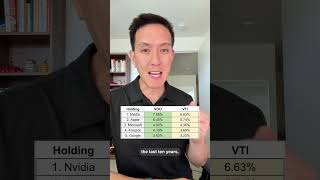
Both funds weight by company size, and the top holdings (NVIDIA, Apple, Microsoft) are identical, leading to similar returns.
Over the last 10 years, VOO is up about 15.2% per year and VTI about 14.7%, a difference of only half a percentage point, and they move together 99% of the time.
Choose one fund: VTI if you want small/mid-cap exposure, VOO for pure S&P 500. Consistency matters more than the slight difference.
For long-term investors, the choice between VTI and VOO is less important than consistent investing; pick one based on your preference for small/mid-cap exposure and stick with it.
What percentage of VTI is made up of VOO?
82%
00:13
How many stocks does VTI include?
3,500
What is the historical annual return of VOO over the last 10 years?
About 15.2% per year
00:39
Why do VTI and VOO perform similarly?
Because VOO makes up 82% of VTI, and both weight by company size with identical top holdings.
What is the main difference between VTI and VOO?
VTI includes small and mid-cap stocks, while VOO is pure S&P 500.
01:10
Overlap revelation
Reveals that owning both VTI and VOO is redundant, a common misconception among investors.
00:13Return comparison
Provides concrete historical returns showing minimal difference, reinforcing the similarity.
00:39Investment advice
Offers practical guidance on choosing between the two funds based on exposure preferences.
01:10[00:00] VTI includes 3,500 stocks and VOO has 500. So why do they perform almost exactly the same? The answer is because VOO, the Vanguard S&P 500 ETF makes up the majority of VTI,
[00:13] which is the Vanguard total market ETF. So 82% of VTI is just VOO already. So which one is the actual best one to invest in? This actually threw me for a loop when I was starting to invest. You actually don't want to choose both because they have some overlap. So here's what you should
[00:27] know. Both funds weight by company size, so when you're investing in VTI, even though there are 3,000 extra companies you get exposure to, they only add up to about 18% of VTI. The top stocks
[00:39] in both of the funds are identical. You'll get roughly the same amount of NVIDIA, Apple, and Microsoft by investing in either. This is why over the last 10 years, VU is up around 15.2% per year and VTI is up around 14.7% per year. That's only about half a percentage apart and they move
[00:55] together 99% of the time. So if you own both thinking you're diversified, you might want to think again, you're just buying the same large caps twice. For long term investing, just go with one or the other. If you want some small or mid cap exposure, then go with VTI. But if you want
[01:10] pure S&P 500, just go with VOO. The difference between them doesn't matter as much as just investing consistently. I hope this helps follow for more.




⚡ Saved you 0h 01m reading this? Transcribe any YouTube video for free — no signup needed.