
Splitting Aces vs. Hitting: 100 Hand Challenge
45sThe premise of a 100-hand blackjack experiment is immediately engaging and challenges conventional wisdom.
▶ Play Clip"The title promises a proof of basic strategy, and the video delivers a hands-on experiment, though the small sample size and manual errors slightly undermine the 'proof' aspect."
This video tests basic strategy in blackjack by playing out 100 hands of a pair of aces versus a dealer's ace, comparing the outcomes of splitting versus hitting. The host manually simulates the hands, tracking chip counts, wins, losses, and pushes, and discusses the results and their implications for basic strategy.
The video begins a 'prove it' basic strategy video, focusing on a pair of aces versus a dealer's ace. Basic strategy says to split, while a non-basic strategy player might hit.
The host uses 40 red chips for hitting and 40 green chips for splitting. Since splitting requires two bets, chip count is more important than wins/losses/pushes. They will play 100 times and track chip counts.
The host shuffles and deals. They note that with aces, you only get one card per ace. They also mention they will not re-split aces, counting an additional ace as 12. They play H17 rules (dealer hits soft 17).
The host plays a few more hands, explaining outcomes. They make a mistake by not checking for blackjack before dealing, resulting in a loss for both strategies. They also explain that if the dealer has blackjack, you haven't split yet, so you only lose one bet.
After 100 hands, the chip count for splitting was 10 left, and for hitting was 2. However, the host corrects a mistake: they took two chips in a few blackjack situations when they should have taken one. After giving back three chips, the count is 5 to 10 in favor of splitting.
The host acknowledges that 100 hands is not enough for statistical significance, but the video is for doubters of computer simulations. They note that the results could be skewed by variance or the count, but the key insight is that splitting leads to more pushes, which preserves chips.
The host explains that while the split strategy had fewer wins (24 vs 30), it had many more pushes. Pushes mean you win one hand and lose the other, so you don't lose chips. Starting with a 12 (by hitting) leads to more losses. Splitting avoids the bad starting hand of 12.
The experiment, despite its small sample size, demonstrates that splitting aces is superior to hitting, primarily because it avoids the disadvantageous starting hand of 12 and results in more pushes that preserve chips. The host encourages viewers to suggest other hands to test in future videos.
What does basic strategy say to do with a pair of aces versus a dealer's ace?
Split them.
In this experiment, how many hands were played for each strategy?
100 hands.
01:08
What rule did the host use regarding re-splitting aces?
They did not re-split aces; an additional ace was counted as 12.
02:32
What is the significance of pushes in the context of splitting aces?
Pushes mean you win one hand and lose the other, so you don't lose chips, which is a big advantage.
12:10
What was the final chip count after correcting the mistake?
5 chips for hitting, 10 chips for splitting.
09:48
Basic Strategy for Aces
Establishes the core premise: basic strategy says split aces, while many players might hit.
Pushes Preserve Chips
Explains the key advantage of splitting: more pushes mean you don't lose chips, even if you win fewer hands.
12:10Sample Size Limitations
Acknowledges that 100 hands is not statistically significant, but the video is for those who doubt computer simulations.
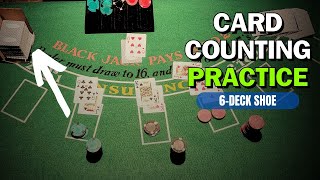
10:02[00:00] I'm back with a prove it basic strategy video for you guys today. In this video we're going to be doing an ace. Ace, so a pair of aces versus a dealer's ace. Alright, I got that here for you on top. And we'll go with a pair of aces of hearts. I'll turn it towards you.
[00:16] Versus a dealer's ace. And of course basic strategy says we should split these. Whereas a poppy or a non-card counter, non-basic strategy player even, would maybe just want to hit their aces.
[00:29] Okay, so I got some chips here. We got 40 red chips, 40 green chips, where I think the green is going to be our basic strategy where we split. And over here, our hitter is just going to hit that.
[00:41] So, of course, we'll need two chips out for the green, as we're going to be splitting those, whereas we'll just need one for the red. And this is why, since we're splitting, the chip counts can be a little bit more important than wins, losses, and pushes.
[00:55] I'll still keep track of those, and we'll show that at the end. but you could potentially you know win double the chips here versus if you win over here you just get one and so that way if we keep tracking the chip count at the end we'll see maybe what's better
[01:08] after we play us out 100 times so i'm gonna get a card to shuffle up for us we'll play through a few about three hands or so where i kind of explain what i think is happening and i'll do the rest of the hyperlapse so don't waste your whole day at the end i'll show you the results
[01:21] ready let's go Alright, got our cards all shuffled up here and got our skew over here.
[01:39] Let's just cut off this a little bit because there's a good chance with splitting we might have to get through all these cards. So, we'll just do just a touch at the end there. Again, it shouldn't matter since they're all shuffled up. I will even put a burn card over into the discard tray.
[01:53] All right, again, you're getting aces of hearts here. We're going to be splitting it with the greens and then keeping it together with the reds. But we need to start, of course, with a whole card for our dealer. No black jacks. That's good.
[02:06] If it wasn't black jacks, then everyone would lose right at once. Now, when I do this, remember with aces, you only get one card. So it turned out really nice. Two 21s in this case. Now, I got this idea from this comment.
[02:18] By the way, if you have a hand that you want to split out 100 times, leave it down below in the comments as to which one you want to see next. If you heart one or like one, whatever, that's already down there that you want to see. Maybe the one with the most likes is what I'll try to do next time.
[02:32] But that said, if I were to get another ace here, like if this was an ace, I am not re-splitting these aces. That's what the comment wanted me to do. And so because of that, if I were to get another ace, I just count it as 12.
[02:45] All right. Whereas these, of course, are going to be 21. now with that said these have to remember this is 21 21 because I'm going to take those same cards off the side for a second and over here this guy is not going to split this is our hitter right our
[03:01] poppy you might say so the first one that came out was a 10 so I have 12 a hard 12 and the next one busts their hands so I'm going to take this back and mark down a loss I'll turn it towards you for
[03:16] are poppy. There's going to be one loss. And then I have to think back These are both 21s And I going to play out the dealer hand So we have 18 By the way let play H17 rules so this was H6 I would keep hitting I assuming that this person that has the rules of not three aces
[03:33] could probably also play an H17 table, as those are pretty common bad rules that you see a lot of times at a low-limit table like this. So regardless, this person won both of theirs, so I took this guy's chip.
[03:46] I have to give this one two chips, one for each of those that were 21s, and that's going to be a win. Now, with that said, we might see a few more pushes over here, as we'll probably win one and lose one several more times than over here,
[04:02] where he has to mask the dealer's hand in order to push. I bet you'll see more pushes when it comes to our basic strategy guy. I'm going to take all the other non-ace cards out and kind of reset our hands here.
[04:18] Give the dealer a whole card. We'll do it two more times before I throw it into a high collapse. By the way, if you guys appreciate this video, please give me a thumbs up down below. I know this will take about an hour and a half or so, especially when I split.
[04:32] Sometimes it even takes longer. I appreciate that and I hope you appreciate my efforts for making these videos for you. for you that's the least you can do hopefully is hit that free thumbs up button okay all right we got a four card all right here's a great example so i cannot re-split this i have to leave it as a 12
[04:50] and a 14. all right so that's going to be interesting there now before i flip this over actually i should make sure oh and you know what this is uh i should have looked first that's my
[05:02] fault but they have black jacks so I really shouldn't even take these cards at all because of that everyone's going to lose regardless of what they I pull here right I would have looked
[05:14] for black jack first and we're not taking insurance so I'm just going to take all these chips okay that's my fault put these over the discard tray but I was able to kind of explain the if I get
[05:29] another ace what would happen. Alright, let's reset this again. Get a whole card for the yard. We'll look this time and I should mark down two losses. Loss, loss. Okay, so this
[05:43] guy, we get soft 18, soft 13. And it was now blackjack. Now I'm going to take these over here. Remember that 18 came first. So because of that, this is a 12 and now it's a 19. Alright.
[05:57] and that's that would stand against the dealer's ace dealer has 16 and because I didn't use this card this one would be the next one out so it's 16 17 18
[06:11] whereas this was a 19 so this is a winner and these two were lower than this these are both losers so I'm going to say that it was a win for the poppy and
[06:25] and a loss for our basic strategy player. All right, so currently we are tied with one win for each, and one loss in our chip count. This is down by one, it looks like,
[06:39] and this one's down two. Okay, but we'll see kinda what happens over the next hundred hands. I gonna take these off and I gonna switch my camera to the one that can do hyperlapse a little bit better and I be back with the results at the end of these 100 hands of blackjack
[07:15] Thank you.
[07:45] Thank you.
[08:15] All right, guys, just pulled up the results here.
[08:44] These were surprising. All right, first off, because the chip count over here, this one had 10 left. This one had two. However, I did make a mistake. When I would, let's see if I can get one here.
[08:56] When I flip a 10, like let's say it was like this and I had these splits, right? If I have a 10 underneath, I don't have the option to split yet.
[09:08] And for the first three or four times that happened, I would take both of these chips. and so because of that I'm going to give I think I know I did at least three times it could be four maybe maybe more but I'm going to give at least three backs because I was taking both those chips
[09:22] away when I should have just been taking one of those chips because if the dealer has blackjack you haven't split your aces yet you don't have that option right the hand is over at that point
[09:34] I know there's enhc rules that are a little bit different but anyway I'm going to give three chips back to this guy now of course since this only had one out I would only take that one if the dealer had the ace or had the 10 underneath and had 21 so I would just take one so I don't have
[09:48] to give any back to this one that evens it out just a little bit making it five to ten all right there's uh 10 chips left over here five over here again don't think those as five and 25 just think
[10:02] them as one single unit each. And I think this is true for a few different reasons First off I been saying through this whole series 100 hands is not enough And by the time you got to this point in the video I guarantee you that someone has put down in the comments you can probably go check 100 hands is not enough Your sample size is way too small
[10:22] Yeah, I know. Okay, I've said that throughout this whole series. It's not enough. But this is for those doubters who don't trust the millions and millions of simulated hands that computers can do, and, you know, much, much faster than I did.
[10:37] It has literally taken, if I check my time over here, it has literally taken me an hour and 32 minutes. So it's a very long process just to do 100 hands, whereas a computer can do,
[10:50] I know I've run simulations of 400 million before, and it takes, you know, 16, 17 minutes. So it's obviously a lot faster and better, and it gets to the long run faster than I can. So I don't think, if I were to do this longer, yes, I might end up more with this hand,
[11:05] that's what basic strategy says. So I thought it was a little bit interesting and it could be something with the count as well. I don't know if you guys want to go back and count but I would guess that either the count was really high or really low probably at the beginning and that's
[11:20] what probably skewed this into the favor of this other guy. There's also a few times where this guy would either win or lose doesn't matter a whole lot but I would flip that third or fourth car
[11:35] be 21 and this guy either had both as 21 kind of ace 10 ace 10 um and because of that i would have to either you know push both or if it was something besides ace 10 of course i would lose two um but that seemed to happen a little bit more frequently than it should have based off of
[11:53] probability and just numbers and things like that um when i went through the end here i did have an extra one on the bottom so i took one out so i apologize i must have marked up twice somewhere but these are kind of results I had the wins were actually less for the guy that split but
[12:10] I think one reason that it basically says the split the pushes were way more and so obviously when you push typically you're winning one hand and losing the other and so this one gets taken but you get it right back so you really don't lose any chips that's a big advantage to split
[12:25] your aces because you don't really want to start with a 12 that's not too good you can see just how many more losses this guy had when he did start with 12 and just tried to hit over here with that.
[12:37] So the losses were a lot more for the hitting of the 12 as opposed to the splitting of our aces. And then you make those up with the pushes. So you might win less overall, about six less or so.
[12:49] This was 30 compared to 24, but you make it up in the pushes. And I think if I were to do this more and more, we would see both these numbers probably grow. and this number would probably also keep growing at that pace for the poppies' losses.
[13:02] So, again, I found this interesting. Hey, let me know down below which hand do you want to see played out 100 times. I'd be happy to keep this series going. I know people have suggested a few of them. I do have a few made already, and so maybe I'll link that playlist down below.
[13:17] Otherwise, you can probably search, you know, prove it playlist or something, and you'll be able to find it. Otherwise, please give me a thumbs up. it just does take a lot of time so I appreciate that you guys are here to the end watching it and until next time
[13:30] this is A1 Biker
⚡ Saved you 0h 13m reading this? Transcribe any YouTube video for free — no signup needed.