
YouTube Doubles Partner Program Requirements
56sDirectly announces a major policy change that affects millions of creators, sparking immediate interest and concern.
▶ Play Clip"The title promises a breaking news update, and the video delivers that, but it's padded with personal commentary and a lengthy intro, making it feel less urgent than the title suggests."
The video discusses YouTube's recent update to the YouTube Partner Program (YPP), which doubles the monetization requirements for creators. The creator expresses skepticism about YouTube's stated rationale and argues that the change may demotivate small and mid-sized creators, potentially undermining the platform's ecosystem.
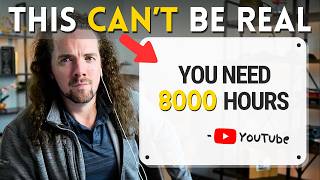
YouTube announced new requirements for the core Partner Program: 1,000 subscribers (unchanged), 8,000 watch hours in the last 12 months (up from 4,000), or 20 million qualified shorts views in the last 90 days (up from 10 million).
Channels below the new threshold remain in YPP and can earn from long-form content, but shorts revenue is turned off until they cross 10 million views again.
The entry-level tier remains at 500 subscribers and 3,000 public watch hours for long-form content, but the core program's bar has been doubled.
In an interview, YouTube's VP of creator product and Rene Ritchie said the changes aim to ensure earnings are 'meaningful' and allow creators to reinvest in their channels. YouTube expects to pay out more next year than this year.
A creator commented: 'I've gotten 9.5 million shorts views over the last 90 days. Those views have made me $781. According to YouTube, those 781 are not meaningful.' This highlights the disconnect between YouTube's messaging and creator reality.
The creator speculates that YouTube may think raising the bar will make creators happier by pushing them further, but argues that reaching a milestone and earning only a few dollars is not demotivating—it's a step toward sustainability.
The creator argues that the ability to see oneself succeeding on the platform and viewing the platform as an ally is critical for the desire to create content. This update seems to go against that goal.
Despite the doubts, the creator emphasizes that the opportunity to build an audience and share meaningful content is still tremendous and worth it, even if this specific change is questionable.
The video concludes that while the opportunity for creators remains vast, YouTube's decision to double monetization requirements may be counterproductive, potentially discouraging the very creators who sustain the platform. The creator calls for reconsideration and invites community discussion.
What are the new requirements for the core YouTube Partner Program?
1,000 subscribers, 8,000 watch hours in the last 12 months, or 20 million qualified shorts views in the last 90 days.
01:00
What was the previous watch hours requirement for the core YPP?
4,000 watch hours in the last 12 months.
01:00
What is the entry-level YPP threshold?
500 subscribers and 3,000 public watch hours for long-form content.
01:43
What happens to shorts revenue for channels below the new threshold?
Shorts revenue is turned off until they cross 10 million views again.
00:32
What example did a creator give to show the disconnect between YouTube's 'meaningful earnings' claim and reality?
A creator earned $781 from 9.5 million shorts views, which YouTube deemed not meaningful.
03:36
Creator's $781 Example
This concrete example starkly illustrates the gap between YouTube's 'meaningful earnings' rhetoric and the actual earnings of creators, making the argument tangible.
03:36Creator Success is Critical
The creator articulates a key principle: creators need to see themselves succeeding and view the platform as an ally to sustain their desire to create.
06:30Opportunity Still Tremendous
Despite the criticism, the creator balances the argument by acknowledging the platform's immense value, offering a nuanced perspective.
07:31[00:03] requirements to get into the core YouTube Partner Program. I am not so sure about this. In fact, I felt so strongly about it, I had to make a video informing you as to why this is such a big deal, including a very gentle
[00:19] first their official blog post. This was outlining various updates here, but I'm going to start with this section right qualified shorts views over the last 90 days will be eligible for ads and
[00:32] subscription revenue sharing on shorts. And then, channels below this threshold remain in YouTube Partner Program and continue earning on long-form content, but shorts revenue is turned off. We're reading between the lines here. Shorts
[00:46] revenue automatically resuming once they cross 10 million views again. Followed by this. In addition to the above threshold, creators who meet the the YouTube Partner Program have additional benefits, including revenue
[01:00] sharing from ads and YouTube Premium. With the new requirements being 1,000 subscribers, the same as before, and 8,000 watch hours in the last 12 months, 8,000 watch hours in the last 12 months, up from the previous 4,000, or 20
[01:14] million qualified YouTube shorts views in the last 90 days, up from the previous 10 million. Now, as I've looked at this, I spent a few hours delving into this and watching all of the official YouTube publications on this.
[01:28] a thing here or there, but I've also been paying attention to the sentiment of creators like you and me in reaction to this. I've attempted to in within myself understand like why what's YouTube's goal with doing this? What are
[01:43] we hoping to accomplish by essentially doubling the bar to get into the core Program. Now, I think it is worth mentioning here that the entry-level hasn't changed. It's still set at 500 subscribers and 3,000 public watch hours
[02:00] for long-form content. But I've looked at this and I've asked myself, why? What? Why? Why is this being implemented? And the best I've been able to come up with comes from a clip from the Creator
[02:13] Insider channel actually, right here, where Rene Ritchie, the YouTube liaison, and the YouTube VP of creator product are having a conversation about these updates. And Rene's asking questions. >> Think about it. The kinds of content,
[02:28] the way you consume that content, the formats have all changed exponentially want to make sure that the earnings you get from the program are meaningful and allow you to reinvest in your channel. And all of these changes, when you step
[02:41] back, we still expect to pay more out next year to creators than we will this meaningful or we're trying to help creators earn something meaningful from their content was repeated more than once in that
[02:54] interview. And I just had to ask myself, is this about higher commitment? Is this about more meaningful earnings? And I think I tried to to take these statements in the context as they're presented to me by YouTube. But but upon
[03:09] hearing all of that, it comes across as not quite understanding the creators. When we say earning something meaningful from the platform, it's not just about reaching a threshold where it's it's like a light switch, all of a sudden,
[03:24] okay, now I can go full-time with my channel and it was zero before that. It's not quite that black and white from my experience. And I think this was especially highlighted by someone who commented on this video below, Table
[03:36] I'm going to read it off to you, but he says, "I've gotten 9.5 million shorts views over the last 90 days. Those views have made me $781. According to YouTube, those 781 are not meaningful." And then this creator goes
[03:50] YouTube for allowing me and thousands of other creators to make money on this." expressed here and by many other creators in the comments that that I've read through is that that's not quite what's top of mind for creators when
[04:05] we're thinking of the threshold to get into the YouTube Partner Program. And this creator also includes, "On behalf of the YouTube Creator Community, I hope to see this change reconsidered." So I look at this and I say, "Are we
[04:17] potentially assuming here that it's demotivating to creators to reach a milestone and only make a few dollars a month? Is that somehow demotivating seems to me like perhaps YouTube is thinking here that creators, by raising
[04:33] the standard for the YouTube Partner Program, creators will in essence be happier because they pushed themselves further before they reach that point. But that could just be me. I I genuinely want to hear what your perspective is in
[04:47] the comments. And yes, please keep the comments civil. And I hope that the to understand what's going on in your mind and what you share in the comments on this video. Small creators, any size creator really, yes, but especially
[05:01] small to mid-size creators are the lifeblood of this platform. I do my best to speak for a wide range of creators here. I personally have worked with creators from brand new to very large channels. I have personally worked with
[05:18] literally hundreds and hundreds of creators where I've observed analytics, I've I've participated in the growth of their channels, and I've also reached millions more creators through my videos. So when I say this, I hope you
[05:32] understand the gravitas or the the gravity with which I am attempting to communicate this. YouTube owns a platform, and I think it is brilliant. When was the last time you paused to think about how you can literally record
[05:47] think about how you can literally record yourself, put that on a platform, and allow it to be shown to anybody in the world, but it also has a layer of finding the right viewers that hopefully enjoy your content from anywhere in the
[06:02] world. The algorithms, the the structure of it, it is brilliant. It's amazing. Now, how do I say this? I appreciate that YouTube in all of their public sharing attempts to reiterate that message that they see
[06:17] creators as the lifeblood of the platform. But behind that, this recent monetization update does not feel like it reflects that to me personally. Now, here is the point I'm trying to get to here, and forgive me anyone watching
[06:30] knowledge on this. If if anyone has additional insights on this, I readily welcome it. But when I look at this, it seems like the creator's ability to see themselves succeeding on this platform is critical for their desire to create
[06:48] content for the platform. And not only that, but combine that with the need for these creators to see the platform as their ally. When you combine these two things together, that understanding and that hope that you can actually make
[07:01] something and make money with it and be able to sustain this passion or this skill or this thing that you're sharing, when you have those two things combined, when you have those two things combined, that is critical for the desire for new
[07:14] creators to create content for that platform. This update does not seem to be doing that for me. It seems to be going directly against that goal. So, for YouTube or anyone else watching this, first, I want you to
[07:31] just kidding. I had to throw that in here. It's a tradition I have. If you're what I want to say here, and this is to YouTube and anyone watching this, is the opportunity is still tremendous. I this specific thing I have my doubts about
[07:45] but as far as let's take it off of the the platform for a moment. Let's talk the platform for a moment. Let's talk about the progress of humanity and the about the progress of humanity and the the ability to connect and share things
[07:57] that really matter with other people online. The opportunity is bigger than it's ever been before. It's tremendous. So in that aspect no, it's not Chicken Little sky's falling. It's more the opportunities are still
[08:12] everywhere and for creators like you and I the ability to build an audience and share things that matter is still tremendously useful. It's still tremendously valuable and it's still way worth it.
⚡ Saved you 0h 08m reading this? Transcribe any YouTube video for free — no signup needed.