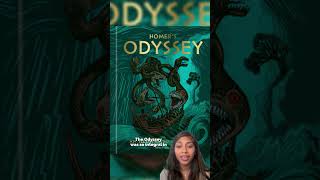

Nolan Got Odysseus Wrong
45sDirectly challenges a beloved director's take on a classic, sparking debate among fans and literature buffs.
▶ Play Clip"The title is accurate and the video delivers a focused critique, though it could be more concise."
The video argues that Christopher Nolan's adaptation of The Odyssey fails to capture the essence of the original epic by omitting Odysseus's defining flaw: hubris. It contends that this omission not only simplifies the character but also erases the cultural and moral lessons central to ancient Greek society.
Most people who have never read The Odyssey gave the movie great reviews, while those familiar with the epic found it lackluster.
Odysseus is known for his trickery and hubris, or excessive pride, a trait Nolan notably left out.
Removing hubris erases Odysseus's flaws and makes him one-note, ignoring why The Odyssey was integral to understanding ancient Greek society.
The concept of xenia (hospitality) and the idea that humans are not above the gods are fundamental to the epic, yet Odysseus spends the film denouncing the gods.
Cutting scenes like the Cyclops trickery strips Odysseus of his identity, which is dangerous for those who misunderstand one of the oldest epics.
What is Odysseus's defining flaw in The Odyssey?
Hubris, or excessive pride, which leads to punishment from the gods.
00:27
What two concepts are central to ancient Greek society as depicted in The Odyssey?
Xenia, the concept of hospitality, and the idea that humans are not above the gods.
01:08
How does Nolan's adaptation change Odysseus's character?
By removing his hubris and scenes like the Cyclops trickery, Nolan makes Odysseus a simpler, one-note character, erasing his flaws and the story's moral lesson.
00:41
Hubris as a Core Theme
Identifies the central flaw that drives the original epic's narrative and moral lesson.
00:27Xenia and Greek Society
Explains the cultural importance of hospitality and the gods' role in ancient Greek life.
01:08Character Erasure
Shows how omitting key scenes can fundamentally alter a character's identity and the story's meaning.
00:41[00:01] the entire point of the epic by leaving out this one giant detail. Let me explain. Most of the split opinions on this movie really seem to boil down to Most people who have never read The Odyssey had really great reviews,
[00:14] Odyssey found the movie really lackluster. The Odyssey is one of the oldest stories ever told with Odysseus himself being a character used as an archetype or a device in literature. He's known for his trickery and his
[00:27] hubris or excessive pride, a trait Nolan notably left out of this rendition. His The Odyssey larger than life and not just another dull expedition story. His hubris is a lesson taught through punishments from the gods. By removing
[00:41] these traits, this erases Odysseus' obvious flaws and quintessential gray Nolan's Odysseus a little bit more simple and one-note, but it completely ignores why The Odyssey was so integral in understanding ancient Greek society.
[00:55] Now, sure, you could say, "Oh, Nolan made this movie for the modern era. There's no reason to know why this was important for antiquity." Okay. Well, if not, why is the idea of Zeus's law or the concept of xenia battered in
[01:08] Greek society, it was thought that the people were not above the gods. The Iliad and The Odyssey are famous for being epics where the gods are pulling all the strings. The humility in praying to a higher being is fundamental, yet
[01:22] Odysseus spends the entire film denouncing the gods. Athena is just a destroying and pillaging all of those cities. By cutting crucial scenes like his trickery with the Cyclops or his interactions with the gods, Nolan strips
[01:35] Odysseus of being Odysseus. And this is especially dangerous to people who misunderstand one of the oldest epics in history.



⚡ Saved you 0h 01m reading this? Transcribe any YouTube video for free — no signup needed.