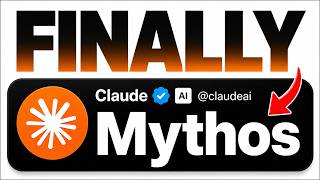

Claude Introduces Mythos Class Model Fable 5
44sReveals a new model tier above Opus, making it the most powerful publicly available Claude model.
▶ Play Clip"Delivers on the announcement but heavily promotes the creator's own agent OS, reducing objectivity."
Anthropic has released Claude Fable 5, a Mythos-class model now available to the public, along with the restricted Mythos 5 for vetted partners. The video explains the capabilities, benchmarks, and how users can leverage these models within an agent operating system for enhanced performance.
Two new models: Claude Fable 5 (public, safe) and Mythos 5 (restricted, unsafeguarded). Both are Mythos class, the most powerful models from Claude.
Fable 5 is state-of-the-art on benchmarks: 95% on SWE-bench verified (vs Opus 4.8 88.6%), 29.3 on Frontier Code Diamond (vs 13.4), and first model to break 90% on Hex's core analytics benchmark.
1 million token context window, 128k max output per request. Scores 79.4 on long context retrieval vs Opus 68.1. Better performance in fewer turns on agentic tasks.
Can play Pokemon Fire Red using vision, autonomously run novel research for a week, used by Stripe for 50 million line codebase migration. Biologists preferred its molecular hypothesis 80% of the time over Opus.
Days before launch, Anthropic urged big AI labs to build a coordinated brake pedal for frontier AI, yet simultaneously released the most powerful models. Mythos 5 has safeguards lifted.
Fable 5 available today on Claude API and subscription plans (Pro Max, Team, Enterprise) until June 22nd at no extra cost. After that, it will require usage credits. Mythos 5 restricted to Glasswing partners.
Using Fable 5 in a simple chat tab is like 'a Ferrari in a parking garage'. Plugging it into an agent OS (like AI Profit Boardroom) allows shared memory, multiple agents in parallel, and easy model switching.
Within minutes of announcement, the creator plugged Fable 5 into their agent OS, replacing all older Claude models across workflows. One line change per surface.
Claude Fable 5 offers unprecedented performance, especially for software engineering and long horizon tasks, but its true potential is unlocked when integrated into an agent operating system that maximizes its capabilities. The model is free on subscriptions only until June 22nd, making now the time to test it.
What are the two new models announced by Anthropic?
Claude Fable 5 (public, safeguarded) and Mythos 5 (restricted, unsafeguarded).
00:06
What score did Fable 5 achieve on SWE-bench verified?
95%.
02:57
How does Fable 5's performance on Frontier Code Diamond compare to Opus 4.8?
Fable 5 scored 29.3, more than double Opus 4.8's 13.4.
03:43
What is the context window size of Fable 5?
1 million tokens.
04:15
Until what date is Fable 5 included at no extra cost on subscription plans?
June 22nd.
10:18
What controversial action did Anthropic take days before launching Fable 5?
They urged big AI labs to build a coordinated brake pedal for frontier AI.
06:40
What is the key difference between Fable 5 and Mythos 5?
Safeguards: Fable 5 has them, Mythos 5 does not.
02:28
What real-world task did Fable 5 accomplish using vision alone?
Played Pokemon Fire Red by reading the screen.
05:29
95% on SWE-bench
Shows a huge leap in software engineering capability, almost 7 points above Opus 4.8.
02:57Autonomous Research for a Week
Demonstrates the model's ability to handle long-horizon, complex tasks without human input.
05:29Safety Paradox
Highlights the tension between Anthropic's safety warnings and their release of increasingly powerful models.
06:40Ferrari in a Parking Garage
Metaphor for the necessity of an agent OS to fully utilize Fable 5's power.
13:10[00:06] announcements on Mythos. So two new model announcements today. This is directly from Claude. So Claude Fable 5, which is a Mythos class model they've basically made safe for general use. And these are are two of the most powerful
[00:21] models ever released from Claude. So, I'm going to show you exactly what they mean, what's happened, what the differences are, how it works, etc. operating system. So, you can see here it says I'm powered by Claude Fable 5,
[00:35] which is the most publicly avail the the most recent available model from Claude. And so, basically what they've said is today we are launching Claude Fable 5, which is a Mythos class model. So basically they've taken Mythos and the
[00:50] idea of Mythos which is you know the model they couldn't release to the public and they kept closed to project Glass Wing only and then what they've Glass Wing only and then what they've done from there is they've created Fable
[01:02] 5 which is still in the same class and so this is better than any model ever created basically state-of-the-art on on all the benchmarks previously. So it's great at software engineering, knowledge work, vision, scientific research, many
[01:17] other areas. The longer and the more complex the task, the larger Fables 5 uh example of what you can build with this. Here's an example guide that we actually
[01:29] created about Claude Fable 5 and Mythos 5. And this was generated fully with the um with the setup, right, with Claude Fable 5. So actually went out, it did all the research. It took quotes as you
[01:44] can see here, organized some images as well on the page using chat PPT image 2.0 API and then you can see it's actually organized all of the research together. So what actually dropped, why is this useful, etc. Let's take a look
[01:58] at this. So here's some of the biggest announcements. Number one, it's a brand new model class. It's not just like a new version. So, for example, for years you really had Claude in three sizes, which is Haiku, Sonnet, Opus, Sonnet,
[02:12] OP, and uh Opus 4.8 just came out last month. Now, there's a fourth class sitting above all Opus, and that is Mythos. Now, Claude, Fable 5 is the first Mythos class model the public has ever been allowed to touch. So, Fable 5
[02:28] and Mythos 5 are the same underlying model in many ways. The only difference is safeguards. So Fable 5 has them. Mythos 5 isn't safeguarded in the same
[02:40] way and that's why it's only well why it's restricted to vetted partners. Having said that, they have said that it will be released in the future. So we'll These are the benchmarks here. So if we compare, for example, Opus 4.8
[02:57] compare, for example, Opus 4.8 versus Fable 5 on SWE Bench verified. You can see that it scores 95% versus 88.6%. It's a big jump in benchmarks right here. You might be saying, okay, you don't care about the benchmarks. I
[03:11] agree. It's always better to test this stuff yourself, but it is interesting to pay attention to this and to understand what the differences are. You can also see SW Bench Pro here. So, Fable 5 scored 80%, Opus 4.8 scored 69% and GPT
[03:27] 5.5 scored 58.6%. So Fable 5 is a huge step up in SWE which is software engineering as a benchmark. You can also see for Frontier benchmark. You can also see for Frontier Code the Fable 5 scores 29.3 versus Opus
[03:43] 4.8 which is 13.4. So it's pretty much doubled or more than doubled on that benchmark which is pretty wild. It's also the first model ever to break 90% on Hex's core analytics benchmark. So, this is a 10point jump over Opus. So,
[04:00] this is a 10point jump over Opus. So, pretty wild stuff right there. It's also built for long horizon real work, right? So it has a million token
[04:15] context window. 128k max output per request on long context retrieval. request on long context retrieval. The mythos class model scored 79.4 The mythos class model scored 79.4 versus opus's 68.1 and tool Aflon which
[04:30] is a tool use marathon. So these are agented tasks that are basically looking at okay how powerful is it? Can it basically uh run directly with something on a long horizon task? Fable 5 scored higher than Opus 4.8 and finished in
[04:46] fewer turns. So it scored higher and finished in fewer turns. So 61.7% in finished in fewer turns. So 61.7% in 19.8 average turns versus 59.9% in 24.5 turns for Opus 4.8. So number one, it scored better and number two, it scored
[05:01] amazing when you think about it. So you get better results, fewer steps. Um, I will say that in in theory that means cheaper agent runs, but actually in
[05:13] reality the cost of the API is much higher for Fable 5. Uh, if you haven't seen the the costs already, let me show you this. So these are where are they?
[05:29] actually. And now this is pretty interesting. So, if you're wondering, okay, what sort of crazy stuff can it do? It can play Pokemon Fire Red using vision alone, reading the screen. Previous models
[05:41] needed special harnesses. Anthropic internal experts used it for some interest in research and design, improving their results by roughly 10x. It ran some novel research autonomously for a week. And in actual blind tests,
[05:58] biologists preferred its novel molecular hypothesis 80% of the time over opus class models. Stripe have also used it as well in a big uh 50 million line as well in a big uh 50 million line codebase migration too. So all in all,
[06:13] Fable 5's capabilities exceed those of any model ever made generally available. Stripe CEO actually came out and said it compressed months of engineering into
[06:25] days. And Scott Woo, CEO of Cognition said, "Highest scoring model on Frontier Bench excels at long horizon reasoning." Pretty wild stuff. Now, what's also interesting about this is
[06:40] the safety story behind it. Bear in mind, like days before the launch, Anthropic actually issued a public uh warning warning and warned and urged the big A labs to
[06:54] build a coordinated brake pedal for Frontier AI. So, if you haven't seen Frontier AI. So, if you haven't seen this already,
[07:18] builds itself and they basically urged big AI labs to take a pause but at the big AI labs to take a pause but at the same time they released Claude Fable 5. So pretty interesting sort of
[07:32] contrasting attempts at doing stuff here, right? Like they're saying pause they're releasing like these big crazy models.
[08:00] advancing so fast they may soon improve themselves without human input. Then they release the most powerful model ever
[08:15] and also Mythos 5. So this is like a twin model of Claude Fable 5. So the same it's the same model with the safeguards lifted. It's only available safeguards lifted. It's only available to vetted partners in Project Glasswing.
[08:33] Mythos preview launched to a handful of partners on April 2026, expanded on June partners on April 2026, expanded on June the 2nd, and went public as Fable 5 on wondering, okay, what happened with Mythos? What what are the new
[08:47] Mythos? What what are the new announcements on that?
[09:03] models right and similar costs as well. So you can see the cost right here in terms of uh the cost per tokens. If we look at the actual benchmarks of Fable 5 versus Mythos Preview, Fable 5
[09:19] and Mythos 5 outperform Mythos Preview as well by quite a lot.
[09:50] availability, Claude Fable 5 is available everywhere today. Claude Mythos 5 is restricted to Glass Wing partners. Now also one thing to note partners. Now also one thing to note here is that they expect demand for
[10:04] Fable 5 to be very high as you can imagine and difficult to predict. So on the Claude API, Fable 5 is fully available for today, right? For subscription plans, they're rolling out conservatively in
[10:18] stages. So this is interesting. From today through June the 22nd, Fable 5 is included on Pro Max, Team, and SEbased Enterprise plans at no extra cost. On
[10:30] June the 23rd, they'll remove Fable 5 from those plans. So using it after that will require usage credits and if capacity allows they'll extend the included window. After this point they aim to restore Fable 5 later and
[10:47] they can. They say but basically it'll be available until June the 22nd. So if using it today. We've already plugged it into the agent operating system as you into the agent operating system as you can see right here.
[11:07] We've already created this guide using it.
[11:20] can it build? What can you create with this?
[12:12] Well, we'll come on to that in a sec. [snorts] Um,
[12:32] the coding agent specifically you just got a generation smarter right so you I'm not technical this isn't for me but basically if you're building anything for example apps games tools websites using AI then this is super useful it's
[12:48] also got a million token context window which is you know obviously one, you know, probably the best in terms of all the models.
[13:10] most people going to waste this model, right? So if you're using Fable 5 inside for example like just a tab like this and you're using Fable 5 like so the problem is that it's like you know Fable 5 and a lonely chat tab is basically a
[13:25] Ferrari in a parking garage right the model is only half the story the system mean by that for example is if you're using like a tab like this well you know you open up a a chat tab you paste context you ask you copy the answer out
[13:39] you have to reexlain your business the outputs are scattered you got one conversation at a time. If a new model drops, there's weeks of like should I switch and around it. Whereas, for example, if you plug it into an agent
[13:51] operating system like we've done, then it's much easier to see everything if we have a look at this, this is all the stuff that we've built with Fable 5 as you can see. We can also open that up full screen as well, which is pretty
[14:06] cool. And everything that we've done here was created with Fable 5. Now, we see what we've built with other models. So, for example, we actually built out this SEO blogs you can see here. And these are all different things that were
[14:19] built out with Fable 5. These are all different websites, for example. Um, different prompt libraries, for example, like even an invoice generator tool. This was a cool little graphic animation where if I move my mouse and the dot
[14:34] actually follows me. And so, we built all this stuff out And so, we built all this stuff out using Fable 5, right? And Now, the thing is, if you're just using the chat window, how are you going to
[14:46] going to, for example, keep it in one can't really. So, that's why I would recommend setting up an agent operating system instead. It will make a big difference to you.
[15:13] Fable 5, for example, wired in, then you got Fable 5 wired into a dashboard with every other agent. You got the shared Obsidian memory, so it already knows and understands you. Every build file and answer is saved to your workspace over
[15:25] here. You got multiple agents running in parallel. New model drops, for example, problem. We just plug it into the system. And so that's the way that I will waste this model and not get the most out of it. But if you have
[15:39] it's going to be way more powerful, right? It's going to be way more useful. The other thing that we've done actually over here is we have this AI agent mastermind system. So we can actually tag in Claude and Fable 5 and then chat
[15:53] with our AI agents. So if I'm like at Lord, what's a good SEO keyword research? So what we can
[16:06] SEO keyword research? So what we can build, right? And if we send that in, we can tag in Claude and get it to come up with ideas. Now, once it's come up with that idea, as you can see right here, then we can say, "Okay,
[16:20] what do you think, guys?" And what this will actually do is Hermes, Clawude, Gemini, Codeex, OpenClaw, pre-claw code. As you can see
[16:32] each other and come up with new ideas between them. And then once we've like you can see here, it's actually going to add those ideas for apps inside our idea factory. So, we got an idea factory over here. And then we can take
[16:46] factory over here. And then we can take the ideas from Claude and Fable 5 and actually build this stuff and implement it. So if we look at this system for example, we've got uh this section where we can
[16:59] come up with ideas and then we can get it implemented over here which is pretty it implemented over here which is pretty powerful stuff when you think about it.
[17:14] to get uh this whole system where we've plugged in Claude and Claude CLI with Fable 5 inside the agent operating profit boardroom. You could build it yourself, but if you want something
[17:26] that's ready to go like we've got, you can get that inside the AI profit description. And basically, you know, if you want what I showed you, which is Fable 5's coding power, the million context window, the um effort dial,
[17:39] operating system. What we do is basically help you take your Claude and plug it into a system and and we have that system ready to go. You can also if you don't use Claude then you can plug in OpenClaw Hermes any sort of agent
[17:52] agents share one memory. They know your goals. They know your business. So when Fable 5 for example needs context already has it ready to go, right? And every time a new uh model like this comes out, no problem. We can plug it
[18:04] in, right? Sega get the full agent operating SIP file, a 30-day Claude 5 road map, every prompt plus the Obsidian memory setup, coaching calls where we can set up together step by step and 3,400 founders who are building with
[18:17] this stack right now. So, it's all inside the AI profit boardroom. And you technical. It might be difficult to use an agent OS. You can see like so many with this stuff. It's amazing and getting awesome results. So, you know,
[18:31] if they can do it, you can do it. Now, inside the community, you can ask you need to. Inside the classroom, you actually get access to all my best trainings, including the agent OS system over here. And we've also got new
[18:43] tutorials on Hermes, on paperclip, on free club code, and everything else. weekly coaching calls, get help and support in real time, share your screen, actually connect with people in your
[18:56] other models like this. So feel free to get it link in the comments description or go to the aiprofitborn.com. Thanks for watching.
[20:37] I've plugged it into a powerful agent operating system and how you can create your own using Claude Fable 5. Bear in mind like it's only available for 2 weeks on these subscriptions. Now is the time to make the most of it. I'm going
[20:50] to show you exactly how to use it and how you can build amazing systems where you can build with Claude Fable 5. You can create anything you want. I mean, out and then we've saved all of the stuff that we've created with Claude
[21:03] Fable 5 over here, right? And so, this is all stuff that we've created and then organized. It's designed exactly how I want it. Um, it's created some pretty interesting stuff which is awesome. You know, very visual animations as you can
[21:17] see right here. And we've done this all with Fable 5 literally whilst I was you know talking to you is it's very quick and easy to set this up. So let me show you exactly how this works and what we've done here. So basically we have an
[21:30] difference between this and something else is basically back in the day you know you might have like claude in a separate tab and start using over here. But the biggest issue with that is that when you're doing this, you know, you're
[21:44] you're basically parking a Ferrari in a parking garage, right? Because how are something? How are you going to create memory? How are you going to organize Claude inside a chat window like this with your other AI agents like Hermes or
[21:57] Open Claw or Anti-gravity or whatever? You can't. And so what we've built here You can't. And so what we've built here is a Claude Fable 5owered agent OS system. And then, you know, when the models drop or when new models come out,
[22:09] etc., We can always plug those in as well. And so literally today, Anthropic shipped Claude Fable 5, which is, you know, the most powerful Claude ever released to the public. It's already scoring like 95% on SWB verified. You
[22:23] know, it's double OPUS 4.8 on Frontier Code benchmarks. Got million token context window. And as soon as I woke up and saw this announcement, I'd already plugged it into my agent operating system. And so everything gets smarter
[22:36] at once. I'm going to explain exactly how this works. Now, if you look at this system here, we've got uh mission control. We've got paperclip built in. So, we have like a full organization of AI agents. And we can easily plug Claude
[22:49] uh Fable 5 into that. We can see what we've built. For example, we can see previous stuff that we've created. We've even got an AI agent mastermind. And if we go over here, we can see that Claude was organizing my whole team. So, he can
[23:01] have a group chat with my the rest of my other AI agents like Hermes, Gemini, and else. Now on top of that we have claude ready to go and for example we can plug in antli here we can use the agent section we can use ultra code which is
[23:15] basically like teams agents as well and so every new feature that comes out for claude we can plug into this system and also claude helped build it let me show you an example so on the back end here uh as soon as claude came out
[23:31] I was like right can you make sure uh that anywhere we're using claude inside had the agent operating system, we used Claude 5 instead. And so, you know, literally within minutes of sending that message, we'd already plugged the new
[23:45] model into our system. So, it replaced Claude Opus 4.8, right? It in the agent room, it replaced Haiku. And everything you can see here is like it's all powered by Claude Fable 5 with the CLI. And the cool thing about this is like
[23:59] you've got a system where you can change everything instead of having to rely on like one model or one workflow, right? And so you become very adaptable when pretty cool. Otherwise, like every time a new model drops, your stack lags
[24:13] behind it because you know, you've probably got APIs running. You got tools example, workflows powered by old versions of of Opus or, for example, old versions of Sonet. Not very good. And so this method is way more powerful. So
[24:27] thinking. If you haven't already, uh definitely start thinking about this because it will save you a lot of time. So let me give you an example. Like So let me give you an example. Like Claude 5 drops on a Tuesday. Within 5
[24:39] announcement, I've got it already running inside the agent operating system, right? The Claude tab, the agent room debates, the SEO engine, one model across every surface. And so the strongest model alive um is now the
[24:52] brain behind every workflow that I run inside this system. And then if the the model drops, which it will in a couple of weeks, no problem. We can get 4.8 back in there in like one click. So that's how powerful this stuff is.
[25:05] [snorts] Now you might think, okay, that that sounds technical. How do you plug Claude into your whole system like this? Well, can just go into Claude desktop like this and tell it exactly what you want
[25:18] and I was like, I need a mission control and then I need a chat with Claude and then I need to see everything that I've built with uh Claude as well. And so you out step by step, making it better and better. That's what we want, right?
[25:32] build it one step at a time. And so if you're thinking about doing this, just go into Claude desktop, use Fable 5 there, and then just start building with that, right? And if you wanted, okay, is
[25:45] this too technical? You can see, for example, people inside our AR profitable Ken's built this out. Nick's built this out, right? Eric's built this stuff out. Uh Ethan said he's 61 and not a coder and even he's built it out, right? So, I
[25:59] mean, it's inspiring. It's inspiring. But what I mean is basically if they can might be wondering, okay, why? And by the way, let's have a look what recently found your videos. They're really good. Quite impressive. Thank you
[26:12] so much, sir. I really appreciate that." And then we've got another one which is, you know, I'd watch, but I'm out of usage limits. I actually haven't found any problems today with usage limits. But I'm sure it does use up a lot of of
[26:24] usage limits. But again, like if you're like, right, I'm out of usage limits. No problem. You can switch your Hermes tab, right? You can switch your OpenClaw tab. having everything in one system is like if I still want to use the agent group
[26:37] chat, but an agent goes down, no problem. Let's just use all the others instead. I can actually deselect Claude if I run out of tokens and then just use adaptable. It doesn't matter what happens. We can keep running this
[26:52] system. That's the power of it. Now let's have a look here. So we have a look at the benchmarks. You can see S swbench fable scores 95% versus Opus 4.88.6%. So it's better at coding, right? And
[27:06] which is basically what we've built with this agent operating system. And then if you look at Frontier Code Diamond, you've got Fable 5 scoring 29.3 versus Opus 4.8, which is 13.4. So it's more than double Opus 4.8 on Frontier Code,
[27:22] to worth hours without losing context. And that's the brain we've installed other cool stuff. So for example, here we can actually operate something that's called Hermes Jarvis, which is a a voice activated AI agent. So for example, if
[27:37] can use that or you could use attack uh chat or you could for example talk to your AI agent over here. And then we've got SEO pipelines and all sorts of got SEO pipelines and all sorts of things using the claude fable 5 as well.
[27:50] things using the claude fable 5 as well. Now you can swap this stuff as well. So for example, we've swapped the claw tab right here and we've got a full clawed code agent that builds edits uh runs jobs from the dashboard. And so every
[28:07] build, every chat, every SEO generation in the operating system now runs on the strongest coding model alive, right? We've changed it to Claude Fable 5. We also change the agent group chat as you can see right here so that we can use
[28:20] Claude Fable 52. We've got the SEO engine. So this is basically where we some case studies like this. And then we can deploy like five articles to five show you an example. So if we go over to this section, you can see that we've
[28:35] deployed content and created content uh using this AI agent, right? And it's the website. I don't need to log into WordPress or anything like that. And so WordPress or anything like that. And so when we're doing this now, we are using
[28:47] create better content. It's going to rank better. It's going to be created faster, and it's actually going to read better as well. And so you might as well interesting thing is if you've got an agent operating system, swapping out the
[29:01] model is usually just one line. That's it. It's just one line where the model name is and you just change the model name for the new one.
[29:13] new way. The old way is like you know if a new model the sorry the old way is like if a new model drops your tools upgrade whenever people who build your tools feel like it right so for example if you're using something like Manace
[29:27] and Fable 5 isn't in there. Well that's because they don't want to add it in and for example with an agent operating system if a new model drops you can change one line straight away per surface. Uh often as well you have to
[29:41] example if you're using something like perplexity or an API you have to run the workflows and change everything manually. Whereas with this system you engine and they're all plugged into Fable 5 and day one right also half your
[29:57] stack quietly runs on last year's model if you do it the old way. The new way is like every workflow inherits the upgrade instantly and you have one dashboard full context. So let me show you an example. So, if we go inside the memory
[30:10] here, it's plugged into Claude and all of our AI agents. And this is a memory galaxy where we can basically have all of our memories and my second brain plugged into all of the agents inside here, which is pretty cool as well. And
[30:23] model comes out, you've got the strongest model. Every time a new model comes out, you can swap it in and out. Nothing breaks. Nothing needs to change. Nothing breaks. Nothing needs to change. And that's pretty cool as well. [snorts]
[30:38] CL to Claude 5 today? I mean if you run agents or build with AI in any serious way I would say yes and the reason for that is because Claude is included on Claude plans until June the 22nd. Now after that it's a paid model. So the the
[30:53] window to test it and the time to test it is today is right now. Right? So you want to uh you want to change your models over ASAP I would say. Otherwise, you're going to miss out because on June the 22nd, it's gone. And so, here's what
[31:05] you learned today. You learned how to stop lagging after model releases. You learned how to get a mythos class brain. You learned how to skip the the traps that I hit. So, for example, like using clawed in a separate tab or not having
[31:20] it connected to a memory or having all my workflows fall behind. You saw it showed you all of the different stuff that we built with this and how it works, etc. And then also
[31:32] you learned that it's free for two weeks if you're already on the subscription and you got the shortcut. So if you want the full system for me, I mean you could build this yourself, right? So for example, if we go over
[31:44] here, you could build this inside uh claw desktop if you want, but if you just want my agent operating system, you can get that inside the AI profit description or go to a profitboard.com. And inside there you get Claude, you get
[31:59] the group chat, you get the um autonomous AI agent team system which you can see here with our agents plugged into a team. You get the mission control Claude uh is plugged in on a separate tab over here. We have openclaw Hermes,
[32:12] we have the SEO pipeline, the video agent, the idea factory as you can see implement anything and that's all inside here. Right? So, if you go to the trainings. And if you go to the new daily updates, we update this daily. So,
[32:28] You can see when it was last updated, so you know it's new. And then also, you can grab the zip file over here. And then, for example, you can see that we inside the community as well, you can ask questions. You can get help and
[32:42] support in real time, which is pretty awesome. coaching calls, get help and support, meet other people building with this stuff. Inside the map, you can meet people in your local city who are using
[32:55] Claude 5 and other AI agents like this. And that's all inside the AI profitable boredom. And again, you might think, well, this stuff is too technical, but you can get the full system from me. You might say, well, okay, I'll wait until
[33:07] uh later to set this up, but the window is today, right? Claude 5 Fable is only available for two weeks and then it's gone. And you might say, for example, useful? Is it a big step up? So, actually, it's Mythos class. It's Mythos
[33:23] class and also it's a tier above Opus and Sonnet. So, it is the most powerful and Sonnet. So, it is the most powerful AI agent available right now. And then we've got a question says new question is all the AI models you use
[33:37] free models. So I may I I change between them depending on what's come out showing the new latest stuff and trying to help people. So for example here you can see that if we go to the mission control we can see what models our AI
[33:52] agents are running on. So you can see here for example Hermes is running on Miniax M3 through the coding plan. Claude is running through our CLI with Claude Fable 5 Open I think we plugged in miniax as well. So it really depends
[34:07] code over here, this can run on a free model. We actually have uh Quen Quen coder running with this. So yeah, and then you got antiggraphy. Antiggravity has a free CLI as well. So depends what section you use.
[34:22] And then Ola from Mexico. Good to see you here. Thanks very much for joining. you here. Thanks very much for joining. Appreciate it. Anesso. All right.
[34:58] SEO with Claude Fable 5, which is a brand new model that just came out. Um, results like you see for this website that the traffic is growing really nicely. And basically what I'm going to show you today is how to use the new
[35:11] model for AI SEO to rank inside Google, to rank inside AI search engines, and my plan to make the most of this. And bear in mind, Claude Fable 5 is only subscription plan. So you might as well make the most of it now. And what I'm
[35:26] going to show you today is exactly how to use it and the best way that I know how to use it. So let me show you some examples first of us ranking based on this. So you can see for example we type in best AI school
[35:39] community on Google. It's an example response. You can see that we are ranking number one inside Google AI overview mode for that keyword. Right? community. And then if we scroll down here you can also see us ranking here
[35:53] and here for that particular keyword. Right? And so we're ranking multiple this keyword. You see for example we've got a website that's ranking over here. And so if we actually go to AI mode as well for this keyword and we type in the
[36:07] same keyword, you can see that we are ranking number one inside Google AI mode too. And so we can use claude to power all of this. And the power here is like we can actually rank inside AI. We can rank inside chat GPT. We can be
[36:20] recommended with AI search engines. We can rank inside Google. It's a really powerful system that I'm about to show you. So how does this work? Well, basically Anthropic have just shipped the most powerful Claude ever made which
[36:32] scores 95% on SWB bench verified. It's got a million token context window and it can work for hours without losing context. And so we've actually created this SEO pipeline tool as you can see right here. And you can use this to just
[36:47] pick a keyword, add in a case study, and then deploy to your websites. And that's look at this website, this is the aiprofitboarding.com. therofitboarding.com. And if we take a look at the deployment history here, you
[37:03] can see that we are creating content on that website using this system. So this is an example of a page we created on the air profitborn.com using this system here. Now what we've actually done is we have plugged in the claude 5 into this
[37:20] SEO engine. So it's now powering it. Right? So now the engine can read uh find keywords to win. It can use my Obsidian memory and context to come up with ideas for SEO and then we can actually deploy and create that content
[37:34] quickly. And so you know this is one of the most powerful ways you can use AI SEO to grow your rankings. Now if you actually look at Claude Fable 5, you might be wondering, okay, is it worth using this? So you can see that GPT 5.5
[37:48] on the same benchmark scored 58%. Claude Fable 5 for S swbench verified scored 95%. It's almost twice as powerful as GPT5 on five on doing this stuff and around it. It's also got a million token context window which means that it's
[38:04] great for creating content. It can read your whole site, every page, every post, etc. It can also work autonomously on full SEO pipelines for hours because it's designed to be long horizon which means it doesn't just like write one
[38:17] your keywords. It can draft the page. It can create the schema. It can write the internal links and it can line up the supporting keyword clusters. So, for example, if you look at this page, it's come up with the title, it's written the
[38:31] introduction, it's embedded some case studies, it's formatted it beautifully, it's added CTAs to our funnels, and it's also included internal links. And this is all done in one single click across five different websites to get us
[38:43] talking about today. So, if you're wondering, okay, how do you use this? So wondering, okay, how do you use this? So all you need to do is you can come up with a keyword and then come up with the case study and then you just go from
[38:56] here. Now you might be wondering okay how do I come up with keywords? So we can go inside our agent mastermind which is a group chat with Claude 5 and with other AI agents and this is inside my agent operating system but you could
[39:09] wanted to. And so we can say, okay, Claude, Claude, based on the AI profit boardroom, come based on the AI profit boardroom, come up with some keyword research ideas
[39:22] around Hermes agent. And I can actually tag in Hermes as well. So we'll tag in Hermes and Claude. And now they can in a group chat come up with keyword research ideas and SEO keywords around the topic that we could potentially rank for. And
[39:38] so that's how we find easy keywords because this has an understanding of what we do. So for example, Claude knows that we talk about SEO and Hermes agent a lot. So it recommends the keyword Hermes agent for SEO automation, right?
[39:53] That could be an example. Or another example that Hermes recommends is Hermes agent use cases. So what we can do over here is we can go to this SEO pipeline. We type in the keyword and again this is powered by uh Claude 5. So, we type in
[40:06] the keyword. It comes up with the URL. And then from here, we're just going to add well, we've got two options. We can add an existing case study or we can add just going to use an existing one, but you could always add your new ones
[40:19] inside there, too. And let's see what we got here. Um, let's say, for example, we wanted to go with this one, right? Or we wanted to go, for example,
[40:31] let's create a new one. Let's create a new one.
[40:53] this section. We'll paste in the case study. So, we've got the use cases, study. So, we've got the use cases, we've got the case study, study to embed, which we've plugged in there.
[41:07] And then what we can do from here is we can click on generate f five articles, studies bank. Right? So, we've save that to the case study section here along with the keyword. we can generate five articles and then it's going to auto
[41:22] the content, right? Which is pretty powerful stuff. And if you're wondering, reality, this is what it looks like. If you're wondering, okay, like how does that look like in terms of managing it, you can see our history right here. So
[41:36] this is an article we created and then we can check out the page and we've got everything stored in one place. And so you can see how with the agent mastermind system, the agent group chat, we can quickly come up with keyword
[41:50] ideas to rank for based on our memory system that's plugged in here. So if you haven't connected your AI agents to a memory system like this, definitely do lot. This is Obsidian that we use and it just helps your AI agents understand
[42:05] everything about you. [snorts] Once you've done that, then you can plug the uh keywords and the idea or the case study into a system like this, you'll then see your history. So your deployment history
[42:19] that's basically the whole system using Claude Fable 5 for AISO. So for example, if we go to the history section there, you can see that this is being generated and is pretty quick and easy to do, right? We can also go inside the chat
[42:34] workspace everything else. But that's how we're using the system.
[42:53] actually like AI content? So, Google just ranks helpful content. It doesn't really care who typed it, right? um typically doesn't like thin uh spammy stuff, but we're using something called the Apex engine, which means that it
[43:06] grounds every page in your real expertise and case studies like I've just shown you. Right? So, when we're using this system, we can get better results because we're using case studies and research behind it. And then if
[43:19] Goldie Apex engine? So, this is four layers and every layer builds on top of each other. So, we have the Oracle. So, Claude 5 uh can actually find relevant Claude 5 uh can actually find relevant keywords using the Oracle group chat as
[43:34] got the forge. So, what it can actually do is inside the SEO section here, we can come up with a keyword. Now, we're using a swarm system, which means that
[43:46] when we create this content, we're using agents in parallel to create the content and publish it across multiple different websites, which is pretty powerful, too. Now, some people want to say, you know, your niche is too competitive for SEO.
[43:58] Really, if you're if you're going after keywords in this style, you're you're targeting low competition keywords that you can rank for easily, right? So, for hours of creating the content, we're already ranking for this keyword. So,
[44:11] to target low competition keywords that are relevant to your niche. How do you do that? Use the Oracle system with your AI agents debating and coming up with AI agents debating and coming up with ideas to give like you saw today.
[44:41] free course link in the comments in description. If you go to description. If you go to the link in the description
[44:53] actually see that we've got loads of training on this. We have 262 lessons on how to use AI for pretty much everything when it comes to SEO. So you can get And if you want a free SEO strategy session, you can get that at goldie.
[45:07] Agency. So, if you want a free one-to-one SEO strategy session that more traffic based on what's working for us, you can get that link in the comments description or go to the Goldie agency. And so, if we look at this
[45:19] system, right, the old way is you would open up at filter by keyword to find difficulty, guess which ones to rank for, you know, target the same keywords yourself or hire a writer, which is
[45:32] to see if Google noticed, right? The new way is like Claude reads your whole site. Um, the Oracle can pick a keyword inside the Oracle group chat. You can different websites and you also show up on Google and AI answers as well. And
[45:48] the cool thing about this as well is that inside the SEO system, we've actually linked it to Indexional, right? Index exceptional is a really powerful indexing tool which means that if we create content today it's more likely to
[46:01] get ranked and also get ranked faster because it indexes faster. when you have an agent operating system like this the great thing is that you can easily have everything in one place. So if we
[46:16] here right? If we need to create for example ideas, if we need to turn, you know, the the ideas that we have into systems, we can go to our pipeline section here. So everything is is there and ready to go
[46:29] everything is is there and ready to go and easy to organize in one place.
[46:42] for keywords because your AI agents find them for you. you stopped uh ranking on inside AI as well as Google and also you're ranking across multiple different websites that you can plug into the system. You got a head start because you
[46:56] know Claude Fable 5 is only free until June 22nd. So if you start using this you got the strongest and most powerful model plugged into the agent operating you want to get my I mean, you could build this system yourself if you wanted
[47:11] to, but if you want to get my system with the SEO pipeline right here and everything else you've seen today, then you can get that inside the AI profit description or go to the profitab.com. We do have a free course as I mentioned.
[47:24] And then if you want to get a free one-to-one SEO strategy session where we you how to rank, you get a free SEO domination plan, you discover the learn the best link building strategy for your website and how to outrank your
[47:39] competitors. You can get that at goldie. Agency link in the comments in Agency link in the comments in description. Thanks for watching.
[49:19] Hermes desktop which allows you to use Olama and you can basically integrate Olama and you can basically integrate your AI agents with Olama using this one-click setup here. So, what you do is you make sure you have Olama downloaded.
[49:32] Then you go to Oama launch Hermes desktop and from there you can plug it into your Hermes desktop app. And so from here what you can do is you can run it for multi- aent workflows. So you can spawn parallel sub aents with isolated
[49:46] contexts from the desktop. You can research several topics at once, run batches and stuff. Here's an example. And then this is also designed for
[49:59] using directly with Hermes which makes it super easy. It can use all the same stuff. So what is also cool about this is you can also plug in Hermes agent to multiple channels as well. So if we go to the messaging section here powered by
[50:13] Telegram or to Discord or to Slack or WhatsApp or whatever we want using this system which is pretty cool. And so Hermes agent is number one easier to manage using Hermes desktop, but number two, you can easily set this up. So how
[50:29] the first thing you do is go to alarm.com and make sure you download alarm.com and make sure you download this uh as you can see right here. So command or you can click download. This is free to use. Once you've done that,
[50:45] you're then going to make sure you have it open like you can see here. And if you've already used it before, make sure you've got it updated. Then once you've done that, you can just run this terminal command, which is launch Hermes
[50:59] desktop. And this will launch your AI agents with OALMA. So it's pretty simple and easy to set up right there. Now, the benefit of using OAM, you might be wondering, is that basically you can plug in number one, local models, and
[51:13] number two, free cloud models to it. So with Olama, they have many different models. For example, like Neatron 3 Ultra, you've got, for example, Miniax M3, and you can plug each of these models directly into Hermes desktop.
[51:27] Now, you might also wonder, okay, why would you use Hermes Desktop? Well, it terminal. It's not as good as an agent operating system. Like I'll I'll compare compare these side by side so you can see the difference. Hermes agent is
[51:41] decent inside Hermes desktop. is much better than terminal, right? And the reason for that is because you can manage everything in one place. If you doing this, right? If we go to the terminal here and we type in Hermes,
[51:56] this is the old way of using Hermes. But look at that. It's just in the terminal. what you've built previously. It's pretty hard to see context and you can't preview anything that you build inside the terminal either, right? And so what
[52:09] we want to do instead is have some place to manage it. Now, Hermes desktop is pretty easy to manage one version of Hermes and it's a lot nicer than skills, the messaging, the artifacts. You can see everything you've built,
[52:23] your images, your files, links, etc. You can also go over to your settings here and manage it here. So, you can change the model, you can set up the chat, you can change the appearance, and you can run this on local models because OAMA is
[52:36] Personally for me, I don't like local models that well, but what I do think is switch model quickly with Hermes desktop, I can just switch over to Miniax or I can switch over to Gemma 4. I could use Gemma 4 as a backup model,
[52:50] etc. Right? And that's the way that I would get the most out of it.
[53:03] So that's basically it. Now, if we look at this as well, I'm just going to change this over. I don't really like the setup there.
[53:17] Hermes desktop. And that's basically how it works. So, that's how to set up with it. If you're wondering, okay, which free local models we recommend for using with Olama. So, if I was looking through
[53:31] the list here, I'd be like, "Okay, well, Quen 3.6 pretty good. GLM 5.1, um, that's a pretty good model. Miniax M3, obviously, Frontier level agentic model.
[53:43] well. Like, if you're just running on a super lightweight setup, then you can use something like Gemma 4 and you can plug this into Hermes agent as well. So, you know, if you need something quick and light, then you can use Gemma 4. Um,
[53:57] and light, then you can use Gemma 4. Um, now this is it depends which version of example, if you use like the smaller model 7.2, it's not going to be as intelligent or as powerful as something like 20 GB. Uh, so depending on what
[54:11] your setup is, you can run bigger models and they'll be better. But if you've got a worse local setup, then you use a smaller model, but you're going to get less quality out of that. So that's the sort of balance that you have to to make
[54:24] sort of balance that you have to to make between them. And so pretty easy to just plug a new model into this system as well.
[54:47] it's just one command inside a terminal. So it's easier than it's ever been is, you know, we've got this set up inside the uh operating system as you can see. So what we can do is you can go to manage inside your agent, go to
[55:02] model over pretty quickly that way as well. So we could always switch to OAMA inside the set of model section here. We providers. As you can see, we could use M3 or M2.7, whatever we want, whenever
[55:16] is like if you like free models, you'll probably like news portal because they've got step 3.7 flash and also Nvidia Neatron 3 ultra for free. So two Nvidia Neatron 3 ultra for free. So two free models you can use right there.
[55:33] with this as well so your context stays clean. So Hermes desktop can create contexts. What that means essentially is like you can switch between different agents and use them like you can see here. So
[55:45] between all these different agents and see our sessions and see what we've Right? And then we can have them with different contexts, with different skills, with different use cases, you know, different expertise. And also, one
[55:58] is like it just gets better the more you use it. Now, also you might wonder, okay, why would you use uh local models? Well, number one, they're free. Number two, they're private. Number three, they work
[56:13] have a flight or something like that, you can still use AI. And number four, it's kind of fun to use. And also, even if you have like a paid API that you prefer to use, you can always have a local model from O Lama set up as a sub
[56:27] agent as well. So just to recap in terms of what you gained, right? You learned how to install this in one click using Homies desktop and OAM. You learned how clicking between these different profiles. And then you can add agents
[56:40] example, if you look at this one, we can click on this one, we've already got loads of other sessions over here, these different agents. And bear in mind, this is synced across our
[56:53] here where I've typed cancel the outreach, that is actually from a chat that I had yesterday with Hermes inside the agent operating system. So all the conversations you have with your Hermes profile across all the different plan
[57:07] platforms and channels get synced inside desktop as well, which is pretty cool. you also learned how to stop app switching with the agent OS system and you learned how to to get free models and basically how to have one agent with
[57:21] one memory on every surface. Now, if you want my system for the agent operating Hermes part of your operating system, profit boardroom. And basically what this is is a powerful system to manage
[57:34] the best features plugged into different tools as you can see. So, for example, we can chat with it. We can talk with it. We can use Hermes Jarvis and use it images and videos and voice. We can create new sessions, manage everything
[57:48] MCPs. We got the manage section, the control room, and the goal mode along with all of our other agents. Like we just plugged Claude 5 Fable into this. agents. We got teams. So, we have organizations with four teams of
[58:03] different agent profiles. And then we also have a pipeline where you can generate ideas and then plug those ideas into a system. you implement. So feel description or go to the aiprofitboarding.com. This is my
[58:15] community for helping you save time and scale with a automation. You can ask see inside the classroom all of our new lessons. You can see the agent OS system and when it was last updated with the zip file to
[58:29] install as well. Inside the calendar, you can jump on weekly coaching calls. the map. You can meet people in your local area. And that's all available inside the AI profitable boardroom. Link in the comments description or go to the
[58:41] AI profit.com. Thanks for watching. Cheers. Bye-bye.
⚡ Saved you 0h 58m reading this? Transcribe any YouTube video for free — no signup needed.