
I'm terrible at clickbait
37sRelatable self-deprecation combined with a surprising success story hooks viewers immediately.
▶ Play Clip"Title perfectly matches content: the video thoroughly explains why clickbait works and how it's used effectively."
Veritasium explores the evolution of clickbait on YouTube, explaining how the platform's algorithm shift from subscriber-driven to engagement-driven content made compelling titles and thumbnails essential for success. He distinguishes between 'legitbait' (accurate but enticing) and 'clicktrap' (misleading) and shares personal experiments showing that better packaging can multiply views tenfold, ultimately enabling higher-quality educational content.
Derek confesses he's terrible at clickbait; his early video 'Strange Applications of the Magnus Effect' got 16.3M views off-platform but few on YouTube due to poor title/thumbnail.
YouTube moved from subscriber-driven views to engagement-driven, making clickbait more important because showing only subscribed content led to fewer clicks and less watch time.
People claim to hate clickbait, yet it's everywhere. Two definitions: type I (legitbait) attracts attention honestly; type II (clicktrap) is sensationalized/misleading.
Brady Haran suggests 'legitbait' for honest enticing titles and 'clicktrap' for misleading ones. The best titles balance curiosity without deception.
MrBeast states that if people don't click, they don't watch; click-through rate is critical for impressions and success.
Derek realized that making the title/thumbnail is at least half the job because better packaging increases both clicks and impressions.
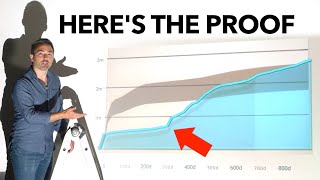
Changing title from 'Asteroids: Earth's Biggest Threat' to 'These Are the Asteroids to Worry About' boosted views from ~1.5M to 14M.
MrBeast makes 2-3 thumbnails per video and swaps them based on performance; no one knows beforehand which will work best.
Using accessible titles like 'The Simplest Math Problem No One Can Solve' instead of 'Collatz Conjecture' reaches broader audiences and teaches more people.
Optimizing titles/thumbnails funds better science documentaries with experts, props, animations, and research.
Derek worries about experimenting at the edge of truthfulness to promote a truth-seeking mindset, but uses scientific testing to find accurate yet clickable packaging.
Examples: 'Why the Neutron is the Hero of Nuclear Physics' changed to 'Why Einstein Thought Nuclear Weapons Impossible' increased views; 'Backspin Basketball Flies Off Dam' is more accurate than 'Strange Applications of the Magnus Effect'.
More views enable better video quality, creating a virtuous cycle: good packaging funds better content, which attracts more viewers.
Clickbait, when used honestly as 'legitbait', is a powerful tool for educational creators to reach wider audiences and fund high-quality content. The key is to test and optimize titles/thumbnails without misleading viewers, creating a symbiotic relationship between views and video quality.
What two metrics does Derek say YouTubers need to optimize for success?
Watch time and click-through rate.
7:22
What is the difference between type I and type II clickbait?
Type I (legitbait) attracts attention honestly; type II (clicktrap) is sensationalized or misleading.
3:42
How many views did the asteroid video get after changing the title to 'These Are the Asteroids to Worry About'?
14 million views.
9:38
What term does Brady Haran suggest for honest clickbait?
Legitbait.
5:25
Why did YouTube decrease the importance of subscribers?
Because showing only subscribed content led to fewer clicks, less watch time, and less engagement.
2:14
What is the 'curiosity gap' in clickbait?
Giving enough information to make viewers curious but not enough to satisfy that curiosity.
4:13
How did Derek test titles and thumbnails before YouTube's real-time analytics?
He used Twitter and Patreon to get feedback.
15:19
What was the original title of the Magnus Effect video?
'Strange Applications of the Magnus Effect'.
0:32
What is the 'dead zone' in clickbait space?
Titles that are so unsensationalized as to be dull.
5:02
What does Jack Conte mean by 'adjusting your packaging'?
Knowing what you won't compromise on (the box content) and being flexible with the packaging (title/thumbnail).
13:49
Admitting clickbait weakness
Sets up the personal journey and the core problem the video addresses.
The clickbait paradox
Explains why clickbait persists despite universal dislike.
3:17Legitbait vs. clicktrap
Provides a clear, useful distinction between honest and deceptive clickbait.
5:25Asteroid video case study
Demonstrates the dramatic impact of title/thumbnail changes with concrete numbers.
8:47Educational value of legitbait
Articulates a compelling ethical argument for using clickbait to spread knowledge.
12:07Better titles improve accuracy
Shows that optimization often leads to more accurate and clear titles.
15:57[00:00] - Can I tell you something I'm bad at?
[00:02] I am terrible at making clickbait.
[00:05] Up until two years ago,
[00:06] my most popular video
[00:09] being dropped from a dam
[00:12] It takes off like a rocket and shoots out
[00:14] way further than you'd expect.
[00:16] This video was embedded
[00:18] on literally hundreds of news websites.
[00:20] And in its first week, it
[00:25] but almost none of those views
[00:29] Why?
[00:30] Because I gave it this thumbnail
[00:32] and I called it "Strange
[00:37] This video is sponsored by KiwiCo.
[00:39] More about them at the end of the show.
[00:42] Now, I believe within YouTube,
[00:43] I'm used as an example of how
[00:47] As if to demonstrate just how bad
[00:48] a title and thumbnail this is,
[00:50] someone else re-uploaded the
[00:53] "Basketball Dropped From Dam."
[00:55] And within a few weeks,
[00:58] tens of millions of views on YouTube.
[01:01] This is when YouTube gave
[01:03] That's the system that
[01:05] when someone else re-uploads
[01:08] but I still wasn't very good at clickbait.
[01:11] So for this video, I called in an expert.
[01:14] I wanted to see your reaction face.
[01:16] Can you give me like a reaction face?
[01:17] Like what's a good thumbnail face?
[01:19] - Oh, I got you.
[01:20] This is a thumbnail face.
[01:22] (Derek laughs)
[01:24] I have like 10, I go through
[01:28] (Derek laughs)
[01:30] And then we just take the best one,
[01:31] I probably have like
[01:33] and we can just Photoshop
[01:36] That way, I don't have to do it anymore.
[01:38] - When I started on this
[01:41] clickbait was less important.
[01:43] Subscribers were what mattered,
[01:45] because most of the views
[01:47] And videos went viral usually
[01:49] by getting a lot of attention elsewhere,
[01:51] like on Reddit or Facebook,
[01:53] not due to the YouTube algorithm.
[01:54] But once you had a big
[01:57] well, then your next video
[02:00] from those subscribers.
[02:01] So YouTube would take that popular video
[02:03] and share it with more people.
[02:04] And so you'd get more subscribers
[02:06] in a positive feedback loop.
[02:09] But soon, YouTube realized
[02:12] the best experience for the viewer.
[02:14] They discovered that
[02:17] from channels they were
[02:20] less watch time and less engagement
[02:22] with the site as a whole.
[02:24] Plus, they knew that
[02:26] to drive traffic to viral hits was risky,
[02:28] since those other platforms might disable
[02:30] the traffic at any time.
[02:32] So they needed to make YouTube
[02:35] They wanted people to come to YouTube,
[02:38] see videos that interested them,
[02:39] click on at least one of them
[02:42] Ideally get sucked down
[02:45] and spend hours on the site
[02:48] The ultimate resource is people's time
[02:50] and attention, and every platform
[02:52] is trying to capture as
[02:56] So, to make YouTube
[02:58] they had decrease the
[03:01] make it less like a podcast app
[03:03] where you only get the
[03:05] and more like Reddit,
[03:06] where stuff with the most
[03:10] But that necessarily meant increasing
[03:12] the importance of clickbait.
[03:14] Now, there seems to be a paradox
[03:17] People almost universally
[03:21] but you also see it everywhere.
[03:23] So why is this?
[03:25] Well, one of the problems
[03:27] on the definition of clickbait.
[03:29] When I google it, the top definition is,
[03:31] on the internet, content
[03:34] is to attract attention
[03:36] to click on a link to
[03:39] We could call this type I clickbait,
[03:42] and there doesn't seem to
[03:44] I mean, if you didn't
[03:46] and get people to click on your links,
[03:48] then you wouldn't really
[03:50] But there is a second definition.
[03:52] One that I think more people ascribe to,
[03:54] which is something such
[03:57] to make readers want to
[03:59] especially when the link leads to content
[04:01] of dubious value or interest.
[04:04] Wikipedia says, "A defining
[04:07] is that it is sensationalized
[04:09] And it also talks about teasers
[04:11] that intentionally withhold information
[04:13] to exploit the "curiosity gap."
[04:15] They give you enough
[04:18] but not enough to satisfy that curiosity.
[04:21] Here are two actual titles
[04:25] Nine out of 10 Americans
[04:27] about this mind blowing fact.
[04:30] And someone gave some kids some scissors.
[04:32] Here's what happened next.
[04:34] I think we can all agree
[04:36] of bad type II clickbait.
[04:39] Now, imagine a clickbait
[04:42] you have how misleading
[04:45] And on the other, how much information
[04:47] is intentionally withheld
[04:50] Well, then these two titles
[04:54] And these are the zones
[04:57] At the other extreme,
[04:58] you have things that are so
[05:02] You could call this the dead zone.
[05:05] Now, here is where you would find
[05:07] "Strange applications
[05:10] I mean, I didn't tell you
[05:13] Now, in the middle is where you
[05:17] But honestly, I think type
[05:20] are so different, that
[05:22] the same word for them.
[05:23] Instead of type I clickbait,
[05:25] my friend and YouTuber, Brady
[05:29] I mean, it might sound
[05:33] Instead of type II clickbait,
[05:34] we could use clicktrap,
[05:40] What's important to recognize
[05:43] there is no one true title and thumbnail.
[05:47] Each video could have
[05:49] of different legitbait titles.
[05:51] For example, how does a zero-G plane work?
[05:55] I went on a plane that does
[05:58] What happens to fire on a zero-G plane?
[06:01] Now, the most enticing
[06:04] are found close to type II clickbait.
[06:07] I'm reminded of the infographic
[06:09] showing that on social media,
[06:11] the greatest engagement
[06:13] of what's allowable.
[06:14] But remember that everyone's
[06:17] is different, and everyone's perceptions
[06:19] of words and images are different.
[06:20] So these are not clear boundaries.
[06:22] They're actually kind of fuzzy.
[06:25] What for one person might be legitbait,
[06:27] for someone else, could be a clicktrap.
[06:30] What's clear is that on a site
[06:32] where click-through rate is important,
[06:33] clickbait of all types is inevitable.
[06:36] How important to a video's success
[06:38] is the title and thumbnail?
[06:40] - Very important. Of course.
[06:41] If they don't click on the video,
[06:42] they don't watch it.
[06:43] You can't get 10 million views
[06:45] unless 10 million people
[06:48] So, I mean, it's literally that simple.
[06:50] They don't click on it,
[06:52] - So, why is clickbait everywhere?
[06:55] Well, because it works.
[06:57] More enticing thumbnails get more clicks.
[06:59] Despite some people's claims
[07:01] that they won't click or they'll unsub,
[07:03] it's just like evolution.
[07:04] Whatever survives, multiplies
[07:09] If you don't begrudge
[07:11] so it can reach the highest leaves,
[07:13] can you begrudge a YouTuber the red arrow
[07:16] that allows them to
[07:18] I talked about this in
[07:21] To be successful as a YouTuber,
[07:22] you need to optimize two things,
[07:24] watch time and the click-through
[07:27] That's the number of times
[07:28] the title and thumbnail are clicked,
[07:29] divided by the total number
[07:32] That's the number of impressions.
[07:34] Now at the time,
[07:34] this was something of a revelation for me
[07:37] because I always thought my
[07:39] And then a title and thumbnail
[07:41] that adequately represented
[07:43] But now I've realized that
[07:46] is at least half the job.
[07:49] This is not just because
[07:51] get you more clicks,
[07:52] but because better titles and thumbnails
[07:54] will get you way more impressions.
[07:57] YouTube has limited real estate
[07:59] with which to show you
[08:02] And so it's not enough
[08:04] even if people watch all of it,
[08:06] you also have to make
[08:08] that gets clicked,
[08:10] with other really good
[08:12] That's the only way you can expect YouTube
[08:14] to give you more impressions.
[08:16] Now, the big development
[08:19] is YouTube introduced real-time metrics
[08:21] like views, impressions
[08:24] Now, I suggested this
[08:26] So what you can bet will happen
[08:28] is that creators will launch a video
[08:30] and then they'll be sitting there
[08:31] with all these different
[08:33] and they'll be swapping them out
[08:35] and looking at what that
[08:38] and then going with the one
[08:39] that leads to the greatest
[08:42] And this is basically what has happened.
[08:45] Let me give you my favorite example.
[08:47] Last year, I made a video about asteroids,
[08:50] which I thought was really good.
[08:51] I called it "Asteroids:
[08:54] which is something Stephen Hawking said.
[08:56] And people were very
[08:58] They thought it was maybe one of my best,
[09:01] but the performance
[09:03] In its first day,
[09:06] out of my previous 10 videos.
[09:09] It was probably on target
[09:10] for about one and a half million views.
[09:13] So I tried different titles and thumbnails
[09:15] like, "Asteroid Impact:
[09:18] Or "Asteroid Impact: What Could We Do?"
[09:20] But none of these changes
[09:23] And then on day three after launch,
[09:25] I changed the title and thumbnail
[09:27] to "These Are the
[09:30] And immediately the video
[09:33] It quickly shot up from almost
[09:36] to my best.
[09:38] It now has 14 million views.
[09:42] Nothing about the video changed,
[09:43] just that one image and 38 characters.
[09:47] But because of that, the video has reached
[09:49] nearly 10 times as many people
[09:52] And the title and thumbnail
[09:55] what the video is about.
[09:56] I mean, sure, there's a curiosity gap,
[09:58] but you couldn't explain the whole concept
[10:00] in the length of the title.
[10:02] So if you see a YouTuber
[10:05] this is why.
[10:07] Because that effort can be
[10:10] I've seen people
[10:12] because they think the creator
[10:13] is trying to dupe their audience,
[10:14] get them to click on the
[10:16] but that's not it.
[10:18] The whole point is to get YouTube
[10:20] to show the title and
[10:22] We're trying to increase
[10:25] which is heavily dependent
[10:28] Now, a lot of my recent videos
[10:32] There's an initial spike
[10:34] and then a dip, and then a second bump
[10:37] after I have figured out a
[10:40] I change the title and thumbnail
[10:41] and I watch the real time view graph.
[10:44] What I'm looking for is a
[10:47] Sometimes there's no change,
[10:51] but on occasions, when you
[10:53] well then, you know you've found a winner.
[10:56] This is something all the
[10:58] Not even Mr. Beast knows exactly
[11:00] which thumbnail will work best beforehand.
[11:02] Have you ever changed
[11:05] and then the video did better?
[11:06] - Oh, of course.
[11:07] So everybody, I usually make
[11:10] and then if it's not
[11:12] we usually just swap 'em out
[11:15] 'cause the thing is like,
[11:17] I mean, you could know if you
[11:21] that could just predict what
[11:23] but you know, usually...
[11:25] Like, you can do hide and seek.
[11:26] You don't really know if
[11:28] and then someone walking
[11:30] Or if you hiding a trash can and
[11:33] So, you know, just do both
[11:34] and then see which one interests
[11:37] - I feel the same way,
[11:38] but I do feel like you have a better sense
[11:40] of this than like most people.
[11:42] - Of course.
[11:42] I mean, no one gets 40
[11:45] (both laughing)
[11:47] - But what is the point
[11:50] If you're cynical,
[11:51] you might say it's all
[11:53] And while there are certainly
[11:56] to getting more views,
[11:58] As an educational YouTuber,
[12:00] I think there are two very good reasons
[12:02] for using excellent type I clickbait
[12:04] over more straightforward packaging.
[12:07] To understand the first reason,
[12:08] let's consider two
[12:10] for my most recent video.
[12:12] I called it "The Simplest Math
[12:16] but it's a video about
[12:18] So perhaps a more straightforward title
[12:20] would have been simply to call it that.
[12:22] The problem is, if I publish a video
[12:24] called the Collatz conjecture,
[12:26] the most likely people to click on it
[12:28] are those who already know
[12:31] And the vast majority of people
[12:34] So for them, the title is meaningless
[12:37] and only the very curious
[12:39] or those who really like
[12:41] In contrast, calling it
[12:44] No One Can Solve,"
[12:46] about the video to everyone.
[12:48] And this means more
[12:50] most of whom will never have heard
[12:52] of the Collatz conjecture.
[12:53] So I get to teach them something new.
[12:55] And since the video has a
[12:58] YouTube shows it to even more people.
[13:01] So if my aim is to increase
[13:04] in the world by the
[13:06] this is the way to do it.
[13:09] The second reason we need to
[13:12] is to support the major
[13:14] We are trying to make
[13:17] on every topic we tackle.
[13:19] That means traveling to meet
[13:22] hiring people to build props,
[13:24] make spectacular animations,
[13:28] We hire expert consultants
[13:30] to double and triple check our work.
[13:32] I don't wanna make vlogs.
[13:34] I wanna make science
[13:36] that put broadcast to shame.
[13:38] And to make this possible and sustainable,
[13:40] the videos have to get
[13:43] And to do that, we have to make
[13:44] the best titles and thumbnails we can.
[13:47] YouTuber and Patreon CEO, Jack Conte
[13:49] has talked about adjusting your packaging.
[13:52] The idea is know what
[13:54] what you won't compromise on
[13:56] and that stuff goes in the box.
[13:58] All the rest, like what
[14:00] that's the packaging.
[14:02] So the video is my focus
[14:04] are the packaging that
[14:07] so I can make the type of
[14:10] Now, is it ironic that a
[14:12] is to promote a true seeking mindset
[14:14] has to experiment at the
[14:17] in order to fulfill that purpose?
[14:18] It is something that I
[14:21] You know, when I did like
[14:24] it's like, well, what probability of death
[14:26] does there have to be for
[14:28] Like 50%?
[14:29] - I love how he always overthinks things.
[14:32] (laughs)
[14:33] He's like, is my life risked enough
[14:36] where I can put I risked my life?
[14:38] I only had a 9% chance of dying
[14:40] and I need at least a 13% chance.
[14:42] You're so funny.
[14:43] He was the same way two years ago
[14:44] when he asked me all this stuff.
[14:46] I was like, "Dude, just do
[14:49] - Yeah, I mean, obviously
[14:52] are not good.
[14:53] But what I realized
[14:54] is that I don't have
[14:57] This problem of getting the
[15:01] well, it's a scientific problem.
[15:03] We're just asking which accurate
[15:06] will get the most clicks
[15:09] And that's a problem we can use
[15:10] the scientific method to solve.
[15:12] So I've hired a couple
[15:14] and we spend a lot of time brainstorming
[15:16] and making titles and
[15:19] For example, on Twitter and Patreon.
[15:21] Varitasium titles and
[15:24] not because I'm better at it,
[15:25] but because of my team and our testing.
[15:28] If you have ideas about
[15:30] please get in touch.
[15:32] The results have often
[15:34] I mean, this video seemed
[15:37] when we excluded the word
[15:40] So it became simply The
[15:44] I thought these two titles
[15:47] but Patreon had a strong
[15:51] What's interesting about this research
[15:52] is that the more clickable
[15:55] often better represent
[15:57] Let me give you some examples.
[15:59] One thing I didn't expect
[16:01] the real time analytics tools
[16:03] and allowed title and thumbnail changes
[16:04] to affect impressions,
[16:06] was that it would also
[16:09] So here is an old video
[16:12] "Why the Neutron is the
[16:15] In hindsight, it's a weird,
[16:18] So I changed it to, "Why Einstein Thought
[16:21] Nuclear Weapons Impossible."
[16:23] It's clearer, more accurate.
[16:25] And this is what happened
[16:30] I changed "Strange Applications
[16:33] to "Backspin Basketball Flies Off Dam."
[16:36] Again, more accurate.
[16:37] And the video is now
[16:40] Probably 10 million more views
[16:42] than it otherwise would have had.
[16:44] Even anti-clickbait has proven effective.
[16:47] Here's a video I originally titled,
[16:49] "Are Negative Ions Good For You?"
[16:51] Which is a question nobody asked ever.
[16:55] Now, I changed it to,
[17:00] Seriously.
[17:01] And here's the result:
[17:04] One and a half million more views.
[17:07] I think looking at these examples,
[17:09] you could easily make the case
[17:10] that YouTube has made
[17:13] It has improved the clarity and accuracy
[17:16] of my titles and thumbnails.
[17:18] what is interesting to my audience
[17:19] and how to encapsulate
[17:22] and fewer than 50 characters.
[17:24] For those of you who worry that a focus
[17:26] on titles and thumbnails will prevent me
[17:27] from picking challenging science topics,
[17:30] well, I simply ask you
[17:33] from the last year or two,
[17:34] like the ones on Gödel's
[17:36] general relativity, Penrose tilings,
[17:38] the logistic map, Newton's
[17:41] the one way speed of light.
[17:43] Good titles and thumbnails
[17:45] to tackle these topics
[17:48] who have heard of them before.
[17:50] There is a symbiotic relationship
[17:52] between views and video quality.
[17:55] The more views we get, the more people,
[17:56] locations, props and equipment
[17:59] and research we can invest in.
[18:01] This makes the next video
[18:04] If we can be good at
[18:06] the ultimate outcome is better videos.
[18:09] That is something I think
[18:17] Hey, this video is sponsored by KiwiCo,
[18:20] a long time supporter of the channel.
[18:22] Now KiwiCo makes awesome
[18:24] including big kids like me.
[18:26] They have eight subscription lines
[18:27] targeted at different age groups,
[18:29] all the way down to newborns.
[18:31] What I love about KiwiCo crates
[18:32] is that they make learning fun
[18:33] and something to look forward to.
[18:35] I mean, when I pull out a crate,
[18:36] my kids just jump at the
[18:39] And all the materials you
[18:42] So there's no need to run to the store.
[18:43] You just open it up and go.
[18:45] My kids and I just built
[18:48] which, who knows, might be
[18:52] Now, the big idea is that
[18:55] kids learn about STEAM concepts.
[18:57] That is science, technology,
[19:00] And in addition to the project,
[19:02] there's a magazine with a lot
[19:04] So I think this is the best way to learn.
[19:06] By doing something
[19:09] it's how education should be.
[19:11] So if you wanna try it out,
[19:12] go to Kiwico.com/veritasium50,
[19:14] and you'll get 50% off your
[19:17] I will put that link
[19:19] So I wanna thank KiwiCo
[19:22] and I wanna thank you for watching.

⚡ Saved you 0h 19m reading this? Transcribe any YouTube video for free — no signup needed.