

DevOps in 2025: The Ultimate Roadmap
43sHigh-intent topic with a clear promise, engaging viewers seeking guidance.
▶ Play Clip"Delivers a solid, structured roadmap as promised, though the '2026' in the title is a slight oversell given the content is evergreen."
This video presents a structured, four-stage roadmap for learning DevOps in 2025, using a symphony orchestra analogy to explain the roles of various tools and concepts. The speaker emphasizes that DevOps is not an entry-level role but a skill set built on existing IT expertise, and outlines a clear learning order to avoid common pitfalls.
DevOps is one of the fastest-growing IT professions, seen as a future-proof alternative to roles threatened by AI, such as test engineers, database administrators, and data analysts.
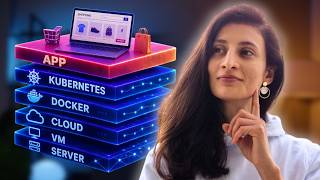
The entire DevOps roadmap is broken down into four stages or layers, each building on the previous one, to make learning manageable and avoid overwhelm.
This stage covers foundational knowledge: Linux (operating systems, shell, file permissions), Git (version control, branching strategies like Git Flow), and package management tools (npm, Maven, Gradle).
Key topics include containerization with Docker, artifact repositories (like Nexus) for storing packages, and cloud basics (e.g., DigitalOcean, AWS) as the underlying infrastructure.
This stage focuses on Kubernetes (orchestration, self-healing, scaling) and advanced cloud platform skills, particularly AWS, including managed Kubernetes services like EKS.
Advanced tools include Infrastructure as Code (Terraform, Pulumi), Python for automation scripting, Ansible for configuration management, and monitoring/observability with Prometheus.
Security is not a separate tool but a mindset that must be integrated into every stage and tool, as each integration expands the attack surface.
The video concludes by emphasizing that this roadmap mirrors what experienced DevOps engineers are expected to know, and the speaker promotes their DevOps boot camp as a way to master these skills and excel in interviews and jobs.
Docker
tool
Git
tool
GitHub
tool
GitLab
tool
npm
tool
Maven
tool
Gradle
tool
Nexus
tool
Kubernetes
tool
AWS
tool
Azure
tool
GCP
tool
ECR
tool
EKS
tool
Jenkins
tool
GitHub Actions
tool
GitLab CI
tool
Terraform
tool
Pulumi
tool
Python
tool
Ansible
tool
Prometheus
tool
DevOps Boot Camp
service
Pulumi
link
What are the four stages of the DevOps roadmap?
Prerequisites, DevOps Fundamentals, DevOps Core, DevOps Advanced.
01:00
Why is Linux considered foundational in DevOps?
Almost every DevOps tool runs on Linux; it powers servers, containers, and cloud environments.
03:58
What is the role of Git in DevOps?
Git tracks changes and ensures team collaboration, acting like sheet music for the orchestra.
04:48
What is the difference between a registry and a repository?
A registry is the entire storage building; a repository is an individual room for a specific artifact type.
11:16
What is Kubernetes' self-healing feature?
Kubernetes automatically restarts services that fail or have issues.
15:42
What is the role of CI/CD pipelines in DevOps?
They orchestrate the workflow of building, testing, deploying, and monitoring applications.
22:39
What is Infrastructure as Code?
Tools like Terraform and Pulumi that automate the building of cloud infrastructure and Kubernetes from scratch.
24:48
What is the advantage of Pulumi over Terraform?
Pulumi lets you use familiar programming languages (Python, JS, Go) instead of a domain-specific language.
25:59
What is Ansible used for?
Configuration management: managing hundreds or thousands of servers consistently, patching, and keeping packages up to date.
29:48
Why is security important in DevOps?
Each integration expands the attack surface; security must be integrated into every tool and stage.
34:07
DevOps as Future-Proof
Positions DevOps as a resilient career choice against AI disruption, a key motivator for learners.
00:02Four-Stage Roadmap
Provides a clear, structured learning path that reduces overwhelm and improves efficiency.
01:00Prerequisites: Linux, Git, Package Managers
Establishes the foundational skills required before diving into DevOps-specific tools.
03:31Kubernetes as Orchestrator
Explains Kubernetes' role in managing containers, scaling, and self-healing, a core DevOps concept.
13:42CI/CD as the Conductor
Highlights CI/CD pipelines as the central orchestrator that integrates all DevOps tools.
22:10Security as Cross-Cutting
Emphasizes that security must be embedded in every layer, not treated as an afterthought.
34:07[00:02] Welcome to The Ultimate Guide to mastering develops in 2025 develops is one of the largest growing it professions and because of AI threatening to replace many roles like uh test Engineers database
[00:16] administrators data analyst and so on devops is becoming the futureproof alternative for all those engineering roles so if you have already recognized future engineering career but are abs abely overwhelmed and unsure where to
[00:32] start here is the clearest most straightforward learning path for you to straightforward learning path for you to learn devops now no matter how complex something is even if it's rocket science you can always break it down into
[00:45] manageable simpler pieces so instead of giving you this huge list and guide of learning devops where by the end you're already overthinking whether you really want to pursue devops or not I wanted to make it simplified and manageable so I
[01:00] broke the whole thing down into four stages or layers that each lead up to the next one and you will find this whole road map as a PDF below to serve whole road map as a PDF below to serve as your guide in your devops journey now
[01:14] picture this a symphony orchestra where you have various instruments like various devops tools that each play a critical role and you have the conductor
[01:26] who brings it all together and that conductor is the cicd pipeline which I conductor is the cicd pipeline which I also call the backbone of devops also call the backbone of devops orchestrating a harmonious flow of code
[01:39] builds tests and deployments so I want to explain to you all of devops with this analogy where at the end of the video you will understand that streamline Pipeline with all these tools is the Symphony of Music the orchestra
[01:55] produces and yes that's how much I love these things that I'm literally comparing an endtoend CSD pipeline to a beautiful Symphony of Orchestra so let's
[02:07] walk you through the devil's road map divided into four phases to help you become the Maestro of this Orchestra and here is an important part this is exactly the order in which you should learn these things to make your learning
[02:21] as smooth as possible because when you learn A New Concept usually you need to learn A New Concept usually you need to know some other underlying Concepts before that so knowing what to learn when and in which order will not only
[02:35] make your learning smoother because you will be building your knowledge in layers but also reduce the time you need to learn tremendously because you won't need to go back and forth getting stuck because you missed an important part
[02:49] before and this is exactly how we structured our Devil's boot camp to literally take you by hand and walk you from start to finish step by step from start to finish step by step without any detour and of course
[03:04] everything that I mentioned here you learn in detail and in depth in the devops boot camp before we dive into the road map it's important to understand that devops engineering is not an entrylevel engineering role instead it's
[03:17] a highly valuable skill set that Professionals in various it roles such as software developers looking to stand out or system administrators aming to stay relevant build on top of their existing EXP expertise so let's start
[03:31] with stage one which is prerequisite knowledge of devops so these are the things that you need to build before you even start with develop specific Technologies and Concepts and with Orchestra analogy first we need to tune
[03:46] our instruments so let's start with getting the basics right before we can even start first we have operating systems like Linux as the common stage
[03:58] for our Orchestra almost every tool in devops runs on Linux so you need to learn how to navigate Shell or manage processes and understand file permissions and so on so knowledge of Linux and Linux commands and scripting
[04:15] is foundational but very powerful part of devop skill set operating systems are basically Foundation of computing environments whether you want to run pipelines or spin up servers for kubernetes it's all powered by Linux
[04:31] most do containers use Linux images and as a devop engineer you will work most of the time with remote servers on cloud which use Linux operating system so this skill is as essential as you know like having a stage and a solid floor for the
[04:48] concert to even take place along next up we have git which you can think of like music sheets for the orchestra to make sure everyone plays from the common music sheets and things are documented transparently music changes are made on
[05:04] the Sheets first before they are played so git is like the sheet music it tracks changes and ensures that everybody in the team is playing the same tune so with Git You would need to learn about branching strategies like git flow and
[05:19] trunk based development and tools like GitHub and gitlab and so on and it's very important to understand that in devops we have this common concept that we call everything as code or X as code that
[05:33] includes other underlying Concepts like infrastructure as code configuration as code and so on so this is like an umbrella term and git actually plays a umbrella term and git actually plays a central part in all of these Concepts it
[05:46] means we code a lot of the configuration that previously were done manually on local computers of some Engineers so we Cod configuration we C infrastructure Cod configuration we C infrastructure creation we called the pipeline logic we
[06:00] code every type of automation logic in our systems and so on and that code will leave in a repository which all the team members can access and using various G features can collaborate on that code like you know creating merge requests
[06:16] resolving conflicts creating branches using various git workflows and so on so you need to learn those git features that let teams collaborate on code changes efficiently so this is another skill that you need across multiple
[06:32] tools and DeVos Concepts whether you are writing a pipeline or infrastructure configuration or kubernetes manifest files or application code or whatever next up we have build and package management tools now whenever you are
[06:46] developing an application you have an application code but we use bunch of libraries and modules basically code that other people have developed and are that other people have developed and are hosted on internet within our ation
[07:00] these libraries have versions and release Cycles um bugs get discovered in them or new features get added so you need to upgrade them to use the new versions of those libraries or dependencies for your application so for
[07:15] managing this list of dependencies for applications we have the dependency management or also called package management tools and there are different tools for different programming languages like we have npm package
[07:30] manager for JavaScript we have Gradle and Maven for Java applications and so and Maven for Java applications and so on similarly music Publishers distribute the right versions of the sheet music to ensure musicians have the most upto-date
[07:43] ensure musicians have the most upto-date music notes in front of them so the last tool set of devops Essentials or prerequisites is the application dependency management or packaging tools as I said these tools resolve
[07:57] dependencies handle any compatibility issues between those dependencies but also allow to run automation tests on your application code and so on so these package manager or packaging tools basically we're creating jar files from
[08:13] java applications or zip files from JavaScript applications and so on but now that we package everything as Docker images those tools are not needed for that specific use case and we're going to come to the package repositories or
[08:28] artifact repositor to understand how that affected the distribution of application packages and that leads us to the stage two of devops which is devops fundamentals and first we have containerization with a specific popular
[08:45] containerization with a specific popular most popular container tool Docker now again back to our analogy the music instruments need a case to be safely transported to the concert venue right imagine if you just threw them all
[09:00] inside a car without a case not only they may get damaged but it would be hard to untangle them from each other once you unload them from the car also think about this some instruments actually have additional parts or maybe
[09:16] some replaceable pieces that the player can actually mount on the instrument itself so with the case you can actually pack everything that the instrument needs inside the case so container technology like Docker is the instrument
[09:32] case that ensures that every musician's instrument is safely packaged easy to transport and with all the needed Parts packaged inside ready to play upon arrival the same way Docker containers encapsulate an application and its
[09:48] dependencies and everything that application needs to run ensuring its consistency no matter where the application gets deployed so a learning application gets deployed so a learning Docker is an absolute essential skill of
[10:02] a devops engineer next up we have what's called an artifact repository now those instruments need to be stored somewhere safely right so we can grab them anytime we need they need to be I don't know maybe temperature controlled in know
[10:18] locked room that someone doesn't steal them and also organized in a nice way so that we can grab them easily whenever we need to use them so that's where artifact repositories or artifact registry comes in so artifact registry
[10:34] is like a storage for all the different types of instruments and as I said types of instruments and as I said before Docker we had instruments stored without cases in the storage rooms like having jar files and War files and zip
[10:48] having jar files and War files and zip files built with those packaging tools just lying around without this common packaging or cases and Registries like packaging or cases and Registries like Nexus for example supported storing
[11:02] instruments so no matter which programming language you use to WR appication you can store the artifact of that specific text deck in Nexus because that specific text deck in Nexus because it supports different types of artifacts
[11:16] and also very important to note the difference between registry and difference between registry and repository registry is like a storage building or a whole section for storing the artifacts and repositories are like
[11:30] the artifacts and repositories are like individual storage rooms inside and each room has one specific type of instruments stored in it so you had one room that stored only violins let's say you had another room that stored only
[11:46] saxophones and so on so a repository is one specific room that stores one specific type of instrument while registry is the entire building with all these different rooms and with Docker as I said the change was that those
[12:00] instruments are now stored with their cases instead of just sitting there cases instead of just sitting there without the casing and Nexus itself has a Docker repository type as well but as you probably have learned with the
[12:13] you probably have learned with the docker we actually have specific Docker Registries for storing only Docker images where you have rooms for each instrument so Docker repositories within that registry but the instruments are
[12:27] stored with their corresponding cases and when we want to deploy containers we can grab the image from that Docker repository now the next one is cloud
[12:39] Basics now for the concert to even take place we need an actual concert hall or building where the concert will take place so that is a cloud infrastructure all the servers that need to run the systems so think of the cloud platform
[12:55] as the concert hall or the venue where the Orchestra is playing the audience is sitting all the lights and electricity the heating and so on that make up that building so Cloud platforms provide the underlying infrastructure the servers
[13:11] that are connected with networking configuration to power and run all those services and applications so you need to learn how this infrastructure is set up the all the servers and the storage and the networking Basics to connect those
[13:26] things together to understand how all this underling infrastructure actually works now that we have all the instruments in place and packaged and stored safely and even being transported safely now it's time to get everyone in
[13:42] their place let people in and set the stage so this is stage three of devops which I call devops core and the First Tool in the stage is kubernetes so think
[13:55] Tool in the stage is kubernetes so think of kubernetes as an orchestra manager who prepares the stage who lets people in brings in the players on stage and so on those instruments that are in boxes or containers need to be unpacked and
[14:10] deployed placed on stage to be played right so kubernetes assigns the seats distributes the music sheets and ensures that every musician is present and ready to perform it takes the containers or the instruments from the cases and
[14:26] arranges them into a cohesive group managing their placement load balancing and scaling and so on and if one violinist for example suddenly cannot play anymore kubernetes will quickly find a backup or adjust their
[14:41] arrangement to compensate for that loss so in the same way kubernetes is this powerful technology that runs all the services smoothly making sure all the operations is actually done seamlessly so here is an easy explanation of
[14:58] kubernetes for you in just a few sentences imagine taking hundreds or thousands of Linux servers on cloud and putting a layer on top of that an abstraction layer which is kubernetes that turns these machines into one giant
[15:15] powerful machine and thousands or tens of thousands of services and applications can run on this one giant machine and talk to each other and connect with each other as if they were
[15:28] really on the same machine so kubernetes basically takes care of networking between these thousands or hundreds of servers to make sure that we can deploy all these applications and services on top of that in an easy way but that's
[15:42] not all once the applications and services packaged in containers get deployed on kubernetes kuet also becomes your operations engineer that works 24/7
[15:54] for you so if any service dies or has any issues it basically just goes and restarts them automatically which is this famous self-healing feature of kubernetes kues also allows you to run multiple clones of each application with
[16:09] deployment components so when you add a new replica it basically automatically reconfigures everything on the Fly Like updating the service and load balancing to this additional replica of the application to Route some traffic to
[16:24] that new instance now it was obviously clear that I would spend most time talking about kubernetes again because I love kubernetes and I could talk about love kubernetes and I could talk about it for hours but let's move on to the
[16:37] next important Concept in the devops core phase which is Advanced Cloud platform skills and specifically with one of the largest public Cloud
[16:50] one of the largest public Cloud providers such as AWS now let's say your Orchestra is so popular that more and more people want to hear you play so you more people want to hear you play so you suddenly need a larger venue or larger
[17:05] Cloud infrastructure to accommodate for that and obviously the larger the venue the more complex it becomes to manage right larger venues have more features they have higher security demands and measures uh they have more sections more
[17:20] complex infrastructure requirements and so on you also have bigger stage so maybe you need more players and more instruments so it's a devops engineer you will need to learn how to manage all this complex infrastructure and how to
[17:34] scale infrastructure and use kubernetes your general manager to fill the stage allow more people to come in as an audience so if that smaller Concert Hall
[17:46] was a simple Cloud platform like digital ocean for example Now we move to more ocean for example Now we move to more complex Cloud giants like AWS or Azure or gcp uh where the the services are more powerful and flexible but also more
[18:03] difficult so you go from easy high level to complex low-level infrastructure configuration so kubernetes will also use the venue the cloud environment for more advanced use cases using various features that the venue offers to run
[18:17] everything smoothly and efficiently and as devops engineer you will need to as devops engineer you will need to learn one of these Cloud platforms AWS is largest one that's why I always recommend to learn AWS first because the
[18:31] good news for you is the concepts are very much transferable from one large Cloud uh platform to another and as Cloud platforms provide hundreds of Cloud platforms provide hundreds of services obviously you need to learn the
[18:46] foundational set of services specifically as a DeVos engineer and some of those services are networking and compute Services storage configuration as well as general account Security Management Services for Access
[19:02] permissions and so on now those large Cloud platforms actually have own services for everything for example imagine if that larger venue had their
[19:14] imagine if that larger venue had their own storage rooms for the instruments or containers the same way AWS actually has its own Docker registry called ECR where you can store the docker images so the larger the cloud platform the more
[19:28] Services they usually provide inhouse so you don't have to use those external third party tools but you can basically do all the things in that cloud itself which has a disadvantage to be logged into that cloud platform so people still
[19:42] prefer to use independent open source third party services but they do provide those services for convenience to use on the cloud platform the cloud platform itself so imagine if the venue had their
[19:56] own manager for the entire cont conert remember the main manager that basically runs everything and oversees everything is kubernetes so instead of the orchestra hiring the manager imagine they used the experience manager that
[20:10] the concert hall itself provided and this would have a lot of advantages because again let's say they have an experiened manager um also the manager knows better than you how the venue is actually set up and how it works so they
[20:23] can run these things without you like managing the building and tickets and all the infrastructure but you still need to train them on your Orchestra specific needs like managing your players or Distributing the sheets or
[20:37] instruments making sure that it all runs smoothly well that is an analogy for smoothly well that is an analogy for managed communties cluster on cloud platforms such as eks on AWS so the cloud provider manages a lot of the work
[20:55] and administration of kubernetes For You especially the parts related to the cloud resources themselves and they do it better often than you so you can just focus on running your services and applications or in this case on the
[21:10] orchestra part instead of all the work around the concert organization and because commes is so complex a lot of companies a lot of the projects actually
[21:22] prefer to use a cloud-managed commun cluster because it reduces the complexity of managing commence cluster yourself which is a very challenging work so that complexity and effort is reduced tremendously and that's why
[21:38] services like eks is actually widely used and a lot of devops Engineers are expected to learn and know how to run and use those Services because even if manag commun clusters are easier to run they're still complex to use and manage
[21:54] because there's still a lot of work that remains on your side that's how complex remains on your side that's how complex kubernetes is now it's time to actually play the music we have prepared everything all around it but now it's
[22:10] time to play so we have the whole Orchestra set up everything is organized Orchestra set up everything is organized players or musicians are on stage but there is the most important thing or element missing here which is the
[22:25] conductor you know the guy waving the want so bring in the conductor the CIA City Pipeline and this is literally where magic happens why is it important
[22:39] because conductor an orchestra sets the direction sets the pace they give cues to when to start playing in which order so that's the cicd platform the
[22:51] orchestrator of all things conductor who leads the entire performance ensuring all musicians tools and processes are in sync playing their parts flawlessly and maintaining the rhythm of the piece the conductor is at the heart of the
[23:07] orchestra itself the conductor is basically the element that brings together all the musicians ensuring that everyone plays in harmony keeps up with the pace transitions smoothly from one movement to the next and the same way
[23:21] cicd pipelines actually coordinate the workflow of building testing deploying monitoring applications and that's why cicd tools like Jenkins GitHub actions
[23:34] cicd tools like Jenkins GitHub actions gitlab C and so on integrate with every single one of these tools that I mentioned because it needs to talk to each of the tools to execute them to tell them what to do when in in which
[23:48] order when to build Docker image when to push it to the repository when to deploy it to C cluster so learning CSD platforms as Devil's engineer is the absolute core skill set but you also need to understand all the other tools
[24:04] first because you will be automating workflows and tasks of those tools with the cicd technology and that's why devops Engineers need to know such wide variety of tools because they literally have to take them and integrate them
[24:19] with each other to build this complete full devops processes and finally we get to stage four of devop which I call devops Advanced so we mastered the core of devops which means we already are
[24:36] able to build complete and end to end devops automation processes now it's time to take it a level up to the absolute Mastery level of devops and as
[24:48] I said here you become the Maestro mastering the tools that make the mastering the tools that make the orchestra truly world class first we have infrastructure as code and these are the tools such as terraform or pumi
[25:04] that give you this power in your hands to automate almost everything to build up the entire Cloud infrastructure in kubernetes on top of it from scratch
[25:16] using automation scripts so think of infrastructure as scripts so think of infrastructure as code tools like composer of music so terraform and pumi can be used by teams to manage resources across multiple
[25:32] to manage resources across multiple clouds to track any changes to maintain consistency and as I said build everything from scratch with a really high level of complexity now before moving on I actually want to give a
[25:47] shout out to pomi and thank them for sponsoring this video palom is actually a game changer for those working with infrastructures code because unlike
[25:59] tools like terraform that use their own domain specific languages palumi lets you use the programming language that you already know and use extensively like python JavaScript typescript go lank whatever you are already using in
[26:15] your text dech and this means you can use your favorite code editor and your favorite text deck to write infrastructures code leveraging all the great features like error checking autocomplete refactoring and debugging
[26:31] tools that you're already comfortable with and familiar with so a huge benefit of pumi is its flexibility pumi integrates very easily with cicd pipelines and works with all major Cloud providers and essentially it's a great
[26:47] tool for both developers and operations teams now since we're moving into an aid teams now since we're moving into an aid driven World poi's latest feature pomi co-pilot can actually help you generate infrastructure code by simply describing
[27:01] infrastructure code by simply describing what you need in natural language but it goes beyond that by asking questions you can actually get deeper understanding of can actually get deeper understanding of your team's specific Cloud usage and
[27:15] valuable insights of your infrastructure for example you can ask pumi co-pilot whether you have any unused AWS resources and you can immediately reduce your AWS costs by simply removing those unused unnecessary Services pumi is open
[27:33] source so you can use it for free but if your team wants to unlock Enterprise features including pumi cloud with its automation API policies code and the
[27:45] popular palumi deployments feature you can use my code Nana 500 and you will can use my code Nana 500 and you will get $500 worth of credits for the Enterprise version I will leave the link in the video description of course and
[27:59] in the video description of course and now let's get back to the next skill in the delas road map which is yet another automation tool and a programming automation tool and a programming language Python and while terraform or
[28:12] language Python and while terraform or pumi are composers of the music that pumi are composers of the music that Orchestra plays think of python as your versatile assistant it's like your Runner assistant so python can be used
[28:26] Runner assistant so python can be used to basically automate any type of small repetitive task that you can imagine on a very flexible level you can write scripts to interact with apis you can write scripts to monitor different tasks
[28:41] you can write scheduled scripts and so on and as a devops engineer learning a on and as a devops engineer learning a programming language such as python is a huge Advantage because in devops everything is literally about automating
[28:56] and making things efficient you will often need to automate tasks and integrate systems and troubleshoot complex issues so python can be that glue that basically lets you integrate different systems or it could be just a
[29:09] simple tool that you can delegate some repetitive manual tasks that need to be run consistently on multiple systems maybe and python is one of the best maybe and python is one of the best choices in automation scripting because
[29:24] it's very easy to understand especially For Engineers coming from non-developer Network engineers and so on they can easily Learn Python it's flexible and
[29:36] more importantly it has a very large ecosystem of Library specifically for automation use cases then we have yet another popular automation tool enzi
[29:48] with enzi you can actually think of it as section leaders to each group of musicians in your orchestra that basically ensure can consistent guidelines within that group of players and make sure that all musicians within
[30:04] their section are in sync playing their parts correctly all the time and adhering to the overall vision of the conductor so the responsibility of enable in this case is to coordinate repetitive tasks which are very critical
[30:20] for the overall configuration of the systems like tuning instruments before a performance so everyone is prepared and L and en specifically is a tool that helps you manage hundreds or thousands of servers in a consistent manner
[30:38] keeping the um operating system packages up to date on all those servers patching those servers and so on so combination of these automation tools such as infrastructure as code tools and configuration tools like anible with an
[30:54] addition of python for edit flexibility will basically help you create systems that even if you replaced musicians or even if you changed venue everything will still run consistently
[31:10] with no hiccups everyone will still know what to do and how to do it so this infrastructure and configuration automation is like your well-defined processes and systems so using this tools you can basically replicate the
[31:24] same experience and music with any same experience and music with any players on any venue and the same way for example if your entire infrastructure goes down and you lose
[31:36] all the servers and your Cate cluster crashes and you cannot recover that old crashes and you cannot recover that old running system because you have scripted everything from scratch you can use the same script to recreate exact same
[31:51] replica of the system within minutes because all the logic and all the configuration is direct ly baked into those terone pumi enable and Python
[32:03] scripts and that's how powerful automation is especially in complex environments where you have thousands of servers because imagine manually creating and configuring and updating and keeping track of such a huge and
[32:18] complex infrastructure that's why knowing these tools is absolutely essential especially if you join a company that has complex infrastructure so these skills will make you an extremely valuable engineer now we're
[32:34] extremely valuable engineer now we're not fully down here because we want to achieve complete Mastery we don't want to just be average and that's where the final piece of the automation tool set comes in in devops advanced stage which
[32:49] is monitoring and observability and specifically with one example of a popular observability tool is Prometheus especially in a community's world think about Prometheus as the audience listening carefully to the orchestra's
[33:05] listening carefully to the orchestra's performance basically having the real life experience of how things are going identifying immediately when something feels a little bit off like the player is out of sync or a note is missed they
[33:21] analyze the performance and provide detailed feedback to ensure continuous Improvement of the performance so Prometheus or observability Tools in general they capture realtime metrics from the systems the infrastructure
[33:37] applications the kubernetes platform itself so basically all the moving parts of the system notices any spikes in usage any downtime and so on much like an audience will detect errors in a performance so these are the four stages
[33:54] or four parts of learning devops that each represent a layer of devops knowledge that you can build on top of now there is one important element that
[34:07] now there is one important element that is it's not really a tool or a concept that you can learn in isolation but rather something that is ingrained or should be ingrained throughout the entire process of develops and as part
[34:19] entire process of develops and as part of each and every single technology that of each and every single technology that we discussed and that is security and security security is especially important skill set from a perspective
[34:32] of a company or an employer and security is an extremely important but often kind of overlooked skill set but it needs to be taken very seriously imagine with our
[34:46] analogy someone changed the notes of the best players for example they will be completely off tune and ruin the concert or let's say someone impersonated the conductor you know the guy who controls who does what in which order so they can
[35:01] take over and do evil stuff and completely ruin the music or let's say someone broke into the instrument storage and broke the instruments and damaged the entire room or manipulate it secretly one of the instruments so for
[35:18] secretly one of the instruments so for every part of the process we need to have security measures in place like the guards at the entrance that validate the entrance tickets to the concert making sure that nobody comes in that disrupts
[35:31] the concert making sure the storage rooms are locked and only authorized people have access to them making sure that no one can impersonate the conductor so security is kind of this hidden thing that should exist
[35:45] everywhere and you only notice its absence if something bad happens so security as I said is extremely important especially in devops where so many different Technologies are integrated with each other where every
[35:59] single integration actually exposes in a tech surface so that means while learning each and every one of those tools you need to learn them with the
[36:12] security best practices as well and as I mentioned at the beginning you learn every single one of those tools in exactly this order in depth in the devops boot camp and if you check the devops job descriptions no matter in
[36:27] which country or which company you will see that this is a pretty complete list of what an experienced devops engineer is actually expected to know and what we
[36:41] teach proficiently in our devops Bo Camp which means we take even beginners of devops but we don't just prepare you with some entrylevel devops knowledge just enough to get you an interview or just enough to get your foood into a
[36:57] devop job because that's not a goal to strive for that's a very low aim instead we prepare you to crush any devop interview to stun your interviewers making them question how come you know all this stuff even though you don't
[37:12] all this stuff even though you don't have any devops work experience and have any devops work experience and perform confidently in your devops job after you actually get hired so that's the level that we are aiming for and
[37:25] that's what we prepare you for with our devops boot camp now I hope this video gave you some guidance in your journey of learning devops if you did please let me know in the comments what was the most interesting or most helpful part of
[37:41] this road map and don't forget to grab your learning path as well to help you in your develops journey and with that thanks for your time and see you in the thanks for your time and see you in the next video


⚡ Saved you 0h 37m reading this? Transcribe any YouTube video for free — no signup needed.