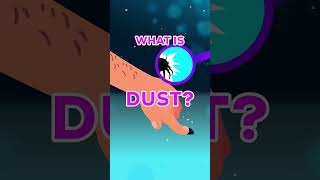

What's Really in Your Dust?
45sReveals the shocking hidden contents of household dust, including dust mite feces and particles that enter your bloodstream, triggering curiosity and disgust.
▶ Play Clip"The title promises a surprising revelation and delivers with intriguing facts, though it could have been more concise."
The video reveals the surprising composition and impact of household dust, explaining that it contains dead skin, textile fibers, and microscopic mites, while also highlighting the beneficial role of dust in ecosystems and the presence of cosmic dust from space.
Household dust is a mix of soil, outside particles, and tiny textile fibers from inside the home, along with dead skin and hair.
One gram of dust can hold thousands of dust mites, whose fecal pellets contain proteins that can weaken airway protective barriers, causing common allergic reactions.
Particles below 2.5 micrometers can enter the lungs and cross into the bloodstream, contributing to millions of health issues.
Saharan dust, about 28 million tons annually, replaces phosphorus in the Amazon soil, preventing the rainforest from starving.
Earth receives over 5,000 tons of comet and asteroid dust each year, meaning household dust contains a few nanograms of stardust.
Dust is not just a nuisance; it plays a vital role in ecosystems and even contains particles from space, making it a fascinating and complex substance.
What are the main components of household dust?
A mix of soil, outside particles, textile fibers, dead skin, and hair.
00:02
How many dust mites can one gram of dust hold?
Thousands.
00:17
What health issue can dust mite proteins cause?
They can weaken the airway protective barrier, causing allergic reactions.
00:17
What is the size threshold for particles that can enter the bloodstream?
Below 2.5 micrometers.
00:31
How much Saharan dust reaches the Amazon each year?
28 million tons.
00:46
What nutrient does Saharan dust provide to the Amazon soil?
Phosphorus.
00:46
How much cosmic dust does Earth receive annually?
Over 5,000 tons.
01:00
Dust Composition
Reveals that dust is not just dirt but a complex mix of organic and inorganic materials.
00:02Allergy Mechanism
Explains the biological mechanism behind dust allergies, linking mites to airway issues.
00:17Ecosystem Dependence
Shows how dust is essential for rainforest survival, highlighting unexpected ecological connections.
00:46Stardust in Your Home
Connects everyday dust to cosmic phenomena, offering a poetic and surprising perspective.
01:00[00:02] of household dust comes from dead skin and hair. It's mostly a mix of soil, outside, along with tiny textile fibers from inside your home. But, that's not all. 1 g can hold thousands of mites, microscopic spider relatives that feed
[00:17] thousands of their fecal pellets. When inhaled, their proteins can weaken your airways' protective barrier, causing one of the most common allergic reactions on the planet. The smallest particles are even worse. Below 2 and 1/2 micrometers,
[00:31] your lungs and cross into your bloodstream, contributing to millions of make rain. >> [music] particle, giving water vapor something to condense on. That's how 28 million
[00:46] tons of Saharan dust replaces the phosphorus tropical rains wash from the Amazon soil every year. Without it, the rainforest would slowly starve. And Every year, Earth gets showered with
[01:00] over 5,000 tons of comet and asteroid dust. So, the next time you dust, remember, for every pinch of regular household dust, there's a few nanograms household dust, there's a few nanograms of stardust.


⚡ Saved you 0h 01m reading this? Transcribe any YouTube video for free — no signup needed.