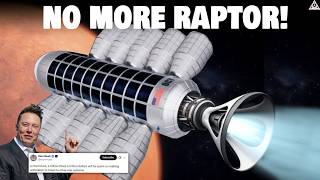

10g of Antimatter vs. Mars in 1 Month?
43sThe mind-boggling contrast between 10 grams and a Mars mission hooks viewers instantly.
▶ Play Clip"Delivers a detailed, physics-grounded breakdown of antimatter propulsion, though the title overhypes 'reveals' when it's a speculative concept."
Elon Musk's June 2026 post on X about spending a septillion dollars on antimatter propulsion, endorsed by NASA head Jared Isaacman, signals a potential shift toward antimatter-powered deep space travel. The video explains antimatter physics, engine concepts, and the immense engineering and cost challenges, concluding that while physically possible, it requires unprecedented civilizational ambition.
10 grams of antimatter could reach Mars in a month, compared to months with chemical fuel.
On June 20, 2026, Musk posted on X about spending septillions on antimatter; Isaacman replied 'I support antimatter propulsion.'
Antimatter particles are mirror images with opposite charge; matter-antimatter contact causes annihilation, converting 100% mass to energy via E=mc².
Antimatter releases 10 billion times more energy per gram than chemical fuel and 300 times more than nuclear fusion.
Chemical propulsion needs thousands of tons of methalox and 6-9 months; antimatter needs ~10g of antiprotons and about a month.
A Starship with antimatter thermal engine and liquid hydrogen could achieve delta V of 32 km/s, Earth-Mars round trip in ~7 weeks per leg, no orbital refueling.
NASA 1999 estimate: $62.5 trillion per gram; energy bill ~2,500 trillion kWh, requiring 80 years of global electricity production for 1g.
Humanity has produced less than 18 nanograms; annihilating all would boil a kettle of water.
A tungsten block (melting point 3,022°C) heated by antimatter annihilation; liquid hydrogen flash-boils to plasma, exhausting at 50-100 km/s.
Antiprotons ignite fusion/fission in nuclear fuel, acting as a match to a warehouse of explosives.
Charged particles from annihilation are funneled by magnetic fields into an invisible exhaust cone; pure physics, no physical nozzle.
Robert Frisbee's design: 700 km long, 400,000 tons, 165,000 tons of antimatter, reaching nearest star in ~50 years vs 70,000 with chemical.
Antimatter must be suspended in vacuum at < -272°C in magnetic bottles; power loss collapses system.
Tanks placed kilometers behind ship; 1g uncontrolled annihilation = 43 kilotons TNT (nearly 3 Hiroshimas).
At high velocity, interstellar hydrogen hits like bullets; nose becomes 1m thick radiation shield of uranium-238 or tungsten, which can also contribute thrust via fission.
Gamma rays absorbed by structure; need radiator panels stretching hundreds of kilometers.
Fuel is infinitely compact, but infrastructure (shield, radiators, storage) is enormous.
Musk and Isaacman envision kilometer-scale solar arrays, centuries of antimatter accumulation, and using it as energy currency for interstellar fleets.
Antimatter propulsion is physically possible but requires a scale of ambition never attempted; it's a long-term civilizational goal, not an immediate Starship upgrade.
What is antimatter?
Antimatter particles are mirror images of normal particles with opposite charge; contact causes annihilation.
01:12
How much more energy per gram does antimatter release compared to chemical fuel?
10 billion times more.
02:07
What is the estimated cost to produce one gram of antihydrogen (1999 NASA estimate)?
$62.5 trillion.
03:47
How much antimatter has humanity produced in total?
Less than 18 nanograms.
04:17
What is the melting point of tungsten?
3,022°C.
05:54
What is the delta V of a Starship with an antimatter thermal engine and liquid hydrogen?
32 km/s.
03:18
What is the explosion equivalent of 1 gram of antimatter?
43 kilotons of TNT (nearly 3 Hiroshimas).
09:50
What is the temperature required for antimatter storage?
Below -272°C.
08:57
Musk's Antimatter Post
First time SpaceX CEO and NASA head publicly endorsed antimatter propulsion.
00:15Energy Efficiency Gap
Quantifies the staggering advantage of antimatter over chemical and fusion.
02:07Handmer's Calculations
Provides concrete mission parameters showing feasibility with current Starship design.
03:05Tiny Total Production
Highlights the immense gap between current capability and needed scale.
04:17Central Paradox
Summarizes the core engineering challenge: compact fuel vs. massive infrastructure.
11:11[00:02] tons of chemical fuel for just 10 grams of antimatter, it could reach Mars in a single month. That's not science fiction. That's exactly what Elon Musk is pushing for. And the plan is so audacious that even
[00:15] the NASA administrator couldn't stay silent. And here is where everything starts. On June 20th, 2026, Elon Musk posted something on X that stopped the entire space community cold. He wrote, "In the
[00:29] dollars will be spent on making antimatter to travel to other star And right underneath that post, Jared Isaacman replied with four words, "I support antimatter propulsion." This was the first time the CEO of SpaceX and the
[00:45] head of NASA simultaneously went on record saying, "Antimatter is the real future of space travel." And right now, the only vehicle humanity has that's even remotely built for deep space travel is Starship. So, is this a sign
[00:59] that SpaceX is quietly laying the groundwork for an antimatter Starship somewhere down the line? But, before we get there, what actually is antimatter? even look like? Let's start with
[01:12] this before the rest of it makes any sense. Imagine standing in front of a mirror. The person staring back at you looks identical. Same face, same height, but their left and right hands are swapped. Antimatter works exactly like
[01:26] that. Every particle in the universe has a mirror image version of itself in the antimatter world. Identical in mass, but with the opposite charge. But, here's where the mirror analogy turns deadly. If you actually stepped through the
[01:39] glass and touched your reflection, both of you would instantly vanish. And every last bit of energy stored in your combined mass would be released at once. That is precisely what happens when matter meets antimatter. Physicists call
[01:52] it annihilation. 100% of the mass converts directly into energy, governed converts directly into energy, governed by Einstein's E 2 MC 2. No waste, no exhaust, nothing left over. No reaction in the universe is more efficient than
[02:07] that. Antimatter releases 10 billion times more energy per gram than burning chemical fuel and 300 times more than nuclear fusion. The Raptor engines on nuclear fusion. The Raptor engines on today's Starship convert roughly 0.001%
[02:22] of their fuel mass into energy. Antimatter converts 100%, not 1%, not Antimatter converts 100%, not 1%, not 10, 100. That gap, 10 billion times, translates into something almost impossible to wrap your head around in
[02:36] practice. To send Starship to Mars on chemical propellant, you need thousands of tons of methalox. That's why SpaceX has to pre-position fuel depots in orbit with dozens of launches just to fill up one crude mission. The trip still takes
[02:50] 6 to 9 months. With an antimatter plasma engine, the fuel load drops to around 10 g of antiprotons. 10 g to put a crude spacecraft on Mars in roughly a month. Impressive, right? Casey Handmer, CEO of
[03:05] Terraform Industries and the researcher whose technical write-up Musk shared to kick off the viral post, ran the numbers more precisely. A standard Starship, swap the Raptors for an antimatter thermal engine, fill the tanks with
[03:18] liquid hydrogen instead of methalox, and you get a delta V of 32 km/s, enough to fly from Earth to Mars and back on a single tank, each leg taking about 7 weeks, no orbital refueling, no 45-launch buildup, no waiting for the
[03:33] launch window that only opens every 2 years. Sounds incredible. Here's the problem. To make those 10 g of antimatter, how much would it cost? NASA estimated back in 1999 that producing a single gram of antihydrogen would run
[03:47] single gram of antihydrogen would run about 62.5 trillion or at 1999 dollar values. And the energy bill alone to make that 1 g would be roughly 2,500 trillion kilowatt-hours of electricity. For context, total global electricity
[04:02] production in 2025 was 31.78 trillion kilowatt-hours. In other words, if every power plant on Earth fed into a single antimatter factory and nothing else, you'd have to run it continuously for nearly 80 years just to produce 1 g
[04:17] of fuel. And the total amount of antimatter humanity has ever produced, every particle accelerator, every physics lab, CERN, Fermilab, DESY, all of them combined across decades of work, adds up to less than 18 nanograms. 1
[04:33] nanogram is 1 billionth of a gram. That entire stockpile, if annihilated all at once, would release just enough energy to boil a kettle of water. That's it. That's everything. Elon Musk is saying we need to spend a septillion dollars.
[04:48] That's 10 to the power of 24 to make this real. The physics doesn't say it's impossible. The physics just says the scale is unlike anything our civilization has ever attempted. But set that aside for a moment. Assume we
[05:01] somehow have a few grams of antimatter sitting in a container. What does the starship that runs on it actually look like? First thing to go, every single Raptor engine. Not because they're bad, they're some of the most advanced rocket
[05:14] engines ever built, but because they belong to a completely different era of propulsion. Like trying to bolt a horse-drawn carriage axle onto a fighter jet. In their place, SpaceX would have to choose between three fundamentally
[05:27] different engine architectures, each one more extreme than the last. The first is the most practical option for a Mars mission, and it's the one that gives you the clearest picture of what an antimatter engine actually is as a
[05:40] physical object. Instead of a combustion chamber full of burning methane, you have a solid block of tungsten, roughly the size of a car engine, dense and dark, sitting at the core of the thruster. Tungsten is the only material
[05:54] has the highest melting point of any metal on Earth, holding solid up to 3,022° For reference, the Raptor engine's combustion chamber runs at around 3,300°
[06:09] at its hottest. That's already pushing the absolute limit of what materials can survive. Now, antimatter is injected into that tungsten core in quantities smaller than a grain of dust. We're talking micrograms. And the annihilation
[06:24] reaction drives temperatures inside the core well beyond what any chemical engine ever touches. Liquid hydrogen gets pumped through channels drilled through the tungsten, absorbs that extreme heat, flash boils into plasma,
[06:37] and blasts out the nozzle at 50 to 100 km/s. The exhaust isn't fire. It's superheated plasma moving roughly 20 times faster than the exhaust from a Raptor. That's your engine. A glowing tungsten block, a
[06:51] trickle of antimatter, and hydrogen turning into a plasma jet. The second approach uses even less antimatter. Here, it's not the fuel at all. It's the ignition switch. A microscopic pulse of antiprotons gets fired into a mass of
[07:05] nuclear fuel, either a deuterium-tritium mix or uranium. The annihilation energy from that tiny trigger is enough to kick off a full-scale fusion or fission reaction thousands of times more [music] powerful than the spark that started it.
[07:20] light a warehouse packed floor to ceiling with explosives. The match costs almost nothing. What it unleashes is a different matter entirely. The third design is what physicists dream about for trips beyond our solar system. No
[07:35] combustion chamber, no propellant tanks, no nozzle made of any physical material at all. When protons and antiprotons annihilate, they produce charged particles that fly out at close to the speed of light. And a massive magnetic
[07:49] field coil mounted at the rear of the ship catches all of those particles and funnels them into a single direction, like an invisible exhaust cone made entirely of electromagnetic force. Nothing moves, nothing burns. It is pure
[08:03] physics, operating right at the boundary of what Einstein's equations allow. A spacecraft engineer named Robert Frisbee once drew up a full design using that third engine. The ship was 700 km long,
[08:17] weighed 400,000 tons, and carried 165,000 tons of antimatter. Enough to reach the nearest star system outside our own in about 50 years. With chemical rockets, that same trip would take over 70,000
[08:31] years. For a Mars mission, you don't need anything close to that scale. But the structural challenges of an antimatter starship have almost nothing to do with the engine. The real problem is what you're carrying. Antimatter
[08:43] cannot touch anything made of ordinary matter, not the tank walls, not a stray molecule of air, not a single speck of dust. Contact means instant annihilation. So, the fuel has to be suspended in a perfect vacuum inside an
[08:57] extremely powerful magnetic trap, kept at temperatures below -272° C. Colder than open space, so it freezes into microscopic crystals that can float
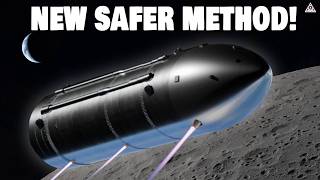
[09:09] inside what engineers call a magnetic bottle, held in place by superconducting rings. If the power cuts out for even a second, the whole system collapses. This is why the antimatter storage tanks on a future starship would not be inside the
[09:23] hole the way the methalox tanks are today. The leading design proposal is to kilometers behind the main body of the ship. If something goes wrong with a tank, the rest of the vessel has a few
[09:36] seconds to separate before facing the consequences, and those consequences are not small. 1 g of antimatter released in an uncontrolled annihilation would produce an explosion equivalent to 43 kilotons of TNT. That's nearly three
[09:50] destroyed Hiroshima. The second structural problem is the nose. At high velocity, even the thin wisps of hydrogen gas floating between planets hit the hole with the energy of incoming rounds.
[10:04] The nose of an antimatter starship stops being an aerodynamic fairing entirely. It becomes a radiation shield at least 1 m thick, built from dense materials like m thick, built from dense materials like uranium 238 or tungsten. Uranium 238 is
[10:19] particularly interesting here because it doesn't just absorb radiation passively. When antiprotons slam into it, they trigger fission reactions that actually contribute to thrust, turning the shield into a secondary propulsion component.
[10:32] If that shield gets breached, a dust particle hits the magnetic containment system directly. The ship doesn't malfunction, it disappears. The third problem is heat. Antimatter annihilation produces an enormous amount of it, and
[10:46] much of that energy escapes as gamma rays that no material can redirect or contain. It just gets absorbed by the ship's structure and has to go somewhere. A true interstellar antimatter vessel would need radiator
[10:58] panels stretching hundreds of kilometers to shed the thermal load. Even a Mars-bound version would need a heat rejection system larger than anything ever flown. And that's the central paradox of antimatter spacecraft design.
[11:11] The most energy-dense fuel physically possible, something so potent that a ship smaller than a pen could theoretically reach the stars, still demands a heavy shield bolted to the front, kilometers of radiators hanging
[11:23] off the back, and storage tanks floating on tethers behind the hole. The fuel is infinitely compact. The infrastructure to survive using it is enormous. Musk understands this. Isaac Man understands this. Neither of them is claiming
[11:38] Starship Block 4 runs on antimatter. What Musk is describing is a civilizational commitment. A future where humanity builds kilometer-scale solar power arrays in space to run particle accelerators, accumulates
[11:53] antimatter over centuries, and eventually uses it as an energy currency to fuel fleets of ships heading for other stars. The physics doesn't forbid any of it. The engineering just requires a scale of ambition we've never
[12:06] a scale of ambition we've never attempted before.
⚡ Saved you 0h 12m reading this? Transcribe any YouTube video for free — no signup needed.