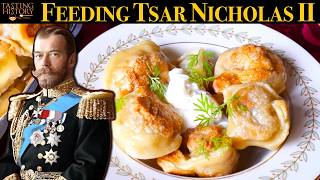

Tsar's Simple Taste: Pelmeni Over French Cuisine
38sThe contrast between the immense power of the last Tsar and his preference for simple, traditional Russian dumplings over opulent French cuisine is surprising and highly engaging.
▶ Play Clip"Title accurately reflects content: the video indeed shows feeding the last tsar by making his preferred pelmeni."
This video explores the culinary preferences of Nicholas II, the last Tsar of Russia, contrasting his simple tastes with the opulent French cuisine of the imperial court. The host prepares Siberian pelmeni from a 1861 cookbook and discusses the historical context of the Romanov family's eating habits.
Nicholas II, despite his power, preferred traditional Russian dishes like Siberian pelmeni over the opulent French cuisine of the imperial court.
While the imperial court favored French cuisine, the royal family enjoyed simpler Russian dishes like pirozhki and pelmeni during private meals.
The pelmeni recipe comes from the 1861 cookbook 'A Gift to Young Housewives' by Elena Molokhovets, which includes exact measurements for the dough.
Mix 1 pound flour, 1 tsp salt, 2 eggs, and about 1/2 cup water. Knead for 10 minutes until smooth, then rest for 20 minutes.
Use 1.5 pounds of fatty ground beef (20-30% fat), 1 tsp salt, 1 tsp black pepper, and 1 cup diced onion. Mix well.
Roll dough into logs, cut into 10 pieces per log, roll into 3-inch circles, fill with 1 tbsp meat, fold and pinch to seal, then wrap ends to form ear shape.
Boil in salted water or clear bouillon for 3-5 minutes until they float, then another 3 minutes until meat is cooked. Fry in butter for extra crispness.
Nicholas II was out of touch and unwilling to modernize, leading to revolution. He preferred simple foods like rye bread, boiled eggs, and cabbage soup.
Alexandra was nearly vegetarian and loved baked goods. She complained about the lack of variety in Russian afternoon tea compared to English customs.
The unchanging tea routine symbolizes the Romanovs' inability to adapt, which ultimately led to their downfall.
State dinners featured elaborate French dishes, but Nicholas often filled up on hors d'oeuvres beforehand and disliked caviar.
Food often arrived cold due to the distant kitchen. Footmen, chosen for their height and handsomeness, were known to gossip.
Champagne toasts involved a complex ritual with footmen and pages. The tsar drank moderately, usually port.
Under house arrest, the family ate simple soldier's rations. The tsar noted his daughters learning to cook and bake bread.
The host fries the boiled pelmeni in butter and serves with sour cream and dill, praising their simplicity and flavor.
Nicholas II's preference for simple dishes like pelmeni highlights the contrast between his personal tastes and the opulence of the imperial court. The video successfully combines a historical cooking demonstration with insights into the Romanovs' daily life and eventual downfall.
What type of cuisine did Nicholas II prefer for family meals?
Simple traditional Russian dishes like pelmeni and pirozhki.
1:19
Who wrote the 1861 cookbook 'A Gift to Young Housewives'?
Elena Molokhovets.
1:41
What are the ingredients for the pelmeni dough according to Molokhovets?
1 pound flour, 1 teaspoon salt, 2 eggs, and about 1/2 cup water.
2:33
What fat content is recommended for the ground beef in pelmeni?
20% or even 30% fat content to prevent the filling from falling apart.
5:13
How many pelmeni does the recipe yield according to Molokhovets?
40 pelmeni.
6:24
What is the traditional shape of pelmeni compared to?
An ear.
7:00
How long should pelmeni be boiled after they rise to the top?
Another 3 minutes or until the meat is cooked inside.
7:48
What did Nicholas II typically eat for breakfast?
Rye bread with butter, boiled eggs, and ham.
10:23
What was Tsarina Alexandra's dietary preference?
She was nearly vegetarian, preferring vegetables, eggs, cheese, and butter.
10:48
Why did Nicholas II dislike caviar later in life?
He ate too much caviar and salted fish during a train trip through Siberia and got sick of it.
15:04
What was the serving style called where dishes are brought out sequentially?
À la russe (Russian manner).
21:31
What happened if the tsar stopped eating during a meal?
All plates, including those of guests, were taken away immediately.
22:13
What did Nicholas II usually drink at table?
Port wine, and only one small golden goblet.
23:14
When were the Romanovs murdered?
July 17, 1918.
25:04
Simple Family Meals
Reveals that the imperial family preferred simple Russian dishes over elaborate French cuisine.
1:19Nicholas II's Character
Provides historical insight into the tsar's out-of-touch nature and its consequences.
8:18Tea as Political Metaphor
Uses the unchanging tea routine to symbolize the Romanovs' inability to adapt, leading to their downfall.
12:45À la Russe Service
Explains the origin of modern sequential serving and its impact on dining etiquette.
21:31Final Days Rations
Shows the family's resilience and adaptation to simple soldier's food before their execution.
23:54[00:00] Today I'm going to be eating like
[00:04] a man of vast power, rather
[00:07] and a surprisingly simple taste
[00:10] French cuisine of the imperial court,
[00:14] like these Siberian pelmeni or beef dumplings.
[00:17] So, thank you to Wildgrain for sponsoring this
[00:22] this time on Tasting History.
[00:29] Nikolai Alexandrovich Romanov,
[00:34] was the last Russian ruler
[00:37] He took the throne in 1894 and
[00:41] in both the Russo-Japanese War and World War I,
[00:44] neither of which went well for Russia.
[00:46] This in conjunction with
[00:48] an absolute autocrat led to civil unrest,
[00:51] his abdication and eventually the murder
[00:57] Now when Nicholas came to power, the cuisine at
[00:59] the Imperial Russian court was
[01:04] Many of the menus were printed in French. Most of
[01:06] the cuisine was French. Most of
[01:10] And the head chef was a
[01:13] But while the big feasts may have mostly been
[01:19] when they were having smaller dinners
[01:23] they actually preferred to
[01:26] Russian cuisine, things like pirozhki and pilmeni.
[01:29] And since I already made pirozhki for the
[01:33] I figured I would bookend Tsarist rule by making
[01:35] a recipe for Siberian Pelmeni from
[01:41] 'Podarok molodym khozyaykam' or 'A Gift
[01:46] scrape 1 and 1/2 pounds first
[01:49] Add one finely chopped and squeezed out
[01:54] Use this filling to make pelmeni... If the beef is
[01:57] lean, use 1 pound beef and half
[02:01] Boil the pelmeni in salted water or
[02:05] These pelmeni are best made the size
[02:10] Siberians prepare pelmeni
[02:13] sprinkling them lightly with flour
[02:16] They are frozen and boiled in
[02:19] Molokhovets gives this recipe for pelmeni
[02:25] on how to make the dough with exact
[02:29] period. So that's pretty cool. What
[02:33] grams of flour, 1 teaspoon of salt, 2
[02:39] She actually says that you'll probably need
[02:42] So we'll just keep that in mind as we make them.
[02:44] So start by mixing the salt into
[02:48] Start to mix those into the dough as if you were
[02:53] But this really isn't enough egg to fully
[02:55] incorporate all the flour. So add
[02:59] to start to make it come together
[03:03] you can go ahead and add more water as
[03:07] What you're looking for is a relatively
[03:12] moisture that it comes together. Then
[03:15] the counter and begin to knead. And you
[03:20] or until it's nice and smooth. It'll be about
[03:25] After about 10 minutes of kneading it by hand,
[03:27] you should have a nice smooth ball of
[03:30] to let it rest for at least 20 minutes.
[03:33] Also, you can make it a day ahead
[03:35] to. Or if you make a big batch, you
[03:39] can just take some out so you'll always
[03:43] It's kind of the same idea with
[03:47] that you can get from today's sponsor, Wildgrain.
[03:49] Wildgrain is the first bake
[03:52] that gathers up pastries and bread and pastas
[03:55] from some of the best small
[03:58] All of the kneading, the letting things
[04:02] So, all you have to do is actually bake
[04:08] your entire house will smell like a bakery.
[04:11] I love their croissants,
[04:13] and now protein boxes with
[04:17] And they have the absolute best
[04:20] I get them in every box. I am addicted.
[04:24] In fact, I think in the box that I just
[04:28] kryptonite. So check out Wildgrain and be
[04:32] wildgrain.com/tastinghistory or just
[04:37] $30 off of your first order plus free croissants
[04:45] And now it is back to our pasta which
[04:49] So once it's rested for 20 minutes,
[04:51] you can make the filling. And the filling
[04:54] you can scrape right off the bone and then mince.
[04:57] It is really hard to get it as small
[05:02] So I'm going to go with ground beef. You
[05:08] Now she does say that this needs to be fatty or
[05:13] 20% or even 30% fat content because if you get
[05:20] Then 1 teaspoon of salt, 1 teaspoon of
[05:25] So, just add the salt and the pepper to the meat
[05:30] Also, make sure that they're actually
[05:35] I realized that I also had some
[05:39] I'm using for something else, and I grabbed that.
[05:41] So, halfway through, here I am having
[05:46] And I felt like Cinderella when
[05:49] from the fireplace. Not great. Just onions.
[05:52] Once it's all mixed together, you can go
[05:54] ahead and form the pelmeni. And
[05:57] You can actually roll the dough out and then
[06:04] Or another way that she explains,
[06:08] is to divide the dough into four pieces
[06:10] and then take one piece and
[06:14] And make sure you cover the other pieces
[06:17] Once you have a uniform log of dough, you
[06:21] And she is very specific about
[06:24] will make. She says it will make 40. So
[06:29] Then kind of squeeze the dough into circles
[06:34] roll one of the pieces of dough out
[06:38] Now you don't want the dough
[06:41] bust when cooking. Several of mine
[06:45] Then set about a tablespoon of the filling into
[06:47] the center and fold the dough over
[06:52] You don't need any water to make
[06:55] Then take the two ends and wrap them over
[07:00] This is the traditional shape which
[07:04] Also, if your ear looks
[07:07] Then continue the process
[07:11] Also, I do think these pelmeni end up
[07:16] They're kind of two bite pelmeni, and I
[07:19] So if you wanted to make 60
[07:23] Very often when you buy them like
[07:26] really small, and you could probably
[07:29] Whatever size you do make them,
[07:30] it says to boil them in either
[07:34] So you can either get some clear
[07:38] just boil some salted water and then
[07:43] and give them a stir so they don't stick to the
[07:45] bottom and then let them boil
[07:48] This takes 3 to 5 minutes. Then
[07:52] minutes or until the meat is cooked inside.
[07:55] Obviously you're going to have to take one
[07:59] But if you end up doing it for like 6 or 7 minutes
[08:04] Then remove them from the pot and
[08:07] while you boil the rest of your
[08:10] bit more about what it was like to
[08:18] Tsar Nicholas II is one of those characters
[08:23] figure out because he was caricatured and so it's
[08:31] I mean it's definite that he was
[08:34] and he was completely out of step with his people,
[08:37] but exactly what degree he should be
[08:43] And I say lionize because many of his friends
[08:50] died. And maybe it's all true, but maybe
[08:55] were his friends. What is clear is that
[09:00] difficult moment. Russia was already ripe for
[09:05] and his poor military decisions and
[09:07] refusal to relinquish absolute
[09:11] It was only after the revolution of 1905, which
[09:17] and military mutinies, that he was
[09:21] a legislative assembly, and granted
[09:25] which he then went on to pretty much
[09:30] So yeah, basically at the heart
[09:35] just unwilling to give up the tradition of
[09:42] the last 300 years. Most of Europe was beginning
[09:50] And to say he was out of touch would
[09:54] But by many accounts, it wasn't that he was
[09:58] completely oblivious to what was going on
[10:04] And it's interesting because he did try to
[10:11] And one of the ways he did that was in how he ate.
[10:15] When he would visit his soldiers during World
[10:20] and shchi or cabbage soup that his soldiers did.
[10:23] Even at home, his daily breakfast was simply
[10:28] Lunch was often boiled beets and potatoes
[10:33] And one of his wife's ladies in waiting
[10:38] simple roasts and chicken."
[10:40] In general, he either liked to eat alone or
[10:45] and she too had simple
[10:48] For most of her adult life, she was all but
[10:52] and instead preferred
[10:56] But like me, she had a weakness
[11:00] In fact the head baker at the palace once
[11:05] "Superb cookies, small - the
[11:09] kalaches, milky kaiser rolls, amazing
[11:14] It was probably her love of baked goods
[11:18] about how they did afternoon tea
[11:22] even though she was the tsarina or empress
[11:26] but rather in Darmstadt, Germany. Then
[11:29] she spent much of her formative
[11:32] with her grandmother, Queen Victoria.
[11:37] tea, which had become popular there in
[11:40] Russia, on the other hand, doesn't seem to have
[11:45] And so, according to her friend,
[11:48] that "Tea was a meal in which there
[11:53] Always appeared the same little white-draped
[11:55] table with its silver service, the
[11:58] and for the rest simply plates of hot bread
[12:03] Never anything new, never any surprises in
[12:07] The Empress often used gently to complain, saying
[12:13] but she who was supposed to have almost unlimited
[12:18] single detail of the routine of the Russian
[12:22] of went for everything. They used the same
[12:28] the same furniture was there
[12:32] the same outfits for the messengers that they
[12:37] "For all I know the same plates for hot
[12:40] were traditions going back to Catherine the
[12:45] And I love this little anecdote
[12:49] all about how the imperial family used to
[12:54] Haha, simple enough. But it is a
[12:59] how they also lived all of their life and
[13:05] A complete inability to change tradition.
[13:12] even if everyone around them wanted to
[13:18] And when it came to tea, this simply
[13:24] When it came to politics, this led
[13:29] Now, while tea and breakfast and
[13:33] was just the family remained
[13:37] many meals had to have invited guests.
[13:44] Menus from those lunches and dinners, which
[13:48] shows a cuisine that you would
[13:52] "Lunch [at the Livadia Summer Palace in Crimea]
[13:56] savory pastries, and small
[14:00] vol-au-vents were served together with the soup
[14:02] rather than as a separate dish as they are abroad.
[14:05] The soup was followed by fish, a (chicken)
[14:09] To drink, there were madeira, white and red
[14:14] and different wines served at lunch, as is the
[14:19] And liqueurs with coffee..."
[14:21] Lunch on the Standart, the imperial yacht, were
[14:26] Menus from these meals include cream
[14:31] salmon mayonnaise, filet of beef,
[14:35] pears and cherry, peaches
[14:39] But again, many of these meals would have guests
[14:45] Something that actually Nicholas
[14:48] One of the officers on the
[14:52] "The sovereign really liked appetizers apart from
[14:58] Supposedly, he actually liked those things when he
[15:00] was younger. But on a trip that he
[15:04] he took a train. And at every single station,
[15:09] of salted fish and caviar,
[15:11] which he ate and got sick of and just
[15:16] Now, when they weren't at their summer home
[15:20] Nicholas and his family preferred
[15:23] St. Petersburg over any of their other
[15:27] it is a smaller palace in comparison with
[15:32] it's still a palace. And so, you would expect
[15:37] dining room. But there wasn't. There
[15:42] So just depending on the meal,
[15:46] If the couple were dining alone, they would
[15:51] For family dinners, it was the
[15:55] Then if they were having a larger affair,
[15:57] say 30 to 100 people, they would
[16:01] Though if they had a bigger group, anything
[16:04] go to a different palace just ;cus
[16:08] petite Alexander Palace to host that many people.
[16:11] But when they were having dinner,
[16:15] of the Alexander Palace, they had
[16:19] One was to have round tables that could hold 10
[16:26] and it was how they would set it up if the
[16:32] because he would go from table
[16:35] that he could talk to everyone
[16:38] that they had had dinner with the tsar.
[16:42] If he didn't really like the people that were
[16:46] then they would set up a massive U-shaped table
[16:49] that he would sit at one end of and only then
[16:55] These dinners were the kinds of dinners with
[17:01] which is what they called him,
[17:04] So, he would actually fill up usually on the hors
[17:09] The hors d’oeuvres were brought out and
[17:12] then everybody would eat standing up
[17:17] Only after a couple shots of vodka would
[17:22] That is when the hot food would come out.
[17:28] because it was notorious for always kind of
[17:33] far away from the palace. When they were made back
[17:41] the noise and the odors wouldn't make it into the
[17:48] So, the food though would
[17:51] over 500 ft outside before it got to the palace
[17:56] no matter what time of year. And St. Petersburg
[18:01] It wasn't until 1902 that they
[18:06] It was still a long way to go, but at least now
[18:12] this lukewarm food were the footmen, and they
[18:18] and they were chosen because of their
[18:24] So you had a bunch of tall, good-looking,
[18:30] and you never knew if they were there because
[18:32] while they dressed in white
[18:36] they also wore these soft black shoes that
[18:42] which made it so that they knew all of the gossip
[18:45] because people would just talk
[18:47] One guest recalled that "Every time we were
[18:51] and the footmen would whisper to us bits of
[18:56] whether we cared for it or
[18:59] Being one of those footmen was
[19:03] people held on to the position
[19:06] And basically the more senior you
[19:12] So, the tsar's footman was
[19:15] He had actually been his father's footman
[19:20] and had trouble holding things. So
[19:25] his arm while he poured the wine.
[19:30] the ceremony of toasts that would
[19:34] "At all the great banquets, a Court official stood
[19:37] behind the chair of every royal guest
[19:41] This was a matter of solemn ritual. The
[19:46] then it had to be passed to a page
[19:50] These handers also were a prestigious position and
[19:54] also were held by the oldest
[19:59] And so some of them had trouble
[20:04] Prince Christopher of Greece once recalled that
[20:10] her favorite pale blue velvet Court dress turned
[20:16] spilled six glasses of champagne over it." But
[20:21] it was time to eat. And the meal
[20:25] This is after the order, a consommé at the
[20:31] something heavier like a cream soup
[20:34] Then came the Yaroslavl style grouse
[20:38] which came from the Partitsa stream that ran
[20:43] Petersburg.
[20:44] Then a saddle of wild goat, chicken fillet with
[20:49] artichokes with mushrooms, asparagus.
[20:54] baked apples, fritters, puddings, and pancakes.
[20:58] Then a course of ice cream followed by
[21:03] which was usually an assortment of
[21:07] The ice cream course was actually a particular
[21:10] specialty of the Russian court.
[21:16] Alexandria, his wife, also did.
[21:18] And Maria, who was the daughter of Grigori
[21:24] "I remember ice cream the like of which
[21:28] And what was interesting to many people was that
[21:31] the courses were served à la
[21:35] as opposed to a la Française
[21:38] way of serving food in most of
[21:43] A la Française is where all of the dishes are
[21:48] while à la russe is where dishes are portioned
[21:52] This is how pretty much
[21:56] Also, it made it so that the tsar actually
[22:02] because he would be served
[22:07] and then it would go down the line by order of
[22:13] But the moment that he stopped eating and put down
[22:19] Not just his, but everyone's. So, if you were at
[22:24] or else you're just going to get a couple
[22:27] As for the wines, red and whites
[22:32] by most accounts, the tsar himself was
[22:38] with how the Bolshevik propaganda portrayed him,
[22:44] By most accounts, he actually didn't
[22:48] it was usually port or sometimes madeira and
[22:54] was from the Crimea. His personal security
[22:59] Since he was Japanese war,
[23:03] it was only when he traveled by sea that
[23:07] one or two small glasses
[23:10] And even when he did drink something
[23:14] "The Emperor was seated in the
[23:18] bottle of a special Port, the
[23:21] and a small, golden goblet. He never drank more
[23:24] than one goblet of this wine,
[23:27] Again, this is coming from
[23:30] so it's unclear exactly how
[23:34] It's just kind of something that we
[23:38] Now after the meal, it was time
[23:43] And he would make a point to announce that the
[23:49] a cigarette and then once he did then everybody
[23:54] Now these kinds of meals would in 1917 come to an
[23:58] end after the tsar abdicated his
[24:04] but culinary standards were maintained
[24:09] they were essentially under house arrest at
[24:15] of that year after they had been moved to
[24:19] pirozhki, roast grouse, salad and fruit compote.
[24:22] Then in June of 1918, just one month
[24:30] that Tsar actually wrote in his diary,
[24:32] "Since yesterday, Kharitonov
[24:35] the provisions are delivered every two days.
[24:37] The daughters are learning how to cook from him,
[24:40] they prepare the flour and knead in the evening
[24:42] and bake the bread in the morning. Not bad at all!"
[24:46] In the Romanov's last days, their diet
[24:51] But it was said that they never
[24:55] bread or potatoes is what they
[25:00] Nicholas, Alexandra, and their
[25:04] Bolshevik revolutionaries on July 17th, 1918.
[25:11] end of Imperial Russia. And they were demonized.
[25:19] know, and it's- you know, not the point of
[25:25] But what I do really appreciate
[25:29] friends and people who worked for them
[25:32] did write to try to give a bit of a glimpse at
[25:41] And as someone who, you know, studies food
[25:46] because we learn things like the tsar of Russia who
[25:53] and did you know enjoy his opulent wealth and lifestyle
[25:58] also preferred the very simple dishes on his table.
[26:03] Things like these pilmeni which I am about to eat right now.
[26:07] Except before I do,
[26:09] I need to address something because the recipe
[26:14] serve them as a soup, which is common. But
[26:18] it was known that the tsar when he was on the royal yacht actually preferred to eat them boiled and then fried in a pan
[26:26] and he would eat them straight from the pan. So I'm going to pan fry these.
[26:31] So melt some butter or ghee in a pan and then toss a few of the boiled pelmeni in, and let them cook for about a minute on each side.
[26:38] Just making sure that they don't stick.
[26:40] And then they are ready to be served with smetana or sour cream and a bit of dill.
[26:45] And here we are, Siberian pilmeni fit for the last tsar of Russia.
[26:50] So like I said, they are a little bit bigger than I think I
[26:55] This is how big she says to make them, but it's going to be hard to eat this in one bite.
[27:02] One bite is the ideal size. Anyway, uh a little sour cream or smetana on there
[27:08] and we'll take a bite.
[27:10] [chomp]
[27:13] Hmmm.
[27:16] Oh, that's really good.
[27:18] Hm!
[27:20] Oh my gosh, that's good.
[27:22] So, as you may have noticed, a little bit of the meat fell out, and that's because they are too big to do in one bite,
[27:27] or at least one decent bite. Maybe if I was alone in a dark room just scarfing these.
[27:33] But on camera, or in polite society, these are two bite, pilmeni.
[27:37] But you can see the meat in there.
[27:41] The dough kind of puffs up a little bit around it. So agh, it's so good though.
[27:47] One second. One second!
[27:50] Hmm.
[27:52] I mean, I don't think I've ever met a dumpling I didn't like, but these are really, really good.
[27:57] Especially because they are so simple. It's just really the meat and
[28:01] onions with a little salt and pepper. That's it.
[28:05] A little dill on the outside, but that's not a dominant flavor.
[28:10] They are so good.
[28:12] The texture is wonderful,
[28:15] and I think they do benefit from being fried. They
[28:20] the frying kind of gives a little bit of a crispness just along the edges
[28:24] while then the rest of the dough is nice and soft.
[28:30] Yeah, no. They are fantastic. Make them. Just absolutely make them. You can actually buy them if there's a Russian store near you.
[28:38] You can buy them pre-made. And they haven't really changed that much. Usually now they'll have beef and pork,
[28:44] but there are also ones that have mushrooms in them or lobster, which I really want to try.
[28:49] But just try them. I can see why the tsar enjoyed these.
[28:52] They're absolutely fantastic. I don't care how powerful
[28:59] So make some pilmeni. Eat like a last tsar of Russia.
[29:02] And I will see you next time on Tasting History.


⚡ Saved you 0h 29m reading this? Transcribe any YouTube video for free — no signup needed.