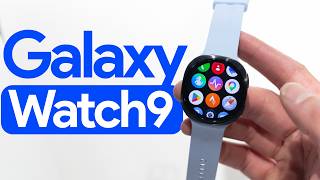

Galaxy Watch 9 vs 8: Is It Worth the Upgrade?
42sDirectly addresses the most common consumer question with a clear verdict, sparking debate among potential buyers.
▶ Play Clip"Delivers a straightforward comparison with honest buying advice, though the title oversells the 'changes' which are mostly incremental."
This video reviews the Galaxy Watch 9, highlighting its similarities to the previous generation and the key upgrades, including a larger battery and a new processor. The reviewer compares it to the Galaxy Watch 8 and provides buying advice based on price differences.
The Galaxy Watch 9 looks identical to the Galaxy Watch 8 on the outside. The reviewer notes that the hardware is essentially the same, with the main differences being internal.
The Watch 9 has a 20% larger battery: 445 mAh in the 44mm model and 390 mAh in the 40mm model. It also features an upgraded Snapdragon processor, which is more efficient and powerful, though the speed difference is not significant in everyday use.
The reviewer compares the Watch 9 to the Watch 8 and notes that the speed difference is minimal, but the new chip is more future-proof and efficient. The upgrade may not justify the cost for existing Watch 8 owners.
The Watch 9 comes in graphite and silver for the larger size, and graphite and cream for the smaller. Pricing is $379 for the 40mm and $459 for the 44mm. The reviewer suggests checking prices for the Watch 8, as it may be a better value.
The new 'Vitals' feature tracks five metrics: heart rate, heart rate variability, temperature, respiratory rate, and blood oxygen. It provides a baseline and holistic health score, similar to features from other brands.
The 'Heart Health' score is based on four factors: BMI, blood pressure, sleep score, and duration of vigorous activities. These metrics contribute to an overall heart health assessment.
The watch provides a daily cardio load recommendation based on past week's activity. The 'Fitness Index' uses a pentagon chart with five metrics: body composition, cardio, endurance, flexibility, and others, offering a holistic fitness score.
The reviewer recommends checking the links for both the Watch 9 and Watch 8. If the price difference is over $40-50, the Watch 8 is essentially the same experience with a slightly smaller battery. The Watch 9 is still a great buy for most people, especially if bundled with a Samsung phone.
The Galaxy Watch 9 is a solid incremental upgrade over the Watch 8, with a larger battery and a new processor, but the differences are minor. For most users, the Watch 8 remains a great value if the price difference is significant.
What is the battery capacity of the 44mm Galaxy Watch 9?
445 mAh
00:32
What are the five metrics used in the Vitals feature?
Heart rate, heart rate variability, temperature, respiratory rate, and blood oxygen.
02:04
What are the four factors that contribute to the Heart Health score?
BMI, blood pressure, sleep score, and duration of vigorous activities.
02:57
What is the price of the 40mm Galaxy Watch 9?
$379
01:38
What processor upgrade does the Galaxy Watch 9 have?
Snapdragon processor (upgraded from previous generation).
00:48
20% Larger Battery
A significant hardware upgrade that improves battery life, a key selling point.
00:32Vitals Feature
Introduces a holistic health metric based on five key vitals, aligning with industry trends.
02:04Buying Advice
Provides practical guidance on when to choose the previous generation to save money.
04:05[00:03] Watch 8? This is really, honestly, the Galaxy Watch 8. So, what is actually different about this, and is it worth should you save a couple bucks and get the previous generation Galaxy Watch 8?
[00:17] Like I said, the hardware on the outside is absolutely identical. You really opinion. But, there are some differences. The first main difference does, as we have had in the past, come in two different sizes, 40 and 44 mm. We
[00:32] now have a 20% larger battery on the inside. So, we should be getting a that, keep in mind that it's going to take slightly longer to recharge the charging tech on here. But, you're looking at 445 mA hours in the 44 mm and
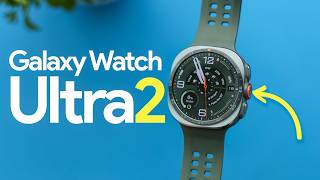
[00:48] 390 mA hours in the 40 mm device. This also has been upgraded to the Snapdragon should be a little bit more efficient, should be a little bit more powerful, based on my testing here. So, let's compare the Galaxy Watch Ultra 2 to the
[01:01] Galaxy Watch Ultra from last year. Same differences in the chips. You'll see the speed difference is kind of not that significant, at least not in my situations where it is a lot faster, and I think over time, it's definitely a lot
[01:13] more future-proof, and hopefully more efficient as well. But, I don't know if that's enough to really justify upgrading. There are a few new features on here. The watch also comes in two different colors for each size. So, you
[01:25] have graphite and silver for the larger version, and graphite and cream for this otherwise, the display, the materials, the buttons, the biosensor on the back, the straps, everything else about this watch is really going to be identical.
[01:38] The price on this watch is $379 for the smaller version, and $459 for the larger version. I will have links down below, but honestly, I'm also going to put links there to the last generation Galaxy Watch 8, because I think,
[01:51] depending on how Samsung changes the prices here, you could save probably a good bit of money buying the previous generation and honestly get basically the same watch. But Samsung has some new features and specifically in the health
[02:04] of them are new, some of them are familiar, some of them are have been other brands. The first one we're looking at is called vitals, which is based on five metrics, your heart rate, your heart rate variability, your
[02:16] temperature, your respiratory rate, and of course, your blood oxygen. You wear calibrates and then it'll give you a baseline of your vitals. Pretty this same thing for a while, but I'm really happy to see this come to the
[02:29] what Samsung's doing in the app, they did kind of redesign the app in the past year. I think it really focuses on giving you like one holistic metric for different aspects of your life and you can tap into it. They'll tell you how
[02:42] improve, and really break down all the metrics within there, which I'm actually good job. And although I keep saying this is the same watch as last year, I think for most people it still is a great buy to get the base level as
[02:57] opposed to the Ultra as many people would like the slimmer, smaller watch. feature is called heart health. So your heart health score is based on four your heart rate. It's kind of interesting, but it makes sense. They do
[03:11] all impact your heart health. So your BMI, your blood pressure, your sleep score, and your total duration of vigorous activities all have a huge impact on your heart. And so those metrics alone just go into your heart
[03:23] health score. Samsung also gives you a daily cardio load, basically telling you should push based on what you've done in the past week. And my favorite one is called fitness index and this is based on a little pentagon chart with five
[03:36] different metrics. Your body composition because just like before, this does have capabilities. Your cardio, your endurance, your flexibility, which is an if you tap on the little I, it tells you, you know, how you can optimize
[03:50] flexibility, I was really curious, like how is this measuring flexibility? And it says it right here, it's summarizing based on body composition and other data stride length, maybe it's going to be like running pace. I'm not entirely sure
[04:05] what it's really basing that on, but I think that's kind of interesting that that they give you one holistic score for that. So, early impressions of this watch. I highly recommend you check out the two links I have in the description
[04:18] down below. One is going to be the Galaxy Watch 9, the other one is going to be the Galaxy Watch 8. If you see a price difference of more than maybe like 40 or 50 dollars, definitely go with the Galaxy Watch 8. It is essentially the
[04:31] same experience, a slightly smaller battery, but honestly, I think that is absolutely a great watch to buy. I still really enjoy this watch, but if you want future-proof, and if the price difference is not very large, or if they
[04:44] check out the Watch 8 link and it's just out of stock everywhere, this is still a fantastic watch, and I think for most people, the Galaxy Watch 9 is still going to be the best Galaxy Watch to buy, meaning instead of the classic or
[04:57] the Ultra, like a slim, basic little watch that tracks your health, tracks your workouts, and is a lot more affordable than the Ultra, really is a little bit more exciting and a little bit more different this year, and I wish
[05:09] it had like a rotating crown or bezel, but you know what? This little watch is pretty solid. It's pretty recommendable, and if you're buying something like a new Samsung phone, it's very likely that Samsung's going to give you a perk to
[05:22] bundle in with this device. So, be sure to check out those links, and if you haven't already, head on over and check out my review of the Galaxy Watch Ultra 2, which actually does have some pretty significant differences.
⚡ Saved you 0h 05m reading this? Transcribe any YouTube video for free — no signup needed.