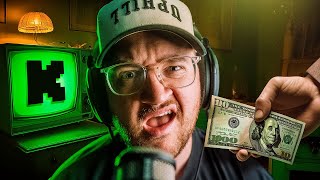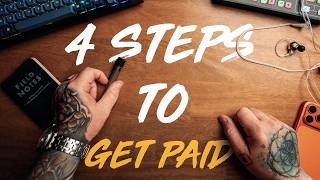

Brands Want Small Creators, Not Celebrities
43sExposes the myth that only big influencers get deals, creating shock value and encouraging small creators.
▶ Play Clip"Delivers exactly what the title promises: a practical system for landing brand deals without a large following."
The video reveals that brand deals are not about follower count but about authenticity and proactive outreach. The creator shares a four-step system to secure brand deals from scratch, emphasizing that most creators fail to ask for opportunities.
Brands are investing more in micro and up-and-coming creators than celebrities. Follower count is a small piece; skills and authenticity matter more.
List all products related to your content that you can authentically talk about. This includes camera gear, fitness equipment, car accessories, etc.
For each product, list multiple brands (including competitors). Don't limit yourself to one brand; research 15-30 brands per category.
Your rate should reflect your skill set, knowledge, and experience, not just follower count. Use AI like ChatGPT to generate a rate card based on your analytics and background.
Create tailored pitches for each category and send them to every brand on your list. 43% of creators never get personalized offers, so being proactive sets you apart.
Most pitches will get no or no response. Accept free or discounted products as door openers; trust is built over time and can lead to bigger deals.
The key is to take action: build a targeted list, create a value-based rate sheet, and pitch proactively. Authenticity and persistence matter more than follower count.
What percentage of brands have a contact page for sponsorships on their website?
99%
14:13
What is the first step to getting brand deals according to the video?
Build a list of products related to your content that you can authentically talk about.
02:38
How many brands should you list per category in Step 2?
15 to 30 brands.
06:46
What three components make up your value beyond follower count?
Skill set, knowledge, and experience.
09:51
What percentage of creators have never received a personalized brand offer?
43%
14:25
Why should you accept free or discounted products from brands?
To build trust and open doors for future paid deals.
16:40
What should you use to help generate a rate card?
ChatGPT (AI).
12:43
Brands Prefer Smaller Creators
Contradicts the common belief that big followings are necessary; brands now invest more in micro-creators.
00:17Map Competitor Brands
Many creators limit themselves to one brand; opening up to competitors increases opportunities.
04:46Value Beyond Followers
Skill set, knowledge, and experience are often undervalued by creators but highly valued by brands.
09:51Proactive Pitching Wins
43% of creators never get personalized offers, so being proactive gives a significant edge.
14:25[00:03] this isn't because money's not there. If anything there's an opposite problem in 2026. The influencer market space right now is currently sitting at $40 don't want to work with smaller
[00:17] creators. Right now brands are investing more than we've ever seen into the micro or smaller up and coming content creator than celebrities, let's just say. The gap isn't the opportunities that are available. There's opportunities
[00:31] everywhere. The gap is nobody is asking for the damn brand deals. So if I was starting from zero in 2026, here's the exact four things I would do to get my first brand deals. Not just post more and hope somebody comes along with a big
[00:47] and hope somebody comes along with a big offer, but to create an actual system. list, let me help you understand something. You got to get this out of
[01:00] your head. Brand deals are not a follower or subscribers game. It never really was the whole piece of the pie when it came to brands working with creators, but it matters more so than ever in 2026 to understand that your
[01:13] follower count and your subscriber account really aren't [music] what's and right, especially lately. A creator with 50,000 followers on platforms can outperform and out monetize creators with 500,000 followers across platforms.
[01:30] I know smaller content creators right now that are running two, three, four times the amount of ad rates >> [music] >> in comparison to bigger creators, like creators that are 10x their size. Brands
[01:43] are completely aware of this by the way, there's no manipulation. That's why more >> you, the smaller, the up and coming, the creator that's documenting their process, going through things, and has real, raw, [music] authentic interaction
[01:58] with what they do. Not just the guy with a million followers anymore. Okay, step Okay, so the first [music] thing I would do is I would build a list, and that's exactly what I have been doing. It's
[02:10] good to know at this current time, over the last couple months, I signed with a new manager, who's a buddy of mine after all these years, and I took a big break from doing brand deals and just completely restarted the relationship
[02:25] have some experience [music] in doing them, so that helps. But also, too, we've been able to get a lot of offers and a lot of opportunities on our plate from doing exactly [music] what I said today. So, everything that we talk
[02:38] about, all the steps in today's video, this isn't just hearsay. This is what we have been doing to go from making zero a month in brand deals as of recently into month in brand deals as of recently into making 10, 15, 20,000 dollars [music] in
[02:51] a month in brand deals. So, the first thing I would do is I would build a list of products, not of brands. This list should consist of anything that is related to any category of what I share as a content creator. For somebody like
[03:05] me, this list looks like camera gear, lenses, microphones, computer parts, of my content. For example, of me sharing my weight loss, of me making
[03:18] content around my TRX, and then I'm into cars. That category list or or product list obviously gets much bigger. So, I would, and I literally did, walked around my entire space, and anything that I could see, could think of, audio
[03:32] gear, headphones, desk mounts, anything related to what I do as a person and a related to what I do as a person and a creator in my content, I put on that list. Basically, the overall goal was if
[03:45] I could passionately talk about this thing, or I could authentically tie it into what I do on a day-to-day as a human being and a content creator, it was not anything that I could think of. I didn't put makeup in there or or hair
[04:00] products. But, that list obviously has the camera gear. It also has truck tires and lifting equipment because these are all fundamental parts of who I am as a content creator and they touch base with anything that I do. I know for a fact
[04:16] that I can talk passionately about this new truck accessory because I love my creators make, especially as we grow over time, is we go straight to the obvious. What brand deals are other people doing? Or who do I know at this
[04:31] important in [music] step two. But, as of right now, the biggest goal is just taking anything that again, you could authentically include into what you do because it is important [music] in your day-to-day, it's relatable to who you
[04:46] are as a person and a creator, you put that on that list immediately. Step number two. Map brands to every item. Now, this is a very important step here. to go straight [music] to their emotions or their personal
[05:01] preferences and I really want to invite creators to open up their thoughts to we've got this list of products from all you do, let's tie some brands to that. And I'm serious, under every single
[05:14] item, I want multiple brands related to that particular item. Not just brands that I know, neither. That's where a lot of creators go wrong and [music] stop. Look, I love Sony cameras as an example, but I know Canon exists. I know Nikon
[05:27] exists, Fujifilm, Ricoh. I have a lot of respect for the other brands as well. It'd be ignorant and arrogant of me to just say, "I'm only going to do work with this one brand." And not open up opportunities and relationships and
[05:40] other avenues. I can obviously stick to the one thing that I really, really like. I can hope that maybe over time I'd have better odds with Sony because I really like Sony gear. But if Canon came along and said, "Hey, we really like
[05:52] your content. We like how you passionately talk about cameras and something." I'd be more than open to camera brands, you know the coffee brands, you know the the fitness
[06:05] supplements. Go do some research and put five to 10 other people in the space on that list. Cuz here's the thing, every brand that you know and you respect and you look up to right now and you would
[06:18] just love to work with right now, they have everybody else hitting them up to. And it's not that it's impossible for you to get that opportunity. I never thought that one of my first brand deals would be with ASUS, for example, and
[06:32] Intel at the size that I was at. It it really was like a right time, right place, right pitch. But to expect that and not maybe just work with a stepping stone for the time being so I can prove myself, pretty important in the process
[06:46] that you have to actively find and search, they're getting fewer offers, especially your small up-and-coming companies. So, for every pillar and category, I'm not stopping at five [music] brands. I'm not confining myself
[07:00] to a potential idea of somebody to reach out to. I'm building 15, 20, 30 if it's possible. By the end of this step, I don't have a vague idea of how I could don't have a vague idea of how I could make a brand deal through products and
[07:14] brands related to these products and knowing each individual product [music] that all of these individual brands make, at that point we have a road map. We know authentically every little thing that we could talk about even if it's
[07:28] stuff that we don't have in our setup right now. What's so great about this "Okay, I see my Sony camera." And I know that I have a lens and I know that I have a camera on this. But then adding the category [music] of cameras and
[07:41] and then I can remember that somebody else has an action cam, and maybe that's something that I don't have right now, but that could be a huge addition to what I do as a creator. That could be a huge pitch into working with somebody
[07:56] who does have an action cam to where I can tie my fitness or my truck content into that. Again, the whole goal in 2026 is authenticity. How does this product [music] How does this iPhone actually help me as a content creator in my
[08:13] enthusiastic and much more capable of selling the idea of this to you because I genuinely [ __ ] with it. And by building this giant list of products and
[08:25] then all these brands, you start unwrapping and unraveling other ideas and other things that you could utilize for what you do and do it in a way that again is authentic. And this list is also so important because it's our
[08:39] entire outreach list for later. This is going to be the unsexy part, and I think really the part where a lot of creators hold themselves back. Like it's exciting to get a list, and it's exciting to think of companies cuz you start
[08:54] fantasizing this idea about all these people you could potentially work with. something with that, which we'll get into in step four. Step three, build a rate sheet. This is where a lot of creators go wrong before they even
[09:07] start. When I knew that I wanted to start working with brands again moving forward, I had to build a rate sheet. I had to see what my value was so I could easily pitch that value to companies and brands. And there's a big
[09:20] misunderstanding in the creator space with how rate sheets should be used and built. People automatically assume that brand deals are a follower count math start of the video, I mentioned that followers play little role into a lot of
[09:36] think, "Okay, I've hit 100,000 followers, so now I can start charging a built up over a handful of things. Yes, it is your general audience, the amount of people that do consume you actively, but it's also things like your skill set
[09:51] look at your following and community as the reach. It does help [music] a brand gauge how many eyes they expect their product to be in front of, but really is a small piece to the value. Skill set is where you can actually produce. Like,
[10:05] what could you actually create? How can you make a story? Can you shoot it? Can you edit it? Can you write copy for it? The skill set in your craft has value in The skill set in your craft has value in its own. I learned this hardcore during
[10:18] with me left and right during the pandemic because when everybody was your studios because nobody could be around each other, they realized they could just send me something. I had all the camera gear. I had the photography
[10:33] background, the videography experience, and I could just do it myself in my own studio. Back in the day, before the pandemic happened, the first things brands would typically do, like G Fuel was a great example,
[10:46] out and they would shoot content there office. So, when the pandemic happened, a lot of brands couldn't do that for a period of time. Creators like myself really benefited from that cuz not only
[10:58] was I taking the product and showcasing it to my community and pushing sales for it, but now I can create high-quality content for it that brands can use. So, that's a skill set. Knowledge is what you understand that the brand doesn't.
[11:11] Now, this can work in many ways, but like for great examples, if you know lighting, if you know audio, if you know camera gear, or educated in something inside and out, you're not just a billboard anymore. At that point, you're
[11:25] paying to advertise with, too. Because here's a problem that a lot of people miss, brands aren't just paying for the reach. They're not just paying for the idea because they couldn't come up with it. Sometimes they're paying for the
[11:37] experience because they don't have the staff or people working with the company flown out. They're part of activations. They are the face of the event because the brand doesn't have that. Sometimes
[11:49] it's just simply the usage rights because they've had negative experience in creating their own ads, so they use you to be the ad and never expect you to post it on their page. Sometimes it's the expertise you, the creator or the
[12:05] influencer, is helping the brand out so they don't embarrass themselves cuz they only understand one aspect of their marketing. All of that is valuable and all of that is built into a rate and none of that really matters when it
[12:17] comes down to your following. Now, obviously today I can't just help you come up with the right numbers. There's no set numbers. If you hit this, you're go to AI, list every one of your platforms, list the analytics, list your
[12:30] experience, your skill sets, your background in things. Like, "Hey, I only got 10,000 followers across these platforms, but I got 100,000 views in this last month. Also, too, by the way, I've 10 years of experience [music] in
[12:43] web development and working with tech products." Any information that could be a part of a resume and makes [music] you more valuable, input that into ChatGPT and get a good solid rate card range that you can just hand over to people
[12:56] when they ask how much you charge for videos. Step number four, build pitches and send them out. Remember I mentioned earlier that there's one part where most This is where everybody gets scared and
[13:08] just doesn't do it because of the fear of rejection. Cuz this is the part that actually takes the courage. It is offering yourself to somebody and either A, not getting a response back at all [music] and and wondering or getting the
[13:20] response that you didn't want to get, which is a no. But what I would do is in every category, I would build a set of uh pitches and angles. [music] Uh different levels with how you would like to introduce yourself to other people.
[13:32] Not one just generic pitch to everybody, but basically copy and paste pitches to categories. Like a small independent brand is actually going to want to know how you use the product and why you passionately want to share that product
[13:48] with your community over somebody bigger. So, generating that concept and idea into your pitch is pretty important. As to where a bigger brand might want you to just kind of get to the point and see that you've done your
[14:00] You know their current campaign, you know their competitors, you know you're the right [music] fit. Once you get that built, go to every single brand on that list. Find their contact information and sponsorships, partnerships, whatever it
[14:13] is on their websites, and I'm telling you right now, 99% of brands have this on their websites, and start sending out those pitches. [music] This step super writing. It's not about planning. It's not about hype. It's about follow
[14:25] through. It's about putting yourself out there and actually sticking to what you said you were going to do. 43% of creators said they've never gotten a personalized brand offer. All while most of this industry has been running on
[14:39] copy and paste brand pitches for years. You show up with a real list, a real rate card, a specific [music] pitch, and you're already ahead of the majority of content creators. [music] Okay, so you've done all the steps or
[14:53] what's coming next. Here's the god honest truth that a lot of people won't them are going to say no or nothing at all. And that's not just to [ __ ] on you. I'm [music] not saying that you suck and it's going to happen to you. It's just
[15:08] build a list on 30 brands for each category thinking that every single one of them was going to give you a $10,000 brand deal. You build it so that you had options. Some will meet you halfway or quarter way. Some will want
[15:21] to just work with you via product, and that's where it's going to be up to you it [music] for you. There is a point, and I even do it to this day, but there is a point where you have to ask yourself, is this
[15:35] opportunity working with this thing that maybe I actually need going to open up future? Like great example right now, I need a new truck bed for my truck. I told my manager straight up, if a brand
[15:49] told my manager straight up, if a brand who makes a quality truck bed cover wants to work with me, only on product, I'm willing to do it if the product is need right now. It's something that I can actually [music] utilize, and I can
[16:02] authentically share and document that thing. That's one thing I wanted to make in a video today talking about brand deals, because in these types of videos we like to uplift creators and say, know
[16:14] worth something. You shouldn't be working for free. You shouldn't be doing X, Y, and Z. Um I make tens of thousands of dollars a year on affiliates and free products. I built some of the longest lasting
[16:26] where [music] these brands have given me tens of thousands, uh hundreds of thousands of dollars at this point in my career, and it all started off of free with the brand and the vision at the time. The concept that you guys have to
[16:40] time. The concept that you guys have to understand from doing all this today is you. They're going to have extra money laying around for campaigns. They're going to open up opportunities. But another thing you have to understand is
[16:53] deal. The real deal can come with like the fifth or 10th time that [music] you worked with the brand. Maybe they do five campaigns at a $2,000 budget, and then they want you to be the big portion of [music] a $40,000 budget, because
[17:07] you've built trust with them. They know that you can deliver. They've seen what what they're paying for. Free or discounted of early on with [ __ ] you genuinely [ __ ] with as a creator is it you undervaluing yourself. It's you
[17:23] building trust faster than what money can actually buy. Just make it a policy of yours. Make it an understanding that it's a door opener and not your entire business model. But guys, that's it. That's seriously all I would be doing
[17:35] right now. It's all I am doing right now in 2026 [music] kidding. This month we're we're on projection of like I think $15,000 in for a few months at this [music] point. And if I'm being honest, we've turned
[17:49] The big thing to take away from this video is I really want you guys to guy to [music] have the opportunities. You don't have to be perfect. You can be in a era of figuring it out and and [ __ ] around and finding out for
[18:04] yourself as a content creator and still bring opportunities to your table. None of this requires you to be a big channel. All of it requires you to show up and do the unglamorous [ __ ] behind the scene first to get the result you're
[18:19] looking for. This is the exact system from [music] the list to the un-fun stuff, but the [ __ ] that's more important that I put into my streamer and creator blueprint on my website. Both of my blueprints even have sections
[18:33] brands and get those opportunities. And they're 90-day systems to slow down, get you to focus on what's important for you growing your brand as a streamer or a creator, being consistent being
[18:46] consistent [music] in reaching out to the brands so that way you can build a So if you're interested in any of those, check them out on my website. Link in the description. But if you never touch a single blueprint, do these four things
[19:00] today. Build that list, build the categories, build the brands, set a to get opportunities. You're going to get a lot more opportunities versus the person that just sits back and just thinks if get more followers, people
[19:14] know a dream brand that you would want to work with in 2026. All right, go here. That's all I got for you guys today. I'm out. Peace. Deuces.
⚡ Saved you 0h 19m reading this? Transcribe any YouTube video for free — no signup needed.