
9,100 Likes! Why Commodities are Trending
45sThe creator highlights a viral success and addresses a common desire to trade with small capital, instantly relating to viewers.
▶ Play Clip"The title 'GOLD F&O | Stock Market Basics' is somewhat generic, but the content delivers a solid, informative guide on gold and silver futures and options, though it could be more concise."
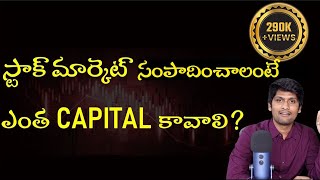
This video provides a comprehensive guide to trading gold and silver futures and options on the MCX, explaining the fundamental factors that influence commodity prices and the practical aspects of trading, including contract sizes, margins, and charges.
The video was created in response to high engagement on a previous commodities video, targeting individuals who want to trade in the evening with small capital.
Gold and silver prices in India are linked to international prices, which are quoted in US dollars per ounce or per kg, and are influenced by global conditions rather than domestic ones.
The Indian commodity price is derived from the global price in dollars multiplied by the USD/INR exchange rate. A weaker rupee increases Indian gold prices, while a stronger rupee decreases them.
The dollar index measures the dollar's strength against a basket of currencies, with Euro having a 57.6% weightage. A strong dollar is negative for commodities, while a weak dollar is positive.
Inflation leads to currency depreciation and increased gold prices as investors shift to safe assets. Gold prices are inversely proportional to interest rates; lower rates boost gold, higher rates reduce it.
Retail traders can trade gold and silver via futures and options on MCX, which allow holding large quantities with less capital (margin) compared to physical buying.
The video explains various gold contracts (main, mini, guinea, petal) with different lot sizes and point values. For example, gold futures have a 1 kg lot with a point value of ₹1000, while gold petal has a 1 gram lot with a point value of ₹1.
Margins are typically around 10% of the contract value. Charges include brokerage, stamp duty, and exchange fees, which vary by contract size. For gold futures, charges are around ₹312.
Silver has three variants: main (30 kg), mini (5 kg), and micro (1 kg). Point values are ₹30, ₹5, and ₹1 respectively. Margins are calculated as a percentage of the contract value.
The video emphasizes that understanding global factors like the dollar index, rupee-dollar relationship, inflation, and interest rates is crucial for successful commodity trading. It also provides practical knowledge on contract specifications, margins, and charges to help beginners start trading.
What is the formula to derive the Indian commodity price from the international price?
Indian commodity price = International price (in USD) × USD/INR exchange rate.
05:03
If the Indian rupee weakens from 70 to 75 per dollar, what happens to the Indian gold price?
The Indian gold price increases because the rupee depreciation makes the dollar-denominated gold more expensive in rupee terms.
07:21
What is the weightage of Euro in the Dollar Index (DXY)?
57.6%
09:27
How does a strong dollar index affect commodity prices?
A strong dollar index is negative for commodities, leading to lower commodity prices.
09:55
What is the relationship between interest rates and gold prices?
Gold prices are inversely proportional to interest rates. When interest rates decrease, gold prices increase; when they increase, gold prices fall.
12:54
What is the lot size and point value for gold futures on MCX?
Lot size is 1 kg (1000 grams), and each point move equals ₹1000 profit or loss.
16:43
What is the typical margin requirement for commodity futures?
Around 10% of the contract value.
18:31
What are the three variants of silver contracts and their lot sizes?
Silver main (30 kg), silver mini (5 kg), and silver micro (1 kg).
21:19
Rupee-Dollar Relationship
This is a fundamental concept that explains how currency fluctuations directly impact commodity prices, which is crucial for traders to understand.
05:33Dollar Index (DXY) Impact
Understanding the dollar index helps traders anticipate commodity price movements based on global currency strength.
08:19Inflation and Interest Rates
This explains the macroeconomic factors that drive gold and silver prices, providing a broader context for trading decisions.
12:13Contract Specifications
Detailed breakdown of lot sizes and point values is essential for calculating potential profits and losses accurately.
16:18[00:00] Recently, I didn't expect that I would get a lot of views for the video explaining the basics of commodities. But, it got 9,100 likes. In most of the comments, I got 1,400 comments saying that we should learn about commodities and share the knowledge needed to trade in commodities.
[00:23] Do you know what I noticed in all that? The people who want to trade in the equity market and the people who want to trade in the commodity market are focusing on the fact that But, the people who are busy in their job or other activities in morning,
[00:39] the people who want to spend few hours in the evening for earning money And, another most important thing is that even with a very small capital, if you buy gold petal future, it will be around 500.
[00:53] So, you can buy futures around 500 and you can see the charges here. So, to spend some hours in the evening or night and to trade,
[01:07] and to practice technical analysis with less capital, to practice these in the live markets, many of us are looking at the commodity market for real trading experience.
[01:21] In today's video, I will explain the important logics of trading gold and silver. This video is about trading and commodities.
[01:33] So, in this video, if you want to trade a commodity, I will first share the basic knowledge you need to have about this. If you learn this first, you can easily understand the commodity you are trading.
[01:51] Let's see how the price of gold and silver reacts when we see the global updates. When you trade gold and silver, you have to trade in futures and options.
[02:03] For every point move, there are different futures. How much can we earn for each point.
[02:16] We can talk about how much money we need to buy, sell, charge, etc. Also, if you want to trade these, how do you have to trade them in an order? Like, I want to trade in MCX gold futures.
[02:32] Or should we observe other factors? Let's talk about these too so that you get an idea related to trading. Because price action, support and resistance, indicators are common.
[02:49] Whether you trade in equity, commodity or currency, the concepts will not change. How to know this in an order. If you can understand this video and the important concepts,
[03:02] you can start your paper trade or practice trades related to commodity trading. If you find our efforts valuable, you can support us.
[03:14] First, let's talk about the basic structure of commodities. Don't miss the logic anywhere. The price we trade in,
[03:29] In rupees. We don't trade in agri commodities actively. We trade in metals and non-metals like energy related commodities.
[03:43] So, commodities is nothing but the trading we do in MCX. Is it in Indian rupees? The price we trade in in the Indian rupee market or in the jewelry shops,
[03:58] it will be linked to the international gold or silver or any commodity price. So, commodities are always based on global conditions, not on Indian conditions.
[04:11] are in global conditions, we trade in Indian rupees while tracking the commodity price. the commodity price in dollar terms,
[04:24] If we do this, we get the commodity price in Indian rupees. Let's assume that Apple products are not sold in India.
[04:36] Then, how much will it cost in Indian rupees? iPhone Indian price is equal to, 100 dollars multiplied by 1 dollar is equal to how many rupees?
[04:50] How much is it? we have to spend 8000 rupees. Similarly, here too,
[05:03] gold in Indian rupees is equal to gold in US dollars. If we do this, we get the gold price in India. No matter what the commodity price in India is,
[05:18] in dollar terms, we have the global price, If we add this, we get the Indian commodity price. If the Indian commodity price increases,
[05:33] Let's talk about them. we can find two important elements. and rupee and dollar relation.
[05:46] So, if the commodity price increases globally, and the price in dollar terms increases, Why am I telling this logic?
[06:00] Not the gold price in India, We should also track the global price. but how is the trend in those?
[06:12] Because, I want to tell that the Indian prices are based on those. the commodity price increases in India. Now, many beginners get confused when we say dollar and rupee.
[06:25] After asking this question, you should pass the video and answer below. If 1 dollar is equal to 70 rupees, If 1 dollar is equal to 75 rupees after 3-4 days,
[06:41] few days back, 1 dollar is equal to 70 rupees. Is rupee strengthened or weak? you might think that it is strengthened,
[06:53] it was enough to give 70 rupees to 1 dollar. They are asking 75 rupees for 1 dollar. Beginners should remember the basic concept.
[07:06] It is useful for equity market, commodity market, currency market, etc. So, rupee is not strengthened or weak when it goes to 70-80 rupees. If today's 70 is reduced to 60-65,
[07:21] If gold international price is 100 dollars, 100 dollars multiplied by present rupee is 1 dollar equal to 70, If rupee is weak,
[07:37] then, gold price increased or not? Increased! if it goes from 70 to 60, then Indian gold price will fall.
[07:52] Indian gold price will increase. If Indian rupee is weak, gold price will fall.
[08:05] This concept works for any commodity price. This is a structure of commodity. How it reacts to any situation.
[08:19] you can analyze any price. We just discussed demand and supply and currency fluctuations. Dollar index.
[08:32] I want to ask you a question. what does it mean? we need to compare it with another currency.
[08:45] To say that I'm a strong person, I'm stronger than him. To say that a currency is strong,
[08:59] to say that only dollar is strong or weak, It's denoted by DXY. DXY or dollar index denotes that
[09:13] Without comparison with other currencies. We have stocks and weightage in Nifty 50. DXY, dollar index has 57.6% weightage from Euro.
[09:27] And, Yen, Pound, Canadian dollar, Swedish dollar, and other currencies have weightage to form dollar index. Because dollar index represents dollar individually.
[09:42] if demand and supply is normal, In terms of dollar, the commodity price will be weak. To say that dollar is strong,
[09:55] You don't have to remember these things. it's negative for commodities. If dollar index is increasing,
[10:09] commodities will have positive impact. Gold futures are trading at 55,722. Gold is MCX futures.
[10:23] So, what does this depend on? Gold is trading at an international price. I think ounce is around 31 grams.
[10:38] 1861 or 1862 dollars per ounce. Gold price has moved like this. What did move first?
[10:50] If dollar index is strong, If dollar index is weak, If dollar index is weak,
[11:05] if it goes below that important level, because demand and supply is also important dollar index, DXY,
[11:19] Trading view or any other platforms. If dollar index is rising, our dollar rupee,
[11:31] With respect to dollar. It is trading in dollar terms per ounce. dollar is equal to how many rupee?
[11:45] If we want to track Indian gold, we should keep an eye on international commodity price, First, supply and demand.
[11:59] If rupee is weak or strong, It will also be impacted. global commodity price in terms of dollar price will be impacted.
[12:13] I have talked about it clearly in previous video. If inflation increases, rupee will depreciate.
[12:25] If currency value is falling in any country, most of the people shift their money from liquid assets to safe assets like gold.
[12:39] If inflation increases, gold price also increases. then gold price will also fall.
[12:54] Gold price will be inversely proportional to interest rates. If interest rates decrease, gold and silver prices will increase. will you invest in banks?
[13:10] Money will go to other places. If interest rates are low, money will be transferred to safe assets like gold.
[13:23] banks will get more money instead of gold. So, money will go to economy again. If interest rates increase, money will go to economy for more returns.
[13:36] If interest rates decrease, money will go to gold for better returns. Not only gold, but both gold and silver prices will also increase. This is the relation between these.
[13:51] This is just for knowledge. will it have value? If you can mine more and get more out of it,
[14:04] Diamonds are found near our house. Gold and silver prices are the same. if there is an issue between two countries,
[14:17] how much currency will fall, If there is uncertainty in gold prices, Gold will also impact on the import duty.
[14:34] We should focus on demand and supply, rupee-dollar relation, inflation, interest rates and dollar index. Now, let's learn the knowledge needed to trade these.
[14:46] These are all gold related futures. If we want to trade in commodities as a retailer, or you can physically buy and sell gold and silver.
[15:01] But, if we want to hold a large quantity with less money for a long time, and speculate with less money, we can use the futures and options here.
[15:16] Like, you can trade gold at 55,715, right? If you want gold at 55,000 call, There is an option below.
[15:32] How far are buyers and sellers. buyer wants to buy at 866. So, usually, if you want to trade in options,
[15:47] Otherwise, it is better to trade in futures. you can use gold petal, you can carry a future contract of almost 4000.
[16:03] Take futures. The rules of lot size in futures, Gold, gold mini, gold guinea, gold petal.
[16:18] And how much money can we get if each point moves? I kept this table to explain it to you. And regarding that commodity,
[16:30] what is the lot size? if you see the lot of gold futures, But, do you see the price? gold future, 1 lot is equal to 1 kg.
[16:43] So, if we keep 55,000, will we get 1 kg gold? So, if you carry a future worth 1 kg,
[16:55] the trading quantity is 10 gm gold. But, we are trading it at 10, 10 grams. how can we multiply 10 gm by 1000 gm or 1 kg?
[17:11] So, for those who carry gold futures, If it moves up, it will be profit. Will we trade in 100 gm?
[17:24] Here also, we see a price of 10 gm. We will get 100 rupees profit. we will get 10 rupees profit.
[17:36] The price we see there is also 8 gm. It is 1 gm. We see a 1 gm price.
[17:51] we will get 1 rupee profit or loss. It means 1 kg. we will need to spend nearly 55 lakhs.
[18:05] If gold is worth 1 kg, If it is 10 gm and 55,000, So, to buy 1 kg future,
[18:18] But, here they are asking you how much? It means nearly 10%. Because 10% means 5,55,000.
[18:31] So, you can carry a 1 kg or 55 lakh worth contract The present commodity market is on. It means it is 10 o'clock in the night.
[18:46] If we buy at 55,715, So, there is a big difference between buyer and seller. if each point here is equal to 55,715,
[19:00] if one point changes, So, you have an idea. the charges that will be paid for buying or selling,
[19:13] all of that will be shown in the trading platform. To buy a gold futures, charges are around 312 rupees. the stamp duty of exchange is around 260-250 rupees.
[19:28] What do we think gold mini is? But, what you see here is the gold price for 10 grams. So, what is 100 grams gold price?
[19:42] what is 100? It will be around 5,50,000. But, what we see here is only 52,000. Next, gold Guinea.
[19:56] 8 grams of gold worth is 44,000. They are taking 4,200. When you see a big contract,
[20:12] Along with brokerage, stamp duty is increased to nearly 260 rupees. see how much brokerage is reduced.
[20:24] see how much it is charged. So, the whole changes according to the contract size. The entire future weight is 8 grams.
[20:39] So, each point is 1 rupee. The charges are also shown on the screen. 1 gram gold is 5,500.
[20:51] it should be nearly 550 rupees. It is not guaranteed that 10% is maintained. Depending upon volatility and
[21:05] depending upon the changes taken by regulators, There are 3 variants in silver. So, no matter how much weight is there in the future,
[21:19] The price of silver is 1 kg. But, gold doesn't have that. Gold main is 1 kg contract or 100 grams contract.
[21:32] Next, gold guinea is 8 grams gold. But, each contract has its own size. But, silver has a price of 1 kg silver.
[21:46] But, each contract weight changes. So, entire contract size is 30. how much change should we get for each point?
[22:00] The weight we see is 1 kg. 1 multiplied by 30. If silver is mini, it is 5 kg contract.
[22:15] So, each point will be 5 rupees. The price is also 1 kg. You can see the margin for each contract.
[22:32] Silver trading in 69,000 will have 2,38,000 margin. March future, is trading here, This is related to 30 kg.
[22:48] So, 69,145 multiplied by 30. Nearly 20,74,000 will come. 10% of that should be nearly 2 lakhs.
[23:02] So, we should see like this. Why are they asking for 2,38,000? So, if we multiply the price of the contract by 5,
[23:16] And, the margin. The margin for the price we have is directly. the margin is nearly 8,000.
[23:29] I hope you understood this. related to the company, Or, you might not have activated it.
[23:43] if you call the broker and ask him to activate it, Friends, I hope you got a clarity. because very few people watch this.
[23:58] Maybe, we don't understand. very few people are showing interest on this. If you find our efforts valuable,
[24:12] And further, if you find our efforts when you open DEMAT and trading accounts, it will support our channel.
[24:26] when you buy, but also from our channel referral links, to buy through those websites.
[24:40] use our referral links. If you liked it, like our video. And if you haven't subscribed our channel,
[24:54] If you find that content useful, We will come back with an interesting video. Jai Hind!
⚡ Saved you 0h 25m reading this? Transcribe any YouTube video for free — no signup needed.