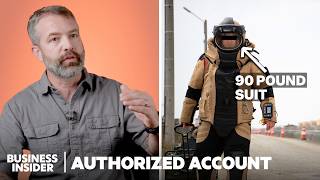

The Biggest EOD Misconception
45sDebunks the Hollywood 'Hurt Locker' myth, sparking curiosity and debate about the real nature of bomb disposal.
▶ Play Clip"Delivers a substantive, first-hand account of EOD work and war crimes investigation, though the title is generic and the content is more documentary than instructional."
The video features an explosive ordnance disposal (EOD) officer and war crimes investigator discussing the realities of bomb disposal work, contrasting it with Hollywood portrayals. It covers the technical aspects of IEDs, the psychological and physical demands of the job, and the transition to investigating war crimes in conflict zones like Afghanistan and Ukraine.
The wars in Iraq and Afghanistan were characterized by IEDs, requiring constant vigilance and assumption that devices were hidden everywhere.
The biggest misconception is that EOD operators are reckless cowboys with a death wish, as portrayed in 'The Hurt Locker', which is far from the truth.
The EOD Warrior Foundation raises money for families of fallen EOD operators, and there is a memorial wall in Florida honoring those who died in the line of duty.
The speaker deployed to Balad in late 2004, then to Kirkuk, leading an EOD unit supporting the 1st Brigade.
An IED consists of a power source, a switch, an initiator, and a main charge, often using consumer electronics modified for remote detonation.
IEDs became more sophisticated as bombers adapted to countermeasures, leading to devices designed to target EOD operators clearing the first device.
EOD operators use a 'five and 25' check, scanning within 5 and 25 meters of their vehicle to avoid patterns that could be exploited.
Robots are used for reconnaissance and to place charges, with jammers to prevent remote detonation, and sometimes explosives are used to disarm devices.
When a device is found, the operator may have to approach it on foot, a dangerous task known as 'The Long Walk', requiring confidence and skill.
Post-blast investigations became crucial, analyzing fragments to understand IED construction and origin, leading to units like the Combined Explosive Exploitation Cell.
Detailed analysis of IED components, down to rivets, helped track bomb makers and improve countermeasures.
Luck plays a massive role in survival; operators focus on controllable factors and accept the inherent risks of deployment.
EOD operators combine mental acuity and physical handiness, akin to a surgeon where failure means death; they are analytical and detail-oriented.
EOD school at Eglin Air Force Base lasts 7-12 months, with intense pace covering physics, math, and demolitions, and a high attrition rate.
EOD is volunteer-only, and the school is designed to weed out those who cannot handle the pressure, with a low graduation rate.
After leaving the military, the speaker became a weapons investigator and military analyst, working with Amnesty International to document war crimes.
In July 2021, the speaker and a colleague went to Kabul to document Taliban atrocities, but had to evacuate as the city fell, eventually running across the runway to board a C-17.
In February 2022, the speaker entered Ukraine to document war crimes, including the use of cluster munitions, which are indiscriminate and leave unexploded submunitions.
Investigators trace weapons used in conflicts to their sources, using forensic analysis and witness interviews to build cases for international justice.
Investigating the bombing of the Mariupol theater involved finding survivors and witnesses to counter Russian conspiracy theories, using building plans and phone interviews.
Many civilian deaths come from legacy weapons, not fancy ones, as stockpiles are cleared and old munitions are used in new conflicts.
FPV drones in Ukraine are analogous to IEDs, being cheap, adaptable, and scalable, changing the nature of warfare similar to machine guns in WWI.
The speaker's first investigation at Amnesty was on US airstrikes in Somalia, where the US military denied responsibility until evidence forced acknowledgment, leading to ex-gratia payments.
Reparations, though not replacing a child, provide a form of closure by acknowledging harm, which is more than a press release.
The video underscores the professionalism and psychological burden of EOD work, contrasting it with Hollywood myths, and highlights the importance of meticulous investigation and accountability in documenting war crimes.
What is the biggest misconception about EOD operators?
That they are reckless cowboys with a death wish, as portrayed in 'The Hurt Locker'.
00:43
What are the basic components of an IED?
A power source, a switch, an initiator, and a main charge.
04:58
What is the 'five and 25' check?
A procedure where EOD operators check within 5 and 25 meters of their vehicle to avoid patterns.
08:15
How long is EOD school and where is it located?
7-12 months at Eglin Air Force Base in Florida.
16:24
What is the 'Long Walk'?
The dangerous approach on foot to an IED, requiring confidence and skill.
10:12
What is the role of the Combined Explosive Exploitation Cell (CEXC)?
To analyze IED fragments and trace their origins.
11:57
What are cluster munitions and why are they dangerous?
They are weapons that spread many submunitions over a wide area, some of which fail to detonate and remain hazardous.
27:34
What is the analogy between FPV drones and IEDs?
Both are cheap, adaptable, and scalable, changing the nature of warfare.
35:11
What are ex-gratia payments?
Payments made by the US military to acknowledge harm caused by airstrikes, a form of reparations.
37:30
Misconception of EOD
Directly challenges the Hollywood stereotype, emphasizing the professionalism of EOD operators.
00:43Anatomy of an IED
Provides a clear, technical breakdown of IED components, essential for understanding the threat.
04:58Five and 25
Illustrates the meticulous, pattern-avoidance tactics used to stay safe.
08:15EOD Operator Traits
Defines the unique combination of skills required, comparing it to a surgeon where failure is fatal.
14:47Cluster Munitions Danger
Highlights the indiscriminate nature and long-term hazards of cluster munitions.
27:34Drones as IEDs
Draws a compelling parallel between IEDs and modern drone warfare, suggesting a shift in conflict dynamics.
35:11[00:00] Explosive ordnance disposal officer. areas to investigate war crimes And this is everything I'm
[00:12] The wars in Iraq and Afghanistan were IED wars. You just had to assume at your feet that you had not found yet.
[00:27] who does this work, You would be inhuman to not be affected by it.
[00:43] It is, it's funny how consistent it is. absolutely no correspondence to absolutely anything. The biggest misconception of
[00:59] when it comes to EOD is this idea of that you have to be do the work, and that the people doing the work and working with perception is, is pervasive.
[01:13] to The Hurt Locker, which won the Academy Award a subject of a film of hand is incredible.
[01:26] reckless cowboys with a death wish. Which could not be further from the truth. So the drama of the film is behavior and this idea that, yeah, of just of
[01:44] Not having a sense of self-preservation. operation is correct. the first few minutes and the last few minutes is Hollywood. And makes a good
[01:59] doesn't understand about the EOD profession We spend memorializing So we have the EOD Warrior
[02:13] Foundation that raises money for of men and women that we've lost in We have a memorial wall down in Florida.
[02:25] every day passing by the wall of the woman who has died in the line of duty from World War when there's a representation in the public
[02:44] cavalier cowboys there's maybe an association or an implication so many people with their name
[02:58] on the wall who died in combat because they were that way you know, just did whatever and weren't paying attention. truth.
[03:16] the end of 2004. Base, which is just north of Baghdad. went back to Iraq in Kirkuk
[03:30] And then did a tour there and I mean, I this sounds so naive now, but I had been training for years
[03:45] thing, and I was finally going to be able to do that thing. a very, you know, 27 year old's version of the EOD unit.
[03:59] And we were there to support first Brigade And so as, as the number two, we're going to have an ops center
[04:13] people, and they're going to be divided out either or they're going to be assigned teams are basically combat engineers with EOD
[04:29] assigned, whose whole job was just to drive the highways and But find the device and take it apart. And so they would just drive the highway before the logistics movements would go
[04:43] emergency response teams, quick reaction teams. QRF. Quick reaction Force teams, however, you want to call it a couple in Kirkuk. IEDs, improvised explosive devices
[04:58] They are put together by a bomber. radio and a main charge of a And maybe some sort of arming switch or something else, that goes into that.
[05:14] That's it. It's improvised because it's just made are a very, very particular solution Afghanistan
[05:27] their own military equipment to challenge There was an occupation, there was U.S. It was hard for them to target.
[05:41] it was it's hard. For them to shoot down aircraft. spot that was being exploited. It's another reason IEDs became so popular is that consumer electronics
[05:57] with wireless technology exploded at the same So they're just more. And more and something happens over there.
[06:12] To instead of, a beep going off. be, I can modify that to now a
[06:24] And as the wars went on dangerous because the bombers or the in places, the people building devices and devices that were meant
[06:38] coming to clear the first device. They they had been trends, even as we tried to mix them up and do different things and were always But the bomber was changing
[06:53] And so when arriving on scene I know where that is.
[07:05] myself safe and my team safe. And And the people that lived in the area safe. because you just had to assume
[07:20] at your feet that you had not found yet. Is to take apart every device. It was a car bomb at a daycare.
[07:34] just trying to make everyone safe. bomb was was meant to target a US to hit a civilian
[07:49] And I think that there's Is important, even when you're out operating
[08:01] Because it this may sound funny... It's easy Well, yeah, there's probably an IED out here or whatever. staying on the edge. There's a reason
[08:15] We check. We do what's called five and 25. You check within 25m of your vehicle. You don't want to just
[08:28] You don't want to do everything the same way. They're going to change something that's going to get you killed. And this is something that pro athletes
[08:42] And it's something I learned from one of the instructors. do the next day
[08:56] was the robot. take it apart, use the gripper. We use jammers to try to keep the bomber from being able to blow it up remotely.
[09:16] an explosive device. is to use explosives yourself. To use an energetic tool, we would call it, to try to get it to disassemble.
[09:30] are carried down by the robot. You put it in the gripper and it drives down and it's putting it near the device. In the
[09:42] typical operation from Iraq, your your robot. doing a recon. Seeing what's it in a certain place to get the effect you want.
[09:55] The first thing you do is you send in a robot, and if your robot blows up And if that robot blows up, I will drive you a third robot before losing a $250,000 robot is way, way better than losing a person.
[10:12] Sometimes you're walking around and you stumble upon the thing and you realize Immediately, right then, To save your our own life. But to be 100 yards away.
[10:26] needs to go and do this thing. Walking down It's called the Long Walk for a reason.
[10:39] that is a certain confidence which is And your skills and your knowledge and the that moment. We've lost a lot of men and women
[10:58] an offhanded, you know, cavalier choice. And it still got them killed.
[11:16] I mean, people just got sick of getting blown up all the time. You can only you can only have
[11:28] For so long before you say When I was first at Balad asked to go and do a post blast investigation.
[11:44] And we drove out there and we looked at the whole. Something went off there. And like, what? We just didn't have the capacity at that time.
[11:57] We, we had weapons intelligence teams. We had a unit called SEXY, the combined explosive exploitation cell in Baghdad. You had all of all of this stuff
[12:14] analysis on exactly Where do they come from? technical standpoint, but from an emotional
[12:28] How do they tend to enter a room? Do you like these little into a scene? Understanding
[12:43] recreating that scene. That's the heart of the work. we had explosively formed penetrators.
[12:58] made to basically punch through armor. They got more and more common through 2007. year before, we probably would have blown them up.
[13:13] and I got on a helicopter to Baghdad deliver these things. analysis everything down to, like the little
[13:26] yeah, we've seen this rivet before. That's that's not something we knew how to do at the beginning of the war. So my job as the commander
[13:39] Organize and lead and We never lost any one of my tours. At the same time, the people that we, you know
[13:54] That that doesn't mean that any Luck is a massive part of this. through Iraq.
[14:08] And I would always You can't do the work if you're not You can't control the fact that you're in Iraq.
[14:21] U.S is fighting a war in Iraq. Your assignment. And so you have to come to peace with that.
[14:34] And focus on the things that you can. sets of character traits for the kind of person that goes into EOD.
[14:47] One of it is a combination of mental acuity and physical handiness. Say is it's like being a surgeon, except if you fail, Then you die
[15:00] And the kind of person that gets into that has to be Booksmart has to do to be really analytical and attention to detail. certain attitude or a certain
[15:16] So I got an electrical engineering degree. engineer. When you're an engineer, you see, like your alarm clock And then you put it
[15:29] back together. EOD sees the alarm clock, Takes it all apart, maybe with a hammer and then can't be bothered to put it back together. And that's much more me. I got a. Scholarship when
[15:43] To go to college At Marquette and get an electrical engineering degree. It was a Very different world. Again I was interested
[15:57] So I got to EOD school in Afghanistan had already Was coming quickly, and we knew what was coming
[16:10] eyes were wide open, that I was not joining a profession would be sleepy, and I would just do my time in the military and move on. I knew that I was going into something where combat was coming quickly
[16:24] attends the same school. At Eglin Air. Area in the panhandle of Florida.
[16:36] And that school takes 7 to 12 months. Yeah, the hardest school is the pace.
[16:49] you basically of physics and then you take a test the next day. you do all of math and you take a test.
[17:02] Then the next section is demolitions. And that's because the school needs to And there are some people that the first time they pick up a blasting cap
[17:20] you know, they just they can't they can't touch it or the, the feeling of putting a bunch of C-4 together and putting out on a pile of bombs and landmines or what?
[17:32] You're getting rid of, Like you are standing on top of your own death. just the, the feeling of that is like, too much. It's DOR
[17:44] You have to be a volunteer to do EOD. So you need an 85% of the questions
[17:58] points. So you do this one thing, you fail. one of these things and it's going to class specifically
[18:13] of us finished. No matter what for the bomber on the street
[18:27] corner at the first time you drive down the road, and there's no way to prepare for that because that particular bomber is most likely, his designs all the time.
[18:47] of the military, I became a contractor. I was covering war in a different way. March of 2018.
[19:02] was initially hired as the weapons investigator and as a military analyst. doing is trying to keep as many civilians safe and free of harm as possible. investigator with Amnesty
[19:17] in a conflict area is very different military and being in an armored vehicle But you also have The entire U.S.
[19:33] it's almost exactly the inverse. Where you are very little support except your own wits.
[19:48] your friends and network and your ability to blend To essentially not get noticed The biggest risks then change.
[20:04] They are normal banditry. being in the wrong place at the wrong time. yourself a target.
[20:17] no one to notice you. I try to do I was always blending in.
[20:29] We So I arrived in Kabul in July of 2021. And the reason that I and my colleague went is And as they were winning
[20:41] violations and crimes was our understanding people caught in the crossfire between the Taliban and the Afghan National Army. that had occurred recently and
[20:56] number of massacres, targeted killings, executions And so, documenting that and we and we were planning on leaving. Except every day,
[21:10] the Taliban were getting closer and provincial capitals started to fall. We had tickets to leave Kabul the day
[21:22] So that morning, the. 15th of August. Our plan was to essentially The Afghan National Army would hold
[21:37] We were going to go to the airport. The night before, overnight at the airport and fly out early in the next day.
[21:51] To hold the airport. And so that morning, the 15th We're planning to leave later that day.
[22:08] outside our compound, like, I mean, steps away from our compound. staff run out. Armed.
[22:20] And basically all the plans changed immediately, which was We are going to the airport, right the second We drove the back roads.
[22:34] The main highways are absolutely through Kabul, are absolutely packed. The Afghan police had disappeared. The road.
[22:48] At that point the airport that night or that evening before dark, and there was Like, okay, we're here.
[23:02] promised that they are setting up a secure area here. we had a plan to sleep and stay overnight.
[23:14] And then after dark, concourse start moving main part of the
[23:29] We would learn later there's two sides to the Kabul airport. side up in the north. word there's rumors spread extremely fast
[23:44] Basically all of the security disappeared. of the Kabul airport, in some ways like any other airport, like you had to go through a metal detector.
[23:59] Like you had to go through the equivalent of TSA to get inside. There's still people working at the front desk right of the various airlines. out through the hallway and like
[24:16] everybody's gone, like every security official is gone. It was pretty clear that the flights the next day were not happening. Was enough to like, basically
[24:32] my colleague, we're, we're grabbing our stuff. you know, where planes are parked. that are sitting there.
[24:46] Out It's completely dark. Who is And he's like, you need to get over here.
[24:58] across and I can see the tails of the C-17s, the American C-17s. to be over here. we ran across the runway.
[25:13] across and we're in the grass and then we're like on a parking apron and then we're in the grass again. And all of a sudden,
[25:26] and it's like it's these things, like holding my passport. does one of these things, holding the passport. And,
[25:40] just lucky we didn't get shot, essentially. And they basically said, "What in And we said, "the Taliban are
[25:53] More and more people started to come. And these are the videos that you saw. And essentially getting ourselves re-arrested.
[26:09] up and, you know, eventually got on We published that report in December. And we I mean, we included.
[26:25] essentially everything that we were able to prove up until the fall of Kabul. drone strike on a car That the US thought was a car bomb and was not.
[26:38] people. Many, many civilians died. Up until the day, the Kabul fell.
[26:54] we entered Ukraine. In February of 2022, is when the full scale invasion. And we set up in Lviv.
[27:09] is because we simply the Russians were going to get in from the eastern border. So,
[27:21] were interviewing people that had fled. We're the first to prove to have physical Cluster munitions being, you know
[27:34] Over a wide area. Cluster munitions are a category of You have a carrier, and that carrier could
[27:50] Clamshell bomb. But it's fired into an area. And it spreads many, many, some
[28:04] over a wide area. the size of a football. Field or even larger. So by their nature they might hit a military target, they
[28:20] randomly falling wherever the air takes them. And by that I mean some of them detonate, but some of them don't.
[28:32] 200 of these fall 80% of them detonate. 90%. that are just sitting there with sensitive
[28:46] up, if you. fuzes are extremely dangerous. the use stockpile, manufacture of cluster munitions.
[29:01] not a state, party. So we had neighborhoods downtown. And were Ppiece of the fragment that a surgeon had
[29:16] photographs with a little, you know, a little ruler or whatever else, 9 to 10. Some munitions And where were you, and trying to build that
[29:33] at this particular time, this weapon was used in That's the heart of the work. pieces
[29:47] And what that That is on no other weapon. And that's a military term. That basically says, what
[30:00] weapons that are being used in this conflict, and what are their sources? When I was in Mykolaiv in July of 2022, Russia still was occupying Kherson.
[30:15] was between Mykolaiv and Kherson. So there were many evenings or nights. would hear an explosion or two, that would interrupt your sleep.
[30:28] But there was one particular night, I don't remember exactly when. that was way, way, way too close.
[30:40] you know, you're looking for the bomb shelter. in the morning, as soon as it's happened, because again, that was way too close.
[30:54] rockets had dropped cluster munitions. But it was only a couple hundred meters away from from our So we essentially.
[31:07] particular sub munitions, they splash is what it looks like of fragmentary. divots, you know, if it hits asphalt or concrete especially.
[31:22] Some of them are, We are collecting evidence. international justice later.
[31:36] But, you know, when I find a piece of frag I'm out digging in a hole and I pull up. don't take it home as a war souvenir.
[31:50] And I leave it for the others. happened is by talking to people. And some trust.
[32:03] known when I was in the military, for all of the fancy. Streams that the US government has I don't know
[32:15] for speaking to the person that lived next door. an excellent example of how challenging this work is. the drama theater in central Mariupol.
[32:31] Major cultural landmark in the And that theater because of the sturdiness of its construction, had served as a
[32:44] And the Russians struck it with 1 or 2 very large aircraft you know, we spoke to
[32:56] were there, had been there or had family members there. conspiracy theories. The Ukrainians put a
[33:10] their own building." And so the We can't get to Mary Mariupol itself. Find people that had been at the theater, find people that had been
[33:25] And then people that could actually name The things that we had to do, we you know, we found
[33:37] plans for And then we have these So we can get on the, phone with people and talk
[33:50] Okay, what room are you in? In the end handful, and we killed.
[34:07] know that violations, most civilian deaths, most tragedy, that comes through conflict is not with fancy weapons.
[34:23] around for decades. the world is awash in more and more possible or
[34:37] feasible that these legacy has been cleaning out stockpiles of weapons that I didn't even Old Hawk
[34:51] that the US had decommissioned long ago. Ukraine is using to shoot down Chad drones right now.
[35:11] I think the best analogy for the IED and analogy is the drone in Ukraine.
[35:23] drones, as used currently is the future of warfare, or if My personal view
[35:36] it is tailor made and that FPV drone. it is so expansively used by both sides is because There's a shortage of infantry, there's a
[35:48] these weapons. in a way and quickly and scale that up in a way that It's very difficult to scale up artillery armor.
[36:02] training more infantry, etc. do change the nature of war machine guns. And we're a novelty until World War One.
[36:16] hard to tell if FPV drones Or if it's really a one off.
[36:33] airstrikes in Somalia was my first case, my first investigation at Amnesty. the U.S.
[36:46] One of the most frustrating things us just getting them to admit they did the thing. We had an initial report,
[37:02] military denied every single one. we documented more and more cases. that the U.S. said. Actually, you're right.
[37:17] with a drone strike. Congress has set aside money U.S. calls ex-gratia payments.
[37:30] we would call them reparations. Or something else. military to say, "We did this." We should of we acknowledge that that your family member was killed.
[37:42] is rarely because the payment itself obviously doesn't replace a child. The reparations are a sign that a
[37:57] country, a military has acknowledged harm in a way It is more than a press release. that families have found closure
[38:12] when when you do get all the way through military to go through the whole families is excruciating.
[38:26] meaning in being family, we believe you and we can prove it, and we're going to. But it
[38:40] is but forcing an organization to say, yes, we really did that, especially For how many years at a time There is some tangible
[38:56] that means something. Not that it fixes the problem.



⚡ Saved you 0h 39m reading this? Transcribe any YouTube video for free — no signup needed.