
How the MIT Blackjack Team Recruited & Trained
60sReveals the secretive recruitment and rigorous training process of the legendary MIT blackjack team, sparking curiosity about how they mastered card counting.
▶ Play Clip"Delivers an authentic insider account with detailed strategies and stories, though some parts are padded with personal anecdotes."
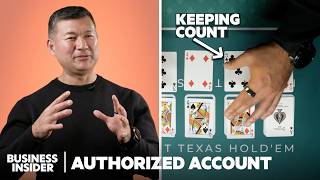
This video features an insider from the MIT blackjack card counting team, revealing the inner workings of their operation. The speaker details the team's structure, training, strategies, and the challenges they faced, including casino countermeasures and the eventual disbandment of the team.
The speaker is a member of the MIT blackjack team that won tens of millions from casinos. He emphasizes the importance of discretion and secrecy due to the cash nature of the business.
Recruits were often friends from MIT. The training involved mastering basic strategy, then becoming a spotter, and finally a big player. The process took 4-6 months, with emphasis on handling pressure and distractions.
The speaker won $40,000-$45,000 at MGM on his first trip, using three spotters. The team had a game plan for each session, including which pits to play and exit strategies.
Spotters would blend in and signal the big player when the count was favorable. The hot signal was crossing arms. The running count was passed via code words, e.g., 'football' for 11. This allowed sampling 20-24 tables per hour.
Casinos eventually recognized team play. They looked for spotters and big players jumping between tables. Countermeasures included shuffling early, half shoeing, and barring players.
The team used disguises like hats, sunglasses, and even a fat suit, but they weren't very effective. The speaker noted that the day shift surveillance was sharpest, so they focused on night shifts.
A teammate's complacency led to several players being caught and barred. The speaker emphasizes always assuming you're being watched.
The team used the Hi-Lo system, grouping cards into high (10-A), low (2-6), and neutral (7-9). High cards are -1, low cards are +1. The count starts at 0 and fluctuates; positive counts indicate player advantage.
The speaker lived a normal student life during the week but adopted a persona on weekends, staying in luxury suites and using aliases. They had simple backstories for their wealth.
The team won tens of millions overall. The best weekend was $500,000 over Super Bowl. Profits were split into three pools: investors, players, and management.
The team operated in cash, often carrying hundreds of thousands of dollars. The speaker once hid $30,000 under his baseball cap. They avoided banks and kept cash in apartments.
Card counting is legal and ethical. Casinos can bar players but must do so civilly. The speaker was barred from many casinos, including Caesar's Palace.
Card counting was formulated by Ed Thorp in the 1960s. The MIT team was a startup called Strategic Investments. The speaker joined in 1993, but that team failed due to poor management and a security breach.
By 2001, key players were too well-known to play, and the team disbanded. The speaker now works as a speaker and consultant, applying data-driven decision-making skills.
Card counting still exists, but online casinos use continuous shuffling and tracking software. Technology like facial recognition may be implemented in the future.
The MIT blackjack team's success was built on rigorous training, teamwork, and mathematical advantage, but ultimately, the casinos' countermeasures and the team's own notoriety led to its disbandment. The story highlights the intersection of skill, risk, and business.
What is the Hi-Lo card counting system?
It groups cards into high (10-A) with value -1, low (2-6) with value +1, and neutral (7-9) with value 0. The count starts at 0 and fluctuates; positive counts indicate player advantage.
16:20
What is the role of a spotter?
A spotter watches tables, keeps track of the count, and signals the big player when the count is favorable.
02:29
What is the 'hot signal'?
The spotter crosses their arms to signal the big player that the count is favorable.
05:39
How long did it typically take to pass the big player checkout?
Four to six months.
03:15
What is a 'camouflage passport'?
A passport from a country that may not exist, used as ID. It's not illegal to use an alias or present a non-government-issued ID.
15:09
What is the 'half shoeing' countermeasure?
Casinos move the cut card up to reduce the number of cards dealt, limiting the card counter's information and advantage.
26:24
What was the team's best weekend win?
Half a million dollars over Super Bowl weekend in Vegas.
22:23
What is the significance of the number 11 in the team's code?
The code word 'football' was used for 11, referencing 11 players on offense and defense.
06:21
Why did the team disband in 2001?
Key players were too well-known and couldn't play without being barred, so profits declined.
32:28
What is the main advantage of team play over individual card counting?
Team play allows sampling more tables per hour (20-24) and increases betting volume, maximizing expected win.
07:34
Insider's Perspective
Provides a rare first-hand account of the MIT blackjack team's operations.
00:02Hi-Lo System Explained
Clear explanation of the card counting system used by the team.
16:20Profit Distribution Model
Reveals the business structure behind the team, including investor and player pools.
22:10Legality of Card Counting
Clarifies that card counting is legal and ethical, countering common misconceptions.
24:58Historical Context
Connects card counting to Ed Thorp and the original Strategic Investments startup.
29:54[00:02] counting team that won tens of millions of dollars from casinos at blackjack tables. And this is everything I'm authorized to tell you. Discretion and secrecy is yeah, it it's of the utmost importance. Particularly
[00:17] since we're cash business, that presents like a obvious potential like safety hundreds of thousand dollars of cash like to and from uh trips. We were very
[00:30] uh structured. We had rules and and policies and protocols for everything policies and protocols for everything that was uh laid out.
[00:45] friends at MIT named Josh uh we lived in the same dorm. Like one day he just told the same dorm. Like one day he just told me about this blackjack Cord County team what to make of what he was saying because I had no exposure to gambling at
[01:02] all. And that's when I learned very quickly that, you know, card counting it, it's a mathematically proven system. It's a 100% legal. So, with the the MIT team, as far as um the successful group, we had a really good run from
[01:19] we had a really good run from 1994 through 20201. MIT is a Massachusetts Institute of Technology. So, it's one of the top science, math, engineering schools in the world. We would actually just
[01:33] the world. We would actually just practice in a classroom at MIT in the early evening about 6:00 p.m. There were three four of us that would uh administer all the all the training to everyone. The number one thing I looked
[01:49] at when it came to potential recruit was just kind of their general demeanor. We just kind of their general demeanor. We knew that the ability, their aptitude to actually learn how to count cards wasn't going to be an issue. So, we we really
[02:02] based things on that that trust and kind of those other characteristics. The whole art of the game, we kind of had like stepby-step training. Like the first step is they have to master that basic strategy. white. What do you do
[02:16] for every single hand in blackjack? There's one and only one correct play. you pass that, you could actually start participating with the team as a spotter. A spotter is someone just that would just watch the tables and keep
[02:29] track of the count and then signal in the big player when things moved into our advantage. And then as they were progressing, the the final and hardest checkout was the big player checkout. That's where you're doing everything.
[02:45] Perfect basic strategy, um, perfect running cow, and then betting optimally, having like the perfect bet relative to your advantage. And then we also factored in you have to have that extra bandwidth to be able to
[02:59] talk, uh, deal with distractions. And so that's something we incorporated into our training uh as well as far as like the very end of the the big player checkout. Passing the big player checkout, like the the top level, I
[03:15] would say it took people typically anywhere from, you know, four to six months. So, the way we tried to train our new recruits to deal with all the pressure and the distractions in the casinos were to try
[03:31] to simulate that as best we could. Like during our training, during the big player checkout, you had to talk. We would also incorporate where we'd have teammates that would be harassing you. They'd be playing the parts of the drunk
[03:44] player at the table or the pit manager that's watching you closely. And there were a few people that didn't make the cut as far as being able to handle all cut as far as being able to handle all that multitasking and and that perceived
[03:59] uh pressure, but overall we had like extremely high uh success rate. We did have a few recruits where it just didn't work out. So we had one recruit where I mean really great guy. I think the stress level was there but then during
[04:15] uh training he would get so flustered when he made mistakes but on one such when he made mistakes but on one such occasion like after failing he kind of his chips from the table and just flung
[04:28] at the wall and he didn't direct his anger at anyone in the team. But after that, we kind of knew he wasn't cut out for it cuz if you're if you're going to break
[04:40] in this environment, you know, what are you going to do in the casinos? I went on the first trip and won. It's like 40 45,000 at MGM. I went and played
[04:54] like 40 45,000 at MGM. I went and played with three spotters. So, I went in. I was very I was excited, optimistic. I wasn't sure exactly what to expect, but then right from the beginning, everything was just went so smoothly. So
[05:08] before each session, we would have a general game plan as far as where what pits are we going to play at, what was the general time frame that we're planning to play, and then also where would we would meet or exit if for when
[05:22] if things both kind of ended well or not so well in terms of like getting attention from the casino. So a spotter can blend in very uh easily. Of course, there is an art of it, right? Because some people naturally are more anxious
[05:39] and kind of stand out. Now once the count of the table like rose into the player's uh advantage, then the spotter would then put out the what we call the hot signal. And we had a very simple signal. They would just cross their arms
[05:52] signal. They would just cross their arms like this. So, I would be kind of uh lurking, you could say, like maybe by the slot machines. And as soon as I saw that hot signal, I would make a beline for the table. And as I approached the
[06:06] table, I would identify where the open spots were. And then at that point, the spotter would pass off the running count to me using a verbal code word. So, for example, for the number 11, we used the code word football. 11 players on
[06:21] offense and defense. Now, the really important thing when the count was being passed off was not to make any type of eye contact. So, say for example, I was coming in on the left side, the spotter ideally would look to the right and just
[06:38] say football. And you could actually say it pretty loud because casinos are it's a noisy environment. And we knew that the surveillance cameras, they didn't record audio, but they could record somebody unconsciously like leaning
[06:53] towards the big player because sometimes uh with new recruits on their first spotting trip, they would get nervous and they would they would unknowingly kind of give a little tail and then we would quickly correct them like after
[07:05] the session, kind of give them feedback. Well, once I knew got that count football, I knew the count was 11. So then I would just sit down and just take over from that point and then the spotter would then walk away to count
[07:21] spotter would then walk away to count another table. And so with this strategy with the the team play your sampling rate goes way up like with three to four rate goes way up like with three to four spotters you could sample up to 20 24
[07:34] tables per hour. So this the strategy of maximize our mathematical expected win and it did provide that camouflage. Now the ideal scenario is that I capitalize
[07:46] on that advantage and then you expect the count to go down like all the high cards to come out and that's when you get black jacks and get the tens when you double down and then hopefully by that point when once the count dropped
[08:00] one of the other spotters would have a hot shoe. So the big player is just hot shoe. So the big player is just jumping from table to table. So one potential telltale sign of a card counter is someone that's varying their
[08:12] bets up and down, particularly near the end of a shoe. Uh but that alone doesn't because there's a lot of gamblers that like to fluctuate their bets up and
[08:24] down. I think one of the aspects in which they proved a lot is they eventually picked up on the whole team play. And so that's where a a individual card counter, it's hard for an individual card counter, they can
[08:40] themselves, but it's hard for an individual to really hurt a casino's individual to really hurt a casino's bottom line. But then a team is capable of doing a lot more damage, right? With a combined bigger bank row, kind of
[08:53] maximizing their betting volume. So the casinos over time did recognize, let's look for these spotters, uh, and let's look for the big player jumping from table to table. For me, I never got nervous. I would get a little
[09:06] bit I would get a bit of an adrenaline rush, but that's kind of that's why you do all the work. That's why your spotters have been counting and that's why you put in all the practice. that's kind of what you're you're trained for
[09:18] and what you live for as an advantage player. So, for me, I just I love that those moments. I didn't go in with the intention of being like uh a manager or a leader. I was just really focused on being the best player I could. And so, I
[09:34] think a lot of that transition into management just came from being a really successful player. I won on that first big trip. I became the first member of big trip. I became the first member of the team to win $100,000 in the trip
[09:47] like uh a few months later. And so it was just kind of a natural like was just kind of a natural like progression.
[10:00] tables. we did have to start looking into disguises cuz one of the unavoidable aspects of advantage play like no matter how great your persona is like no matter how great your persona is or your act is like at some point what's
[10:14] going to give you away is the fact that you keep winning and then that kind of puts you on the on their radar. So, in response to that, we would start to use uh first we started with low tech disguises, uh baseball caps, some
[10:29] sunglasses, try growing, uh a beard or facial hair, and then later on we did I actually did make a trip to LA with one of my teammates and we actually consulted with a Hollywood makeup artist where we tried
[10:44] more elaborate stuff like wigs um and actually a fat man suit. Overall, the disguises didn't work as well as we had hoped because you have to consider when if you get barred from a casino and and well known,
[10:59] if you come back and you're playing and you change your lookup slightly, like when they if they start scrutinizing you, like they're going to recognize who you, like they're going to recognize who you are. Well, as far as the casino um
[11:12] employees and supervisors, that would depend on um just the number of tables. Like a small casino, a blackjack pit might only be four or five tables. At a place like MGM Grand, a blackjack pit could be huge.
[11:25] Grand, a blackjack pit could be huge. And then each pit is going to have floor people. And the floor people, they're responsible for kind of supervising like several tables. Their main job is actually just to rate players and make
[11:39] sure that the dealer is following proper procedure. Each pit's going to have a pit manager. And the pit manager in general is the one where you really want to keep an eye on them because they're more senior
[11:51] knowledgeable they tended to be. Obviously each shift would have its own set of surveillance people. The day shift tended to be the sharpest that would have the mo most senior people. And then we so we started focusing on
[12:07] the night shift and even the graveyard shift as well. The phone ringing that was a big one. when the phone starts ringing in the pit, more attention. And then you also have to learn to discern between when there's
[12:22] actually heat. They communicate regularly in terms of like chip inventory and so forth. But for me, the tailtale sign was definitely just the casino employees, their demeanor. There were
[12:36] they would try to try to be inconspicuous, but you could just tell from their energy and kind of their like quick glances that they were suspicious. there's any type of heat, our rule was to to leave the casino. But there were a
[12:54] few times where it gets it is more difficult to manage, particularly on the really big weekends. So, as far as Vegas, we didn't play there like every week or even every month as a lot of people would think. We focused on the
[13:09] people would think. We focused on the high roller weekends, like New Year's, uh, Super Bowl. Uh, during the time we played, like boxing was like at its peak. There were so many great fighters, you know, Tyson, Roy Jones, De La Hoya.
[13:23] Those fights were at MGM Grand and those weekends you would have all the high rollers come in, celebrities, pro aletes, all of the wannabes and it made for so much cover for us where we could just you could bet 5 $10,000 and you
[13:40] wouldn't even get um a second look. So during those fight weekends, we would literally have the entire team at the MGM Grand, for example. There
[13:52] were a number of uh instances where there was a very poor decision made by a member of a team. You can get too comfortable where the casino people like you and you're not getting any type of attention and then you start
[14:08] to get a little complacent. So, we actually did have that on one trip and we had uh probably we had about 10 players there at the time and then that's when I noticed I noticed the heat. this uh pit manager was looking at
[14:22] me, so I just got up and took off. But unfortunately, one of our other players, she didn't recognize the heat at all. So, not only did she not know notice the heat, she started a conversation right on the casino floor, which that's like a
[14:38] cardinal sin with a number of other players and they ended up all getting nabbed by the casino. And they got taken to the back room. didn't get beat up or anything, you know, they got their IDs and ended up u burning about five of our
[14:54] players just from that one simple mistake from getting like too relaxed. So, you have to always assume that you're being watched. Yeah. Richard Chen, he was a member of our our team, actually an excellent player, and he got
[15:09] involved in a legal situation at Monte Carlo Casino in Las Vegas because he naturally used an alias. It's called a camouflage passport. So a camouflage passport, I believe the one he used was for
[15:24] Burma was it was stated as official country. Well, Burma technically doesn't exist anymore. It's known as Myanmar. And so he used that passport for his ID.
[15:36] And so he used that passport for his ID. It's not illegal to use an alias or even It's not illegal to use an alias or even present an ID as long as as it's not a legal governmentisssued ID. But if you're presenting a passport for a
[15:49] country that doesn't even exist, technically that's not illegal. And so that's why Richard was awarded that 40,000 that he had won. So that was the 40,000 that he had won. So that was the correct decision.
[16:07] compared to other casino games is that it's a way of quantifying what's it's a way of quantifying what's happened before in a user-friendly way to determine when you have the advantage and then capitalize on that advantage.
[16:20] The system of choice by the MIT team is called the Hyo card counting system, which groups the cards into three groups based on how they impact House Edge. Now, with the game of blackjack, when you start at the beginning of a new
[16:35] shuffle, it doesn't matter whether it's single deck, double deck, six deck, or even eight deck. There are an equal amount of high cards. The first group is the high cards, 10, jack, queen, king, and ace. And overall, these cards favor
[16:52] the player over the long run. That gives you blackjack, which pays three to two. you blackjack, which pays three to two. That's 150% on your wager. So, for example, when you're doubling down a 10 or 11, these are the cards that you want
[17:04] to draw. And the third benefit to the player is that when the dealer is hitting on those tough totals of 12 through 16, stiff totals, the dealer is more likely to bust if there's more of those 10 value cards remaining. So, high
[17:19] cards favor the player. There are two low cards, two, three, four, five, and six. So, at the start of a new shuffle, these cards are balanced and they essentially cancel each other out. But as soon as the dealer starts dealing the
[17:33] game, you can imagine that the net difference between these cards is going to constantly fluctuate. And what this does, it provides the opportunity for a skilled card counter to identify when there's a lot of high cards remaining in
[17:49] the game because a lot of a surplus of low cards have already been dealt. The more low cards that are remaining, that means fewer blackjacks for the player. Also, when the dealer is hitting on totals of 12- 16, these are the cards
[18:05] that can turn the dealer's bad hand into the winning hand of 17 through 21. And the third group of cards in the high low is the neutral cards, seven, eight,
[18:18] and nine. And living up to its name, relatively speaking, the neutral cards relatively speaking, the neutral cards don't favor the house or the player. So don't favor the house or the player. So that leaves us with high and low. And as
[18:31] system, right? All of the high cards cancel out all the low cards in any complete number of decks, whether it's single, double, six, or eight. Now, as far as the actual count values, the high cards, they each
[18:47] count values, the high cards, they each have a count value of minus one. Now the reason these are negative even though these are favorable for the player is that a card counter is sticking in terms of future probability. So for example
[19:00] the moment you get dealt a blackjack that's great but that also means that there's two fewer high cards remaining that can benefit you in subsequent play. The low cards two through six are each going to be plus one.
[19:16] And that's in line with the fact that as low cards are depleted from the game, player advantage increases. Because if there's been a surplus of low cards that have come out, that means that there has to be a surplus of high cards remaining.
[19:31] So at the start of any shuffle, the count's always going to be zero because count's always going to be zero because there's an equal amount of high and low. count's going to be constantly fluctuating up and down. So, a card
[19:46] counter takes advantage of those positive deviations. And the key to it is just putting in the time to get skilled at it uh visually so that it becomes second nature as far as keeping track of the count.
[20:06] regular student, you know? you're eating like cafeteria food, you're going to classes, you know, go play pickup basketball with your buddies, but then on uh weekends, you kind of you take on this whole role and persona. So, like as
[20:21] soon as you land in Vegas, for example, uh we would t often get picked up by limo, you know, under your alias, get VIP check-in, and then we would typically always stay like in the best suits, get everything fully comped, and
[20:37] then even get like ringside seats at at the fight. So, all these perks made the made the weekend easier, but we were we put in a lot of hours and worked very hard while we were there. Well, I always really enjoyed the the transition. Even
[20:53] though it's 100% legal, you always have to be like looking over your shoulder. You always had like a simple backstory for um why you had so much money. You could just give them a simple like one
[21:06] sentence like, "Oh, my family's in import export." And then in their minds, they just kind of, you know, that's going to check that that box. It did have some of that like uh Clark Kent the Superman feel. Like even just flying to
[21:21] Vegas, we're still normal, right? We want to be inconspicuous. Naturally, we kind of viewed the casinos a bit as the bad guy. And so, uh I think that's part of what people love about the whole story, right? Just like beating the
[21:35] system, taking down the house. Once we started making um what was a lot more money as compared to being a poor college student, our spending did increase, but we were good. We didn't increase it in an extravagant way. Like
[21:49] it was nice just to be able to have like a nice, you know, sushi dinner, for example, but we were very tempered about it. There was no one on the team that went out and bought a Porsche or anything like that.
[22:10] I would say like the, you know, the MIT teams, we did win like in the tens of millions. I mean, the most I ever won for the team in a trip was a quarter million. But as a team, our best weekend, we won half a million dollars
[22:23] um in Vegas over Super Bowl weekend. What we would do is we would set a What we would do is we would set a arbitrary uh profit goal. Typically it was about 350,000. So once we hit like 350,000 in profit,
[22:39] we would have a distribution. And so that profit it would be divided into like three pools. One big pool was the investor pool. The second big pool that
[22:51] was equal to investment pool was the player pool. As a player, your share of that would be the percentage of expected win that you contributed to the bank. we would meet up discreetly and then we would confirm like all the details of
[23:07] our actual play and then we did have like a third the smallest um pool was for management so for people such as myself that spend a lot of time recruiting training coordinating trips so it was like very businessrun very
[23:21] black and white I mean one of the unique aspects of um being a professional card counter advantage player at that time was that we just operated in cash At was that we just operated in cash At first it was it was quite a jolt as a
[23:35] young person when you're you're carrying around when you see like even $10,000 in cash much less a h 100,000 but then it becomes like anything you get immune to it pretty quickly. So it was common place for us to carry tens if not
[23:50] hundreds of thousand dollars of cash. we'd always have it in our carry-on or actually even better, you would just have it on your person, right? Because a machine, they could they could potentially identify it. Like for
[24:04] example, when we won that half a million in in Vegas, um I was responsible for bringing back like over 300,000 in cash. I totally packed myself and I put the
[24:16] last like $30,000 on top of my head underneath my baseball cap because at the time, you know, it was different as far as security. We didn't utilize banks at all. For example, it was pretty common just simply in my apartment just
[24:31] common just simply in my apartment just locked in in a file cabinet. I could have anywhere from 3 to 500,000. So, I mean, this is a huge part of why discretion was so important. Like literally even good friends of ours
[24:44] didn't know that weren't on the team. They might hear rumors but they had no They might hear rumors but they had no idea the extent.
[24:58] counting, it's uh not just 100% legal, but it's 100% ethical from a business standpoint. casinos, it's it's not in their favor to allow advantaged players their favor to allow advantaged players to to keep playing uh over time. Now,
[25:13] the vast majority of them, they were they're very civil. The most common uh when I would get barred from playing is you would just get a polite tap on the shoulder and they would say something like, "You're welcome to play any other
[25:28] game than blackjack." And that's it. And at that point, our policy was to never at that point, our policy was to never never confirm or deny. Don't argue. Just simply say okay and then you leave the premises. They could be more um
[25:43] aggressive or hostile about it. And there also could be a difference between um the corporate like Vegas casinos and Indian casinos because a lot of the Indian casinos it was so brand new that they're just trying to figure it out
[25:56] because there was still a lot of percept some perception when we started playing some perception when we started playing that card counting is illegal or at a minimum should be illegal as far as the counter measures that casinos can take
[26:11] against card counters. I mean, one simple one is they can just shuffle on you, shuffle up once you put out a big bet. I mean, the downside of that from the casinos is it actually stops the game. So, that was a one kind of a bit
[26:24] of a old school method. Uh, another one is they call it half shoeing you. They might move the cut card up on you. So, the cut card determines the shuffle point, like how far you get to play into the game. So, for example, for a six
[26:38] deck game, typically we would get to play four and a half decks into it. So, they put the cut card at one and a half decks. Now, if you're a gambler, it doesn't matter where the cut card is. But, as a card counter, you ideally
[26:51] would like to play as deep as possible into the shoe because you can get more uh information and you tend to get a higher frequency of advantage. So cutting the shoe in half is one counter measure they especially like to do in
[27:04] Atlantic City because in Atlantic City, according to state law, they're not allowed to ban advantage players. They can't kick them out, but they can take other measures such as half shoeing you. As far as casinos I've been banned from,
[27:18] it's a really long list. MGM Grand, Mirage, uh, Treasure Island, Bellagio, Tahoe, like the all pretty much all the casinos in Tahoe. Like in Tahoe and
[27:32] Bloxy, they're much smaller community. So they even at that time they had an agreement. They would share information quickly. So on one trip to Bloxy Gulfport after I had uh I had won like 40 50,000 and then I they escorted me
[27:45] 40 50,000 and then I they escorted me out politely then they just that information got shared quickly where I went to try to go to another casino and they instantly barred me for playing and that's where it really accelerated um
[28:01] kind of the burnout of players on the team such as myself where you could go to a casino that you'd never played at before, but then you were already on kind of in that that blackbook, so to speak. The first casino I ever got uh
[28:16] banned from in Las Vegas was Caesar's Palace. They had a list of people from MIT that was going around cheating casinos. And then at that point, they um
[28:28] And then they tried to direct us to the And at that point, I just refused. I said, "We're not going." So eventually said, "We're not going." So eventually they relented and and took us to the cab
[28:41] line and uh they read us the official Trespass Act. Well, when it comes to who the casinos allow to play it, it you can just distill it to one simple principle like everyone's welcome to play as long as you're going to lose. It's it's as
[28:56] simple as that. I mean that's they can't they don't discriminate based on any like on gender, race, religion, but they can and they do discriminate based on
[29:08] your skill level. And I know a lot of people get up in arms about it. I guess for me I just it's just one of those facts of life that you just have to accept and it's something that's uh never going to change. I obviously
[29:22] naturally viewed it from an extreme position that the casinos were unethical. They were the bad guys. But then over time, I kind of see things a bit more objectively and that, you know, they're running a business. They should
[29:36] have the right to protect that business interest. I think the important thing to me is that when they do do that, just do it in a very uh legal and civil way.
[29:54] counting. It was a professor named Ed Thorp who formulated it way back in the 1960s. The MIT card counting team, it was a startup company called Strategic Investments. So there were three managers, a Harvard MBA grad and two MIT
[30:11] they raised and they formed a limited partnership and their whole business model was to recruit MIT students, train them how to uh count cards and then you
[30:23] know send in the casinos. And so I was recruited on the tail end of that team recruited on the tail end of that team uh strategic investments in 1993. So it had like a number of issues was that we just had this like really large kind of
[30:38] bloated group and it was a bit disjointed like every practice on strategic investments I would see people I'd never seen before and that also I'd never seen before and that also created a security issue which ended up
[30:51] biting the team um pretty hard because one of the practices in hindsight that wasn't very wise is that the managers they would have everyone on the team their name, email addresses, and phone numbers. It was for good reasons. They
[31:07] wanted everyone to have each other's information so that they could practice with each other in between team practices. But later on, there was a member of the team that sold that took one of those photocopies and sold it to
[31:20] one of those photocopies and sold it to the casinos for like 30 to 40,000. Then I was introduced to um JP. He was one of the managers of the team for some reason. and uh JP, he wouldn't put your
[31:34] full name on the roster. He would just put your initials. So, for me, it was uh put your initials. So, for me, it was uh just MA. So, I was really lucky because my full name would have been on that list. Unfortunately, the team wasn't
[31:47] very wellrun or operated. So, it ended up failing and dissolving. Well, after that failure, like a new team formed. So I was fortunate to be recruited onto
[31:59] I was fortunate to be recruited onto that team in 1994. You could make it akin to the mafia. Like if you mafia you you bring someone in you you have to vouch for that person like that person's on you. So people were were vetted
[32:14] on you. So people were were vetted very uh properly before coming in. After we had that great run of success, things just kind of slowly and gradually
[32:28] moved to the point where we weren't making the same type of profits. And it wasn't because we were losing, we just couldn't get down the money. So key players such as myself, we were so well known that we couldn't play anymore. And
[32:42] so about 2001, it got to the point where we just decided to to call it quits and and disband the team. Currently I'm in touch disband the team. Currently I'm in touch with only a few members of the team. So
[32:56] it's good. It's interesting. Everyone's kind of gone on not surprisingly to do like some pretty uh pretty impressive things in in different fields. We kind things in in different fields. We kind of uh are nostalgic about the the good
[33:08] special period that we got to nonprofit work and then the book Bringing Down the House came out. It that's when our story became public. There was a tremendous amount of buzz
[33:21] There was a tremendous amount of buzz about it. And then I got pulled back in to blackjack, but just in different aspects as like professional speaker. they wanted to learn how to play. And then now I'm currently working on a
[33:37] number of uh uh entertainment projects that are like blackjack, card counting, gambling based. When I was young, I never even knew that such a profession uh even existed. And then it was like after my card counting career ended, I
[33:52] realized well one it was my first exposure to entrepreneurship. We did actually learn from our mistakes, run the team as a business. And for me, I've always been a math guy. That was my first real life application of like
[34:06] probability and statistics, right? It's one thing to learn something in a in a class from a textbook, but it's quite another to experience that in real life. of the things kind of the one of the common threads I've been like a data
[34:21] science consultant. I've had a data science uh boutique firm for a time and card counting was my first uh real life experience about the power of like making datadriven decisions. And so it's something that has a lot of carryover
[34:37] something that has a lot of carryover into other fields. there's always going to be that opportunity, at least in the US, right?
[34:50] As long as the casinos offer blackjack and they're, you know, dealing in a non-ontinuous shuffle machine, you know, that that dependent event uh opportunity is always going to exist. You can't count cards online if it's just
[35:06] essentially like just a continuous shuffle in which uh it's kind of negating those past events. But there are some select online casinos in which the dealer actually does deal the game from a finite set of cards.
[35:20] from a finite set of cards. Unfortunately, they have algorithms and tracking software that can easily identify like advantage players. I mean, what's ironic about card counting and like surveillance in terms of their
[35:33] technology and procedures, they kind of have a a symbiotic relationship in a sense. advantage card counters and and advantage players have kind of forced the casinos to adapt and get better. So, one tremendous improvement is going from
[35:49] like VHS tapes to like modern-day digital cameras, the ability to pull up, you know, footage from it could be from a year ago at a specific time and place.
[36:01] So that provides the sur surveillance with a lot more capability to evaluate players and then the handinhand with that is just the the improvement vast improvement in terms of the databases for undesirable players and that
[36:17] information is now passed can be passed instantly and electronically. I mean in the last 20 years there's been so many um advancements in technology and also in terms of like AI and algorithm development. There are applications of
[36:34] AI for facial recognition, but for the most part, they aren't very effective because as technology gets better and just as important, less expensive, more cost-effective, at some point in the future that's going to be implemented
[36:49] future that's going to be implemented um at every table. I mean, today there are there certainly are card counters still playing and uh and teams as well, a number of which I'm I know personally. So, as long as casinos offer games that
[37:05] are beatable, there's always going to be people looking to to beat the system. account. If you like this episode, then you should check out our new podcast and comment below with the names of people you'd love to hear us interview.




⚡ Saved you 0h 37m reading this? Transcribe any YouTube video for free — no signup needed.