
How Sperm Whales Hunt Giant Squid
44sThe clip reveals a fascinating deep-sea hunting technique, combining echolocation and a suction-feeding trick, which is both educational and visually striking.
▶ Play Clip"Delivers exactly what the title promises — a concise, fascinating look at a specific hunting behavior."
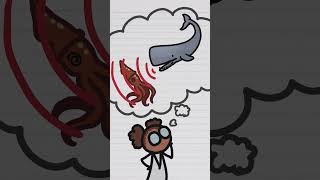
This video explores the fascinating hunting strategy of the sperm whale, the largest toothed predator, as it hunts for giant squid in the deep ocean. It reveals that the whale's famous sonar is not a weapon but a sophisticated tracking tool, and details the whale's unique ambush technique involving a powerful vortex created by its tongue. The video highlights the evolutionary arms race between these two deep-sea titans.
Sperm whales need to consume a massive amount of calories, requiring them to actively hunt many squid of all sizes.
The whale's sonar is used to locate prey in the dark, not to stun it, as squid are unaffected by the sound waves.
The whale uses a final, rapid maneuver, flipping its body and using its tongue to create a vortex that sucks in nearby squid before they can react.
Large squid, like the giant squid (Architeuthis), may try to bite back, but by the time they react, they are already in the whale's mouth.
The video provides a fascinating, concise look at the evolutionary arms race between sperm whales and giant squid, highlighting the whale's sophisticated hunting strategy and the surprising role of its sonar.
What is the primary purpose of a sperm whale's sonar?
To locate prey, not to stun it.
00:17
What is the whale's final hunting technique?
It creates a vortex that sucks the squid into its mouth.
00:43
How large can a giant squid (Architeuthis) get?
It can weigh up to a ton.
00:55
Caloric Needs
Establishes the core biological challenge the whale must overcome.
00:03Sonar is Not a Weapon
Debunks a common myth and clarifies the true function of echolocation in this context.
00:17The Vortex Strike
Describes the whale's unique and effective hunting technique in detail.
00:43[00:03] свои желудки, фильтруя тонны легкодоступных скоплений калорийного криля. Но кашалоту приходится удовлетворять свои огромные потребности в калориях, активно охотясь на огромное количество кальмаров всех размеров, что кажется сложной задачей, поскольку
[00:17] кальмары — ловкая добыча с огромными глазами и чернильными мешками, отпугивающими хищников. Некоторое кашалоты используют свои встроенные сонары для оглушить кальмаров, прежде чем те их проглотят. Но, как оказалось, кальмары
[00:30] вообще не замечают сонарные волны, что на самом деле хорошо для кита, позволяет кашалоту проникать глубоко в самые темные уголки океана и незаметно находить свою добычу. Затем, в последнюю секунду приближения, он переворачивает
[00:43] тело и взмахивает языком, создавая водоворот, который засасывает находящихся поблизости кальмаров в свой рот, прежде чем те успевают среагировать. Когда кальмар особенно крупный, как, например, Architeuthis, так называемый гигантский кальмар, который может весить до тонны, он
[00:55] иногда может попытаться укусить в ответ. Но к тому моменту, когда оно понимает, что происходит, оно time it knows what’s going on, it’s already in the whale’s mouth, so the whale almost always wins.
⚡ Saved you 0h 01m reading this? Transcribe any YouTube video for free — no signup needed.