
AI Summary
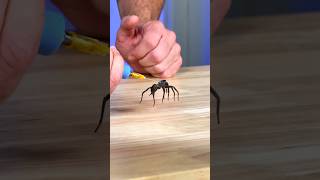
This video explains the hydraulic mechanism behind spider leg movement, comparing it to the operation of a giant excavator. It demonstrates how spiders extend their legs by pumping fluid into them, and shows that even after death, manual pressure can still move the legs.
Chapters
Spider legs work like hydraulics, similar to the system used in a giant excavator. Fluid entering a chamber forces the piston to extend, rotating the arm.
The heart pumps blood into the legs, causing them to extend. When pressure is released, the legs contract. Crawling is achieved by doing this one leg at a time.
After a spider dies, there is no pressure, so all legs contract. However, humans can manually apply pressure to re-extend the legs, effectively hijacking the hydraulic system.
The video shows a blur removal revealing leg expansion and contraction. The presenter asks for a subscription if the demonstration works.
Spider legs utilize a hydraulic system that can be manually manipulated even after death, showcasing a fascinating biological mechanism.
Study Flashcards (4)
What mechanism do spider legs use to extend and contract?
easy
Click to reveal answer
What mechanism do spider legs use to extend and contract?
Hydraulics, similar to an excavator.
How does a spider crawl forward?
medium
Click to reveal answer
How does a spider crawl forward?
By pumping blood into legs one at a time, extending them, and then releasing pressure.
00:29
What happens to a spider's legs when it dies?
easy
Click to reveal answer
What happens to a spider's legs when it dies?
All legs contract due to lack of pressure.
00:41
Can a dead spider's legs be moved?
medium
Click to reveal answer
Can a dead spider's legs be moved?
Yes, by manually applying pressure to the hydraulic system.
00:53
💡 Key Takeaways
Hydraulic system analogy
Provides a clear, relatable explanation of spider leg mechanics.
Post-death leg movement
Shows a surprising and visually striking demonstration of the hydraulic principle.
00:53Full Transcript
[00:00] is the same reason you can bring them back to life with this tiny, little pump. The answer actually has to do with this giant excavator because they use something called hydraulics.
[00:12] As the fluid enters this chamber, it forces the piston to extend and that causes the arm to rotate. So when their heart pumps blood into the legs, they extend out like this and then when they pull
[00:29] And so just by doing this one leg at a time, they're able to crawl forward like this. So this means when they die there's no more pressure in the system and all of the legs contract.
[00:41] But here's the coolest part. Once they go to spider heaven, we can hijack the system on our own. Stay with me for a second, even if you hate spiders, because this is incredible.
[00:53] OK, removing the blur in three, two, one. Look at those legs expand and then contract when the pressure goes away.
[01:09] Now watch this, and if this works, you have to subscribe to see more cool stuff like this. I told you that would be worth it. Oh, got it!