
AI Summary
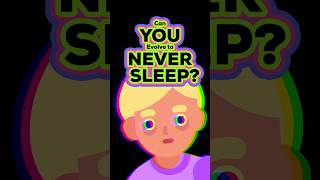
This video explores the hypothetical possibility of eliminating sleep through biological and technological upgrades, examining the brain's reset system, waste clearance, and energy costs. It concludes that achieving zero sleep would require radical modifications, making humans more like dolphins than current humans.
Chapters
Sleep involves neurons pulsing in a slow rhythm, reducing brain noise and preserving learned information. To eliminate sleep, this reset would need to run while awake via implanted electrodes across the cortex.
During sleep, spaces between brain cells open, allowing fluid to flush out protein byproducts. Without this, proteins accumulate, potentially leading to Alzheimer's. Each brain half would need alternating cleaning cycles.
The brain already uses about 20% of the body's energy. Running it 24/7 would require roughly three times that amount, implying significant metabolic demands.
Achieving zero sleep would make humans biologically closer to bottlenose dolphins, which can sleep with half their brain while the other half stays conscious. Nature hasn't found a perfect zero-sleep hack.
Cramming these fixes into a wearable sleep suit could allow a person to be very hungry but otherwise unstoppable, suggesting a practical but extreme solution.
Eliminating sleep is theoretically possible but requires profound biological changes and massive energy costs, making it an extreme and unlikely evolution.
Study Flashcards (6)
What happens to neurons during sleep?
easy
Click to reveal answer
What happens to neurons during sleep?
Neurons pulse in a slow rhythm, reducing brain noise and preserving learned information.
How does the brain flush out toxins during sleep?
medium
Click to reveal answer
How does the brain flush out toxins during sleep?
Spaces between brain cells open up, allowing fluid to carry away protein byproducts.
00:25
What condition can result from protein accumulation in the brain?
easy
Click to reveal answer
What condition can result from protein accumulation in the brain?
Alzheimer's disease.
00:25
What percentage of the body's energy does the brain burn?
easy
Click to reveal answer
What percentage of the body's energy does the brain burn?
Around 20%.
00:37
How much more energy would a 24/7 brain require?
medium
Click to reveal answer
How much more energy would a 24/7 brain require?
Roughly three times as much.
00:37
Which animal can sleep with half its brain while the other half stays conscious?
medium
Click to reveal answer
Which animal can sleep with half its brain while the other half stays conscious?
Bottlenose dolphin.
00:52
💡 Key Takeaways
Sleep as a Reset Program
Frames sleep as a technical system that could theoretically be reprogrammed, sparking curiosity.
Toxin Flush and Alzheimer's Link
Connects sleep's waste-clearing function to a major disease, adding urgency to the topic.
00:25Energy Cost of Wakefulness
Quantifies the metabolic burden, grounding the speculation in real biology.
00:37Dolphin Comparison
Uses a real animal example to illustrate a plausible biological path, making the idea tangible.
00:52Full Transcript
[00:00] Can we evolve so that we never have to sleep? First, we need to upgrade your body's reset system. When you sleep, your neurons pulse in a slow rhythm, reducing the noise in your brain and preserving what you learned.
[00:13] We need to fix that reset program so it runs while you're still awake by implanting electrodes across the entire brain cortex to reset one region at a time. Next, we need to get rid of your brain's toxic waste.
[00:25] Protein byproducts that build up through the day are flushed out when you sleep. The spaces between brain cells open up and fluid carries the toxins away. Without this, the proteins accumulate and you may get Alzheimer's.
[00:37] So each half of your brain will need to take it in turns to be cleaned while the other stays awake. But all this comes at a cost. Your brain already burns around 20% of your body's energy. Keeping your brain running 24-7 would require around three times as much.
[00:52] And biologically, you're not human anymore. You're closer to a bottlenose dolphin that can put half of its brain to sleep while the other half stays conscious. Nature hasn't found the perfect hack for zero sleep, but if we cram these fixes into
[01:04] a wearable sleep suit, you might be very hungry but otherwise truly unstoppable.