
I Could Hypnotize You Right Now
30sThe playful hypnosis setup and sudden reveal create a surprising and engaging hook that makes viewers want to rewatch and share.
▶ Play Clip"The title is intriguing and the video delivers a solid explanation of afterimages, though it includes a promotional segment for the Curiosity Box."
This video explores the phenomenon of afterimages—visual illusions that occur after staring at a stimulus and looking away. It discusses the partial theory involving photoreceptor adaptation, the historical context from J.H. Brown's 1864 book 'Spectropia', and the philosophical debate over whether afterimages are illusions or hallucinations.
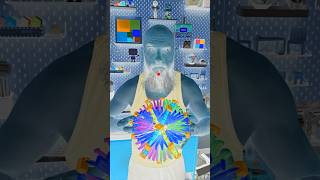
The host demonstrates an afterimage by showing a high-contrast image and then switching to natural colors, causing a lingering inverted image.
Staring at a color (e.g., green) causes photoreceptors sensitive to that color to adapt and become less sensitive, leading to an afterimage of the complementary color (magenta).
Afterimages can occur even with colors not directly stimulating photoreceptors, as shown by spreading illusions, indicating more complex neural involvement.
J.H. Brown's 'Spectropia' (1864) was the first book dedicated to afterimages, exploring how they might explain inexplicable visions.
Illusions are misperceptions of real stimuli; hallucinations are perceptions without external stimuli. Afterimages are debated: some call them hallucinations (no current stimulus), others illusions (based on past stimulus).
The host argues afterimages are illusions because the colors are misperceived, and the afterimage is derived from real light reflecting off the wall, akin to Michelangelo's David being 'already in the marble'.
Afterimages are a fascinating intersection of physiology and philosophy, illustrating how our perception is an active construction rather than a passive recording. The host concludes that they are illusions, sculpted from the raw material of our environment.
What is an afterimage?
A visual illusion where an image persists after the stimulus is removed, often in complementary colors.
00:28
What causes the afterimage effect according to the photoreceptor theory?
Photoreceptors sensitive to a color (e.g., green) adapt and become less sensitive, leaving an inverted (complementary) color afterimage.
00:28
What is the difference between an illusion and a hallucination?
An illusion is a misperception of something that is really there; a hallucination is perceiving something that isn't there at all.
01:38
Why do some philosophers consider afterimages hallucinations?
Because the afterimage is not a real external stimulus at the moment of perception.
01:51
What was the first book dedicated to afterimages?
J.H. Brown's 'Spectropia', first published in 1864.
01:12
What is the host's conclusion about afterimages?
They are illusions because the colors are misperceived and the afterimage is derived from real light reflecting off the wall.
02:17
Photoreceptor Adaptation
Provides a concrete physiological mechanism for afterimages, making the phenomenon understandable.
00:28Illusion vs. Hallucination Debate
Highlights a philosophical distinction that challenges our understanding of perception.
01:38Host's Take
Offers a clear, reasoned conclusion that ties the science to a broader artistic metaphor.
02:17[00:01] >> [music] >> really in your walls right now. To see blink, but just don't look away from the dot. Okay, ready? [music] Ooh, you will subscribe to the Curiosity Box. I'm just kidding. I'm not trying to
[00:16] hypnotize you, even though I could. What I'm going to do instead is switch this image back to natural colors. [music] You ready? Here it is. Ah, just kidding. just happened is called an afterimage, [music] and we still don't fully
[00:28] understand how they work. We do know that if you stare at something green, photoreceptors in your retina that are sensitive to green, that its green light falls on, will quickly adapt and become less sensitive to green light. Your
[00:41] brain expects this and isn't confused until the scene changes. At that point, adapted receptors will barely make it to your awareness. It's essentially inverse is left behind, which in [music] this case is magenta. That's a partial
[00:56] theory of afterimages, but there's more than just your photoreceptors involved, there, colors that are not falling on any photoreceptors, like [music] this spreading illusion, can still cause afterimages. J.H. Brown's Spectropia,
[01:12] first published in 1864, was the first book dedicated to afterimages and how a science of them may help explain otherwise inexplicable visions. Now, this is our restored high-contrast [music] edition, and it comes in the
[01:24] Camera Lucida, you can get this for free. And if you join us for an entire year up front, [music] you will get an extra for free. But here's the question: Are afterimages illusions or hallucinations?
[01:38] Well, typically illusion describes a misperception of something that is really there. Hallucination, on the other hand, describes perceiving something that isn't even there at all. Now, an afterimage that you see is not a
[01:51] you. So, for that reason, many philosophers consider afterimages hallucinations. Now, still others say, "No, no, no, it's an illusion." Um the aren't [music] there, but they were there. Okay, when you see an after
[02:05] image, you are seeing something from the past, but it's also an illusion because you're misperceiving its colors. [music] Okay, here's my take. I don't think it's time travel, but I do think it's an illusion. You see, the original natural
[02:17] in this image are really there. They make up the values of white in the photoreceptors have been adapted to their opposites, well, they'll filter inversion of the opposite, [music] which is the natural scene. In other words,
[02:32] the ghost you can see on your wall after staring at this image for a while was already in the light coming off of your wall. In the same way that Michelangelo's David was already in the block of marble before he started
[02:46] carving. [music] You can sculpt horrors out of the raw material around you. And that is what I call beautiful.
⚡ Saved you 0h 03m reading this? Transcribe any YouTube video for free — no signup needed.