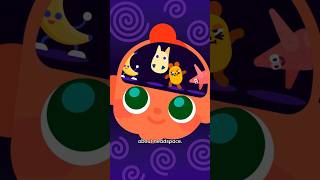

Babies Have More Neurons Than Adults?!
45sThe shocking fact that newborns have 15% more neurons than adults challenges common assumptions and sparks curiosity.
▶ Play Clip"The title is provocative but the content delivers a solid, if brief, explanation of brain development—though it oversells the 'peaked' angle."
The video explains how a newborn's brain is uniquely powerful, with 100 billion neurons and rapid synapse formation, making babies superior linguists and perceptive learners. It contrasts this with adult brains, which specialize and prune unused connections, ultimately making them more efficient but less flexible.
A newborn's brain has roughly 100 billion neurons, 15% more than an adult's, and synapses form at a rate of about 100 million per second.
Babies can distinguish sounds from any language on Earth and could learn any language before turning one, making them better linguists than adults.
Babies can tell individual monkey faces apart, similar to human faces, and learning to move is a mental challenge akin to surfing while doubling in size and quadrupling in weight.
As we grow, the brain uses or loses connections; frequently used synapses strengthen, while unused ones are pruned, leading to specialization.
Pruning doesn't make you dumber; it gives you speech, lasting memories, and a brain that is truly your own.
The video concludes that while babies have incredible learning potential, adult brains trade flexibility for specialization, which is essential for complex skills and personal identity.
How many neurons does a newborn's brain have?
Roughly 100 billion neurons, 15% more than an adult's.
00:01
At what rate do synapses form in a newborn's brain?
Around 100 million per second.
00:01
Why are babies better linguists than adults?
They can distinguish sounds from any language on Earth and could pick up any language before turning one.
00:17
What happens to unused synapses in the brain?
They are pruned, while frequently used synapses get stronger.
00:53
What does synaptic pruning provide in adulthood?
Specialization gives the power of speech, lasting memories, and a brain that is truly your own.
01:07
Newborn Brain Has More Neurons
Reveals a surprising fact that challenges common assumptions about brain development.
00:01Babies Are Universal Linguists
Highlights a critical window for language acquisition that adults lack.
00:17Use It or Lose It
Explains the mechanism of synaptic pruning in a memorable way.
00:53[00:01] >> is better than yours. At birth, a newborn's brain has roughly 100 billion neurons, 15% more than an adult's. Soon, [music] synapses start forming at a rate of around 100 million per second as new experiences trigger chemical signals and
[00:17] build new connections. Having a brain that's still wiring itself makes babies [music] better linguists than adults. They can distinguish sounds from any language on Earth and could pick up any of them before they turn one. They're
[00:29] also super perceptive. Unlike most adults, babies can tell individual monkey faces apart, just like they can with humans. And at the same time, they're learning to move. Wrestling with gravity is as much a mental challenge as
[00:41] it is a physical one, like trying to surf while doubling your size and quadrupling your weight. When it comes to this pace of learning, adults just can't [music] compete. With all those synapses, babies don't need to be so
[00:53] >> [music] >> But as we grow, our brains have to use these new connections or lose them. Frequently used synapses get stronger destruction. But this doesn't [music] make you dumber. Specialization gives
[01:07] you the power of speech, memories that stick, and a brain that's truly your stick, and a brain that's truly your own.


⚡ Saved you 0h 01m reading this? Transcribe any YouTube video for free — no signup needed.