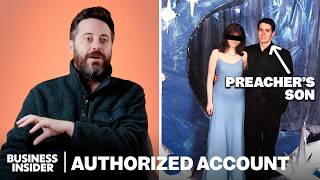

I survived gay conversion therapy
45sPersonal survival stories from marginalized groups generate high engagement and empathy.
▶ Play Clip"Delivers exactly what the title promises: a detailed, first-hand account of conversion therapy camps, with historical context and personal testimony."
This video features Garrard Conley, author of 'Boy Erased', providing a first-hand account of his experience in conversion therapy at Love in Action in 2004. He details the coercive techniques, psychological manipulation, and lasting trauma inflicted by the program, while also discussing the broader history and ongoing impact of conversion therapy.
Garrard Conley begins by stating he entered conversion therapy at age 19, after being outed to his parents. He emphasizes that this practice, often thought to be a thing of the past, happened to him in this century and is still ongoing.
Conversion therapy is defined as any attempt to change a person's sexual orientation or gender through coercion or force. Conley arrived at Love in Action in June 2004, noting the program's high cost ($2,500 for a two-week session) and the strict, restricted environment.
Upon arrival, Conley was patted down and his belongings were searched. Staff questioned items like phone numbers and even confiscated his notebook containing short stories, disturbed by a female character he had written. This established a climate of intense surveillance.
Conley received a 274-page handbook filled with rules governing every aspect of behavior, including how to talk, think, and act. The program followed a strict script, with participants expected to confess their 'horrible' past and express happiness, though the staff seemed deeply unhappy.
The program enforced rigid gender norms: men were forbidden from wearing sleeveless shirts, and women were told to wear bras. Participants were taught to monitor each other for feminine behavior in men, reinforcing a binary and submissive ideal for women.
A map of the city marked 'safe' zones (religious) and 'evil' areas (secular). Participants were restricted from secular places like bookshops and restaurants. Conley's mother once sneaked him out for an Italian dinner, but he felt guilty about being influenced by secular culture.
Each day was rigidly scheduled with silent Bible study, group therapy, and church lessons. The therapy aimed to teach participants they were wrong, using testimonies from ex-drug addicts and others. Group sessions often included people with diverse struggles, all lumped together.
Arts and crafts were designed to induce shame about one's life. Music was restricted to Mozart and Bach. The underlying message was that all sins are equally sinful, but participants learned they were particularly disgusting.
The program used a system similar to Alcoholics Anonymous, with the first step being admitting to God that being gay is wrong. Confession was a key component, with participants expected to share their darkest secrets and then receive 'I love you' from others, teaching a dark version of love.
The genogram was an activity designed to trace family sins, suggesting that the 'sins of the fathers' caused homosexuality. This made Conley view his family members as sinful, rather than as individuals.
Love in Action was founded in 1973, the same year the APA declassified homosexuality as a mental illness. It began as a church group and later became part of Exodus International. The program was designed to get participants to buy into longer programs, eventually becoming permanent staff.
John Smid, the leader of Love in Action, was a married man who used these practices to create a semblance of a 'normal' life. Conley felt angry that someone who couldn't hide who they were was lecturing him, and he was constantly scrutinized by staff.
Participants decorated plastic masks: the front showed the world what they wanted to see (crosses, Bible verses), while the back showed the 'ugliness' inside. Conley's humor during this exercise was not appreciated, and he was told to take it seriously.
Conley was a target because of his skepticism. When he pushed back on Freudian explanations, he was shamed, even though others in the room seemed to agree with him. He recognized brainwashing techniques involving rules, repetition, and correction.
Conley believes the staff were truly religious and thought they were doing good, but cruelty came through. They mocked gay behavior out of self-disgust, projecting their own trapped feelings onto the participants. He met John Smid years later, who had renounced the practice but remained evasive.
Conley grew up in a small town in Arkansas. At age 12 or 13, he was pressured to sign a petition against a pride parade, which made him feel like a liar either way. He learned to mask his feelings, and his father's role as a beloved mechanic added to the pressure to conform.
In his freshman year of college, Conley encountered new ideas that contradicted his upbringing. This environment made him question everything and equipped him to leave Love in Action. He credits that semester with saving his life.
Conley's roommate, a friend from high school, disclosed that he had assaulted a 14-year-old boy, and then assaulted Conley that night. When Conley reported it, the college minister told him to stay quiet without proof. The roommate then outed Conley to his parents, leading to his enrollment in conversion therapy.
Conley's father gave him an ultimatum: go to Love in Action or lose his family, community, and God. He was forced to swear to God that he didn't feel these things, which he couldn't do. He felt trapped and gave up, eventually applying to the program.
The application for Love in Action was more difficult than college applications, with absurd questions (e.g., about Dungeons and Dragons) and deeply personal ones about fantasies. It required a preacher's recommendation, and Conley underwent three months of one-on-one therapy beforehand.
The therapist had Conley divulge his sexual thoughts in great detail, then shamed him with Bible verses. This contributed to the start of his depression. His mother tried to comfort him by taking him shopping, but he felt disgusted with himself.
Conley's father was ordained as a Baptist minister the weekend between his two weeks of therapy. Conley attended like a zombie, and during the ceremony, someone asked his father to affirm that no one in his congregation would believe homosexuality is a good option, which he did.
The 'lie chair' exercise involved sitting across from an empty chair and imagining a person there. The staff assumed Conley hated his father, but when he said he didn't, they insisted he was lying. When he refused to participate, staff yelled insults, calling him a plant and fake.
Conley got up from the chair and walked out, retrieving his phone. He called his mother, who came to get him. On the drive, she asked if he was going to end his life, and he knew that saying yes would mean never going back. She said, 'I'm never taking you back there again.'
His father asked if it worked, and the family closed the conversation for seven years. Conley struggled with the lasting effects, including difficulty trusting people and an inability to attend church or see a therapist due to intense fear and anxiety.
Conley emphasizes that conversion therapy closes the door on many things that could heal you. His mother eventually became supportive, and his father, while still a preacher, has changed his heart but can't say it out loud in his church, representing another kind of closet.
Conley initially didn't consider himself an activist, but after writing 'Boy Erased', he found a singular message. He has worked with organizations like the National Center for Lesbian Rights and Born Perfect to legislate against conversion therapy. Since the book's publication, almost half of US states have banned the practice for minors.
Conley continues to write, with a historical fiction novel 'All the World Beside' and a teaching position at Kennesaw State University. He also runs workshops at Bennington's MFA program.
Conversion therapy existed before Love in Action, with examples like Saint Elizabeth's Hospital in the 1950s and 60s using shock treatments, lobotomies, and chemical castration. Modern conversion therapy is more talk-based but still harmful.
Zach Stark's Myspace post brought conversion therapy to national attention, leading to protests. John Smid's online apology and Exodus International's later apology were shocking to Conley, who then contacted therapists and survivors to round out his understanding.
Conversion therapy is now primarily used against trans people, fueled by anti-trans rhetoric. Regulation is limited because it's often protected under religious freedom, so legislation focuses on banning licensed professionals from using it on minors.
While legislative victories are largely symbolic, they matter. Conley advises parents to let their kids grow and find out who they are, as conversion therapy only confuses them more. For those facing ultimatums, he says to hold on to the truth and what you really feel.
Garrard Conley's account reveals the coercive, shame-based, and psychologically damaging nature of conversion therapy, which continues to affect survivors long after they leave. His advocacy and legislative work highlight the ongoing fight to ban this practice, especially for minors.
What is the definition of conversion therapy?
Any attempt to change the sexual orientation or gender of any person by use of coercion or force.
00:37
In what year did Garrard Conley attend Love in Action?
June 2004.
00:50
What was the cost of the two-week session at Love in Action?
About $2,500.
01:02
What was the purpose of the genogram activity?
To teach participants why they were in conversion therapy by tracing family sins, suggesting that the sins of the fathers caused homosexuality.
11:26
What year was Love in Action founded, and what significant event happened that same year?
1973, the same year the American Psychological Association declassified homosexuality as a mental illness.
12:09
What was the 'lie chair' exercise?
A therapy exercise where a person sits across from an empty chair and imagines a person there, used to elicit feelings, but in this context, staff insisted on a predetermined narrative.
29:45
What historical practices were used at Saint Elizabeth's Hospital in the 1950s and 60s?
Shock treatments, lobotomies, and chemical castration.
38:58
How many US states had banned conversion therapy when 'Boy Erased' was written?
Zero.
37:04
What is the current primary target of conversion therapy?
Trans people, fueled by anti-trans rhetoric.
42:23
Definition of Conversion Therapy
Provides a clear, formal definition that frames the entire discussion.
00:37AA-Style System
Reveals the structured, quasi-religious methodology used to enforce conformity.
08:28Historical Context
Connects the founding of Love in Action to the APA's declassification, highlighting the backlash.
12:09The Lie Chair Exercise
Illustrates the coercive and invalidating nature of the therapy techniques.
29:45Advice to Parents
Offers a direct, actionable message to parents considering conversion therapy.
43:27[00:00] I began conversion therapy at 19 after being added to my parents. This is everything I'm authorized to tell you. dramatic practice that happened like in the last century.
[00:17] happened in this century to me, and it's still going on. a certain way, that could be reported to the therapist, who would then take you in their office and shame you for a very long period of time.
[00:37] is any attempt to change the sexual orientation or gender of any person by use of coercion or force. I arrived at Love in Action in June of 2004.
[00:50] this place looks really tacky, you know, for the amount of money we're spending. Because I think at the time, the two week session that I was in,
[01:02] which was like a youth group was about two, $2,500, So we pull up. It's got ugly decor on the walls. She wanted to see the place,
[01:18] but they said that she couldn't that it was private and restricted. There was, not a strip search per se, but definitely a patting down. One of the people there looked through every one of my belongings he was like,
[01:31] pull out cards from my, wallet and say, okay, well, where did you get this from? Is this a phone number that if I called, it would be inappropriate? And I was writing short stories at the time,
[01:46] but when I entered Love in Action, they looked through my notebook image, was misleading me in some way. and threw it away without reading the story. Really.
[02:01] they were, disturbed that I'd written a female character, Everything was kind of streamlined. You know, I had like a 274 page handbook
[02:15] there were so many rules, like how we're supposed to talk to one another, How we were supposed to think in any situation, you know, like,
[02:29] and you'll see this sort of rundown of, of what you're supposed to do. And it seemed like they were following a script.
[02:41] So I'd start with, like, I did all these horrible things when I was younger. here's why I'm so, so happy today. I mean, these people didn't seem happy at all.
[02:56] They seemed really, really, deeply unhappy. they got into great detail on, what we should wear. So men should not wear sleeveless shirts or anything
[03:08] that's going to be suggestive of their muscles or their bodies. Women were for, you know, told to wear bras. And we were sort of taught that, a surveillance system was important for this whole endeavor.
[03:22] We had to check each other for, if you're a man, feminine behavior. So basically they were saying that if you're a straight man, you act a certain way and if you're a straight woman, you must act completely
[03:38] effeminate, and submissive they had bizarre rules, too. if you are going to slip up and masturbate, here's what you should do.
[03:50] So there was practical advice, along with theoretical, discussions about masculinity and femininity. there was a map of the city with zones and places
[04:07] that were marked that were safe, and everything else was evil. restaurants, from going anywhere secular. So what that meant was if a bookshop or a store was not explicitly
[04:22] Although my mom did sneak one night, we went to the Peabody Hotel in Memphis, which is a really nice hotel, and ate this beautiful Italian dinner.
[04:36] oh no, I'm going to be influenced by the secular culture. I was constantly being told how to stand, how to act, what
[04:48] my posture should be those were things that I couldn't help, right? the way that I spoke, it was not something I could just suddenly erase.
[05:04] every day was rigidly scheduled. that schedule would consist of silent Bible study in the morning, group therapy. that were designed to teach us that we were wrong.
[05:21] anything from, ex-drug addicts to people who'd And then we would go to a separate church and do another lesson.
[05:35] We were never really allowed to be in a group together without, what we were going to tell each other. Love in Action had a rather unique approach to conversion therapy
[05:49] and that they were sort of structured like a It's like you go to Vacation Bible School and you do crafts
[06:01] Well, there was no singing. There was no music allowed other than Mozart and Bach, we were allowed arts and crafts, but they were designed to, like, make you feel shame about your life.
[06:15] We went to church at various points, but there was no singing or, eating together. It was like a lecture, I wasn't prepared for
[06:28] in, a group therapy session. And especially not with the people that I was there with. You know, there were people dealing with bestiality,
[06:42] But we were all grouped together in one session in the mornings, that love and action was easing was that all sins are equally sinful within God's eyes.
[06:57] Many of the people there had tried to commit suicide. You know, like, I could die, if I don't change
[07:09] or I could become one of these people that I don't expect to become. seeing these people whose lives were in many ways broken
[07:23] I'm 19 at this point, and I'm being told, like, people's lives have been completely ruined by their sinfulness. who were like, "Yeah, I lost my lover to aids,
[07:39] It was just a fantasy. Or a man who would say "I lived 12 years with another man, but it was always selfish and greedy, and we were all,
[07:53] There was still a part of me, I think, when I showed up at Love in Action, that thought, well, maybe I can still have a future with a man. that I was meeting was a tragic one.
[08:10] that everyone is equal in their sinfulness and that God loves us all anyway. They would say that sometimes, but then what you really learned that they felt was that we were particularly disgusting.
[08:28] system that was very similar to Alcoholics Anonymous, with the first step being, you know, you have to admit to God that you're wrong and that you're the part of you that believes you're gay is wrong.
[08:41] And as hokey as some of their teachings were, and as silly as it sometimes looked or the ugly Bible verses crocheted on the wall, you know, any judgments I had could easily be shut down with,
[08:55] well, you know, when an alcoholic goes to AA meetings, it's not glamorous. would be testimonial format really is what it was. It was I grew up in the church watching testimonials.
[09:10] It's time to talk about it. It's time to confess. And then tell us why all that stuff was wrong. That was our homework. everyone had a really
[09:25] I went to the underwear section and looked at pictures of men in underwear. And so I started making things up, I think by the third day, like,
[09:37] oh, yeah, I kissed a boy, only wishing that I had done that. my lack of experience with stubbornness. You're not telling me what you really did.
[09:53] I think I made up, like, masturbating with somebody I never had, So in a way, I knew that there was something deceitful in doing that. if they kept telling me that I wasn't really committing.
[10:09] that nothing was working and that I was stubborn. I mean, like, my entire motivation for getting out of bed,
[10:23] for continuing to do it even though it felt like my life was empty. You, The instructor would kind of pile on anyone during the therapy sessions that was revealing anything personal, we could never talk positively about
[10:37] anything gay or, you know, gender related that they didn't like. and how much I loved them. the devil entered our minds often.
[10:53] and said, yeah, I like that video game too, or blah, blah, blah. And they're like, yeah, it's evil. You know, like they just come up with some reason why it was bad.
[11:09] after someone gave a speech, you'd have to say, I love you and then say their name. You get up and you'd, like, share the darkest secrets you could. And right after that, to be followed up with "I love you."
[11:26] taught us a very dark version of love, They had a an activity called the genogram. And the goal was to teach us why we were in conversion therapy.
[11:41] To say that the sins of your fathers are bearing down upon you now. And that's why you have an H next to your name for homosexuality. It made me look at them as if that's all
[11:57] I didn't really, like looking at my family members, like they were just sinful people.
[12:09] conversion therapy facility in Memphis, Tennessee. It was, founded around the year 1973, which was the same year that the American Psychological Association declassified homosexuality as a mental illness.
[12:24] It began as a church group in a small church in San Rafael, California. A few years later, Exodus International was founded. And that was one of the largest international conversion
[12:38] That began a movement where slowly people started to medicalize the problem. that could help, systematize
[12:55] really the path out of homosexuality. The one I went to is called The Source. It was a two week trial program for younger people.
[13:07] really what it was designed to do was to get you to buy in to a longer program. you passed two weeks, now it's time to go to three months. then two years, and then you're a permanent part of the staff.
[13:32] Smid started off in a support group in a church for people who are dealing with homosexuality. And then Love in Action asked him to be the leader.
[13:48] He was, I think, married twice to women, and he had used these practices to create some semblance of a, quote unquote, normal life.
[14:02] There was a sense of holier than thou, I was really angry at the time that someone who obviously couldn't hide who they were
[14:14] was lecturing me because, I felt like I was good at playing the part. Nobody knew really about my sexuality until I was outed. I was constantly scrutinized by the staff members
[14:29] "I can see you thinking" that was something that I heard a lot. I think it was very hard for all of us to
[14:41] because on one hand it felt like a very familiar world that My whole life, they acted like youth pastors.
[14:53] And then on the other hand, you know, we were being shamed constantly by these people that we were told to look up to. And I think that was really hard for everyone, including myself.
[15:07] We had these plastic masks that we had to decorate. On the front of it, we showed really what the world saw us as
[15:19] you know, these Bible things and crosses and things. And then on the back we were supposed to show the ugliness inside, sort of what we were hiding from people.
[15:33] And, I looked around at the art supplies and I said, well, you know, I would need, like some tar they were like, that's not funny. You need to you need to take this seriously, and you need to really commit
[15:48] to this exercise, and you're distracting other people with your humor. I was definitely one of the main targets because I was skeptical And so any time I would sort of react with a question or be academic
[16:06] in any way or like push back on anything, can recall a moment when I pushed back, we were in a session
[16:19] Dynamics, and we were being told all the stuff, the Freudian stuff about how this is what your father needed to act like. One time someone said,
[16:32] "well, you know, really what you probably want, And I'm sitting there just like, did I just hear that? And in this Christian setting, And so I said,
[16:51] and we talked about Freud, and I don't think that's right." You know, we know this," blah, blah, blah.
[17:04] And and so I was shamed for that, even though I could tell with a few of the expressions around the room that they agreed with me. and discovered a lot of brainwashing techniques that are used around the globe.
[17:21] They happen to involve a lot of rules. They happen to involve a lot of repeated Here's what you actually think."
[17:35] So the correction was the point in many ways. Looking back to you, what do you think kind of motivated them? I think these people were truly religious people, for sure.
[17:48] I think that they believed that they were doing the right thing. that these people thought they were doing good. That doesn't mean that cruelty didn't come through.
[18:03] who would mock gay behavior or whatever they deemed as gay. But I think they did that out of self disgust.
[18:15] and what they really wanted to express in their lives. they pushed it out, you know, on us. you know, like they were trapped in it much longer than I was.
[18:32] I remember meeting John years later after conversion therapy, after he'd renounced it and said that he didn't believe in it anymore. And he was still evasive about what he'd done.
[18:48] I don't think I could live with it, So I grew up in a really small town in Arkansas called Milligan Ridge.
[19:02] And the only real community that we had, aside from my dad's business, was a one day when I was in Sunday school, I think I was about 12 or 13,
[19:16] a man came into the classroom with a petition that was against a pride parade that was taking place in a town not far from ours. And he said, I want everyone in this room to sign it.
[19:29] that if I signed it, I would be a liar on some level, which was a sin because I was attracted to other boys
[19:41] But if I didn't sign it, everyone would know that And I remember in that moment thinking, During that 2003, 2004 period,
[19:58] We had the marriage amendment, which was being voted on, to forbid same sex partners from marrying, and it was not that distant from other stories like Matthew Shepard.
[20:14] So I learned how to mask a lot of what I was actually feeling during that time. and so she was kind of my shield during that time. That's why it makes it really hard to be angry with him.
[20:31] He worked as a car mechanic and owned it for 25 years. I you know, everybody knew him. Everybody loved him. entire community was watching me for signs of like, are you like your dad?
[20:50] All these things that I had almost no interest in doing were expectations that I felt were on me. One was evil and wanted,
[21:04] And the other was the good son and the straight son and, the son who would follow in his father's footsteps.
[21:16] And I was a very private person for that reason. going smoothly until my freshman year of college.
[21:32] And in that setting, there were these new ideas, ideas that were really forbidden when I was younger. that women's rights were, nothing but a hoax,
[21:49] and that the LGBTQ movement was just, basically perversion. So suddenly I'm in an environment where people don't believe that. I was shocked, I started questioning everything that people were telling me.
[22:02] And I think that without that one semester, I wouldn't have been equipped to leave a place like Love in Action. Those were the things that saved my life. I had a roommate
[22:16] who was a friend from high school, My roommate told me that he had assaulted a 14 year old boy in his church group, and I remember at the time thinking,
[22:31] And also thinking like, "is this what happens when you're gay?" You know, and one of the reasons I thought that was because of so much language at the time, and it still exists today
[22:46] and that they will assault people younger than them if they get into a position of power. disclosure from my roommate,
[23:00] and he assaulted me that night when I was asleep. the next day, I told some friends of mine And, they told their mother,
[23:15] and told him he was a horrible person. It was a liberal arts school, but it was Presbyterian.
[23:27] And the minister basically told me that without any proof, I had nothing and that I should be quiet my roommate found out about it that I told. And he said, Garrard is living an openly homosexual life at school,
[23:42] And he said that they needed to come pick me up and do something about it. And I remember thinking, if I leave college, you know, like,
[23:56] Because this is the world that is teaching me to think So my mom shows up at the school with a friend because she's afraid,
[24:09] and we sit on a bench outside she said, is this true? my roommate did something horrible and he's trying to cover it up And my mom said, well, I think we need to go home anyway and talk to your dad.
[24:25] crying the whole time, thinking like, how do I get out of this? when my dad learned that I was gay, he took me into his bedroom, closed the door, and said,
[24:40] listen, I've spoken with Bellevue Baptist Church in Memphis. They tell me there's this great program that has a high success rate. and that if I didn't go there, that I wouldn't see my family
[24:54] or my community, or talk to God ever again. But he didn't believe me. And finally he said, I need you to swear to God that you don't feel these things.
[25:06] After that, I went to my room and looked up search on like, how do you have credit if you don't have any credit?
[25:20] How do I become independent? that I just gave up.
[25:35] for an application for Love in Action in Memphis. What I was up against, because the application, not only did
[25:48] it have absurd questions in it, like, have you ever played Dungeons and Dragons? Which they saw as eastern and evil, but they also had questions that were deeply personal, like, what fantasies have you had?
[26:03] They wanted you to be vouched for by a preacher who believed that you were willing to change. who wrote a letter of recommendation for my application,
[26:18] and I would say that my application was harder than my college applications, after that came the brochures and the planning. And that's when I went to about three months of one on one therapy
[26:30] with a conversion therapist who was connected with love and action. And that's where he basically had me divulge almost sexual thoughts and, And he would ask me to go into great detail.
[26:43] And after that he would say, well, here's a few Bible verses This is disgusting and shameful. not only in his words, but in the way he looked at me.
[26:56] want to talk about it with my mom or my dad. And I wouldn't talk at all about it I think it was the start of depression.
[27:09] I didn't have a lot of motivation and I think that my mom understood this I'll never forget one of the sessions when I was in this one on one therapy.
[27:21] that depression Then I came out just completely drained and she said, let's go shopping,
[27:34] That's okay, you know? totally normal, that you would do with your family are somehow evil. She buys me this like really expensive, beautiful coat and, has me try it on.
[27:50] And I'm feeling feeling good about myself. you're disgusting. Like, look at you. You're going to cover it up with this coat that makes you look even gayer and like,
[28:06] some kind of power over my life when that was not a secret anymore, there was really nothing to hang on to. bitter, angry, cold,
[28:24] And it was something that I saw reflected you know, there was just something fake about all of it to me.
[28:37] But but then again, I thought, well, maybe that's what you have to do as an adult. Maybe you just have to be fake. It was crazy because my dad was being ordained
[28:52] as a Baptist minister the weekend between my two weeks of therapy. I think that my dad really believed in these people who sold him this idea that, like, okay, once he hears for sure that this is wrong
[29:06] and he hears it enough time, then he'll change. that I would just show up at the ordination ceremony. And that's not what happened.
[29:20] What happened is I showed up and I was like a zombie. as he was being ordained, someone says during the ceremony itself,
[29:33] that no one within your congregation will ever believe that homosexuality is a good option, And he said, yes.
[29:45] yeah, I was when I returned, we had a big exercise called the lie chair,
[29:57] which was something that's often used in real therapy. So you sit across from an empty chair and imagine a person sitting there therapy their assumption was that I hated my father,
[30:14] and share all these intimate feelings I had about my relationship And they did this in front of everyone.
[30:27] when I said to them, like, I'm not actually angry at my dad, I, They said, that's not what you really feel. And I said, well, I don't have any.
[30:42] Several people got up and started yelling all these insults like, You're a plant. You're like, fake all these things just to try to get me to engage in the activity.
[30:58] It was an auditorium, and I said, I'm not going to do this. everything that I believed about Christianity was based on compassion.
[31:10] And suddenly I was being told that I needed to hate my father I got up from the chair, started to walk out of the auditorium. I went to the office where all my belongings were, including my cell phone,
[31:25] And the guy there said, no, not unless it's an emergency. And he gave it to me, gave me my phone. and, she was staying in the hotel room not far away.
[31:41] She just said, okay, I'm going to come get you she drove off. of the highway and says, like, "I've heard all these stories about people,
[31:55] are you going to end your life?" place myself back in that moment because I knew that if I said yes,
[32:08] Because if she says we're going back after she hears that, she said, "I'm never taking you back there again."
[32:21] I was surprised, honestly, like, I, I knew my mom loved me, but I just thought the pressure of all of this would get to her again. We drove back in silence, came to the house,
[32:33] And my dad answered the door and he said, "well, did it work?" Like, no, it was never going to work.
[32:47] And our family closed the door on that conversation for like seven years maybe, we didn't talk about it. I know my mom talked to my dad a lot during this time, but,
[33:04] you know, he was struggling too, with just what he'd done and what he saw in me when I showed up on that doorstep. Like I was not the same person.
[33:19] I mean, luckily I chose, I think good, good choices. because I was just like confused about what my life was.
[33:31] And I needed some other culture to understand my own culture. It like, stays there and you have to deal with it every day of your life.
[33:44] just stop speaking to people for months because I don't feel safe with them. And it's not anything they did most of the time. It's like
[33:56] I can't walk into a real therapist's office. it just like creates intense fear and anxiety going to church impossible. And it's not because I'm not a person of faith.
[34:12] It's not because I don't believe in some version of God or wouldn't find community. That's what makes me the angriest about many of these therapies,
[34:25] is that they close the door on so many things that could heal you. my mom was supportive from the minute I left conversion therapy, Of course, it took her a while to get around
[34:42] to being comfortable with any boyfriends I dated or anything like that, It was a couple of years after conversion therapy, she said, And then one night I got the great idea to ask God if I should change instead."
[35:00] And she said she woke up the next day feeling totally different about it. When I had real conversations with my dad years after leaving conversion therapy, I discovered that he was just trying to fit in to this idea
[35:16] He's still a missionary Baptist preacher, and he and I disagree on a lot of things, I give him poetry every birthday.
[35:32] When I went back to his church, I totally expected, like, years And instead they were really kind. that was in my dad's church, and I said, "do you know what's going on here?
[35:48] but your dad's actually really nice to us, and he doesn't ever judge us, And I thought, well, that's a change.
[36:00] He may have his own personal beliefs, but I think in his heart, he's completely changed his mind on everything. And he can't say it out loud in his church.
[36:17] And I think that that's a kind of closet, too. It's one that people don't really talk about a lot.
[36:30] conversion therapy, like I did not want to write it for years. I did not consider myself to be an activist because I didn't to be conversion therapy or the conversion therapy survivor story.
[36:48] After a while I was just like, oh yeah, I do know a lot about conversion therapy. I have a singular message that I'm not hearing anywhere else, hopefully a way towards legislating against this practice.
[37:04] speak in the language that they speak, and tell them why this is wrong When I wrote Boy Erased, there were zero states that had banned
[37:16] conversion therapy, almost half the states have now banned conversion therapy. large part thanks to the organizations I worked with, the National Center for Lesbian Rights, Born Perfect, all those organizations
[37:31] that worked with me and with the film version of Boy I continued writing after conversion therapy, I wrote a historical fiction novel that was published last year called All the World Beside,
[37:47] which was about many of the same themes, but set in New England with Puritans. So, and the family sort of reacting to that. currently I teach at a state school in Georgia called Kennesaw State University.
[38:04] I'm a tenured professor there, in creative writing. And I also, run workshops at Bennington's MFA program.
[38:18] so there were plenty of politicians and organizations that were funding conversion therapy at the time.
[38:30] They had a big Christian network and, they funded a lot of it. So Love In Action and Exodus International sort of popularized
[38:43] But it existed well before they became organizations. Saint Elizabeth's Hospital in Washington, DC, back in 50s and 60s, was dealing with patients who went there who were either
[38:58] disclosed as homosexual or they were found out or they were caught. subjected to various shock treatments. Some were, subjected to lobotomies,
[39:13] or chemical castration was also used. for the queer community, back in those years.
[39:26] And I think, most conversion therapy places, I believe to people or electroshock therapy, but,
[39:38] it's transformed over the years to be more talk based. was investigated around the time
[39:52] had posted on his Myspace at the time, His name was Zach Stark, and he was in a documentary called
[40:06] He was kind of like the first big moment where conversion therapy became a CNN headline And there was a big protest happening because people found that blog post and they were terrified by what they saw.
[40:21] They saw that it was very coercive, a very dangerous place for this sweet kid named Zach, who was like 16 years old at the time. They're never going to apologize.
[40:36] So when I saw John Smid apologize online, Exodus international quickly followed the year later.
[40:48] I mean to say, I was shocked is quite an understatement because I never thought I wrote a short blog piece about my experience in conversion therapy around that time, and he came in on the comments,
[41:04] because I thought he's going to deny everything. "Everything you said here is valid, Garrett, like I did wrong. And then Alan Chambers, who ran Exodus International, apologized a year later,
[41:21] and I started contacting many of these therapists, Then spoke with a bunch of survivors. And that was really,
[41:34] healing, but I would say it rounded out the picture for me. I could see that these people were really And that's why I included John Smid in so much of the promotion around the movie,
[41:49] and the podcasts that I did because I thought, people do need to hear his story. I may not personally like being in the same room with him, there was a lot of stuff around how these former leaders
[42:03] It made me feel like I was part of that, that I was one of those, but I decided to include their stories anyway because I thought, there's no way you can know the story without knowing what they were thinking at that time.
[42:23] the very anti-trans moment that we find ourselves in, conversion therapy is being used primarily against trans people. I think that there is an easier way to get people to send their kid there,
[42:38] by using anti-trans rhetoric or gender ideology fear, and that that's where the movement is really picking up steam right now. Conversion therapy can only be regulated up to a certain point because it's often
[42:53] and freedom of expression. So, the only battle that we've really fought through legislature is to make sure that licensed individuals
[43:09] do not use conversion therapy on minors, the UK has been trying to ban conversion therapy for quite a while, but I don't think that's passed fully. a lot of people say, "what's the point of these victories?"
[43:27] Because in fact, they're they feel largely symbolic. They don't stop the majority of places from practicing conversion therapy. And what I say to that is that my mom,
[43:40] when she looked this up in 2004, she found websites And now in 2025, And I'm very, very proud of some of the legislation
[43:57] that we've passed to and conversion therapy for minors in many states. when you're a parent, it's often very scary to see your kid So what I would say to a parent
[44:15] who is thinking about conversion therapy is let your kid grow, let them find out for themselves who they are, is only going to confuse them more.
[44:28] But the brainwashing techniques that are often used in conversion therapy have effects that last forever. what is something you might say to people who are put in a situation,
[44:42] whether it be by a family member or a close friend or something, where it's an ultimatum, change or you lose this part of your life. what I would love to say to them is,
[44:55] know, walk away from that kind of thinking because it's dangerous. But I won't say that to people because they're in a position of, of,
[45:08] what I think you have to do in those moments is remember what you really feel and what you really are deep down, that's hard to do. I've spoken with so many people who went to conversion
[45:23] therapy who went along with the game because it was, you know, they would have ended up without housing on the streets If they hadn't gone along with it.
[45:36] It's not easy to find a new community that's helpful rather than harmful. It's not easy to get your faith back when it's been used as a weapon against you. yeah, I'd say just hold on and hold on to the truth.
[45:50] The part that is planning for the future.
⚡ Saved you 0h 46m reading this? Transcribe any YouTube video for free — no signup needed.